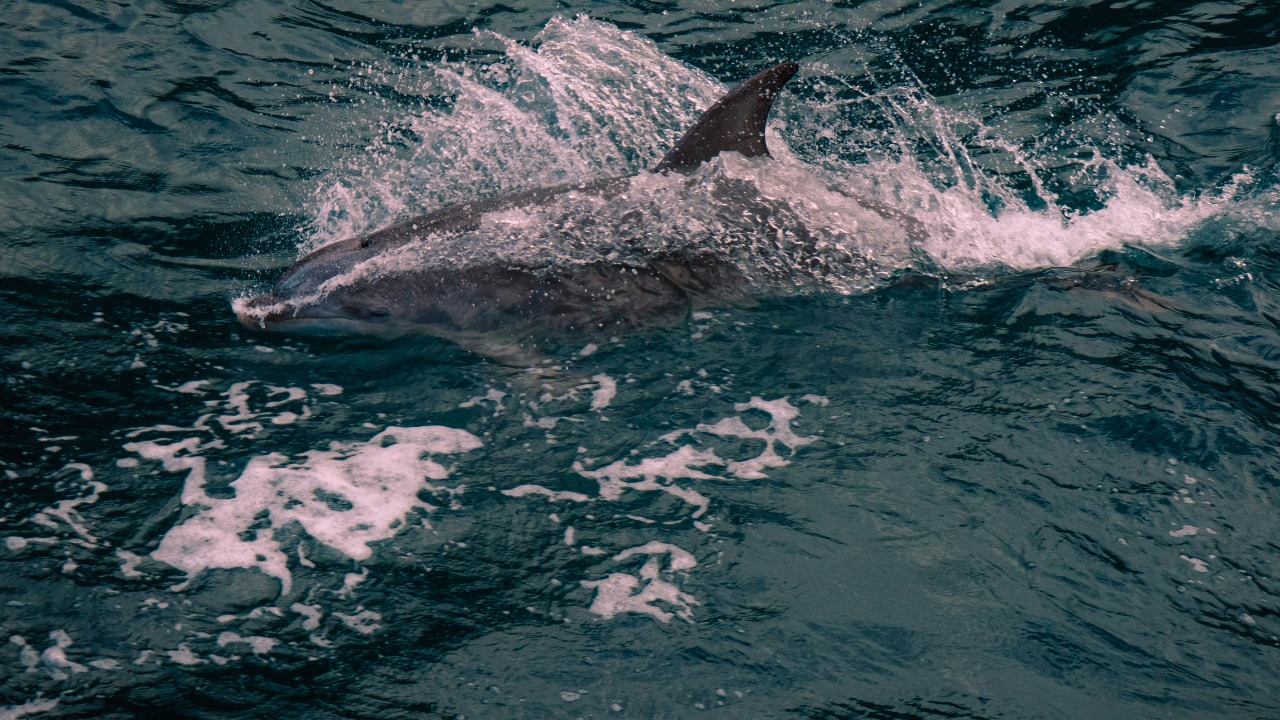

In the cold coastal waters of the North Pacific, a rare alliance is challenging what scientists thought they knew about marine predators. Orcas and dolphins have been filmed coordinating their movements to corral giant salmon, a scene that looks more like a choreographed hunt than a chaotic feeding frenzy. The footage is electrifying, but as researchers rush to interpret it, not everyone agrees on whether this is true cooperation or a fleeting convenience between two powerful hunters.
At stake is more than a viral clip. If these encounters represent a genuine partnership, they could reshape how I understand relationships among top predators, from how they share food to how they adapt to dwindling fish stocks. If they are instead opportunistic one-offs, the spectacle still exposes the intense pressures bearing down on Pacific ecosystems and the surprising ways animals respond when salmon become scarce.
What the new footage actually shows
The starting point for the debate is a set of videos that capture orcas and dolphins moving in tight formation around schools of salmon. In the clearest sequences, the orcas appear to drive the fish into dense clusters while dolphins dart along the edges, snapping up prey that slips past the larger hunters. The behavior looks deliberate: the predators match speed and direction, pivot together, and seem to hold a loose perimeter around the fish rather than scattering into individual chases.
Researchers who reviewed the recordings describe orcas and dolphins converging on the same salmon-rich patches, then maintaining proximity long enough to suggest more than random overlap. In one widely shared clip, the orcas focus on the largest salmon, tearing into the biggest bodies, while the dolphins hang back slightly and then surge forward to seize smaller fish and scraps. The scene, captured as a rare Watch Rare Video of Orcas Teaming Up With Dolphins, shows the two top predators apparently working together to feast on salmon, with the orcas largely keeping the choicest portions for themselves and leaving dolphins to capitalize on the leftovers.
Who these hunters are and where they meet
To understand why this encounter is so striking, it helps to know who is in the frame. The orcas involved are fish-eating killer whales that specialize in salmon, particularly the largest individuals that offer the biggest caloric payoff. These orcas are distinct from mammal-hunting “transient” killer whales that target seals and porpoises, and their hunting style is built around speed, coordination, and an ability to track salmon runs across long distances. The dolphins are Pacific white-sided dolphins, agile mid-sized predators that also target schooling fish but usually operate in their own pods.
The interactions have been documented in coastal waters off British Columbia, where salmon runs draw a dense mix of predators into relatively confined channels. In that setting, orcas and dolphins are not strangers; they often travel through the same corridors and sometimes appear in mixed groups. A recent study of these waters reports that Orcas and dolphins have been spotted for the first time working together to hunt salmon, suggesting a more complex relationship between the two predators than simple competition or avoidance.
Why scientists call it a possible first
Marine biologists have long documented mixed-species groups in the ocean, but those gatherings usually involve shared travel routes or mutual defense rather than coordinated hunting. What makes these new observations stand out is the apparent division of labor: orcas seem to take on the role of heavy hitters, pushing and stunning the biggest salmon, while dolphins exploit the chaos at the margins. That pattern has led some researchers to describe the behavior as a possible scientific first for these species.
In one detailed account, observers describe fish-eating killer whales driving salmon toward the surface while dolphins arrive later and begin weaving through the orcas’ wake, picking off disoriented fish. The orcas do not chase the dolphins away or break formation, which would be expected if they saw the smaller predators purely as competitors. Instead, the two groups maintain a loose but stable configuration around the prey. One analysis of the footage frames it as an example of fish-eating killer whales engaging in a hunt that may represent a scientific first, precisely because the dolphins appear to join in after the orcas have already begun corralling the salmon.
How the research team pieced the story together
Behind the dramatic footage is a methodical research effort that relies on more than just lucky camera angles. Scientists tracking these encounters combine visual observations with acoustic recordings and biological sampling to build a fuller picture of what is happening below the surface. By analyzing the sounds the animals make, they can distinguish between different types of orcas and identify when dolphins are using specific calls associated with feeding or social coordination.
Sampling plays a crucial role in confirming what the predators are actually eating. Researchers collect fish scales, tissue fragments, and sometimes fecal samples from the water column after the hunts, then match them to salmon species and sizes. One account describes how a team, confronted with the question “What would you do if you were a hungry Pacific white-sided dolphin, salivating at the idea of sampling some salmon,” used these methods to show that the dolphins were indeed feeding on the same salmon targeted by the orcas. The study of these Pacific white-sided dolphins frames the shared hunt as a potential win-win for everyone involved, at least from the predators’ perspective.
Cooperation, commensalism, or just convenience?
Where the debate heats up is in how to label what the cameras captured. Some researchers argue that the orcas and dolphins are engaging in true cooperation, meaning both sides adjust their behavior in ways that benefit the group. In this view, the orcas tolerate the dolphins because their presence helps keep the salmon school tight and panicked, which in turn makes it easier for the orcas to target the largest fish. The dolphins, for their part, gain access to a concentrated buffet they could not create on their own.
Others are more cautious and see the pattern as commensalism or opportunism rather than partnership. From that perspective, the orcas are simply focused on their own prey, and the dolphins are clever freeloaders that have learned to shadow the larger hunters without offering anything in return. The fact that orcas appear to keep the biggest salmon for themselves, leaving dolphins to feed on smaller fish and scraps, supports the idea that the relationship is asymmetric. The footage of orcas taking the prime cuts while dolphins move in on the leftovers, highlighted in the rare video of orcas teaming up with dolphins to hunt giant salmon, can be read either as a sign of tolerated cooperation or as a case of dolphins exploiting a situation the orcas create.
Why some experts are skeptical
Not everyone is ready to declare a new chapter in interspecies teamwork. Skeptical scientists point out that a handful of recorded hunts, no matter how striking, may not represent a stable or widespread behavior. Orcas are famously flexible hunters, and dolphins are opportunistic by nature; it is entirely plausible that the two species occasionally overlap around dense salmon schools without forming any lasting alliance. From this angle, the synchronized movements in the videos could be a byproduct of both predators responding to the same prey, not to each other.
There is also the question of risk. In other parts of the world, killer whales have been documented harassing or even killing smaller dolphins, which makes some experts wary of assuming a friendly relationship. The orcas in these salmon hunts are fish specialists, not the mammal-eating transients that target porpoises and seals, but the potential for aggression still looms in the background. One analysis that contrasts fish-eating killer whales with transients that hunt marine mammals underscores how unusual it is to see dolphins so close to orcas without signs of fear or flight. For skeptics, that very contrast is a reason to demand more data before calling the behavior cooperative rather than an anomaly.
What this could mean for salmon and the wider ecosystem
Whether cooperative or opportunistic, the joint hunts highlight the intense pressure on salmon populations in the North Pacific. Both orcas and Pacific white-sided dolphins depend heavily on schooling fish, and salmon runs have been under strain from warming waters, habitat loss, and fishing. When two top predators converge on the same resource, it raises questions about how much additional stress that puts on already vulnerable stocks and how the ecosystem absorbs that pressure.
At the same time, the behavior may reflect a kind of predator flexibility that helps the ecosystem adapt. If orcas and dolphins can adjust their hunting strategies to make the most of dense but patchy salmon schools, they may be better able to survive in a changing ocean. The study that first reported orcas and dolphins working together to hunt salmon in British Columbia notes that such interactions could signal a more dynamic relationship between predators and prey than traditional models assume. By showing that Orcas and dolphins have been spotted coordinating around salmon, the research hints at a food web where alliances and rivalries shift as conditions change.
How rare alliances reshape our view of predator behavior
For me, the most striking part of these encounters is how they challenge the simple predator-versus-prey narrative that often dominates discussions of marine life. When orcas and dolphins appear to synchronize their movements, divide up the spoils, and tolerate each other’s presence in the middle of a feeding frenzy, it suggests a social and cognitive sophistication that goes beyond instinctive chasing. These animals are not just reacting to fish; they are reading and responding to one another in real time.
That insight fits into a broader reevaluation of how top predators interact. Mixed-species hunting has been documented on land, from lions and hyenas shadowing each other to wolves and ravens sharing carcasses, but the ocean has been harder to study at that level of detail. The new footage of fish-eating killer whales and Pacific white-sided dolphins around salmon schools, described as a possible scientific first, opens a window into similar dynamics underwater. It hints that alliances of convenience, shifting partnerships, and even negotiated truces may be more common among marine predators than the traditional image of solitary hunters suggests.
Why the argument is far from settled
Despite the excitement, I do not see a consensus forming quickly. The same scenes that some researchers interpret as deliberate teamwork can be read by others as nothing more than overlapping feeding strategies. Without long-term tracking of individual orcas and dolphins, including repeated observations of the same animals hunting together, it is hard to prove that these interactions are intentional partnerships rather than one-off events driven by local conditions.
Future work will likely focus on building that longer record: tagging individual predators, recording their calls during hunts, and combining visual footage with detailed sampling of what each species eats in mixed groups. The early studies that rely on careful acoustic analysis and biological sampling, including the work that asks what a hungry Pacific white-sided dolphin would do when offered a chance to sample some salmon, show how much more there is to learn. For now, the rare video of orcas teaming up with dolphins to hunt giant salmon has opened a vivid new chapter in the story of ocean predators, even as scientists continue to argue over exactly what kind of relationship the footage reveals.
More from MorningOverview