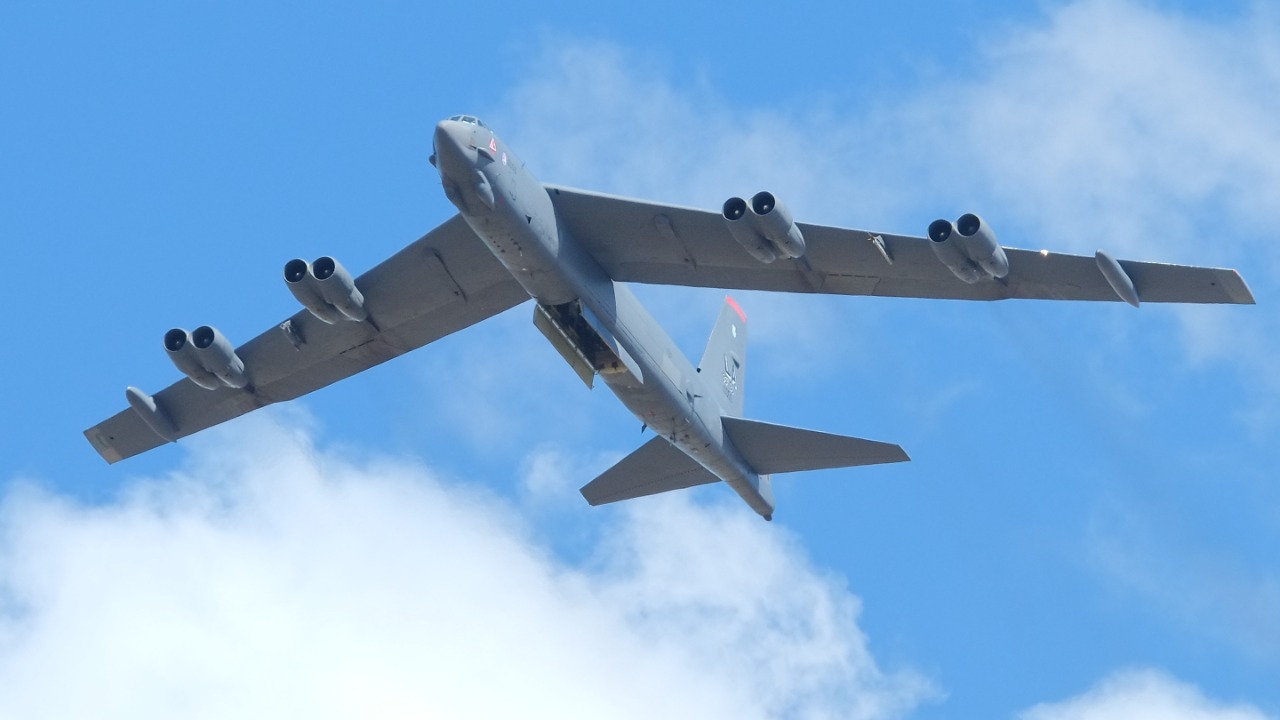

The Boeing B-52 is on track to do something no other combat aircraft has ever done: remain an operational frontline bomber for a full century. Built for the nuclear standoff of the 1950s and repeatedly rebuilt for new kinds of wars, it has become less a single airplane and more a flying platform that the United States keeps reimagining for each era of conflict.
Its projected 100-year career is not an accident of nostalgia or bureaucratic inertia. It is the product of a rugged airframe, a mission that still matters, and a series of upgrades that will turn the latest B-52J variant into a kind of airborne launch truck for precision weapons, even as newer stealth bombers arrive alongside it.
The cold war giant that refused to age out
I see the B-52’s longevity starting with a simple fact: the original design left enormous room to grow. Engineers built a large, straight-wing bomber with generous internal volume, forgiving aerodynamics, and a structure that could absorb new weight and systems without losing its basic performance. That adaptability is why, as one analysis notes, Three core factors, including the flexibility of the original airframe, have allowed the B-52 to outlive newer bombers that were more optimized but less adaptable.
From that starting point, the aircraft evolved from a high-altitude nuclear bomber into a low-level penetrator, then into a standoff missile carrier and conventional bomb truck. Each shift layered new avionics, weapons, and tactics onto the same basic airframe rather than demanding a clean-sheet replacement. That is why the B-52 Stratofortress, often shortened to Stratofortress, is now expected to remain in service for more than 100 years, a forecast that would have sounded implausible when the first examples rolled out with slide rules and vacuum tubes.
Why the B-52 still fits modern strategy
For all its age, the B-52 still matches what American strategy needs from a heavy bomber: long range, heavy payload, and the ability to launch weapons from outside the teeth of enemy defenses. I view it as a flying arsenal ship, able to carry the broadest range of conventional and nuclear bombs and missiles in the inventory, a role that one technical overview describes when it notes that the B-52 can haul an unmatched mix of weapons while still deterring adversaries.
That mix matters because the bomber is no longer expected to dive into the densest air defenses. Instead, it can orbit far from hostile territory and release long-range cruise missiles or other standoff munitions. One assessment of its modern role points out that Today a B-52 loaded with long-range cruise missiles can strike targets thousands of miles away without ever crossing a border, a profile that fits neatly with a United States pivoting toward Asia and vast Pacific distances.
Payload, range, and cost: the unglamorous advantages
When I talk to pilots and analysts about why the B-52 keeps flying, they rarely start with romance. They start with payload, range, and cost. The bomber can carry a larger load of weapons over longer distances than most alternatives, and it does so with a maintenance and operating bill that is relatively modest for such a large aircraft. Even informal communities of aviation enthusiasts highlight that the B-52 combines a big payload, long legs, and comparatively low operating costs, which is exactly the kind of unglamorous arithmetic that keeps a platform in service.
Those attributes are especially valuable in a world where precision weapons are expensive and often scarce. A single sortie that can carry dozens of cruise missiles or guided bombs reduces the number of aircraft and crews needed to generate a given level of firepower. That efficiency is one reason the B-52 Stratofortress is expected to remain in service for more than 100 years, because replacing that combination of capacity and reach with a brand new fleet would be vastly more expensive than continuing to modernize the existing airframes.
The “Super” B-52J and the great reboot
The next chapter in this story is the B-52J, a deeply upgraded version that I see as a reboot rather than a minor refresh. The program will replace the bomber’s aging engines, overhaul its cockpit displays, and integrate new radar and mission systems so thoroughly that some observers have taken to calling it the Super B-52J, a Bomber Is Coming upgrade for the Air Force that is often Summed Up in just a few Words: more efficient, more lethal, and more integrated with future systems like the B-21 Raiders.
Alongside that engine and avionics overhaul, the bomber is getting a broader modernization that one analysis simply calls The Great B-52 Bomber Reboot Has Arrived. That effort emphasizes that, Despite its age, the Stratofort remains central to plans for new long-range weapons, enhanced electronic warfare systems, and the ability for the updated B-52J to launch cruise missiles and even drones from safer distances, turning the venerable bomber into a networked node in a much larger kill chain.
Why replacements never fully replaced it
One of the most revealing explanations for the B-52’s century-long career is that the aircraft meant to push it aside never quite did. Sleeker bombers arrived with stealth and higher speeds, but they were more expensive to build and operate, and they were optimized for specific penetration missions rather than the broad, flexible role the B-52 fills. As one detailed look at the program puts it, But the main reason the B-52 will still be flying at 100 years old is that the bombers meant to replace it have not fully taken over its missions, leaving those 1950s airframes airborne today.
In practice, that means the United States has ended up with a mixed bomber fleet in which stealth platforms handle the most demanding penetration tasks while the B-52 carries the bulk of the standoff weapons and conventional loads. The result is a division of labor rather than a clean handoff. The B-52 Stratofortress, expected to remain in service for more than 100 years, fills the high-volume, long-range role so effectively that there has been little budgetary or operational incentive to retire it outright.
How standoff weapons keep an old bomber relevant
The B-52’s survival is also a story about weapons, not just airframes. As air defenses have grown more lethal, the bomber’s job has shifted from flying over targets to launching munitions from far away. I see this as the key to squaring its age with modern threats: instead of trying to make a 1950s design invisible, planners have turned it into a launch platform for standoff weapons that can travel hundreds or thousands of miles on their own. One detailed discussion of its current employment notes that the B-52 has also become a key standoff missile carrier as the United States pivots toward Asia and the vast distances of the Pacific.
That same logic shows up in more informal conversations about tactics. Enthusiasts and veterans alike point out that the bomber does not need to duel modern fighters or surface-to-air missiles if it can stay outside their effective range and simply lob cruise missiles at targets. One widely shared explanation of this approach describes how standoff weapons allow crews to Whenever
Engineering for a 100-year lifespan
Keeping any aircraft in service for a century requires more than nostalgia; it demands a deliberate engineering plan. In the B-52’s case, that plan has centered on periodic structural inspections, targeted replacements of critical components, and major modernization cycles that refresh entire systems at once. A detailed breakdown of its life-extension work explains that a general overhaul of the B-52 Stratofortress, including new engines and avionics, is designed to preserve the bomber’s capability for the United States well into the future.
Those upgrades are not cosmetic. Re-engining improves fuel efficiency and range, new radars and electronic warfare suites sharpen situational awareness and survivability, and digital cockpits reduce crew workload while making it easier to integrate new weapons. One modernization overview of the B-52J emphasizes that, Despite its incredible age, the Stratofort is being fitted with advanced radar, new communications, and enhanced electronic warfare systems so that the updated bomber can launch cruise missiles and even drones from safer distances, effectively resetting the clock on its relevance.
Deterrence value in a changing world
Beyond its technical attributes, I see the B-52’s continued presence as a signal in its own right. A formation of these bombers flying near contested regions sends a message about American reach and resolve that is instantly recognizable to adversaries who have watched the aircraft for decades. One national security analysis underscores that the B-52 continues to deter the United States’ adversaries precisely because it can carry the broadest range of conventional and nuclear bombs and missiles, backed by modern defensive systems.
That deterrent effect is amplified by the bomber’s integration into new concepts of operation. As the United States pivots toward Asia and prepares for potential high-end conflicts, the B-52 is being woven into plans that pair it with stealth aircraft, drones, and long-range missiles in a layered force. In that context, the bomber’s age becomes less important than its ability to carry large numbers of weapons, communicate with other platforms, and remain on station for long periods, all of which reinforce its role as a visible and credible instrument of deterrence.
What a 100-year bomber says about future airpower
As the B-52 approaches its centennial, I see it as a case study in how air forces might think about future platforms. Rather than expecting every new aircraft to be replaced after a few decades, planners may increasingly design large, flexible airframes that can be updated repeatedly while more specialized systems handle the most demanding tasks. The B-52 shows how Three intertwined factors, including a robust initial design, continuous modernization, and a mission that remains relevant, can keep a single aircraft type viable across radically different eras of warfare.
That does not mean every platform will or should last a century. But the B-52 Stratofortress, expected to remain in service for more than 100 years, suggests that the most valuable aircraft may be those that can evolve from one technological generation to the next without losing their core utility. In that sense, the bomber’s 100-year career is less an anomaly than an early glimpse of how future airpower might blend old airframes with new brains and new weapons, long after their first pilots have retired.
More from MorningOverview