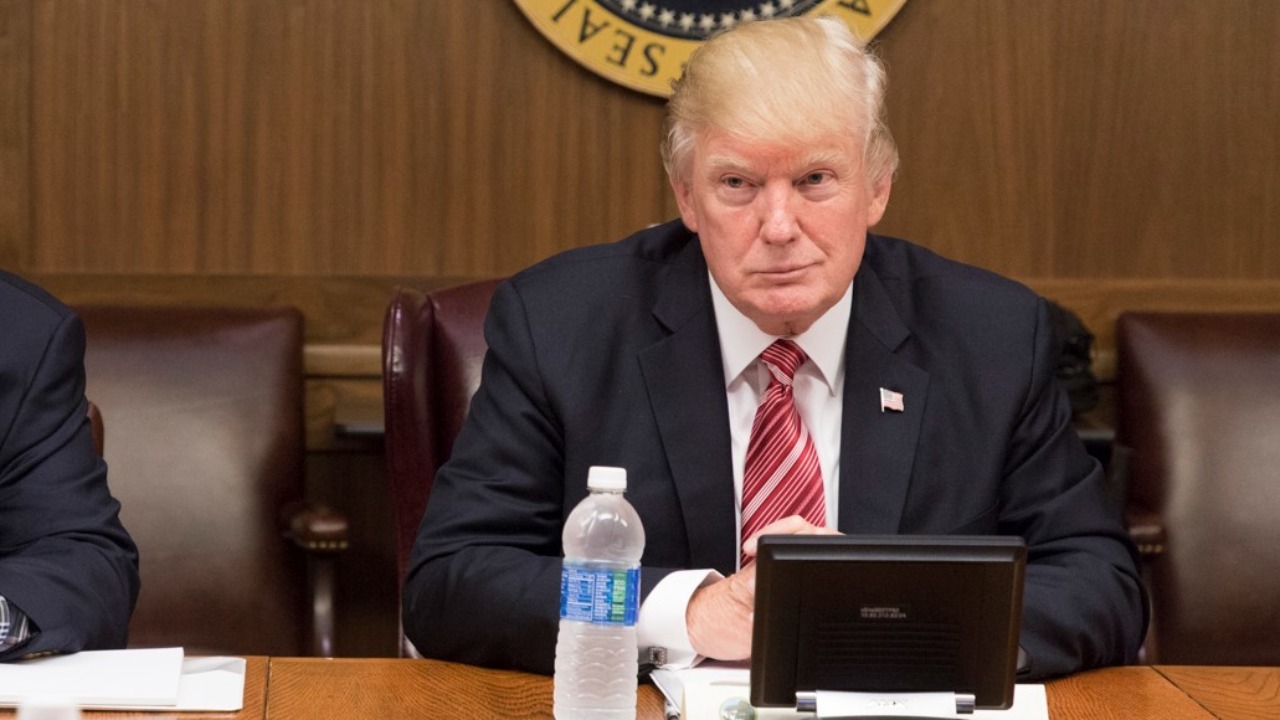

Donald Trump’s return to the White House has revived an old Washington parlor game: guessing what a sitting president really knows about unidentified anomalous phenomena, and what he might finally say out loud. UFO insiders now claim Trump has already received detailed briefings on UAP programs, raising the stakes for a second-term disclosure fight that blends national security, political theater and a public hungry for answers.
If those insiders are right, the question is no longer whether the commander in chief has been read into the mystery, but how far he is willing to go in challenging the secrecy that has surrounded it for decades. The answer will be shaped not only by Trump’s instincts, but by whistleblowers, Congress and a growing body of testimony that insists the public has been misled about what the government really knows.
How a UFO whistleblower put Trump at the center of the disclosure timeline
The most direct claim that Trump has been fully briefed on UAPs comes from a UFO whistleblower who has publicly tied the president’s second term to a new wave of revelations. In an interview highlighted by Mar, the whistleblower argued that Trump’s return to power would bring “further proof” of non‑human technology, suggesting that the president has already been exposed to sensitive material and could choose to declassify more. That account, shared in a segment featuring By Nick Valencia, Jason Morris and Rose Yann, framed Trump not as a bystander to the UAP debate but as a pivotal decision maker whose personal curiosity and political calculus could accelerate or stall transparency about UFO programs.
What stands out in that discussion is the confidence with which the whistleblower links Trump’s second term to concrete action, rather than vague hopes. The witness described a government that has long compartmentalized UFO information, then insisted that a president determined to shake up the bureaucracy could force more of it into the open. By placing Trump at the center of that scenario, the whistleblower effectively claimed that the president has already received detailed UAP briefings and now sits atop a trove of secrets that could be exposed if he chooses, a narrative captured in the video on a UFO whistleblower believes Trump’s 2nd term will reveal further proof.
Betting markets, public fascination and the Trump factor
Outside the intelligence community, the idea that Trump has been fully briefed on UAPs has already seeped into popular culture and even online betting markets. On Polymarket of Trump, traders have been wagering on whether the president will reveal what the United States knows about aliens, treating disclosure as a measurable political event rather than a fringe fantasy. Interest spiked around a high‑profile documentary release, then cooled when the anticipated bombshell failed to materialize, a reminder that even in the age of viral speculation, the timing and substance of any presidential revelation remain stubbornly opaque.
The same reporting that tracked those wagers also noted how the odds shifted after a film stoked expectations of imminent disclosure, only for the market to reassess when Trump did not immediately deliver. That pattern captures the tension between a public primed for dramatic announcements and a presidency constrained by classification rules, legal risk and national security advice. The fact that a mainstream prediction platform is hosting bets on whether Trump will talk about aliens at all, as described in coverage of Trump UFO disclosure predicted to come in just DAYS, underscores how deeply the notion of a briefed, disclosure‑ready president has penetrated the broader conversation.
Congressional hearings that shifted the UAP debate
Trump’s alleged briefings do not exist in a vacuum; they sit atop years of congressional pressure that has dragged UAPs from classified annexes into televised hearings. A key inflection point came when lawmakers convened a House UFO transparency hearing that showcased testimony about unidentified craft and government secrecy. The Key moments at that session, captured in a recording of the House UFO event, featured members pressing witnesses on whether the public had been misled and what data the Pentagon still refused to share, signaling that Congress expected the executive branch, including the president, to take the issue seriously.
Earlier, another high‑profile session on unidentified anomalous phenomena, or UAPs, opened with a subcommittee chair formally bringing the hearing to order and welcoming witnesses to discuss what the government knows. That proceeding, preserved in a full video of the Jul gathering, underscored that lawmakers were no longer content to treat UFOs as a taboo topic. Instead, they framed UAPs as a matter of national security and public trust, a shift that inevitably shaped the briefings any president, including Trump, would receive as Congress demanded more clarity from the intelligence community and the Department of Defense, a dynamic visible in the House holds hearing on unidentified anomalous phenomena.
Inside the secretive UAP world portrayed on screen
While whistleblowers and lawmakers have pushed for transparency, a secretly made documentary has tried to show viewers what that hidden world might look like from the inside. In that film, a key voice describes UAP technology as doing “stuff that we can’t do,” then warns that if officials cannot figure out what it is, what it wants or what it can do, they are “in trouble.” That stark assessment, highlighted in coverage of the documentary by Nov, reinforces the idea that the stakes of any presidential briefing are not just political but existential, involving capabilities that current human engineering cannot match.
The same reporting quotes participants who argue that “the public has been lied to” about the scale and significance of UAP encounters, and who call for a more honest accounting of what has been collected and studied. Their insistence that the government must “understand more about UAPs” dovetails with the whistleblower’s claim that Trump has been fully read into programs that remain hidden from most of Congress and the public. If the technology described in the film is as advanced as those insiders suggest, then any president who has been briefed on it, including Trump, is sitting on information that could reshape how citizens view both national security and humanity’s place in the universe, a theme explored in the documentary coverage of UAP technology that does stuff that we can’t do.
What experts say presidents should know about UAPs
Beyond whistleblower claims and cinematic dramatization, national security experts have laid out what they believe any responsible administration must understand about UAPs. At a high‑profile congressional session, a Wednesday witness panel repeatedly stressed that the U.S. government, and specifically presidential administrations, should treat UAPs as a serious subject of study rather than a punchline. When pressed on how he would characterize UAPs, one witness replied in careful terms that underscored both the limits of current knowledge and the need for systematic investigation, a stance detailed in coverage that noted how Repeatedly, Wednesday’s testimony pushed for more rigorous analysis.
That expert view matters because it defines the baseline for what a “full briefing” should include. If specialists are telling Congress that presidents must be informed about sensor data, pilot encounters and potential adversary technologies, then any claim that Trump has been comprehensively briefed implies exposure to that entire spectrum of information. The same reporting that chronicled the witness panel’s warnings also emphasized that administrations have a duty to balance secrecy with public accountability, a tension that will shape how Trump handles whatever he has been told. Those expectations are spelled out in an analysis of why UFOs and UAPs should be studied by the U.S..
Trump’s own UFO rhetoric and the “bombshell” narrative
Trump has long shown a knack for turning complex policy questions into headline‑grabbing soundbites, and UFOs are no exception. In a widely shared broadcast titled “UFO Hearing LIVE: Donald Trump Drops UFO Bombshell, Truth Rocks America,” the president was framed as delivering explosive new information about unidentified craft. The program, presented as News LIVE coverage, leaned heavily on the idea that Trump was willing to say what previous leaders would not, casting him as a truth‑teller ready to challenge entrenched secrecy around UAPs.
Yet even in that charged setting, the line between genuine revelation and political theater remained blurry. The broadcast’s framing suggested that Trump was dropping a “UFO Bombshell,” but the substance of his comments still operated within the constraints of classification and plausible deniability. For viewers, the spectacle reinforced the impression that the president had been briefed on sensitive material, even if he stopped short of confirming specific programs or technologies. The event’s packaging as UFO Hearing LIVE: Donald Trump Drops UFO Bombshell, Truth Rocks America shows how Trump’s persona and the promise of disclosure have become intertwined in the public imagination, even when hard details remain scarce.
How House UFO hearings frame what a “full briefing” might contain
To understand what insiders mean when they claim Trump received “full” UAP briefings, it helps to look at what Congress has already dragged into the open. The Key moments at the House UFO transparency hearing included pointed questions about whether the government has recovered non‑human craft, how data is collected and who controls access to it. Lawmakers pressed witnesses on classification practices and the chain of custody for alleged materials, sketching a rough outline of the topics that would almost certainly appear in any comprehensive presidential briefing on UAPs.
Those hearings also highlighted the bureaucratic maze that surrounds UAP information, from intelligence agencies to defense contractors and special access programs. When members of Congress demanded to know which offices held the most sensitive files, they implicitly raised the stakes for any president who claims to have been fully briefed. If Trump has indeed received detailed updates, they would likely draw on the same networks of data and testimony that lawmakers have been trying to pry open, only with far more granularity. The public record of those exchanges, preserved in a video of the Key moments at House UFO transparency hearing, offers a rare glimpse of the questions that shape what presidents are told behind closed doors.
The culture of secrecy that shapes presidential choices
Even if Trump has been given extensive UAP briefings, the culture of secrecy around the topic will heavily influence what he can or will say. The secretly made documentary that accused officials of lying to the public about UAPs described a system in which information is tightly compartmentalized, with only a small circle of insiders granted full visibility. That environment can leave even presidents dependent on what they are shown, and on how candid their briefers choose to be, a dynamic that complicates any claim of “full” knowledge.
Congressional testimony has echoed that concern, with witnesses warning that some UAP programs may sit inside special access channels that are difficult for elected leaders to penetrate. When experts tell lawmakers that administrations must push harder to understand UAPs, they are implicitly acknowledging that the default setting is opacity, not openness. For Trump, who has built a political brand on challenging the so‑called “deep state,” that secrecy presents both an opportunity and a risk: he can promise to rip the lid off hidden programs, but he must still navigate classification rules, intelligence relationships and the potential fallout of revealing capabilities that adversaries could exploit.
What Trump’s alleged briefings mean for the next phase of disclosure
If UFO insiders are correct that Trump has received detailed UAP briefings, the next phase of disclosure will hinge less on what the government knows and more on how the president chooses to use that knowledge. The whistleblower highlighted by Mar framed Trump’s second term as a window for “further proof,” suggesting that the president could authorize new releases of data, declassify historical programs or direct agencies to cooperate more fully with Congress. That scenario would align with expert calls for administrations to treat UAPs as a serious research and security issue, not a political liability to be buried.
At the same time, the gap between public expectation and official action is widening. Betting markets like Polymarket of Trump have already priced in the possibility of dramatic announcements, only to adjust when anticipated disclosures fail to appear. Documentaries and live broadcasts promise bombshells, while congressional hearings methodically chip away at secrecy without delivering the definitive answers many viewers crave. In that environment, Trump’s alleged full briefings become both a symbol and a test: a symbol of how far the UAP issue has penetrated the highest levels of power, and a test of whether any president is willing to confront the entrenched secrecy that has defined the UFO debate for generations.
More from MorningOverview