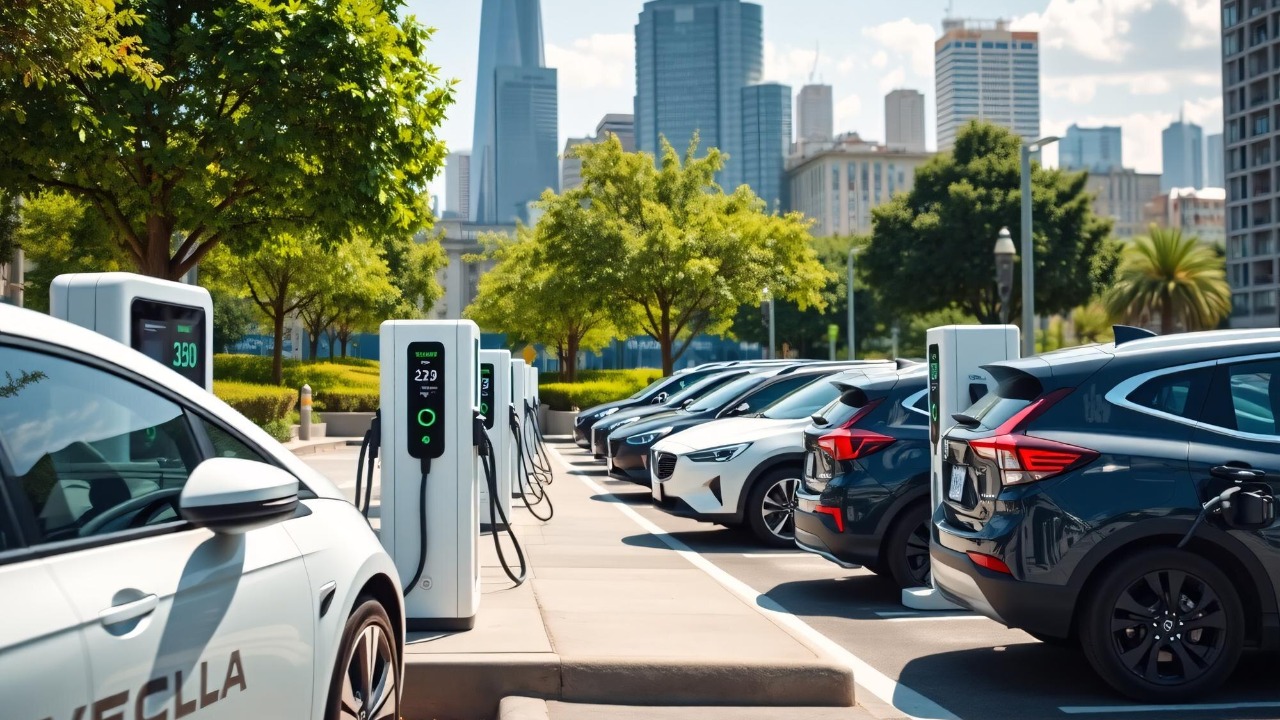

Federal support for electric vehicles in the United States did not end with a whimper. It vanished in a single policy stroke, instantly reshaping what it costs to drive a new car off the lot. With the federal EV tax credit gone, the market has been left to absorb a sudden price shock that is colliding with already strained household budgets and a fragile auto supply chain.
I see the fallout most clearly in the widening gap between what automakers need to charge to stay profitable and what buyers can realistically afford. The credit once acted as a bridge between those two numbers. Now that bridge has collapsed, and the scramble to replace it is exposing how dependent new car affordability had become on a single line in the tax code.
How the federal EV tax credit finally ran out of road
The end of the federal incentive was not a surprise to anyone watching the policy closely, but the final cutoff still landed hard. On Wednesday, federal EV tax credits in the US officially came to an end, closing out a program that had directly lowered the purchase price of a new electric vehicle for years and that had been expanded and extended in the 2020s to accelerate adoption of battery-powered cars. That abrupt finish left buyers who had been counting on a discount suddenly staring at full sticker prices, with no federal cushion to soften the blow, as documented when On Wednesday the credits officially expired.
In the months leading up to that moment, the clock was loudly ticking. Policy guides warned that the federal EV tax credit was entering its final phase-out, explaining that once the deadline passed there would be no warning beyond this final cutoff and no partial benefit for buyers who missed it by a few weeks. That sense of urgency was captured in consumer explainers that opened with a blunt reminder that the Table of contents itself revolved around the looming end of the Electric vehicle incentive and the fact that, After the phase-out, the benefit would simply disappear.
The Inflation Reduction Act made the credit more powerful, and more fragile
Before it vanished, the EV incentive had already been reshaped into something more complex and more targeted. The Inflation Reduction Act of 2022 overhauled the long-standing federal EV tax break and rebranded it as the Clean Vehicle Credit, tying eligibility to where vehicles were built, how their batteries were sourced, and who was buying them. Guides on how to qualify for the Clean Vehicle Credit The Inflation Reduction Act of reforms walked buyers through new income caps, price ceilings, and manufacturing rules that determined whether a car could still unlock up to How much federal help they would receive.
Those changes were part of a broader push to tie climate policy to domestic manufacturing. Federal EV Tax Credits Ending Soon Incentives for hybrid or electric cars had been part of the tax code for nearly two decades, but the Inflation Reduction Act, passed in 2022, rewired them to favor vehicles assembled in North America and batteries that met strict sourcing rules. That shift was meant to strengthen US supply chains and reduce reliance on imported components, yet it also narrowed the list of qualifying models and made the incentive more brittle, as highlighted in consumer alerts that framed the Federal EV Tax Credits Ending Soon Incentives for buyers who were trying to navigate the new rules before the window closed.
Ever-tightening rules shrank the pool of eligible cars
Even before the final cutoff, the Inflation Reduction Act’s fine print had already done quiet damage to affordability by steadily shrinking the number of vehicles that qualified. As of the point when the new rules took effect, these changes to have drastically reduced the number of vehicles that qualify for the credit, with updated lists of eligible models maintained by the Federal Government and made available to shoppers who were trying to match their preferred car to the incentive. That meant buyers who had once assumed that any plug-in would earn a discount were suddenly discovering that their chosen model no longer counted, a shift documented in technical summaries that opened with the phrase As of today to underscore how quickly the eligibility map was changing.
Tax professionals were blunt about the impact on ordinary filers. In summary, the changes made to the Federal Electric Vehicle Tax Credit by the Inflation Reduction Act had made the tax credit a bit more complex, layering in new documentation requirements and eligibility checks that confused buyers and sometimes scared them away from EVs altogether. Accounting advisories stressed that the Federal Electric Vehicle Tax Credit, as reshaped by the Inflation Reduction Act, now required careful planning to claim correctly, a far cry from the earlier era when the benefit was relatively straightforward, as explained in guidance that spelled out how the Federal Electric Vehicle Tax Credit, Inflation Reduction Act interplay had raised the stakes for getting the paperwork right.
Caps, quotas, and the long political fight over subsidies
The EV credit did not just fade away; it was chipped down over years of political bargaining. Over the past decade, Congress has periodically adjusted the rules around electric vehicle subsidy, setting manufacturer-specific caps that cut off the credit as a company delivers its 200,001st EV and debating whether those limits still made sense as the market matured. Those thresholds meant that early leaders in the EV space, from mass-market brands to luxury makers, saw their federal support vanish long before rivals, a dynamic that was laid out in consumer explainers that opened with the phrase Over the past decade to trace how Congress and Manufacturers had repeatedly revisited the subsidy’s structure.
Layered on top of those caps were new content rules that split the credit into separate pieces. One credit covers the sourcing of critical minerals used in the EV battery, while the second credit requires that an increasing share of the battery components be manufactured and assembled in North America, a design meant to reward companies that invested in domestic supply chains. Policy summaries emphasized that One of the key goals was to align climate incentives with industrial policy, but in practice the dual-credit structure created another hurdle for buyers trying to figure out whether a specific trim level of a specific model year would still qualify, as detailed in technical breakdowns of how One part of the incentive focused on minerals and the other on manufacturing.
From simple perk to intricate eligibility maze
For buyers, the evolution of the EV tax credit felt like watching a once-simple perk turn into an intricate maze. Previously, the credit hinged on where the electric vehicles were built, the sourcing of their battery components and minerals, and a set of price and income limits that already required some homework to understand. As the Inflation Reduction Act layered on new sourcing thresholds and domestic assembly requirements, the eligibility picture became even more fragmented, potentially affecting the eligibility of certain vehicles that had once been safe bets, a shift captured in dealership guides that opened with the word Previously to contrast the old rules with the new.
At the same time, the headline number remained a powerful draw. People who bought electric vehicles (EVs) before September 30, 2025, may be eligible for a tax credit of up to $7,500, a figure that often made the difference between a monthly payment that fit a household budget and one that did not. Consumer tax guides stressed that People needed to pay close attention to purchase dates and delivery timelines to lock in that $7,500 benefit before it disappeared, underscoring how a single figure could dominate the economics of a new EV purchase, as laid out in detailed breakdowns of how the $7,500 incentive worked in practice.
When the subsidy vanished, the price shock hit buyers directly
Once the federal credit finally expired, the impact on affordability was immediate and visible. A buyer who had been counting on up to $7,500 in federal help suddenly had to absorb that entire amount in the vehicle price, or walk away from the deal. For a mid-priced EV that had been hovering around $40,000 before incentives, losing the credit effectively pushed the out-the-door cost into luxury territory for many households, especially when combined with higher interest rates and rising insurance premiums. Dealers reported more shoppers stepping back from EVs entirely once they realized that the federal discount was gone, a reaction that tracks with the central role the credit had played in closing the gap between sticker prices and take-home pay.
The ripple effects are not limited to electric models. As EVs become less financially attractive, some buyers are pivoting back to gasoline cars, adding pressure to a new car market that was already struggling with supply constraints and elevated prices. That shift risks slowing the broader transition to cleaner transportation while also keeping overall new car prices higher, since automakers have less incentive to discount popular internal combustion models when demand remains strong. In practical terms, the end of the EV credit has removed one of the few levers that directly lowered the cost of a new vehicle for middle-income buyers, leaving them to navigate a market where list prices are sticky and financing costs remain stubbornly high.
Supply chain scars keep both new and used prices elevated
The timing of the credit’s demise could hardly be worse, because the auto market is still living with the aftershocks of the pandemic-era supply crunch. It was precisely the 2020 semiconductor shortage that affected the European automotive industry, significantly influencing the used car market and pushing secondhand prices to levels that would have been unthinkable a decade ago. That same shortage, combined with broader supply chain disruptions, left global inventories thin and gave dealers little reason to offer deep discounts, a dynamic that continues to shape pricing even as production recovers, as detailed in analyses of how the European experience with chip shortages spilled over into used car prices worldwide.
In the United States, those supply constraints collided with the phase-out of federal EV support to create a kind of affordability pincer. On one side, new car prices remain elevated because manufacturers are still rebuilding inventories and prioritizing higher-margin models. On the other, used car prices have not fully retreated from their pandemic peaks, in part because fewer new vehicles were sold in those years, which means fewer late-model trade-ins are now entering the secondhand market. Without the EV tax credit to offset those structural pressures, buyers are left choosing between expensive new cars and used vehicles that are no longer the bargains they once were, a choice that is particularly stark for families trying to stay within a fixed monthly payment.
Budget cuts and political choices sealed the credit’s fate
The final blow to the EV incentive came from politics, not market forces. As federal budgets tightened, the program became a tempting target for cuts, especially for lawmakers who argued that the subsidy disproportionately benefited higher-income households and coastal markets. Proposals to slash or eliminate the credit gained traction in Washington, culminating in a budget plan from President Donald Trump’s administration that sharply reduced support for new EV purchases and set the stage for the program’s eventual end. Consumer advisories framed the moment as a race against time, warning that the clock was ticking on EV tax credits as the Trump budget slashes incentive and directing shoppers who wanted to see which models still qualified to visit the U.S. Department of Energy website at FuelEconomy.gov for a full list of qualifying vehicles.
Those political choices did more than end a single program; they signaled a broader retreat from using the tax code to steer consumer behavior in the auto market. Without a federal incentive to reward cleaner choices, the burden of promoting EV adoption now falls more heavily on states, cities, and private companies, many of which lack the fiscal firepower to match what Washington once offered. The result is a patchwork of local rebates and utility programs that can help at the margins but rarely add up to the kind of nationwide price relief that the federal credit provided. For buyers, that means the affordability of a new EV now depends as much on their ZIP code as on their income, a shift that risks deepening regional inequalities in access to cleaner transportation.
What affordability looks like in the post-credit car market
In the wake of the credit’s demise, the new car market is settling into a harsher reality. Automakers are experimenting with price cuts, lease deals, and dealer incentives to keep EV sales moving, but those efforts are uneven and often temporary. Some brands are trimming features or offering lower-range battery options to hit more accessible price points, while others are doubling down on premium models that can absorb higher costs without losing their core customers. For a typical buyer, the landscape now involves more fine print, more negotiation, and more trade-offs between up-front price, long-term fuel savings, and the risk that today’s EV might not hold its value as well as yesterday’s subsidized models.
I see a clear throughline in all of this: the federal EV tax credit did not just encourage cleaner cars, it quietly propped up the entire notion that a new vehicle could still be within reach for a middle-class household. By removing that support at a moment when supply chains are fragile, interest rates are elevated, and used car prices remain high, policymakers have effectively raised the floor on what it costs to participate in the new car market at all. Unless a new wave of incentives, cost-cutting innovations, or aggressive competition emerges to fill the gap, the era when a federal tax form could shave thousands of dollars off a showroom price is over, and with it a key pillar of new car affordability in the United States.
More from MorningOverview