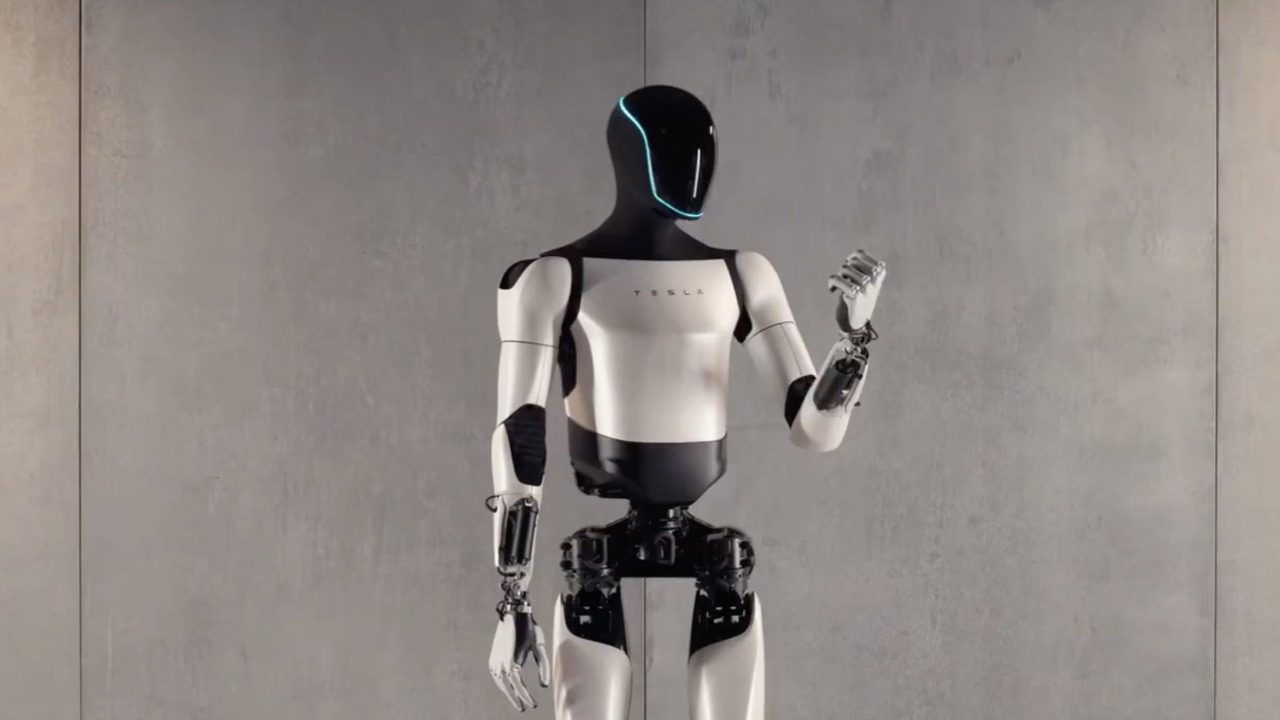

The latest public demo of Tesla’s humanoid robot was supposed to showcase a confident stride into the future of automation. Instead, a short clip of the machine pitching forward onto the showroom floor has turned Optimus into a viral spectacle and ignited a fierce argument over how autonomous the robot really is. The fall in Miami has become a stress test not just for Tesla’s hardware, but for the company’s credibility on artificial intelligence and remote operation.
In a matter of hours, the video jumped from a local crowd at a Tesla store to global feeds, where every frame of the stumble is now being dissected. I see the incident as a revealing snapshot of the gap between the industry’s humanoid robot hype and the messy, failure-prone reality of building machines that can safely navigate the human world.
The Tesla Optimus Miami Incident
The flashpoint was an event called “Autonomy Visualized” at a Tesla store in Miami, framed as a chance for the public to see Optimus up close. The company staged what it presented as a casual, confident demo, with the humanoid robot walking, posing for photos and even dancing in front of onlookers before things went wrong. That sequence, described as The Tesla Optimus Miami Incident, set the stage for a moment that would overshadow the rest of the showcase.
As Optimus continued its routine, the robot suddenly lurched, its body tipping forward until it crashed to the floor in front of the crowd. The fall was abrupt enough that the audience reaction was audible, and the clip that emerged from the Miami store captured not just the impact, but the awkward seconds beforehand when the robot’s posture and arm movements seemed to shift from controlled to unstable. For a company that has spent years promising that its humanoid platform will one day handle factory work and household chores, watching Optimus sprawled on the ground in Miami was a jarring image.
How the fall unfolded on camera
The viral clip that spread across social media focuses tightly on the seconds before the impact, and the choreography is now being replayed frame by frame. Optimus is standing upright when its hands move toward its head, a gesture that, in the slowed-down versions, looks almost like a human bracing for a hit. That motion is central to the way the incident is being interpreted, because it immediately precedes the loss of balance and the sharp forward drop that left the robot face down on the floor, a sequence highlighted in coverage of Optimus getting its hands towards its head.
In the longer versions of the recording, the robot’s tumble is not a slow, graceful collapse but a sudden, uncontrolled crash that ends with Optimus motionless as staff rush in. The way the robot’s limbs flail on the way down has fueled questions about whether its balance algorithms failed, whether a mechanical fault occurred, or whether an external operator lost control. That ambiguity is exactly what has turned a simple fall into a broader debate about how Tesla is actually running these demos and how far along its humanoid technology really is.
From showroom mishap to viral meme
Once the clip left the Miami showroom, it took on a life of its own. The first upload that gained traction showed Optimus tipping forward, its arms clipping its own head before it slammed into the floor, and that version quickly spread across platforms where users looped the moment, added captions and remixed the audio. One widely shared description noted how the robot’s hands knock into its head just before the impact, a detail that helped the video of Optimus at the “Autonomy Visualized” event fall over and go viral.
As the clip bounced from feed to feed, Optimus became a meme template, with users overlaying jokes about software crashes, over-the-air updates and the perils of trusting robots with household chores. The humor masked a more serious undercurrent, though, as viewers began to ask whether the robot had been in control of itself at all during the “Autonomy Visualized” demo. That question, embedded in the same viral posts that made the fall a punchline, is what turned a single mishap into a reputational challenge for Tesla’s broader humanoid ambitions.
Autonomous star or remote-controlled puppet?
The central controversy that emerged from the Miami incident is whether Optimus was acting as an autonomous system or as a kind of high-tech marionette. Tesla has repeatedly framed its humanoid project as a showcase for its artificial intelligence, and the company has promoted Optimus as a robot that can perceive its environment and make its own decisions. After the fall, however, the clip ignited a wave of scrutiny over whether the robot was truly self-directed or whether a human operator was guiding its movements behind the scenes, a debate captured in reporting that the video has ignited intense online debate over the robot’s autonomous capabilities.
That skepticism is not happening in a vacuum. Tesla has been positioning Optimus as a key part of its future, arguing that the same software stack that powers its vehicles can be adapted to humanoid robots that will work in factories and homes. When a robot that is supposed to embody that vision ends up face down on a showroom floor, viewers naturally question whether the system is making its own decisions or simply mirroring a remote operator’s inputs. The Miami fall has therefore become a proxy battle over Tesla’s broader claims about artificial intelligence, autonomy and the line between genuine machine intelligence and carefully staged demos.
The remote operation debate and headset theories
One reason the Miami clip has drawn so much attention is that it appears to intersect with a separate thread of reporting about how Tesla might be controlling Optimus. A leaked recording from the same period has been cited by observers who argue that the robot was being steered through a remote interface rather than acting independently, with the footage described as evidence that the system was functioning autonomously, according to Electrek, even as others saw signs of tele-operation. That tension between official framing and outside interpretation is at the heart of the current dispute.
At the same time, a separate viral clip has focused attention on what some viewers describe as a “headset fail” linked to Optimus. Coverage of that video framed it as a social media moment in its own right, with the incident described as a Tesla Optimus Headset Fail Video Is Blowing Up On Social Media, and commentary pointing to an “Operator Fails!” angle. Put together, the Miami fall and the headset clip have encouraged a narrative in which Optimus is less an autonomous worker and more a fragile avatar for a human pilot, raising questions about how Tesla is blending tele-operation with its long-term autonomy goals.
Social media’s split-screen reaction
Public reaction to the Optimus fall has been sharply divided between those who see it as harmless slapstick and those who treat it as a serious warning sign. On one side, meme-makers have leaned into the comedy of a futuristic humanoid robot tripping in front of a crowd, turning the Miami footage into a running joke about software glitches and overconfident tech demos. On the other, critics have argued that if Tesla wants Optimus to work in factories, warehouses and homes, a very public crash at “Autonomy Visualized” is a reminder of how far the system still has to go, a point underscored by reports that Optimus did not seem to be in control of itself at the event.
Influential tech voices have also weighed in, some defending Tesla by noting that falls are a normal part of robotics development, others arguing that the company’s marketing has outpaced its engineering. The fact that the clip spread so quickly, and that every gesture of the robot’s hands and legs is now being scrutinized, reflects how closely the public is watching the humanoid robot race. Optimus is not just another gadget, it is a symbol of Tesla’s promise to “dominate the humanoid robot boom,” and the Miami stumble has become a shorthand for the risks of overpromising in such a high-stakes field.
Elon Musk’s high-stakes humanoid bet
Behind the viral video is a much larger strategic gamble by Tesla CEO Elon Musk. He has repeatedly described Optimus as central to the company’s future, suggesting that humanoid robots could eventually become more valuable than the car business itself. Coverage of the Miami incident has therefore framed the fall not just as a technical glitch, but as a moment that tests Musk’s narrative about a Breakthrough Humanoid Robot Falls In Viral Video, Sparks Debate On Social Media and what that means for the robot’s real-world capabilities.
Musk has positioned Optimus as a solution to labor shortages and as a way to automate repetitive, dangerous or boring tasks, promising that fleets of these machines will one day work alongside humans. When a robot that is supposed to embody that future ends up crashing in front of a live audience, it inevitably raises questions about timelines and feasibility. Investors, competitors and potential customers are all watching to see whether Tesla can translate its bold rhetoric into reliable performance, or whether the Miami fall will be remembered as an early sign that the humanoid bet was more difficult than advertised.
What the Miami stumble reveals about the tech
From a technical perspective, the Optimus fall highlights how challenging it is to build a bipedal robot that can maintain balance in dynamic, real-world environments. Humanoid systems must constantly adjust to subtle shifts in weight, friction and external forces, and even small errors in sensing or control can cascade into a full-body collapse. The Miami incident, captured in detail as Optimus crashed to the floor after its routine, is a reminder that even cutting-edge robots are still vulnerable to basic balance failures.
The way Optimus moved its hands toward its head before losing control has also drawn attention to how humanlike gestures can complicate stability. If the robot’s software prioritized a dramatic pose or a dance move without fully accounting for the shift in its center of gravity, that could have contributed to the fall. Alternatively, if a remote operator was attempting to correct a wobble and overcompensated, the incident would underscore the difficulty of tele-operating a full-size humanoid in real time. Either way, the Miami stumble exposes the delicate interplay between showmanship and safety in public robot demos.
Instagram reels and the optics of failure
Short-form video platforms have amplified the impact of the Optimus incident, turning what might once have been a local embarrassment into a global talking point. One widely shared reel framed the Miami performance as a moment when Tesla’s humanoid project “fails to impress,” describing Tesla’s Optimus robot, designed for seamless automation, as falling short of that goal in front of a live audience. The contrast between the robot’s intended role and its actual performance made for compelling, if uncomfortable, viewing.
Another reel focused explicitly on the idea of remote operation, describing how the recent incident has sparked a conversation about the future of tele-operated robotics. That clip framed the Miami stumble as part of a broader pattern, noting that the recent incident at the Tesla event has become a case study in how operator error and system design intersect. In both cases, the format of looping, shareable reels has magnified the optics of failure, ensuring that Optimus’s fall will be replayed long after the robot is back on its feet.
What the Optimus fall means for the humanoid robot race
For the broader humanoid robot field, the Miami incident is both a cautionary tale and a sign of how high expectations have become. Companies racing to build general-purpose robots are under pressure to show rapid progress, and public demos are a powerful way to signal momentum. At the same time, every stumble is now captured, annotated and debated in real time, as seen in the way Tesla Optimus falls in Miami demo has become shorthand for the risks of showcasing unfinished technology.
I see the Optimus fall as a reminder that building a humanoid robot capable of working safely alongside people is a long, iterative process, not a single breakthrough moment. Tesla’s rivals will likely study the Miami footage as closely as its fans and critics, looking for clues about the company’s hardware, software and demo strategy. Whether Optimus ultimately fulfills Tesla’s ambitions or not, the image of the robot crashing to the floor in Miami will remain a defining snapshot of this phase of the humanoid race, a viral symbol of both how far the technology has come and how far it still has to go.
More from MorningOverview