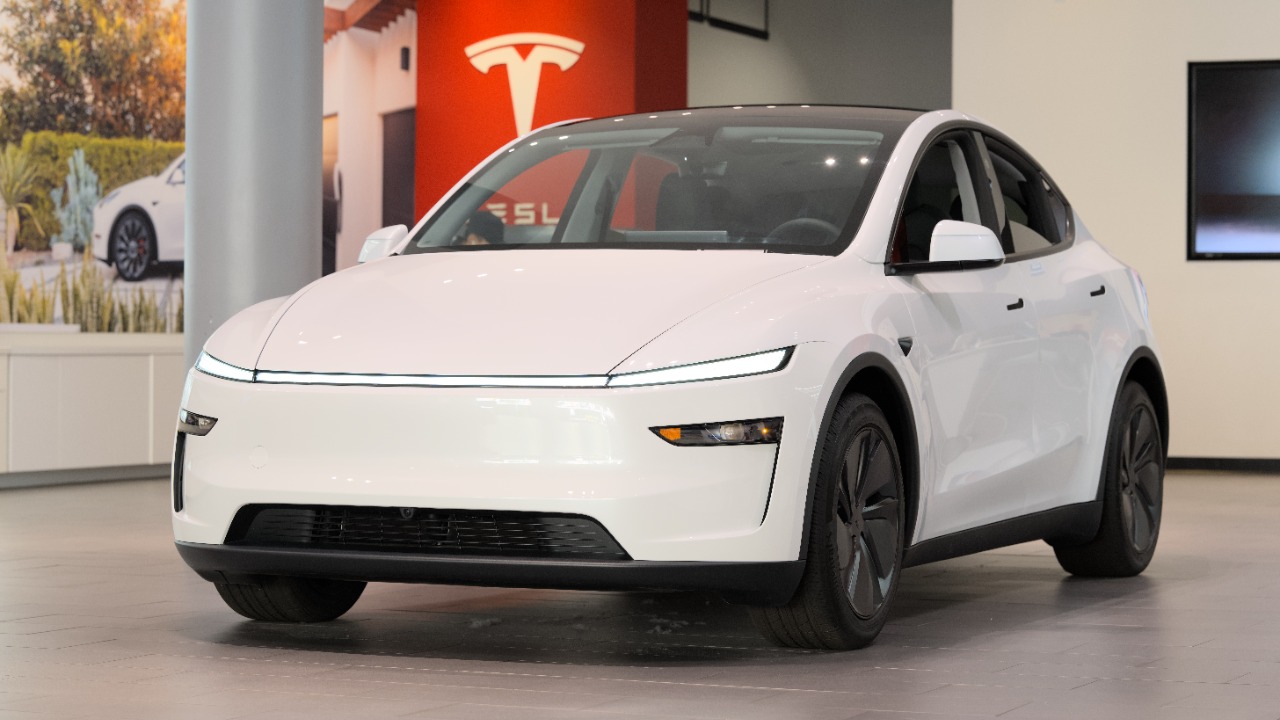

Tesla’s newest reliability problem is not about the latest Model Y rolling off the line, but about what happens to those cars after years of hard use. A major owner survey of long-term dependability now places the brand at the very bottom for used vehicles, even as its newer models climb in short-term rankings. The split between fresh-off-the-lot performance and aging hardware is turning Tesla into a case study in how an automaker can be both a rising star and a laggard at the same time.
That contradiction matters for anyone weighing a used Model 3 against a conventional hybrid or a rival EV. It also raises a harder question for the broader industry: if one of the most valuable car companies in the world struggles to keep its vehicles solid past the warranty window, what does that say about the future of high-tech cars as they age?
How a long-term survey pushed Tesla to the bottom
The latest blow to Tesla’s reputation comes from a long-term owner survey that focuses on vehicles well past their first few years on the road. Instead of predicting how a brand-new car might hold up, this research asks people who live with older vehicles which ones are actually staying out of the shop. In that ranking, Tesla barely edges out Jeep at the very bottom, making it one of the least dependable choices once the odometer climbs and the sheen of novelty wears off, according to a detailed owner survey.
This long-term view is separate from the more familiar predicted reliability scores that shoppers see for new cars. The methodology here leans on real-world histories of repairs and failures, not forecasts, which is why it can diverge sharply from new-car rankings. In that framework, Tesla’s position at or near the bottom is not a theoretical warning but a reflection of how older cars have actually behaved, a point underscored in a broader analysis of how American automakers stack up in long-term reliability.
Why long-term reliability is different from new-car scores
Short-term reliability ratings tend to reward brands that quickly fix early bugs and refine their designs, which is an area where Tesla has made visible progress. Long-term reliability, by contrast, is a stress test of durability, parts quality, and repairability over many years and tens of thousands of miles. A car can score well in its first three years and still age badly if components wear out faster than expected or if software and electronics become chronic weak points.
The organizations behind these assessments are explicit that their long-term rankings are not the same thing as predicted scores for new vehicles. One analysis of American brands notes that this used-vehicle research is “different than CR’s predicted reliability for new cars” and that the two sets of results can diverge, especially when a brand has recently improved its designs but still carries a legacy of older problem-prone models, a gap highlighted in reporting on long-term histories of major engine problems.
Tesla’s used-car problem: at the bottom of the pack
For used-car shoppers, the most practical question is simple: which brands make the best bets once a vehicle has a few years behind it. In that context, Tesla’s position is stark. In a comprehensive ranking of used brands, the company lands at or near the very bottom, trailing not just Japanese and European rivals but also several domestic competitors that have long histories in the mass market, according to a detailed breakdown of which brands make the best used cars.
That same research shows a clear hierarchy in the used market, with some brands consistently delivering solid long-term performance across multiple model years while others rack up patterns of expensive failures. Tesla’s placement alongside the least reliable names signals that its older vehicles are generating more complaints and repairs than most, which aligns with the separate owner survey that found Tesla barely outperforming Jeep at the bottom of the reliability ladder.
Old Teslas “falling apart” as they age
The numbers are backed up by vivid stories from owners and technicians who deal with aging Teslas every day. Reports describe older models suffering from a mix of cosmetic deterioration, failing trim, and more serious mechanical and electronic issues that can be costly to diagnose and fix. One account characterizes “old Teslas” as effectively “falling apart,” capturing the frustration of drivers who expected their high-tech EVs to age as gracefully as premium German sedans but instead face a steady drip of problems that erode confidence.
Those anecdotes are not just about squeaks and rattles. They include concerns about suspension components, door handles, screens, and other hardware that should last far longer than they sometimes do, especially in vehicles that were marketed as cutting-edge and low maintenance. The pattern has been linked to Tesla’s long-standing “reputation for questionable quality control,” a phrase used in a detailed look at how old Teslas are falling apart, which also cites writer Frank Landymore, photographer Alex Martin, and the outlet AFP, and notes the specific figure 45 in its discussion.
At the same time, Tesla is climbing in new-car reliability
The twist is that while older Teslas are dragging the brand to the bottom of long-term rankings, newer models are finally starting to earn respect in short-term reliability studies. After years near the back of the pack, Tesla has broken into a top tier of brands for predicted dependability of current vehicles, reflecting a series of incremental improvements in build quality and design. One recent assessment notes that Tesla is now ranked 9th out of a large field of automakers, a jump that would have been hard to imagine when the company was still battling basic fit-and-finish issues, according to an analysis titled Tesla Breaks Into Consumer Reports Top 10 Reliability, Model Standouts And Why It Improved.
That rise is not a fluke. Another report describes how Tesla’s reliability rankings “skyrocket significantly” in the latest assessment, crediting a “Remarkable Rise” in its “Reliability Rating” to continuous improvements in build quality and a more disciplined approach to engineering changes. The same piece emphasizes that this “Latest Assessment” is based on structured research methods rather than anecdote, reinforcing the idea that Tesla’s current lineup is materially better than the cars it was selling just a few years ago, as detailed in the report on how Tesla Reliability Rankings Skyrocket Significantly in Latest Assessment.
From near-last to the top 10: a rapid turnaround
The scale of Tesla’s turnaround in new-car reliability becomes clearer when you look at where it started. Back in 2022, the brand’s reliability ranked 27th out of 28, a position that reflected chronic issues with electronics, body hardware, and build consistency. In just a few model years, Tesla has climbed from that near-bottom slot into the top 10, a shift that suggests the company has learned from early missteps and focused on refining existing platforms instead of constantly reinventing them, as highlighted in coverage that notes how Back in 2022, Tesla’s reliability ranked 27th out of 28 brands.
That improvement has come despite ongoing complaints about certain systems, particularly complex electronics and infotainment features that remain more failure-prone than the industry average. The brand’s move into the top 10 therefore looks less like a clean bill of health and more like a relative gain in a market where many rivals are also struggling with the complexity of modern vehicles. It is progress, but it does not erase the long-term reliability problems that continue to show up in used-car surveys and owner narratives.
J.D. Power data shows gains, but only in the first three years
Independent of owner surveys focused on older cars, J.D. Power’s long-running dependability study offers another lens on Tesla’s trajectory. That research tracks the number of problems per 100 vehicles after three years of ownership, a metric known as PP100 that gives a standardized way to compare brands. In the latest results, Tesla shows clear progress, with fewer issues reported per 100 vehicles and a narrowing gap with more established automakers, according to a summary of how The J.D. Power study, which measures the number of problems per 100 vehicles (PP100) after three years, has tracked Tesla’s improvement.
Another analysis of the same data underscores that Tesla’s dependability is no longer an outlier in the negative sense. It notes that reliability has become a “major industry topic” and frames Tesla’s gains as an “advantage” in a market where consumers are increasingly sensitive to repair costs and downtime. That report, which appears on a site that also promotes accessories with the phrase “Lust auf Tesla Zubehör,” highlights that Tesla’s progress in the J.D. Power rankings is meaningful, even if it only covers the first three years of ownership and does not fully capture the problems that emerge as vehicles age beyond that window, as described in the discussion of Tesla improves in the 2025 J.D. Power reliability ranking.
Why American brands, including Tesla, struggle with longevity
Tesla’s long-term reliability woes do not exist in a vacuum. Broader research into used vehicles shows that several American automakers perform poorly once cars are out of warranty, with patterns of major engine and drivetrain problems that drag down their scores. In that landscape, Tesla is grouped with other domestic brands that have “terrible long-term reliability,” a phrase used in a pointed analysis of how U.S. manufacturers compare with Japanese and Korean rivals on durability and repair histories, as detailed in the examination of how American automakers have terrible long-term reliability.
Part of the problem is structural. American brands, including Tesla, tend to push rapid innovation, frequent redesigns, and complex feature sets that can introduce new failure points faster than they can be fully validated in the real world. Tesla’s heavy reliance on software, over-the-air updates, and integrated electronics amplifies that risk. When those systems work, they feel futuristic. When they fail out of warranty, they can be expensive and time-consuming to repair, especially in regions where service centers and parts pipelines are still catching up to the company’s sales growth.
What this split means for buyers and the EV transition
The gap between Tesla’s improving new-car reliability and its dismal long-term scores leaves buyers with a nuanced calculation. For someone leasing a new Model Y or planning to trade in a Model 3 after three or four years, the latest data suggests a smoother ownership experience than early adopters endured. For a shopper eyeing a six-year-old Model S with high mileage, the same data flashes a warning that long-term durability and repair costs may be far less predictable than with a similarly aged Toyota hybrid or a conventional compact from a brand that tops used-car rankings.
That tension also matters for the broader electric transition. If one of the most visible EV brands cannot keep its cars solid deep into their life cycles, skeptics will use that as ammunition against battery-powered vehicles in general. At the same time, the fact that Tesla has climbed from 27th out of 28 into the top 10 for new-car reliability, improved its PP100 scores in J.D. Power’s research, and earned praise for a “Remarkable Rise” in its Reliability Rating shows that the technology is not inherently fragile. The challenge now is whether Tesla can extend those gains beyond the first few years and rebuild its reputation in the used market, where long-term surveys still rank it at the very bottom.
More from MorningOverview