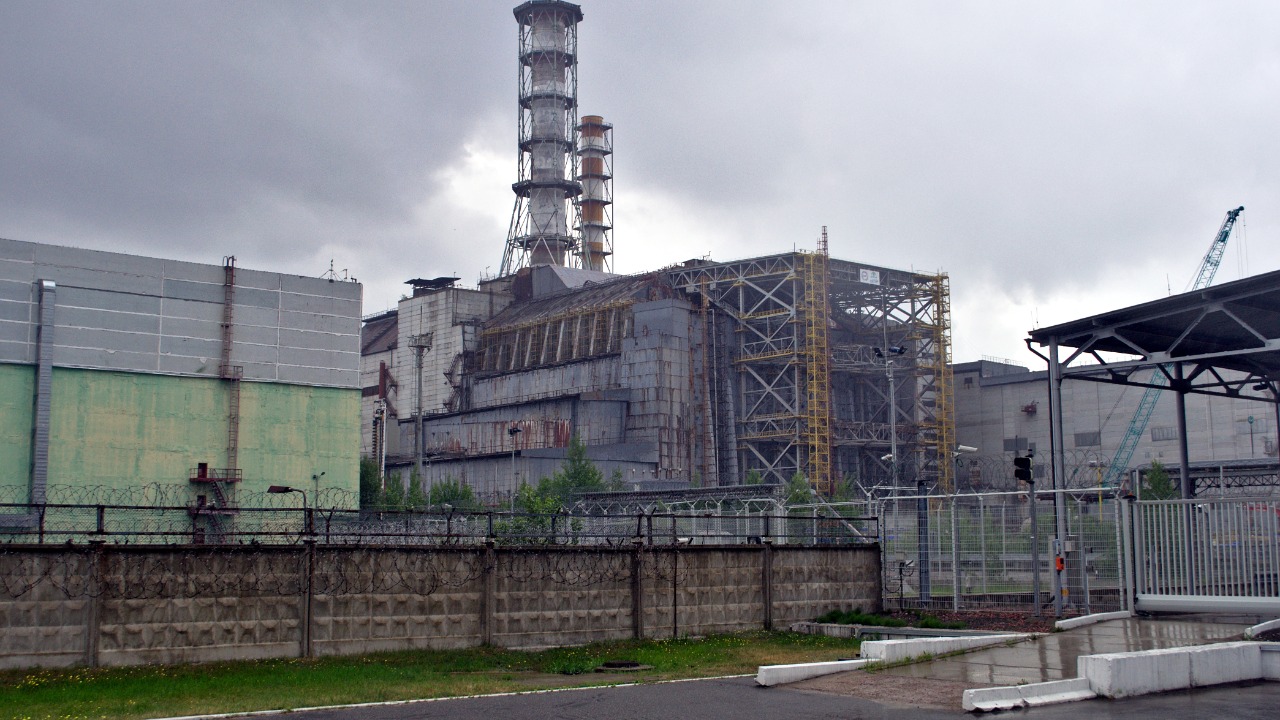

The concrete and steel shell built to contain the ruins of Chornobyl’s reactor 4 was supposed to be the final word in sealing away the world’s worst nuclear disaster. After a Russian drone strike earlier this year, that multibillion-dollar structure has lost its core safety role, turning what was meant to be a permanent solution into a fresh source of risk. The failure is not yet a second catastrophe, but it is a stark reminder that even the most advanced nuclear safeguards can be undone by modern warfare.
Instead of quietly doing its job for a century, the New Safe Confinement now stands as a damaged monument to the collision of aging nuclear infrastructure and high-tech weapons. I see in this breach not only a technical problem for engineers, but a political and moral test for governments that promised Chornobyl would never again threaten the people of Ukraine or the wider region.
The drone strike that pierced Chornobyl’s shield
The turning point came when a Russian drone slammed into the New Safe Confinement, the vast arch that covers the shattered core of reactor 4. According to the International Atomic Energy Agency, the impact tore a roughly 160‑square‑foot opening in the structure, large enough to compromise the integrity of a system that was designed to be airtight and robust against extreme weather. The IAEA’s assessment is blunt: the reactor’s protective shield was so damaged by the drone strike that it is no longer confining radiation in the way it was engineered to do, a conclusion that underscores how a single precision weapon can undo years of painstaking nuclear safety work, as detailed in the agency’s account of the drone damage.
When inspectors from the United Nations nuclear watchdog reached the site, they confirmed that the New Safe Confinement, often shortened to NSC, had lost its primary safety functions. Their mission found that the structure’s confinement capability, the very feature that justified its multibillion‑dollar price tag, was no longer intact after the Russian attack. The same mission reported that the NSC could not prevent a radiation leak in its current state, a finding that has been summarized in detail in the description of how the NSC lost its primary safety functions.
How a multibillion-dollar “tomb” was supposed to work
The New Safe Confinement was never just another industrial shed. It was conceived as a gigantic, high‑tech sarcophagus, a “Multi Billion Dollar Tomb Is No Longer Effective After Drone Attack” in the words of one technical analysis, built to slide over the crumbling Soviet‑era shelter that had been hastily erected after the 1986 explosion. The arch was designed to trap radioactive dust, keep water out of the ruined reactor, and create a controlled environment where robotic systems could eventually dismantle the remains of reactor 4. That vision, which once symbolized the world’s determination to learn from Chornobyl, is now in question, as explained in the detailed breakdown of how Chornobyl’s Multi Billion Dollar Tomb Is No Longer Effective After Drone Attack.
Engineers built the NSC to last at least 100 years, with a complex ventilation and filtration system that would capture radioactive particles before they could escape into the air. The structure was meant to be resilient against earthquakes, storms, and the slow decay of the original sarcophagus beneath it, but it was never designed with modern drone warfare in mind. The fact that a single strike could punch a 160‑square‑foot hole in the shell shows how the assumptions behind the project have been overtaken by the realities of conflict in Ukraine, a vulnerability that the IAEA highlighted when it described the protective shield over Chernobyl in Ukraine as no longer able to provide its main containment function.
What “lost its primary safety functions” really means
When nuclear regulators say a structure has “lost its primary safety functions,” they are not speaking in metaphors. In the case of Chornobyl, the UN nuclear watchdog has confirmed that the NSC can no longer reliably confine radioactive material or fully prevent contaminated dust and air from escaping the reactor ruins. That assessment is not about cosmetic damage, it is about the failure of the core systems that justified building the arch in the first place, a point spelled out in the report that the Chernobyl radiation shield has stopped working after Russian drone strikes.
The watchdog has also made clear that quick fixes will not restore those functions. Temporary patching of the hole and ad hoc repairs to the ventilation system might reduce immediate risks, but they do not bring the NSC back to its original standard of safety. In its warnings, the agency has stressed that the shield must undergo significant and urgent reconstruction to prevent a future incident, a message that is captured in the description of how the radiation shield lost its safety function and why temporary measures are not enough.
Radiation risk: serious, but not another 1986
For people living in Ukraine and neighboring countries, the obvious fear is a repeat of 1986, when the original Chornobyl disaster sent radioactive clouds across Europe. The current situation is not that, and it is important to be precise about the level of danger. The damaged NSC covers a reactor that has long since cooled, and the fuel debris inside is not capable of the kind of runaway reaction that caused the initial explosion. The IAEA has not reported a major spike in radiation levels outside the plant, even as it acknowledges that the shield is no longer performing its main containment role, a nuance reflected in the analysis of the protective shield’s reduced function.
Some nuclear physicists have gone further, arguing that the immediate risk to the public remains low despite the breach. In one widely shared discussion, a contributor identified as Nordalin in a Comments Section on a physics forum responded to alarmed questions by saying, “Yes, it’s safe,” and emphasizing that the metal cover is a contingency rather than the only barrier between the fuel and the outside world. That perspective, which notes that there are journalists walking around the site without acute exposure, offers a counterweight to the most apocalyptic interpretations and is captured in the thread where Nordalin says Yes it is safe.
A GIANT dome that no longer does its main job
Visually, the NSC is hard to miss, a GIANT dome of steel that looms over the flat forests and abandoned buildings of the exclusion zone. It was built to be a symbol of control over the chaos unleashed in 1986, a sign that the world could engineer its way out of even the worst nuclear mistakes. That symbolism has taken a hit now that the structure is no longer performing its main safety function, a failure that has been described in reports that the GIANT Chornobyl dome can no longer contain radiation after the Russian attack.
The damage is not just a hole in the roof, it is a breach in public confidence. For years, officials pointed to the NSC as proof that Chornobyl was finally under control, that the site had been transformed from an active hazard into a managed legacy. Now, with the dome’s main safety role compromised, those assurances ring hollow. The fact that the structure, which towers over the Chornobyl site in Ukraine, can no longer reliably block radiation has been reinforced by video reports that show how the bombed Chornobyl protective dome is no longer blocking radiation after the Russian attack.
The UN Watchdog’s verdict and the limits of patchwork fixes
The UN nuclear watchdog’s verdict on the NSC is unambiguous: the protective shield can no longer contain nuclear material after the drone strike. That conclusion is based on direct inspection of the arch over Chornobyl’s Number 4 reactor and on measurements that show the structure’s systems are not functioning as designed. The watchdog’s assessment, that the shield is no longer able to perform its main safety function, has been summarized in reports that the Chernobyl protective shield can no longer contain nuclear material after the attack.
In its communications, the watchdog has pushed back against any suggestion that quick repairs could restore the NSC to its original condition. It has warned that temporary patching is not enough and that the shield must undergo significant and urgent work to prevent a future incident. That stance reflects a broader lesson from nuclear safety: once a critical barrier is compromised, the standard for repair is not “good enough for now” but “as safe as originally promised.” The insistence on major reconstruction, rather than stopgap measures, is echoed in the detailed warning that the watchdog made clear that temporary patching is not enough.
War, nuclear legacies, and the new front line of infrastructure
The attack on Chornobyl’s NSC is part of a broader pattern in which Russian forces have targeted critical infrastructure across Ukraine, from power plants to dams and rail hubs. What makes this strike different is that it hit a site that was already one of the most contaminated places on Earth, a location that had been treated for decades as a closed chapter in nuclear history. By turning that legacy site into an active front line, the war has exposed how vulnerable even the most carefully managed nuclear ruins can be when they are pulled back into the logic of conflict, a vulnerability that was highlighted when inspectors confirmed that the NSC had lost its primary safety functions after the Russian strike.
Chornobyl was always a global problem, not just a Ukrainian one, and the same is true of the risks created by the drone attack. Radioactive material does not respect borders, and any long‑term degradation of containment at reactor 4 would have implications for countries far beyond Ukraine. The fact that the damaged shield sits in a war zone complicates every aspect of the response, from sending in repair crews to securing funding and political agreement for a new phase of work. The IAEA’s warning that the Chernobyl radiation shield has stopped working after Russian drone strikes is therefore not just a technical note, it is a diplomatic alarm bell.
What must happen next to keep Chornobyl contained
In practical terms, the path forward at Chornobyl has two tracks: emergency stabilization and long‑term reconstruction. In the short term, engineers need to close the 160‑square‑foot hole, shore up any weakened structural elements, and restore as much of the ventilation and filtration system as possible. Those steps are essential to reduce the risk of additional radioactive dust escaping, especially during storms or other events that could stir up contamination inside the arch, a risk that has been underscored in the IAEA’s description of how the reactor’s protective shield was so damaged that it is not confining radiation anymore.
Over the longer term, the international community will have to decide whether to rebuild the NSC to its original specifications, reinforce it against future attacks, or design an entirely new containment strategy. None of those options will be cheap, and all of them will require cooperation between Ukraine, donor governments, and technical agencies that have already spent years and billions of dollars on the current structure. The UN nuclear watchdog has already signaled that significant and urgent work is non‑negotiable, warning that without it, the shield cannot prevent a future incident, a warning that is captured in the analysis of how the confinement capability is gone and must be restored.
More from MorningOverview