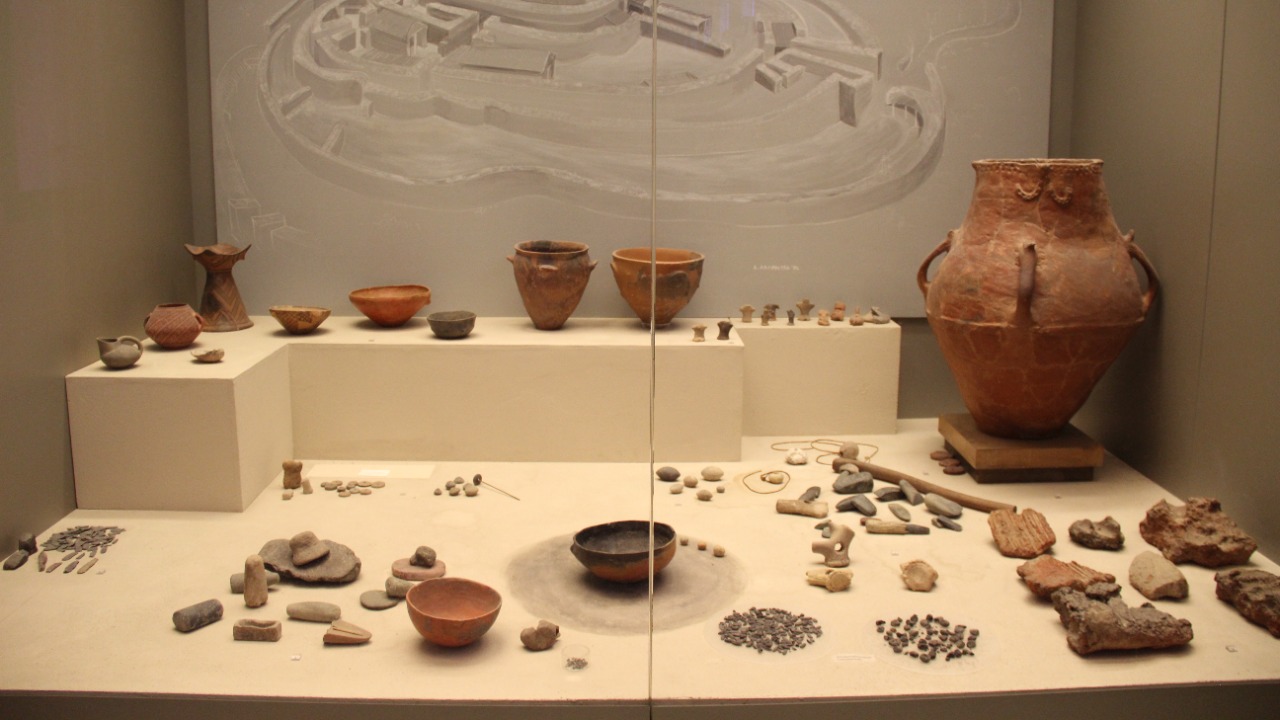

Archaeologists have long trusted the microscopic smears left on ancient pots and bowls to reconstruct what people once cooked, traded, and valued. New research now suggests those ancient dirty dishes may have been telling a partial, and sometimes misleading, story about the rise of olive oil and other prized foods. If the chemistry is off, the history that rests on it can tilt, reshaping how I understand economies from Neolithic villages to classical cities.
The stakes are not just academic. When residue on a shard is misread, entire narratives about trade routes, farming systems, and cultural identity can drift off course, and those errors can echo for decades in textbooks and museum labels. The latest work on ceramic residues forces a hard look at how much confidence we place in a thin film of ancient grime and what it will take to clean up the record.
How a kitchen staple became an archaeological compass
Olive oil has become a kind of compass for archaeologists, a marker used to navigate questions about wealth, diet, and long-distance trade. Because olive trees were cultivated as far back as Neolithic times, traces of this fat in pottery are often treated as proof that a community had access to orchards, presses, and the networks that moved jars of oil across the Mediterranean. When I see a site report that confidently identifies olive oil in a cooking pot, it usually carries an implied story about social status and technological sophistication.
That confidence rests on the idea that the chemical fingerprints of olive oil are distinctive and stable enough to survive centuries in the ground. Researchers have tied the long history of this commodity to residues that appear to show olive cultivation since Neolithic times, turning a modern kitchen staple into a key proxy for ancient economies. When those residues are misidentified, however, the compass swings in the wrong direction, and the map of early agriculture and trade begins to warp.
The “dirty dishes” problem inside the lab
At the heart of the new concern is a deceptively simple problem: ancient ceramics are rarely clean, and neither are the methods used to interpret them. Organic residue analysis depends on extracting fats and other molecules from the pores of pottery, then matching those molecules to reference patterns for things like olive oil, animal tallow, or cereal grains. If the reference patterns are incomplete or the extraction process alters the molecules, the lab can turn a mixed smear of plant and animal products into a single, confident label that does not match what was actually cooked.
An interdisciplinary team at Cornell University has now shown that this kind of organic residue analysis can be far more ambiguous than many site reports admit. Their work on ancient dirty dishes argues that decades of studies leaned on methods that were never fully stress-tested against realistic mixtures of fats and oils. When the team deliberately recreated messy, real-world residues, they found that standard protocols could easily blur the line between olive oil and other plant products, or between plant fats and animal fat, calling earlier identifications into question.
Why olive oil is so easy to overdiagnose
Olive oil is chemically complex, but in practice, its archaeological identification often hinges on a handful of fatty acids and degradation products that are not unique to olives. Many other plant oils, and even some degraded animal fats, can produce overlapping signatures once they have soaked into clay and weathered underground. When I look at how often olive oil is invoked to explain residues in Mediterranean ceramics, it is clear that the commodity’s cultural prominence has sometimes encouraged a kind of interpretive shortcut.
Recent reporting on experimental work with ceramic vessels suggests that this shortcut has been costly. By showing that an interdisciplinary team of researchers could easily generate residue patterns that mimic olive oil using other plant materials, the new studies imply that archaeologists have probably overdiagnosed olives in contexts where multiple fats were present. The result is a skewed picture in which olive oil appears earlier, more widely, and more uniformly than the underlying chemistry can reliably support.
Decades of misread ceramics and what they imply
If olive oil has been overcalled in the lab, then some of the most familiar stories about ancient kitchens and markets need to be revisited. Reports from sites across the Mediterranean and Near East have treated olive-rich residues as evidence that households relied heavily on this single fat, sometimes using that pattern to argue for specialized orchards or export-focused economies. The Cornell work indicates that decades of archaeologists have likely misidentified olive oil in ceramics, which means those economic reconstructions may be resting on shaky ground.
The implications reach beyond diet. When a pot is labeled as an olive oil container, it can be used to argue for trade links between regions, to date the spread of pressing technology, or to infer religious practices tied to oil-based offerings. If many of those labels are wrong, then the timelines for olive-based trade networks and the social meanings attached to oil need to be pushed back into the realm of open questions. In practical terms, that means museum displays, regional syntheses, and even national heritage narratives that lean heavily on olive oil residues may need careful reexamination.
What “Ancient dirty dishes” really contained
The phrase “ancient dirty dishes” captures something that archaeologists sometimes forget in the rush to interpret: most pots were used, reused, and repurposed in ways that leave layered, messy residues. A single cooking vessel might have seen stews of grains, pulses, meat, and vegetables, followed by storage of oil or rendered fat, and finally a secondary life as a container for something entirely different. When I imagine scraping the inside of a modern saucepan after a week of varied meals, it becomes obvious how misleading it would be to assign that residue to a single ingredient.
Experimental reconstructions of these messy scenarios show just how easily mixed-use pots can fool the lab. In work highlighted by Cornell, researchers found that organic residue analysis often collapses complex mixtures into simplified profiles that resemble a single dominant fat. That tendency makes it tempting to read a pot as an “olive oil jar” or a “meat stew pot” when in reality it may have been a flexible, all-purpose tool in a household that relied on a wide spectrum of plant and animal resources.
Lessons from how residues decay over time
Part of the problem lies in how residues change as they decompose, a process that can scramble the original chemical signals. Studies of crop residues in soil show that the chemical structure of plant material shifts significantly during breakdown, which in turn affects how easily the remaining fragments can be decomposed further. When I think about fats and oils trapped in ceramic pores for centuries, it is clear that similar transformations are likely to blur the lines between once-distinct substances.
One recent leaching experiment on agricultural byproducts found that the chemical structure of different crop residues changes during decomposition, which then alters the decomposability of what remains. That insight matters for archaeology because it undercuts the assumption that a residue’s present-day chemistry is a straightforward reflection of its original composition. If plant residues can converge chemically as they decay, then the overlap between olive oil, other plant oils, and even degraded animal fat inside ancient ceramics becomes much harder to untangle.
How new experiments are rewriting the olive oil story
To move beyond speculation, researchers have started to treat ancient residue analysis more like a controlled experiment than a one-off test. By cooking known recipes in replica pots, burying them, and then applying standard extraction protocols, they can see exactly how much information survives and how often the lab mislabels what went in. These “test kitchens” for archaeology are revealing that the margin of error is larger than many earlier studies acknowledged, especially when multiple fats are present.
Reporting on this work describes how only researchers at Cornell University were able to reliably distinguish certain plant oils from animal fat under realistic conditions, and even then, the distinctions were not always clean. Those findings suggest that the olive oil story, from its supposed early dominance to its role as a marker of cultural identity, needs to be retold with more humility. Instead of treating every ambiguous residue as evidence of olives, archaeologists may have to accept a broader category of “plant-based fats” and build their historical arguments on a more cautious foundation.
Rethinking how I read the archaeological record
For someone who relies on archaeological reports to understand the deep past, the “dirty dishes” problem is a reminder to treat residue-based claims as hypotheses rather than hard facts. When a study asserts that a particular community was already using olive oil in abundance, I now look for details about how the residues were identified, whether alternative plant oils were considered, and how the team accounted for decomposition. The new research makes it clear that without that methodological transparency, the leap from chemistry to culture can be far too long.
It also pushes me to pay closer attention to how archaeologists describe uncertainty. The Cornell team’s insistence that analysts should “do some method development first” before drawing sweeping conclusions from residues is not just a technical point, it is a call for intellectual restraint. As more work on ancient dirty dishes accumulates, the most responsible narratives will be the ones that foreground ambiguity, acknowledge overlapping chemical signatures, and resist the temptation to turn every smudge of fat into a definitive story about olive groves and trade routes.
Why this matters beyond the Mediterranean
The lessons from misread olive oil residues reach far beyond the Mediterranean world. Any archaeological context that relies on organic residues to reconstruct diet or economy is vulnerable to similar pitfalls, whether the focus is on dairy in Central Asian steppe pottery or maize-based stews in pre-Columbian North America. If decomposition can blur the chemical lines between different plant and animal products, then the risk of overconfident identifications is a global one.
That is why the emerging critique of residue analysis is so important for the field as a whole. By showing that ancient dirty dishes may have led archaeologists astray for decades, the new work is not just correcting the record on olive oil, it is setting a higher bar for how chemical evidence is used to tell human stories. The next generation of residue studies will need to combine more rigorous experiments, better reference libraries, and a greater willingness to say “we do not know” when the chemistry is ambiguous. Only then will the traces left on ancient dishes support histories that are as robust as the methods used to read them.
More from MorningOverview