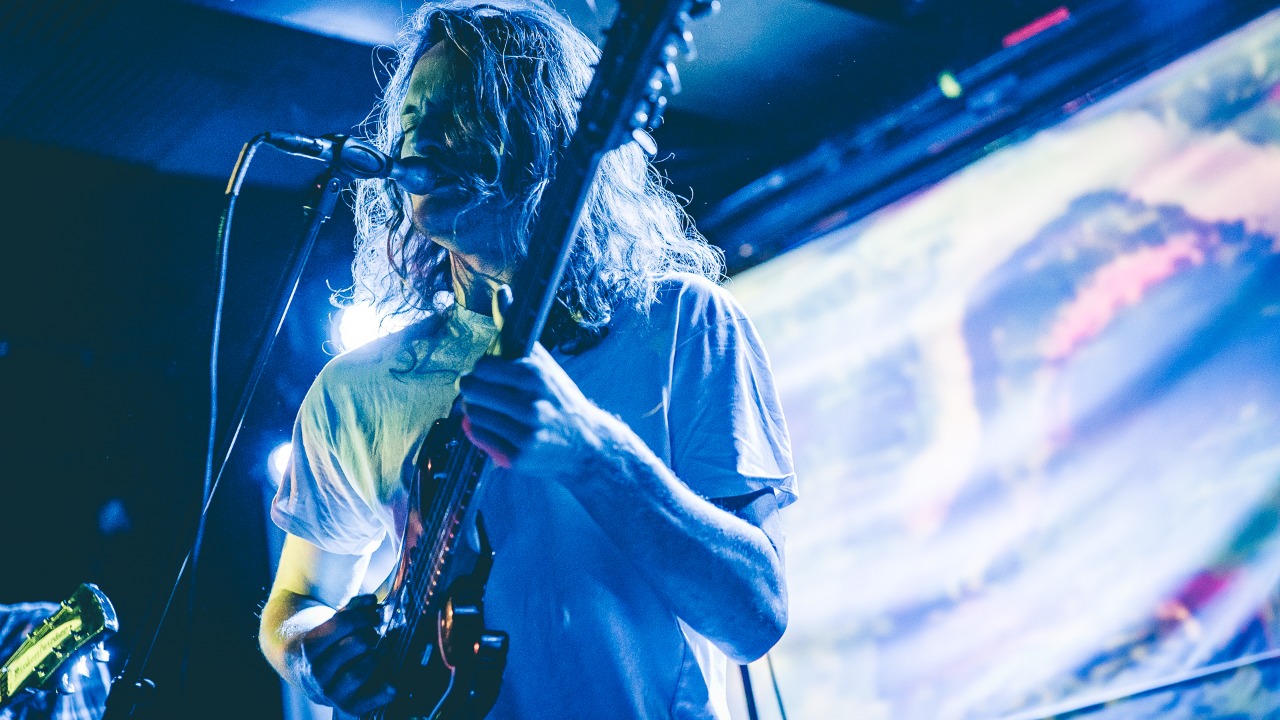

King Gizzard & The Lizard Wizard walked away from Spotify over the summer, turning a moral stand against tech money in warfare into one of the most closely watched artist boycotts of the streaming era. Within months, their absence was quietly filled by AI generated soundalikes that slipped onto the platform and started harvesting plays from fans who thought they were listening to the real thing. The clash between a human band’s protest and a machine made imitation has become a test case for how streaming services handle artificial intelligence, artist consent, and the basic question of who gets paid when a copycat shows up.
Why King Gizzard bailed on Spotify in the first place
King Gizzard did not leave Spotify on a whim or as a publicity stunt, they framed the move as a direct response to where the company’s leadership was putting its money. The band pulled its catalog after Spotify CEO Daniel Ek’s investment in a defense tech company that works with AI driven weapons, a link they saw as incompatible with their values and their fan community’s expectations. By yanking their music from the service, they turned a corporate funding decision into a cultural flashpoint and signaled that streaming deals are no longer just about royalty rates but also about what kind of technology musicians are willing to be associated with.
Reporting on the boycott makes clear that the group’s protest was aimed squarely at Daniel Ek’s role as both Spotify chief executive and an investor in a military focused AI firm, with coverage describing how King Gizzard & The Lizard Wizard chose to pull their catalog from Spotify over that investment in a defense tech company. Other accounts underline that King Gizzard’s decision to leave Spotify in Jul was a direct response to the Spotify CEO’s choice to back an AI weapon venture, with one report noting that the band’s music was removed after Daniel Ek’s decision to invest in an AI weapon was made public and that the group’s stance was framed as a clear protest against that AI weapon investment.
The vacuum on Spotify and how AI rushed to fill it
Once King Gizzard’s songs disappeared, the band’s absence on Spotify created a rare kind of vacuum on a major streaming platform, a popular artist page with name recognition but no official music. That gap turned out to be an invitation for opportunists who saw an opening to generate soundalike tracks with generative AI tools and upload them in the band’s place. Instead of a quiet protest, the boycott inadvertently set the stage for a new kind of exploitation, where the lack of legitimate content made it easier for fakes to stand out and capture confused listeners.
Coverage of the fallout describes how Aussie prog rockers King Gizzard & the Lizard Wizard pulled their music from Spotify in Jul, then, as the months passed, copycats began using generative AI to create tracks that mimicked the band’s style and slipped them onto the group’s now abandoned official profile, effectively turning the protest into a magnet for AI rip offs on Spotify. Separate reporting notes that King Gizzard & The Lizard Wizard are among the artists boycotting Spotify, yet that did not stop AI generated covers and clone tracks from appearing on the service under their name, illustrating how the band’s protest left a void that was quickly filled by AI clone uploads.
Inside the AI clone that slipped past Spotify’s defenses
The most striking part of the story is how long the AI clone of King Gizzard managed to operate in plain sight. According to detailed accounts, an imposter artist profile appeared on Spotify that used AI generated music designed to sound like King Gizzard & The Lizard Wizard, complete with track titles and artwork that evoked the band’s aesthetic. The fake act reportedly stayed live for weeks, gathering streams and recommendations while the real band’s catalog remained absent, which suggests that Spotify’s systems were not tuned to catch this kind of impersonation even as the company publicly talked up its efforts to manage AI content.
One investigation describes how an AI copycat of King Gizzard & The Lizard Wizard went unnoticed on Spotify for weeks, with screenshots captured before the profile was taken down and only the band’s origin page left behind as evidence that the AI copycat had been streaming. Another report notes that every song uploaded by the imposter was eventually removed after the story drew attention to the issue, and that Spotify said it would not pay out for any streams generated by the knockoff, a response that underscores how the platform had to react after the AI knockoff was exposed.
How fans discovered the fake and why it hit a nerve
The AI clone did not get shut down because of a sophisticated internal filter, it was fans who first noticed that something was off. Listeners who knew King Gizzard’s catalog well started spotting tracks that sounded like uncanny imitations, with familiar riffs and structures but none of the band’s usual personality or context. That grassroots detection, driven by people who could tell the difference between a real King Gizzard deep cut and a machine stitched pastiche, turned into online chatter and eventually into formal complaints that forced Spotify to respond.
Accounts of the saga describe how a Reddit user flagged the suspicious tracks after realizing that the music on the band’s profile did not match any known releases, and that the songs appeared to be AI generated clones of King Gizzard & The Lizard Wizard’s style, which then prompted closer scrutiny of the AI clone tracks. Further reporting notes that Unsurprisingly, the unsavory attempt at cashing in on a band that had pointedly departed Spotify did not sit well with many fans, and that the backlash intensified once it became clear that every song uploaded by the imposter was designed to mimic King Gizzard’s sound and had been live on Spotify without the band’s consent.
Spotify’s AI problem is bigger than one band
King Gizzard’s boycott and the AI clone that followed are not just a quirky footnote in streaming history, they expose a structural problem in how platforms handle artificial intelligence. Spotify has been eager to experiment with AI driven features and to position itself as a tech forward service, but the King Gizzard episode shows how that enthusiasm collides with the messy reality of policing AI generated content. When a band leaves on ethical grounds and is then replaced by a machine made imitation, it raises questions about whether the platform’s incentives are aligned with artists’ rights or with maximizing the volume of content, regardless of who made it.
Reports on the incident point out that despite making some moves to manage AI on the platform, Spotify still allowed an AI copycat of King Gizzard & The Lizard Wizard to operate for weeks, which suggests that the company’s current safeguards are not catching sophisticated AI impersonation attempts. Other coverage notes that Spotify ultimately removed every song uploaded by the imposter and said it would not pay out for any streams generated, a move that may protect the company from directly funding the clone but does little to address the deeper issue of how easily AI generated knockoffs can appear on Spotify in the first place.
What this means for artist rights and AI generated music
For artists, the King Gizzard case crystallizes a fear that has been building since generative AI tools became widely available: that a band can walk away from a platform on principle and still find its sound repackaged and monetized without permission. The legal frameworks around AI generated music are still unsettled, and streaming services have largely treated these uploads as just another category of user generated content, but the optics of a protest band being replaced by a clone make it harder to argue that this is a neutral technological evolution. Instead, it looks like a new form of exploitation, where the risk and labor of building a distinctive sound belong to humans while the upside of cheap imitation flows to anonymous uploaders and the platforms that host them.
Detailed reporting on the King Gizzard clone notes that the AI generated tracks were designed to have a notably similar composition to the band’s real songs, and that the imposter’s uploads were structured to cash in on the group’s name recognition after King Gizzard pulled their music from Spotify in protest of Daniel Ek’s AI weapon investment, a sequence that highlights how quickly a moral stand can be undercut by AI copycat tactics. Another account explains that King Gizzard & The Lizard Wizard are among the artists boycotting Spotify, yet AI generated covers and clone tracks still began streaming under their name, underscoring how current rules around rights in any one market are not yet equipped to stop AI clones from exploiting boycotts.
How King Gizzard is steering fans toward alternatives
While the AI clone drama played out on Spotify, King Gizzard has been busy building up its presence on platforms it can control more directly. The band has leaned into Bandcamp and other direct to fan channels where it can set terms, curate releases, and avoid the ethical compromises that pushed it away from Spotify in the first place. That shift is not just about revenue splits, it is about trust, giving fans a place where they know the music is real, the money is going to the band, and AI knockoffs are not quietly siphoning off attention.
King Gizzard’s official catalog and new releases are now anchored on their own Bandcamp page, which has become a central hub for fans who followed the group off Spotify after the boycott. By contrast, anyone searching for King Gizzard on the main Spotify platform is confronted with a fragmented landscape shaped by the band’s absence, the recent AI clone scandal, and whatever unofficial content remains, a split that illustrates how artist led distribution choices can collide with the realities of a streaming ecosystem that still struggles to distinguish between authentic music and algorithmic imitation.
More from MorningOverview