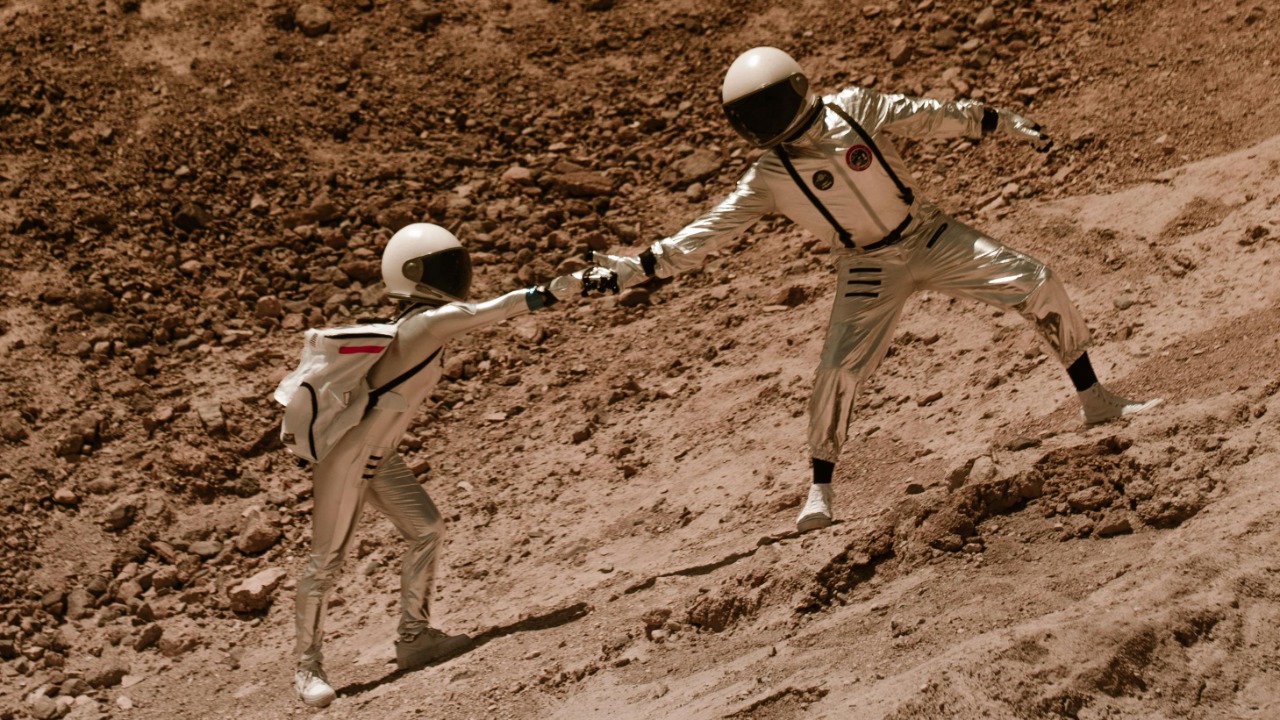

Human bodies are exquisitely tuned to one world, and it is not a forgiving one. Strip away our technology and even Earth would kill us in minutes in the wrong place, yet our home planet is still the only spot in the Solar System where skin, lungs and blood can operate in the open air. Everywhere else, gravity, pressure, radiation and chemistry would pull a human apart in very different ways.
Thinking through what would happen to you on each planet is not just a morbid thought experiment. It is a way to understand how fragile our biology is, how extreme our neighboring worlds really are, and why any future explorers will rely on engineering as much as courage if they ever step beyond Earth’s protective bubble.
Earth: the baseline your body is built for
On Earth, your body is constantly balancing against a narrow band of temperature, pressure and chemistry that just happens to match what our planet provides. The air you breathe is a carefully mixed cocktail, with about 78% nitrogen and 21% oxygen, plus trace gases that help regulate climate and biology. Your lungs, blood and even the hemoglobin inside your red cells are tuned to that oxygen level and to the roughly one bar of pressure that keeps gases dissolved in your bloodstream instead of bubbling out.
What keeps that life friendly mix in place is the layer of gases that surrounds our planet, the atmosphere that clings to Earth because of gravity. That blanket filters ultraviolet radiation, slows down space rocks before they hit the ground and smooths out temperature swings between day and night. I treat Earth as the control case in this tour, because every other planet strips away one or more of those protections, and your body fails in a different way each time.
Mercury: instant sunburn, slow-burn death
On Mercury, your first problem is not heat, it is exposure. With almost no atmosphere, the sunlight at the surface is unfiltered, so ultraviolet and X-rays slam directly into unprotected skin and eyes. In full daylight, you would feel the heat of the Sun searing one side of your body while the other side radiated warmth into space, a brutal temperature contrast that would leave you badly burned and hypothermic at the same time if you somehow avoided a spacesuit failure.
Without air to breathe, you would lose consciousness in seconds as oxygen levels in your blood crashed. The low gravity would feel gentle on your joints, but it would not save you from the vacuum, which would make saliva boil on your tongue and cause gases in your blood to expand. Compared with some of the horrors elsewhere in the Solar System, Mercury is almost simple: you asphyxiate and suffer radiation damage, rather than being crushed, dissolved or vaporized.
Venus: crushed, cooked and dissolved
Venus looks like Earth’s twin from a distance, but your body would not last long enough on the surface to appreciate the view. The second planet from the Sun is wrapped in a dense atmosphere of carbon dioxide with clouds of sulfuric acid, and the pressure at the ground is high enough to flatten you like a deep ocean trench. Engineers testing hardware for future probes describe how Temperatures reach 860 degrees, the air pressure is enough to crush you, the clouds are made of sulfuric acid and the atmosphere is so thick that moving through it feels like you are moving in gelatin.
In that environment, a human would be overwhelmed almost instantly. One discussion of survival times on Venus notes that it is probably a millisecond before the combination of heat, pressure and corrosive chemistry destroys any exposed material, a point driven home by comparisons to how Russia built a probe to withstand what the planet throws at it and still saw it fail quickly. Even a robust spacecraft hull would soften and electronics would die in minutes, so an unprotected body would be crushed, cooked and chemically burned before you could even register the pain.
Mars: slow suffocation and long-term decay
Mars is often sold as the most plausible second home for humans, but your body would still be in trouble the moment you stepped outside a pressurized habitat. The planet does not have much of an atmosphere, magnetic field or ozone layer, three things that make life a lot more comfortable on Earth, so any exposed skin would be bombarded by radiation and extreme cold while your lungs found almost nothing to breathe. Analyses of how people might live there stress that Mars does not offer the natural shielding we take for granted, so even future settlers would treat a restrictive spacesuit as “outdoors.”
The air itself is another problem. The mix we breathe on Earth is perfect for humans, but Mars air is very different, with so much carbon dioxide and so little oxygen that you would black out in seconds and die of hypoxia soon after. The air pressure is so low that liquid water cannot stay stable on the surface, and reports on whether humans can live there emphasize that Earth air contains about 78% nitrogen and 21% oxygen, while Mars offers almost none of that support. If you died on the planet, your body would not rot the way it does here; instead, forensic analyses explain that On Mars a corpse would go through initial post-mortem changes like algor mortis and livor mortis, then dry out and mummify in the cold, thin, oxidizing environment rather than being quickly broken down by microbes.
Jupiter: falling into a crushing sky
Jupiter is a gas giant, so there is no solid ground waiting for you at the bottom, only denser and denser layers of atmosphere that eventually blend into a superheated, high-pressure interior. If you were dropped from some height outside the visible clouds, you would accelerate under the pull of the planet’s immense gravity, feeling weight grow on your body as you plunged into thicker air. One detailed explanation of this scenario starts with the idea that But let’s say you just get dropped from some height way outside of Jupiter’s visible atmosphere, and then follows what happens next.
Once you reached the upper atmosphere, the friction of the air would heat you like a spacecraft on reentry, while the pressure climbed far beyond what human tissues can tolerate. You would be crushed long before you ever approached the deep layers where temperatures soar and hydrogen behaves more like a metal than a gas. There is no meaningful way to “land” on Jupiter, only a descent into a sky that becomes an ocean of gas, then a supercritical fluid, then a realm of physics your body was never meant to encounter.
Saturn and the ice giants: beautiful, lethal atmospheres
Saturn, Uranus and Neptune are often grouped together in glossy space posters, but your body would meet a similar fate on all three. On Saturn, the pastel bands and famous rings hide a deep atmosphere of hydrogen and helium that thickens with depth, so any human dropped into it would be vaporized, crushed or asphyxiated long before reaching any hypothetical core. Analyses of survival times across the Solar System point out that fantasies of skating on Saturn‘s rings are best kept to dreamland, because in reality each of the planets would kill you in its own way.
Farther out, Neptune is the eighth planet in our Solar System, and it is another ice giant, like Uranus. As an ice giant, 80% of its interior is thought to be a slushy mix of water, ammonia and methane around a rocky core, wrapped in a deep atmosphere that would crush a human body long before you reached the interesting chemistry. Reports on what would happen to you there stress that Neptune is not a place you could ever stand, only a place where you would be crushed by the pressure. Uranus offers a similar fate, with the added insult of frigid temperatures and a tilted magnetic field that would bathe you in radiation as you fell.
Venus and Earth compared: why one twin kills and the other protects
Comparing Venus with Earth highlights how small shifts in planetary conditions translate into catastrophic differences for the human body. Both worlds are similar in size and mass, yet one supports oceans and breathable air while the other cooks anything that touches its surface. The second planet closest to the Sun has an atmosphere so thick and hot that it would melt much of your ship, either, a point underscored in analyses that describe how What keeps Earth safe is missing there.
On Earth, the atmosphere stays in place due to gravity and the right balance of greenhouse gases, which trap enough heat to keep water liquid without turning the planet into a furnace. On Venus, a runaway greenhouse effect has turned that same protective mechanism into a weapon, driving surface conditions to extremes that destroy metal, let alone flesh. When I look at the two side by side, it is a reminder that the line between habitable and hostile is razor thin, and that our bodies are passengers on a planet whose climate we cannot afford to push in the wrong direction.
Beyond the planets: what this thought experiment says about us
Walking through each world in the Solar System, a pattern emerges. Your body fails first where the environment diverges most from Earth: in pressure, in temperature, in atmospheric makeup and in radiation. On Mercury and the Moon, vacuum and radiation win. On Venus, pressure and heat dominate. On Mars, thin air and cold slowly erode you, while on the giants, gravity and crushing atmospheres end the story before it really begins.
That is why I keep coming back to the quiet miracle of our own world. We pivot much further out in the Solar System and find gas giants with temperatures that climb to thousands of degrees Fahrenheit near the core, yet here a thin blue shell of air and a modest magnetic field keep us alive. Analyses of planetary interiors note that when we pivot much further out, we encounter realms where temperatures reach thousands of degrees Fahrenheit near the core, a stark contrast to the narrow comfort zone around Dec on our own planet. Thinking about what would happen to your body elsewhere is ultimately a way of seeing how astonishingly well matched we are to this one small patch of space, and how much technology it will take to carry that fragile equilibrium with us if we ever decide to leave.
More from MorningOverview