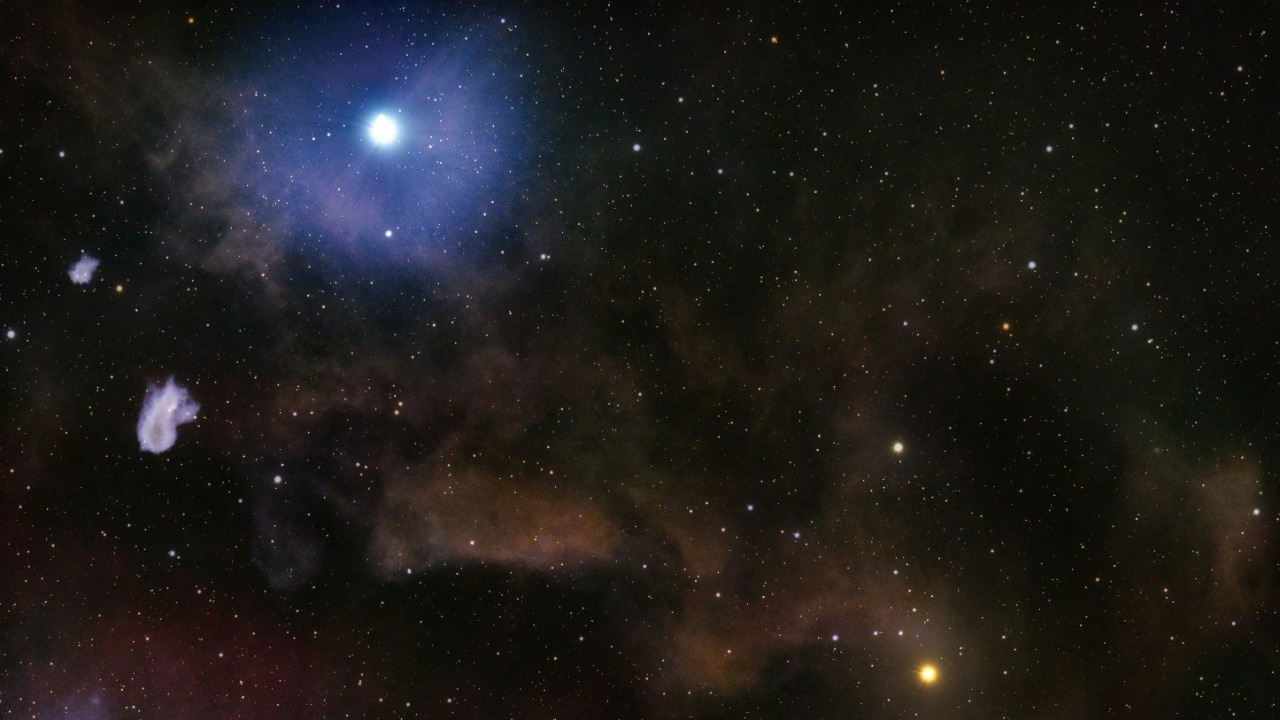

Every breath of air, every strand of DNA and every cell in my body carries a chemical story that began long before Earth existed, in the violent death of ancient stars. The key elements that make life possible were forged in stellar furnaces, then scattered across space when those stars collapsed and exploded, eventually seeding the cloud of gas and dust that became our Solar System.
Tracing that journey, from the first pristine stars to the specific atoms that power my muscles and thoughts, reveals how intimately human biology is tied to cosmic catastrophe. The path runs through the birth and death of massive suns, the creation of heavier elements in extreme environments and the quiet work of chemistry that turned stardust into living cells.
From cosmic hydrogen to the chemistry of life
At the beginning, the universe was almost chemically simple, dominated by hydrogen and helium with only traces of anything heavier. The complex mix of carbon, nitrogen, oxygen, iron and other elements that now fill my bloodstream had to be manufactured later, inside stars that acted as nuclear factories. Those heavier atoms were not present in the early cosmos, they were built step by step as stars fused lighter nuclei into more complex ones and then expelled them into space.
When I say I am made of stardust, I am describing a literal chain of events in which earlier generations of stars created the raw materials for life and then ejected them into the interstellar medium that later condensed into planets and people, a process that detailed work on stardust origins traces from stellar cores to human cells.
The first stars and their missing ingredients
The earliest stars were very different from the Sun that lights my days, because they formed from gas that contained almost nothing but hydrogen and helium. According to current models, They would have contained none of the heavier elements like carbon, nitrogen, oxygen and iron that are found in stars and planets today, which means they could not have hosted rocky worlds or familiar biochemistry. These first giants lived fast, burned hot and died young, but in doing so they began to change the chemical makeup of the universe.
As those primordial stars aged, the nuclear reactions in their cores started to assemble heavier nuclei from lighter ones, enriching their interiors with the very elements that were absent at their birth. When they reached the end of their lives and exploded, they expelled that new material into surrounding space, so later generations of stars formed from gas that already contained the seeds of carbon based chemistry and the metals needed for planetary surfaces and magnetic fields.
How massive stars die and spread the elements
The most dramatic enrichment of the cosmos happens in the final stages of a massive star’s life, when its core runs out of fuel and gravity takes over. In the case of a star at least ten times more massive than the Sun, the internal balance between outward pressure and inward pull collapses, and the star’s death becomes a powerful engine for element creation. As the core contracts and heats, new layers of fusion ignite, building heavier and heavier nuclei until the structure can no longer support itself.
In that moment, the Death of a massive star, specifically When a star ten times more massive than the Sun exhausts its core fuel, triggers a catastrophic collapse and rebound that blasts its outer layers into space, flinging out many of the elements that make life possible.
Gentler stellar endings and recycled matter
Not every star ends in a titanic explosion, but even quieter deaths help recycle material that will one day be part of living organisms. For stars closer in mass to the Sun, the final act involves a gradual shedding of outer layers as the core changes composition and the balance of forces shifts. As the helium fuel in the core is depleted, the internal structure responds in ways that reshape both the star and its surroundings.
When the helium fuel runs out, the core will expand and cool, and the upper layers will expand and eject material that will collect around the dying star as a shell of gas and dust, a process described in detail in explanations of When the late stages of stellar evolution transform a red giant into a white dwarf surrounded by a planetary nebula.
Three ways a star can die
The fate of any star, and the way it contributes to the cosmic stockpile of elements, depends primarily on its mass. Educational work on stellar evolution breaks the endgame into three broad outcomes that hinge on how much material the star started with and how its core behaves as fusion winds down. Each path has different consequences for how and where newly forged atoms are released into space.
What happens at the end of the life cycle of a star is often taught through a framework that highlights three main endings, as a lesson in the What Socratica Astronomy playlist explains, showing that a star can fade into a white dwarf, collapse into a neutron star or disappear into a black hole depending on the mass of the original star.
Extreme environments and the heaviest elements
Some of the most crucial ingredients for planets and people are not made in the steady burn of a star’s main life, but in the brief, violent moments when that life ends. When a massive star collapses and explodes as a supernova, temperatures and pressures spike to levels that allow new nuclear pathways to open, assembling elements that normal stellar fusion cannot easily produce. These events do not just scatter existing material, they actively reshape the periodic table in their surroundings.
Recent observations of supernova remnants show that Nuclear reactions also take place during explosive events like supernovae, which occur when stars run out of fuel, collapse and then explode, creating and dispersing a bounty of silicon, sulfur, iron and other elements within Cas A and similar remnants.
Building carbon and the six core elements of life
Among the many atoms forged in stars, a small group plays an outsized role in biology on Earth, forming the backbone of proteins, DNA, cell membranes and energy molecules. Carbon is central to that story, because its ability to form long chains and complex structures underpins organic chemistry, yet its creation in stars requires a delicate sequence of reactions. Early theoretical models struggled to explain how enough carbon could form in stellar cores to match what we see in the universe today.
Work on stellar nucleosynthesis showed that existing models did not include a source of carbon, and this is where Hoyle filled in a gap by proposing a specific resonance in carbon nuclei that would allow three helium atoms to combine efficiently, helping to explain how the atoms of carbon, along with five other key elements, came together to form life on Earth.
Phosphorus, ATP and the energy of stardust
Some elements forged in stars are not abundant in the human body, but they are absolutely essential to its function, acting as switches, scaffolds or energy carriers. Phosphorus is one of those quiet linchpins, present in every cell membrane and in the molecules that store and transfer energy. Without it, the biochemical machinery that keeps my heart beating and my neurons firing would grind to a halt.
In particular, Phosphorus is a key component of ATP, and ATP is the molecule that acts as life’s molecular battery, capturing energy from food and releasing it in controlled bursts to power muscle contraction, nerve impulses and the countless chemical reactions that sustain living cells.
Creation of heavier elements and the star within us
The story of how my body came to contain carbon, iron and other heavy elements is ultimately a story about the end of stars and the environments those endings create. Ordinary stellar fusion can build elements up to a certain point, but going beyond that threshold requires conditions that only appear when a star is dying or when compact objects collide. Those brief episodes of extreme temperature and density open new channels for nuclei to capture particles and climb the periodic table.
Creation of heavier elements requires more extreme environments, usually triggered by the end of a star’s life, and After those events, the resulting debris clouds carry newly minted atoms such as carbon and iron into space, as described in work on the Creation of heavy elements and the way they eventually become part of planets and living organisms.
Why tracing stellar deaths changes how I see life
Following the trail of life’s elements back to the death of ancient stars reshapes how I think about biology, because it links everyday processes like breathing and eating to events on a galactic scale. The oxygen I inhale was once locked in the core of a star that ended in a supernova, the iron in my blood crystallized in a collapsing core and the calcium in my bones condensed from gas clouds enriched by earlier stellar generations. Each of those atoms traveled across interstellar space, joined a forming planetary system and cycled through rocks, oceans and ecosystems before becoming part of me.
Understanding that journey does not diminish the intimacy of life, it deepens it, because it shows that my existence depends on a chain of physical processes that connect the smallest cells to the largest structures in the universe. The key life elements traced to the death of an ancient star are not abstract curiosities, they are the literal substance of my body, and recognizing their origin turns every heartbeat into a quiet echo of long vanished suns.
More from MorningOverview