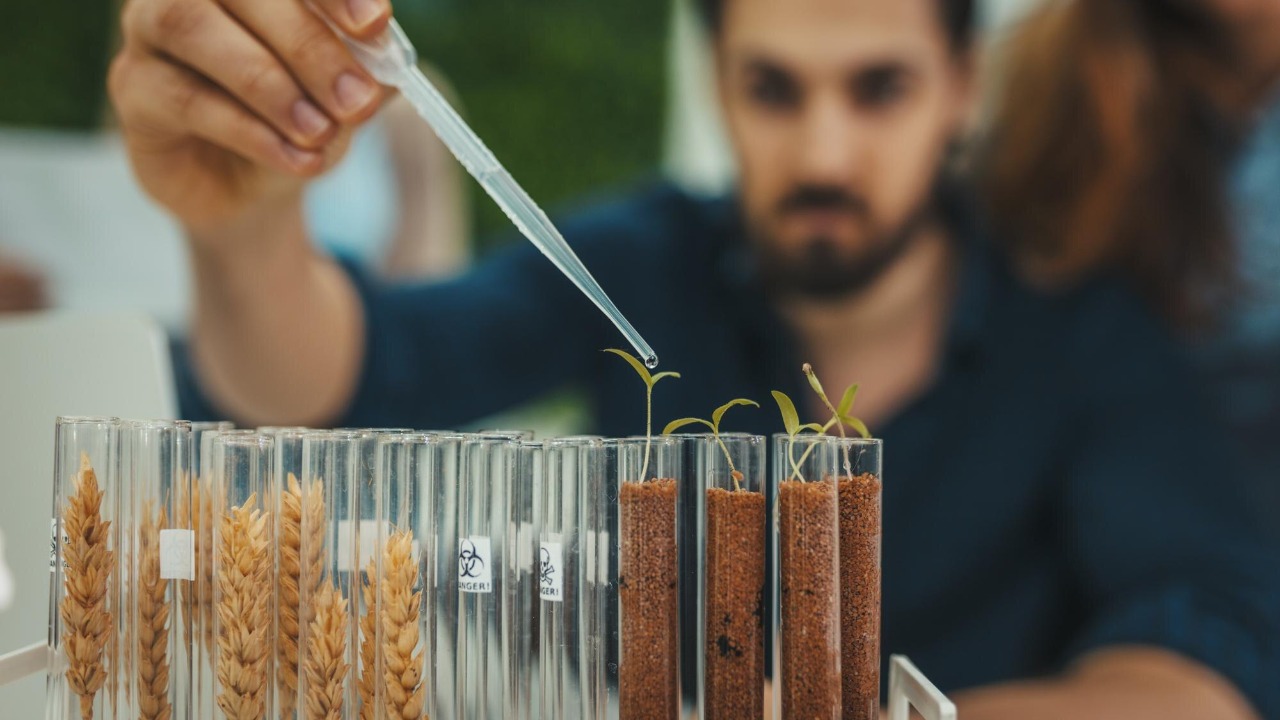

Human urine is emerging as an unlikely climate solution, and a Swiss startup is betting that what we flush away could help feed crops and cut pollution at the same time. By turning this nutrient-rich waste stream into a certified fertilizer, the company is trying to close a loop that modern sanitation systems have kept stubbornly open.
Instead of diluting urine in vast volumes of drinking water and sending it to energy-hungry treatment plants, the Swiss team is concentrating its nutrients into a product farmers can spread on fields. The result is a circular model that treats pee as a resource, not a problem, and challenges long-held assumptions about what belongs in our sewers and on our soils.
Why urine is too valuable to waste
At the heart of this story is a simple chemical reality: urine carries most of the nutrients our bodies excrete, particularly nitrogen and phosphorus, which are the same ingredients farmers buy in synthetic fertilizers. When those nutrients are flushed away, utilities must remove them to protect rivers and lakes, while agriculture imports them again in industrial form, creating a costly and polluting loop. Urine is therefore both a burden on wastewater plants and a missed opportunity for crop nutrition.
Evidence from field projects shows why that opportunity matters. Reporting on farmers in Vermont notes that urine’s power as a fertiliser comes from its nitrogen and phosphorus content, the very nutrients that drive yields but also come at an environmental cost when mined or manufactured. By intercepting those elements before they are diluted in sewage, a circular system can reduce the load on treatment plants and cut demand for conventional fertilizers that are tied to fossil fuels and finite phosphate rock.
The Swiss pioneers behind the pee-to-fertilizer push
Switzerland has become a quiet hub for this unconventional form of nutrient recycling, with a cluster of engineers and entrepreneurs turning lab research into commercial products. One of the central players is a startup that grew out of academic work on decentralized sanitation and now operates under the brand VunaNexus, which focuses on capturing nutrients from urine and turning them into market-ready fertilizers. The company’s roots lie in a long-running collaboration between sanitation researchers and innovators who saw that small, modular systems could treat urine close to where it is produced.
The scientific backbone for this work comes from the Swiss Federal Institute of Aquatic Science and Technology, known as Eawag, Swiss Federal Institute of Aquatic Science and Technology, which has spent years testing how to safely transform urine into a standardized fertilizer. That research program eventually produced a product line called Aurin and helped prove that a liquid derived from human pee could meet regulatory standards and perform reliably on crops. The Swiss startup is effectively the commercial arm of that scientific journey, taking a once-taboo idea into greenhouses, gardens, and, increasingly, larger farms.
From space toilets to city blocks: how the technology works
The technology that underpins this Swiss effort did not start on farms at all, but in the demanding world of space missions, where every drop of water and gram of nutrient must be carefully managed. Engineers working on life-support systems for astronauts developed compact reactors that could stabilize urine, recover its nutrients, and minimize waste, and those same principles now guide the startup’s terrestrial systems. Instead of flushing into a sewer, urine is diverted into a treatment unit that controls its chemistry and biology to make it safe and useful.
In practice, that means urine first passes into a biological reactor where microbes convert its nitrogen into a more stable form, a step often described as nitrification. Reporting on the Swiss process notes that when most people need to go, they simply flush, but in this system they effectively pee into a biological reactor instead, setting off a chain of treatment steps that ends with a concentrated fertilizer. The resulting liquid is then filtered, cleaned of micropollutants, pasteurized, and distilled into a product that can be stored, transported, and applied with standard agricultural equipment.
Inside Aurin, Europe’s first certified urine-based fertilizer
The flagship product of this Swiss effort is Aurin, a clear, amber-colored liquid that looks more like a conventional farm input than its origin might suggest. Aurin is marketed as a plant fertilizer that delivers nitrogen and other nutrients in a form crops can readily absorb, and it has been tested on vegetables, ornamentals, and other plants. Its development required not only engineering but also regulatory work, since authorities had to be convinced that a product derived from human urine could be safe for food production.
According to project documentation, Aurin emerged from a long-term initiative at Eawag’s Process Eng group, where researchers in the Aurin fertilisers from urine project refined treatment steps to meet strict quality standards. A detailed description of the process explains that after nitrification, the resulting substance is filtered to remove micropollutants, then pasteurized and concentrated by distillation into what is described as Europe’s first certified urine-based fertilizer called Aurin. That certification is more than a label, it signals that regulators have accepted a new category of circular nutrient product.
The science of squeezing nutrients into a tiny volume
Behind the brand names and pilot projects lies a rigorous body of research on how to stabilize and concentrate urine without losing its valuable components. One key insight is that controlling pH and promoting the right microbial processes can keep nitrogen from escaping as ammonia gas, which would both waste nutrients and create odor problems. By carefully managing these conditions, engineers can retain nearly all of the fertilizer value while shrinking the liquid volume to something that is practical to move and store.
Peer-reviewed work on urine treatment technologies and the importance of pH reports that close to 100 % of the nutrients bound in hydrolysed urine were retained in 3 % of the original volume, a striking illustration of how concentrated these products can become. That same research notes that such a fertilizer is currently commercially available in Switzerland, underscoring that this is not just a lab curiosity but a product on the market. For farmers, the ability to move the equivalent of many liters of urine in a small container of stabilized fertilizer is what makes the model viable beyond a single building or neighborhood.
From research project to startup: the VUNA story
The transition from academic experiment to commercial enterprise did not happen overnight, and it hinged on a project known as VUNA that brought together scientists, engineers, and early-stage investors. Within Eawag, the VUNA initiative focused on decentralized urine treatment, testing small-scale reactors in real-world settings and refining the chemistry until the output met agronomic and safety benchmarks. That work eventually spun out into a dedicated company that could focus on scaling the technology and finding customers.
Project documentation explains that as part of the “VUNA” initiative, researchers at Eawag’s Process Eng group developed the Aurin process and then transferred it to a commercial entity described as VUNA Ltd. That handoff marked a shift from grant-funded research to a startup model that must navigate markets, regulations, and public perception. It also created a template for how public research institutions can incubate circular-economy technologies and then release them into the private sector without losing sight of their environmental mission.
The woman putting urine on the climate agenda
Technology alone rarely changes entrenched systems, and in this case a new generation of entrepreneurs has been crucial in pushing urine recycling into mainstream climate and food conversations. One of the most visible figures is environmental engineer Nadège de Chambrier, who has become an advocate for treating urine as a neglected but powerful environmental lever. Her work illustrates how personal conviction and technical expertise can combine to move a once-taboo topic into boardrooms and policy forums.
In a profile of her journey, the story begins with the line that when Nadège de Chambrier decided to study environmental engineering she did not expect to spend her career talking about urine, yet that is exactly what happened as she co-founded a company focused on this resource. She explains that the challenge is not only technical but cultural, and that is why she and her colleagues came together and founded VunaNexus AG to bridge the gap between lab-scale innovation and public acceptance. Her role underscores how much of this transition depends on people who can translate complex science into practical solutions that city planners, farmers, and citizens are willing to adopt.
Scaling up with help from space agencies
For urine-derived fertilizer to move beyond niche projects, it needs both capital and high-profile demonstration sites, and here the space sector has reappeared as an unlikely ally. The same constraints that make nutrient recycling attractive in orbit, limited water and storage, also apply in remote or resource-stressed regions on Earth, which is why space agencies have taken an interest in the Swiss technology. Their backing provides not just funding but also a stamp of technical credibility that can reassure regulators and partners.
Reporting on the company’s growth notes that VunaNexus has secured three ESA demonstration projects, each designed to show that its decentralized urine treatment systems can operate reliably outside the lab. One 24‑month project aims to prove that the company’s patented technology and various sensors can turn urine into a consistent fertilizer in real-world conditions, while others explore how the same approach might support closed-loop life-support systems. These collaborations highlight how a solution born in Swiss sanitation research is now being tested under the demanding standards of space-related programs.
Global context: from Swiss labs to Vermont fields
Although the Swiss startup sits at the center of this story, it is part of a broader global shift toward rethinking human waste as a resource. Farmers in places as different as New England and sub-Saharan Africa are experimenting with urine-based fertilizers, often driven by the twin pressures of rising input costs and climate stress. These experiments show that the concept can work in very different agronomic and cultural contexts, even if the technologies and regulations vary.
In Vermont, for example, growers have been applying sanitized urine to hay fields and vegetable plots, guided by research that emphasizes how urine’s power as a fertiliser stems from the same nitrogen and phosphorus that underpin synthetic products. Their experience suggests that with proper treatment and application rates, crops can thrive without the environmental costs associated with conventional fertilizers. The Swiss systems, with their focus on standardized, certified products like Aurin, represent one end of this spectrum, offering a model that could plug into existing agricultural supply chains while still delivering the benefits of nutrient recycling.
The regulatory and perception hurdles ahead
For all the technical progress, the path to widespread adoption of urine-derived fertilizers still runs through regulators and public opinion. Authorities must be satisfied that products made from human excreta meet stringent safety standards, particularly when they are used on food crops, and that requires extensive testing and documentation. At the same time, utilities and building owners must be willing to install urine-diverting toilets and treatment units, which can be a hard sell in existing infrastructure.
The Aurin project at Eawag shows what it takes to clear those hurdles, with detailed process descriptions from the Process Eng team outlining how micropollutants are removed and pathogens are neutralized. The involvement of entities such as Menu, PFAS, Rootline Navigation, and Eawag in documenting and refining the process has helped convince regulators that the product is safe, but public perception is slower to shift. As more pilots roll out and more farmers report positive results, the Swiss startup and its partners are betting that the idea of fertilizing with treated urine will move from fringe curiosity to accepted practice.
More from MorningOverview