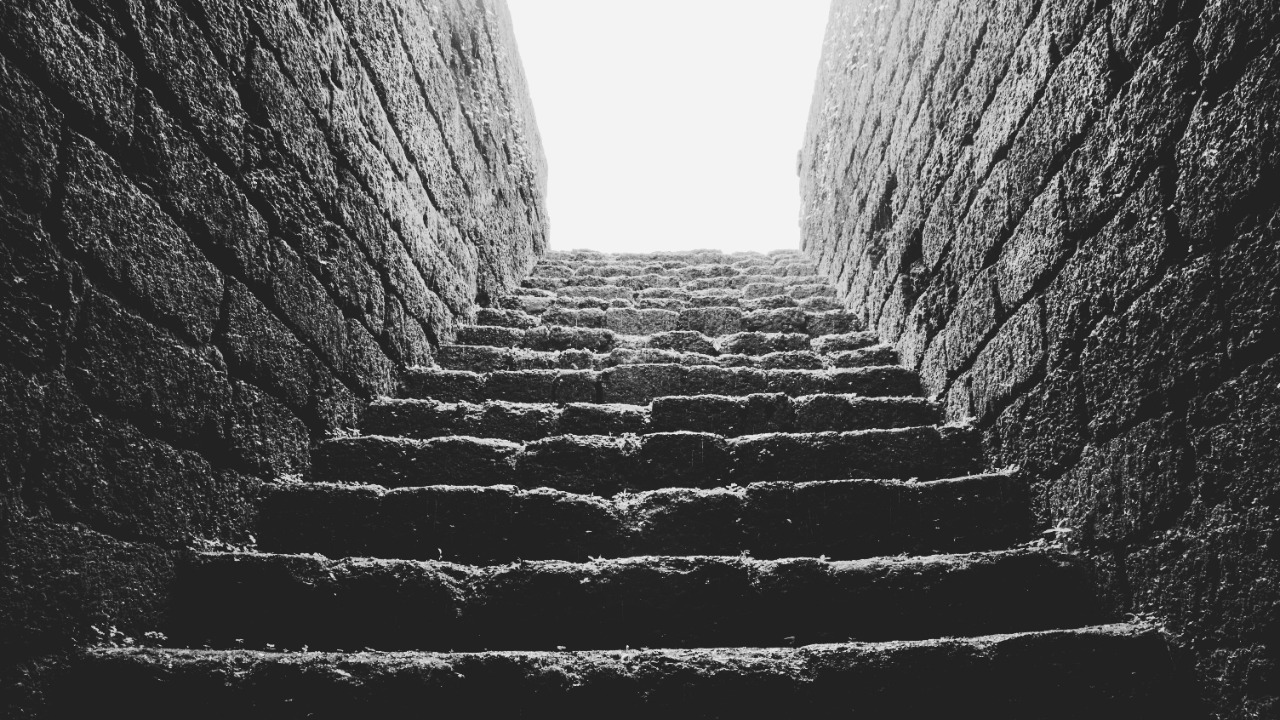

The discovery began with an architectural puzzle: a staircase inside a Roman house that seemed to climb into empty air, its upper destination erased by time. That “stairway to nowhere” has now become the key to a digitally resurrected skyline, revealing a hidden vertical city that some researchers are calling a kind of “lost Pompeii” above the ruins tourists know at ground level. By following those vanished steps with new technology, archaeologists are reconstructing towers, upper floors, and rooftop worlds that transform what we thought we knew about life in this famously frozen city.
What emerges is not just a refinement of old maps but a reimagining of how power, privacy, and spectacle were built into Roman homes. As I trace the work of the teams behind this project, from field excavations to high resolution scans, it becomes clear that the most important parts of Pompeii’s story were never entirely buried under ash, they were simply hanging in the air, waiting for someone to rebuild them in three dimensions.
The city that vanished under ash, and the parts we never saw
Any attempt to understand this new “lost” layer of Pompeii has to start with the catastrophe that preserved it. When Mount Vesuvius erupted in the year 79, it buried Pompeii under compact volcanic material that sealed streets, houses, and wall paintings in a kind of accidental time capsule. The weight of that deposit, however, crushed many upper stories and wooden superstructures, leaving archaeologists with ground floors that looked eerily intact and upper levels that were little more than rubble. For generations, the city was studied as a mostly horizontal space, a grid of streets and courtyards rather than a layered urban landscape.
Popular accounts of the disaster often focus on the drama of the eruption and the haunting casts of victims, but they also underline how thoroughly the city disappeared from view. One widely read overview notes that The Lost City of Pompeii was “basically lost” for centuries, its location forgotten until excavations began to peel back the ash and dig up the secrets of what happened on that terrible day. What those early digs could not easily recover were the vanished upper floors, balconies, and rooftop spaces that once towered above the streets, because the physical evidence was too fragmentary and the tools too limited to reconstruct them with confidence.
The “Curious Stairway” that changed the questions
The turning point came when archaeologists confronted a feature that refused to make sense: a staircase preserved inside a Roman house that stopped abruptly, with no surviving landing or upper room to justify its existence. Instead of dismissing it as a quirk of preservation, researchers treated this “Curious Stairway” as a clue that something substantial had once risen above. Reporting on the project describes how that Curious Stairway to nowhere led archaeologists to rethink the missing vertical dimension of the site, prompting a broader effort to digitally reconstruct what they began to call a “Lost Pompeii” above the ruins.
Inside one elite residence, a staircase that initially appeared to lead nowhere became the focal point of a new hypothesis. Researchers noted that the steps were too substantial and too carefully integrated into the floor plan to have served a trivial purpose. A separate account explains that a staircase inside the home, which at first seemed to end in mid air, prompted speculation that it once extended to a tower or upper floor that had completely collapsed. That single architectural fragment, stubbornly pointing upward, forced archaeologists to ask not just what had been lost, but how they might see it again without rebuilding it in stone.
Digital archaeology steps in where trowels cannot reach
To follow that vanished stairway, archaeologists turned to a toolkit that would have been unthinkable to the first excavators of Pompeii. Instead of relying solely on trenches and scaffolding, they began to scan, model, and virtually reassemble the broken pieces of the city. One detailed report describes how researchers are using LiDAR, drones, and photogrammetry to digitally recreate lost upper floors and towers in Pompeii, stitching together millions of data points into precise three dimensional models.
This is not digital wizardry for its own sake. The same account notes that these techniques allow archaeologists to test structural hypotheses, such as how high a tower could have risen above a given footprint, or how light would have filtered into an atrium from an upper loggia. Another project summary explains that the research is part of a broader effort in digital archaeology, developed by the archaeological park and Humboldt University, which aims to reconstruct the upper floors of buildings in Pompe. In that context, the “stairway to nowhere” becomes a test case for how far digital methods can push beyond the limits of traditional excavation.
Reimagining a domus with a tower
Out of this digital work has emerged one of the most striking hypotheses: that some elite houses in Pompeii were not just single story villas but multi level complexes crowned with towers. In one case, archaeologists focused on a particular domus where the surviving walls, staircases, and decorative schemes hinted at a more ambitious vertical design. By feeding those measurements into their models, they proposed that the house once included a tower like structure rising above the main block, a feature that would have dominated the surrounding neighborhood and reshaped how its inhabitants experienced the city.
The official description of this research emphasizes that it is part of a coordinated project between the archaeological park and Humboldt University, aimed at reconstructing the upper floors of buildings in Pompeii, a domus with a tower. The same summary notes that the urban fabric at Pompe is extremely complex, which makes the ability to test different reconstructions in a virtual environment especially valuable. The tower hypothesis does not simply add a picturesque detail to a single house, it suggests that the skyline of the ancient city was more varied and more socially expressive than the flattened ruins suggest.
Luxury towers and the lives of Pompeii’s elite
Once the possibility of towers was on the table, archaeologists began to ask what those elevated spaces might have meant for the people who built and used them. One account explains that Oct research suggests Pompeii’s elite may have lived in what we would now call luxury towers, with upper floors reserved for private retreats, panoramic dining rooms, or display spaces for art and status symbols. The same reporting notes that the staircase that once seemed pointless now appears to have been a carefully designed conduit between the public life of the ground floor and the more exclusive world above, a vertical axis of power and privacy.
A complementary analysis, citing a statement from the Archaeological Park of Pompeii, notes that According to that statement, these elevated rooms would have offered not only views but also a way to stage social life, reflecting the hierarchy and aspirations of the society of the time. Another summary of the same research underscores that the project, discussed in Nov, uses digital reconstructions to show how these towers may have looked, turning abstract architectural speculation into vivid, navigable spaces that reveal new details about elite domestic life.
A “Lost Pompeii” above the streets
As these reconstructions accumulate, the phrase “lost Pompeii” takes on a more specific meaning. It no longer refers only to the city buried under ash, but also to the vertical city that once rose above the surviving walls, a world of staircases, galleries, and rooftop terraces that has been missing from our mental picture. One overview of the project notes that archaeologists are digitally reconstructing “lost” upper floors and towers in one of history’s most enigmatic cities, describing this work as the Discovery of a kind of Lost Pompeii that had been hiding in plain sight.
What makes this “lost” layer so compelling is that it changes how I understand the everyday experience of the city. Instead of imagining life confined to ground floor rooms and open courtyards, I now have to picture families climbing internal staircases to reach breezy upper loggias, servants moving between service levels, and guests being escorted up to tower rooms for special occasions. The digital models, built from LiDAR scans and photogrammetric surveys, allow researchers to test how sound, light, and movement would have worked in these stacked spaces, turning abstract floor plans into lived environments. In that sense, the stairway that once seemed to lead nowhere now opens onto an entire hidden city above the streets.
From excavation site to immersive cityscape
The implications of this work extend beyond academic debates about Roman architecture. For visitors, the difference between walking through roofless ruins and navigating a fully reconstructed cityscape is profound. One travel focused guide invites readers to Explore the lost city of Pompeii as a kind of time machine, a Journey that lets you Travel back into an ancient city where only part of the urban fabric has been unearthed so far. The new digital reconstructions promise to fill in some of those missing parts, not by rebuilding them physically, but by overlaying virtual models on the existing remains.
In practical terms, that could mean augmented reality tours where a visitor standing at the base of a ruined staircase can look through a tablet or headset and see the vanished tower rising above, complete with painted walls and open windows. It could also mean online platforms where students in distant classrooms can “walk” through a multi level domus, climbing the same steps that once puzzled archaeologists. The more detailed and evidence based these models become, the more they can shift Pompeii in the public imagination from a flattened ruin to a living, vertical city, one where the stairway to nowhere finally leads somewhere again.
Why the upper floors matter for history
Reconstructing upper stories is not just about architectural completeness, it is about recovering social history that would otherwise remain invisible. The distribution of rooms across different levels can reveal how households organized privacy, labor, and status. For example, if dining rooms or reception spaces turn out to have been located in towers or on upper floors, that suggests that elite hosts used height itself as a form of display, inviting guests into elevated spaces that literally placed them above the street. Conversely, if service areas or storage rooms occupied those levels, that would point to a more utilitarian use of vertical space, with the glamorous life of the house concentrated at ground level.
The digital archaeology projects anchored in the “stairway to nowhere” are beginning to answer those questions by correlating structural evidence with decorative programs and circulation patterns. When a richly painted room is found adjacent to a staircase that once climbed higher, it becomes plausible to imagine a suite of elite spaces stacked above. When a plain service corridor leads to the same stair, a different picture emerges. By modeling these possibilities and testing them against what we know from other Roman sites, researchers can refine their understanding of how class, gender, and work were organized in three dimensions. In that sense, the lost upper floors are not just missing architecture, they are missing chapters in the story of how people lived and moved through the ancient city.
A new kind of map for an old city
All of this work is gradually producing a new kind of map for Pompeii, one that charts not only streets and building footprints but also the vertical relationships between spaces. Instead of a flat plan, archaeologists and visitors alike can begin to think in stacked layers, with towers, terraces, and upper rooms plotted above the familiar grid. One of the more technical project descriptions notes that the urban fabric of Pompe is extremely complex, which makes this layered mapping especially challenging but also especially rewarding, because it can reveal patterns that were previously hidden in the rubble.
In some cases, the new maps are tied to specific coordinates that visitors can explore virtually. A digital viewer linked to the archaeological park allows users to navigate a reconstructed portion of the city, zooming in on particular houses and features that have been modeled in detail. One such interface, accessible through a place viewer, hints at how these reconstructions can be shared widely, turning specialized research into an interactive experience. As these tools evolve, the “lost Pompeii” revealed by a single enigmatic staircase may become the default way new generations encounter the ancient city, not as a ruin frozen in time, but as a multi level urban world rebuilt, step by digital step.
More from MorningOverview