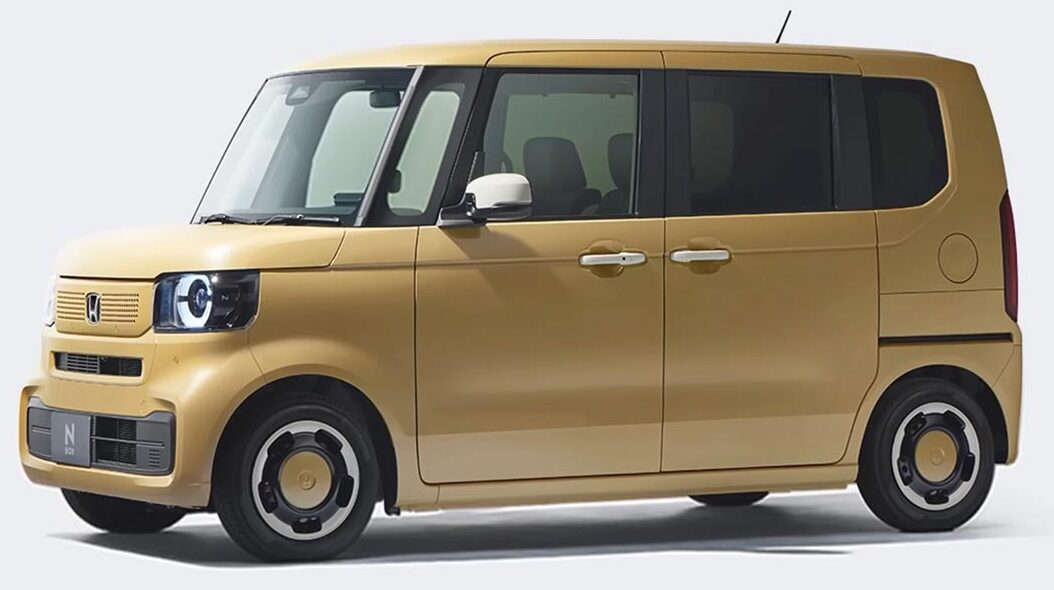

The smallest new electric vehicle headed for American streets is about to make even kei cars look oversized. Fiat’s decision to bring its ultra-compact Topolino to the United States signals a sharp turn in how global automakers, and Stellantis in particular, are thinking about city driving, affordability, and the political pressure to shrink vehicles instead of supersizing them.
Rather than another hulking crossover, the brand is betting that a tiny, low-speed, retro-styled EV can carve out space in a market built on full-size trucks and SUVs. The move tests whether American drivers are finally ready to trade sheer size for simplicity, price, and charm.
How Trump’s kei car push put tiny EVs on Stellantis’s radar
When President Donald Trump publicly urged automakers to bring Japanese-style kei cars to the United States, it sounded at first like a culture clash more than a product roadmap. Yet that call for smaller, cheaper, ultra-efficient vehicles landed squarely in the lap of Stellantis, which already had a stable of micro-sized EVs in Europe and a U.S. footprint through brands like Jeep, Ram, and Fiat. The company has now confirmed that it will bring an all-electric small Fiat to the American market, a move that directly answers Trump’s push for tiny cars to show up in U.S. showrooms and streets, and that commitment is spelled out in Stellantis’s own description of its plan to introduce a tiny car to the U.S..
Trump’s interest in kei-style vehicles reframed what had been a niche curiosity into a political talking point about urban congestion, fuel use, and manufacturing strategy. By responding with a production commitment rather than a concept sketch, Stellantis and Fiat are effectively treating that demand as a mandate to experiment with scale, not just powertrain. The decision to send a micro EV across the Atlantic shows how a single, high-profile request for kei car alternatives can ripple through corporate planning and accelerate a product that might otherwise have stayed confined to Europe’s narrow streets.
Meet the Fiat Topolino, Italy’s “little mouse” with big ambitions
The car Stellantis is betting on is the Fiat Topolino, a mini electric runabout whose name translates from Italian as “little mouse.” In Europe, the Topolino is classified as a light quadricycle, not a traditional passenger car, and it leans into that playful identity with a boxy profile, exposed door frames, and a cabin that feels more like a rolling lounge chair than a conventional cockpit. Fiat has already framed the U.S. version as a direct extension of this European personality, positioning the Topolino as a city-focused EV that trades highway capability for charm and simplicity, a strategy detailed in coverage of how Fiat plans the launch of its mini electric Topolino.
In Italy and across Europe, the Topolino’s retro styling and compact footprint have made it a symbol of affordable urban mobility, not a luxury toy. The car’s design nods to classic Fiat city cars while embracing the stripped-down ethos of a quadricycle, with limited top speed and range that are intentionally tuned for short hops rather than long commutes. Reporting on Italy’s decision to send this “little mouse” across the Atlantic underscores that the brand sees the Topolino as an affordable retro city car coming to America, not a halo product meant only for enthusiasts.
So small it makes kei cars look big
Kei cars in Japan are already tiny by American standards, with strict limits on length, width, and engine size that keep them narrow and short enough to thread through dense city streets. The Fiat Topolino pushes that idea even further by operating in the European quadricycle category, which allows an even smaller footprint and lower performance ceiling than kei regulations typically permit. In practice, that means the Topolino’s stance and proportions make many kei hatchbacks look almost full-size, a contrast that becomes clear when you see the car’s micro dimensions and low-speed hardware laid out in detail in video coverage of the Fiat Topolino EV U.S. launch.
From a U.S. perspective, the Topolino’s scale is closer to a golf cart or neighborhood electric vehicle than to a subcompact like a Chevrolet Spark or Mitsubishi Mirage. Its narrow track, short wheelbase, and limited top speed are all optimized for tight parking spots and low-speed urban grids rather than interstate travel. That is precisely why it stands out in a market dominated by full-size pickups and three-row SUVs, and why the comparison to kei cars is almost generous to the Japanese models: in many photos, the Topolino looks like it could park sideways behind a kei hatchback and still leave room to spare.
Performance, range, and the reality of a 28 mph lifestyle
On paper, the Topolino’s performance figures read more like a scooter than a conventional car, and that is by design. The European version is capped at a modest top speed and a short range that align with its role as a city shuttle, and early U.S. details suggest the American model will stay close to that template. Reporting on the U.S. rollout notes that the Fiat Topolino is a low-speed electric minicar with a top speed of 28 mph, a figure that sets expectations clearly and is highlighted in coverage of the cute, tiny Fiat Topolino coming to the U.S..
Range is similarly modest, tuned for short urban loops rather than highway slogs. In Europe, the Topolino’s maximum range is described as 47 miles, a number that fits neatly into the pattern of quick errands, school runs, and last-mile commutes that define its mission. That limited performance envelope is a feature, not a bug, because it keeps the battery small, the curb weight low, and the price within reach of buyers who might otherwise be priced out of EV ownership. The tradeoff is that owners will need to accept a 28 mph lifestyle, where the Topolino is a second vehicle for city duty rather than a do-everything family car.
Price and positioning: the $12,000 question
Affordability is the Topolino’s most disruptive trait, and it is where the car comes closest to the kei ethos that Trump highlighted. In Europe, the tiny EV sells for under $12,000, a figure that undercuts almost every mainstream electric car on the market and even challenges many gasoline-powered subcompacts. That price point is central to its appeal and is explicitly cited in reporting that describes how this tiny EV selling for $12,000 in Europe is coming to the US.
Translating that European sticker into a U.S. price will involve shipping, regulatory compliance, and dealer margins, but the strategic goal is clear: Fiat wants the Topolino to sit at the very bottom of the EV price ladder. That positioning allows Stellantis to reach buyers who have been shut out of the electric transition by five-figure MSRPs and complex financing. It also gives the company a way to test whether Americans will accept a radically simple, low-speed EV if the price is closer to a high-end e-bike than a traditional car. If the Topolino can land anywhere near its European cost structure, it will instantly become a reference point in debates about how cheap an electric vehicle can realistically be.
Design, charm, and the “adorable” factor as a sales tool
Fiat is not shy about leaning into the Topolino’s cuteness as a core part of its pitch. The car’s squared-off body, big windows, and minimalist interior are all designed to project friendliness rather than aggression, a stark contrast to the macho styling that dominates much of the U.S. market. Coverage of the American rollout repeatedly describes the Topolino as an adorable tiny car, and one report even frames the U.S. launch as America getting an “adorable ride” in direct response to Trump’s kei car demand, a characterization captured in analysis of how America may get this adorable tiny car after Trump’s kei car demand.
That aesthetic strategy is not just about Instagram appeal. In a market where small cars have often been dismissed as cheap or unsafe, giving the Topolino a playful, retro identity helps reframe smallness as a lifestyle choice rather than a compromise. The open-air variants, fabric doors, and customizable color schemes turn the car into a fashion accessory as much as a transportation tool, which could be especially powerful in dense urban neighborhoods and resort towns. By making the Topolino something people want to be seen in, Fiat is trying to sidestep the stigma that has haunted past microcars and instead tap into the same emotional pull that made the original 500 and other city icons so beloved.
Where a micro EV fits in America’s oversized traffic
Dropping a quadricycle-scale EV into U.S. traffic raises obvious questions about safety, regulation, and use cases. The Topolino’s 28 mph top speed and limited range effectively confine it to city streets, beach communities, college campuses, and private developments where low-speed vehicles already coexist with full-size cars. In that sense, it slots into a niche similar to neighborhood electric vehicles and street-legal golf carts, but with the added benefit of a fully enclosed cabin and a brand identity that carries more weight than a generic cart. The way Fiat has framed the Topolino’s U.S. mission, as a mini electric city car rather than a highway-capable hatchback, is spelled out in its own description of how Fiat plans the U.S. launch of its mini electric Topolino.
Urban planners and city governments may see the Topolino as a tool to reduce congestion and emissions without waiting for massive infrastructure overhauls. A fleet of micro EVs that occupy half the space of a compact sedan could ease parking pressure and make shared mobility services more efficient. At the same time, regulators will need to decide how to classify and treat a vehicle that is smaller and slower than a typical car but more substantial than a scooter. That gray area is where the Topolino could either flourish, if cities embrace it with dedicated low-speed zones and incentives, or struggle, if it is forced to mix with high-speed traffic on roads it was never designed to handle.
Stellantis’s strategy: from Europe’s quadricycle to U.S. experiment
For Stellantis, the Topolino’s American debut is more than a one-off novelty, it is a test case for how far the company can stretch its global portfolio across regulatory and cultural boundaries. In Europe, the car’s classification as a quadricycle allows it to sidestep some of the crash and emissions standards that apply to full passenger vehicles, which keeps costs low and design constraints minimal. Bringing that same platform to the United States forces Stellantis to navigate a different rulebook, but it also gives the company a chance to leverage its scale and engineering resources to create a new category of urban EV that sits below traditional subcompacts. The decision to adapt a European quadricycle for American streets is part of a broader pattern described in reporting on how Stellantis will bring an all-electric small Fiat to the U.S..
Strategically, the Topolino also helps Stellantis diversify its EV lineup beyond the premium and performance segments that have dominated early adoption. By offering a micro EV at the bottom of the price spectrum, the company can gather data on how American consumers actually use such vehicles, which features they value, and how much they are willing to compromise on speed and size. Those insights could inform future products across brands like Jeep and Ram, where smaller, lighter electric models might eventually complement the heavy trucks and SUVs that currently define those lineups. In that sense, the Topolino is not just a quirky Italian import, it is a rolling experiment in how to shrink the American car without shrinking the business case.
Culture clash or turning point for U.S. car buyers?
The biggest unknown in the Topolino story is not its engineering or price, but whether American drivers are ready to embrace a vehicle that looks and behaves more like a motorized accessory than a traditional car. For decades, the U.S. market has rewarded size, power, and perceived safety, with compact and subcompact cars often relegated to budget buyers or urban niches. The Topolino challenges that hierarchy by presenting smallness as a premium, curated choice, backed by Italian design and a clear narrative about urban living. Reporting that frames the car as Italy’s affordable retro city car coming to America captures that cultural pivot, describing how Italy’s affordable retro city car is actually coming to America with a clear sense of purpose.
If the Topolino finds an audience, it could open the door for other micro EVs and even true kei cars to follow, reshaping the lower end of the market around efficiency and footprint rather than horsepower. If it fails, it will likely be remembered as a charming outlier that proved how deeply entrenched American preferences for big vehicles remain. Either way, its arrival will force a fresh conversation about what kind of cars cities really need, how much vehicle is enough for daily life, and whether the future of urban mobility in the United States might finally be getting smaller instead of larger.
More from MorningOverview