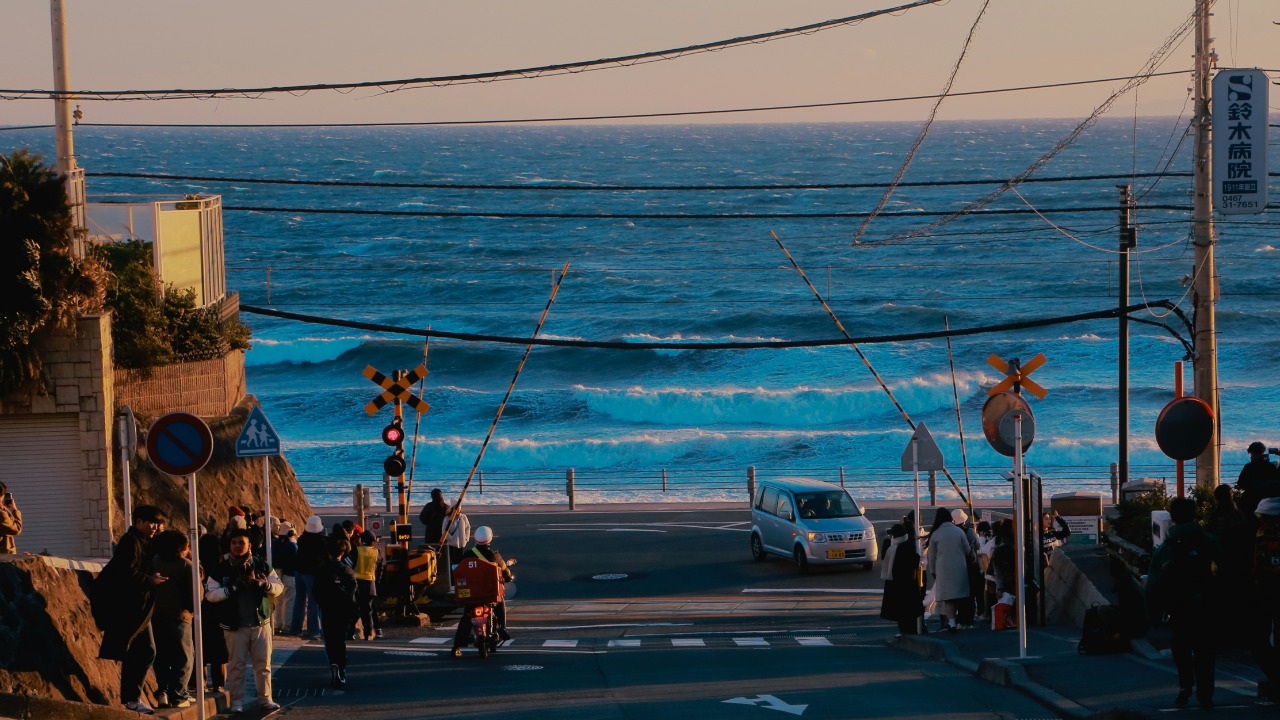

Japan’s latest disaster advisory has revived a chilling term in the seismology world: “megaquake.” The warning followed a powerful offshore shock and raised the prospect of a far larger rupture that could unleash towering waves, flatten coastal cities and test one of the world’s most advanced early warning systems. For people in Japan and across the Pacific, understanding what scientists mean by a megaquake is no longer an abstract exercise in geology but a practical question about survival, infrastructure and political will.
What scientists mean by a “megaquake”
When seismologists talk about a megaquake, they are not describing an ordinary strong tremor but an extremely powerful earthquake that releases vastly more energy than the quakes most people have experienced. In technical terms, the label is usually reserved for events at the very top of the magnitude scale, the kind that can rupture hundreds of kilometers of a plate boundary and shake entire regions for minutes at a time. In the current Japanese debate, the term is being used for a scenario in which a giant offshore fault fails in one go, triggering both catastrophic shaking and a massive tsunami that would hit densely populated coastlines.
Japan’s own hazard planners have framed a megaquake as the “big one” that could strike along a major subduction zone, where one tectonic plate dives beneath another and stores strain for decades. In that context, a megaquake is not just a number on a seismograph but a multi-layered disaster that combines ground failure, landslides, fires, building collapses and coastal flooding on a national scale. Officials and researchers have used that language to describe an event that would dwarf routine tremors and even most large quakes, a definition that aligns with how a megaquake is an extremely powerful rupture capable of becoming the big one hitting the country.
Why Japan issued a new megaquake advisory
The immediate trigger for Japan’s latest alarm was a strong offshore earthquake that shook the northern part of the country and reminded residents how quickly the ground can turn violent. Authorities reported that the event reached magnitude 7.5, a level that is already capable of causing serious damage, cutting power and disrupting transport. In the hours that followed, seismologists warned that such a shock could be a precursor to something even larger on nearby faults, prompting the government to move from routine alerts to a more pointed advisory about the risk of a megaquake.
Officials framed the advisory as a precaution rather than a prediction, but the language was stark enough to capture global attention. The message was that the recent 7.5 event had altered the stress state along a broader plate boundary and that, for a limited period, the probability of a much larger rupture had risen. That assessment drew on decades of seismic monitoring and on Japan’s experience with past sequences in which a strong quake was followed by an even more destructive one, a pattern that has shaped the country’s willingness to warn early even at the cost of alarming residents and disrupting daily life.
How the advisory affects people on the ground
For residents in the affected regions, the megaquake advisory translated into a sudden shift in daily routines, from how families sleep to how companies manage shifts and supply chains. Local leaders urged people to review evacuation routes, secure heavy furniture and keep emergency kits close at hand, treating the advisory as a live-fire drill for a worst case scenario. The warning also landed during a period of heavy travel, which meant that tourists and returning families had to navigate both crowded transport hubs and the possibility of rapid evacuations if a larger quake struck offshore.
National leaders used televised addresses and mobile alerts to call on communities to stay calm but vigilant, emphasizing that the advisory did not guarantee a disaster yet still demanded serious preparation. That balancing act was especially delicate because the warning overlapped with Japan’s Buddhist holidays, a time when many people travel long distances to visit family graves and hometowns. In that context, the prime minister and local governors stressed that the advisory was meant to protect both residents and travelers during Japan’s Buddhist holidays, urging people to stay informed, avoid risky coastal areas and follow any evacuation orders without delay.
Inside Japan’s Earthquake Early Warning system
Japan’s decision to speak openly about a potential megaquake rests on a technological backbone that few countries can match. The national Earthquake Early Warning network uses thousands of seismometers to detect the first, less damaging waves of a quake and then pushes alerts to phones, trains and broadcasters before the more destructive waves arrive. In practice, that can give people seconds to tens of seconds to duck under sturdy furniture, shut down industrial processes or stop high speed trains, a small window that can still save lives and reduce cascading failures.
Beyond those immediate alerts, the same dense sensor network and data pipelines feed into longer term hazard assessments that underpin megaquake advisories. By tracking how stress accumulates and releases along key faults, scientists can estimate when a region is entering a period of elevated risk, even if they cannot pinpoint the exact day or hour of a giant rupture. Japan has invested heavily in this capability, and its Earthquake Early Warning infrastructure is now central to how the country anticipates and communicates the threat of a future megaquake, a role highlighted in detailed explanations of how Japan has issued alerts based on real time seismic data.
The Nankai Trough and the geography of risk
Behind the abstract term “megaquake” lies a very specific geological fear: a full scale rupture of the Nankai Trough, a deep undersea trench that runs off Japan’s Pacific coast. This subduction zone has produced some of the country’s most destructive historical earthquakes, and modern models suggest that a future event there could shake a vast swath of the archipelago while driving a towering tsunami into coastal cities. The government’s latest advisory explicitly referenced this kind of scenario, underscoring that the risk is not evenly distributed but concentrated along particular plate boundaries that have long records of giant quakes.
Authorities have been especially focused on a corridor of prefectures that would bear the brunt of a Nankai style megaquake and its tsunami. In their most recent warning, Officials urged residents in seven prefectures from Hokkaido in the north to Chiba near Tokyo to prepare for the possibility of intense shaking and coastal flooding. That geographic specificity reflects years of mapping how seismic waves would propagate through different soils, how tsunamis would funnel into bays and rivers, and which communities would have only minutes to reach higher ground once a megaquake begins.
What a megaquake could do to Japan’s coasts and economy
The physical damage from a megaquake would be only the first chapter in a much longer story of recovery and economic strain. Government scenarios for a giant offshore rupture include the prospect of tsunami waves approaching 30 meters in height, enough to overtop many existing sea walls and inundate industrial zones, ports and residential neighborhoods. In some models, a megaquake could generate a tsunami of up to 98 feet, a wall of water that would sweep inland, destroy critical infrastructure and leave behind a vast field of debris and contamination that would take years to clear.
Economists who have studied these scenarios warn that the financial toll would be staggering, with estimates running into the hundreds of billions of dollars as factories shut down, supply chains fracture and housing stock is destroyed. One widely cited analysis suggests that a megaquake and tsunami of this scale could cause damage on the order of 1.28 trillion in the region, a figure that captures not only direct losses but also the ripple effects through global trade. For a country that remains a key node in automotive, electronics and shipping networks, such a blow would be felt far beyond Japan’s borders, affecting everything from car prices in Europe to semiconductor supplies in North America.
How this warning compares with past Japanese disasters
Japan’s new megaquake advisory inevitably invites comparison with earlier national traumas, especially the 2011 Tohoku earthquake and tsunami that devastated the northeast coast and triggered the Fukushima nuclear crisis. That disaster, while not labeled a “megaquake” in the current sense, showed how a powerful offshore rupture can overwhelm defenses that were designed for smaller events. Sea walls that once seemed imposing were overtopped, evacuation plans proved too slow for the speed of the incoming waves and critical systems failed in ways that planners had not fully anticipated.
In the years since, Japan has tried to absorb those lessons into building codes, coastal defenses and emergency communication strategies, yet the megaquake advisory is a reminder that some risks cannot be engineered away entirely. The current warning is more explicit about the possibility of extreme tsunami heights and broader geographic impact, and it is being issued in a political climate that is more attuned to transparency about worst case scenarios. That shift reflects both public demand for candor and the scientific community’s growing confidence in its ability to model complex fault systems, even as it acknowledges that the exact timing of a megaquake remains uncertain and that some aspects of the hazard are still unverified based on available sources.
Global echoes: what Japan’s alert means for other quake zones
Japan’s megaquake advisory is not only a domestic story, it is also a case study for other regions that sit atop dangerous faults. In the United States, for example, seismologists have long warned about the potential for a giant rupture along the Cascadia subduction zone off the Pacific Northwest and along segments of the San Andreas system in California. Experts such as Lucy Jones have drawn direct connections between Japan’s experience and the risks facing Southern California, arguing that the same principles of preparation, early warning and public education apply on both sides of the Pacific.
For policymakers in those regions, Japan’s approach offers both inspiration and caution. The country’s investment in real time alerts, tsunami modeling and community drills shows what is possible when a society treats seismic risk as a central policy issue rather than a niche concern. At the same time, the very need for a megaquake advisory underscores that even the most advanced systems cannot eliminate uncertainty or fully contain the consequences of a truly giant rupture. Other governments watching Japan’s response are being forced to ask whether their own infrastructure, from coastal highways to nuclear plants, is ready for a similar test and whether their communication strategies can convey urgency without tipping into panic.
Living with the threat: how people can respond
For individuals, the concept of a megaquake can feel overwhelming, yet the practical steps that reduce risk are often straightforward. Securing heavy furniture, reinforcing older homes, knowing evacuation routes and keeping supplies such as water, medications and portable chargers on hand can make the difference between a manageable disruption and a personal catastrophe. In coastal areas, the most critical habit is to move quickly to higher ground after strong shaking, without waiting for official tsunami warnings that may arrive too late if a nearby fault has ruptured.
Community level action is just as important, from neighborhood drills to school education programs that teach children how to protect themselves when the ground starts to move. Local governments in Japan have been updating hazard maps, installing clearer signage and building vertical evacuation towers in low lying areas, measures that can save lives even if a megaquake exceeds design expectations. Internationally, aid groups and news organizations have been working to explain what is at stake, with outlets such as The Independent highlighting how tsunami alerts from Monday’s earthquake and the broader megaquake warning fit into a longer struggle to keep coastal communities safe.
More from MorningOverview