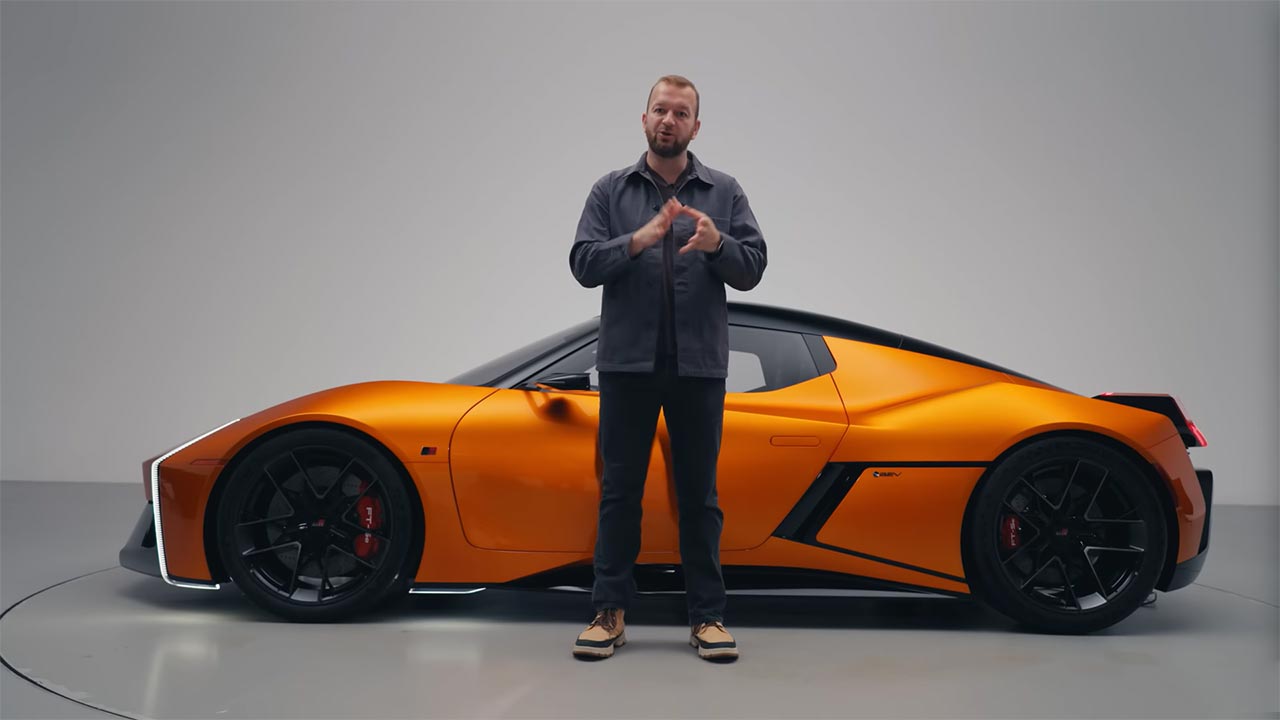

The MR2 name is edging back toward showrooms, but the car that wears it may not look like the mid‑engine Toyotas enthusiasts remember, and it might not even carry a Toyota badge on its nose. Instead, the reborn two‑seater is shaping up as a showcase for Gazoo Racing’s growing independence, a compact sports car that could sit slightly outside the brand’s traditional hierarchy while still drawing on decades of MR2 heritage. That tension between legacy and reinvention is exactly what makes the next MR2 one of the most intriguing performance projects in development today.
What is emerging from reports, trademarks and concept hints is a picture of a small, focused machine that leans hard into modern performance tech while keeping the simple, playful spirit that made the original MR2 such a cult favorite. I see a company trying to balance nostalgia with a new business reality, using Gazoo Racing to push bolder ideas on powertrains, pricing and even badging, without losing the thread that connects this car to three generations of mid‑engine icons.
MR2 is coming back, but the badge story is getting complicated
The clearest signal that the MR2 is returning is that Toyota has been quietly laying the legal groundwork for a new sports car, including filings for names that explicitly tie the project to Gazoo Racing. Reporting on those filings describes trademarks for labels such as “GR MR” that point directly to a performance‑focused model and confirm that the company is actively preparing a new mid‑engine product line rather than simply toying with the idea in design studios. In that context, the suggestion that a new MR2 sports car is coming is no longer wishful thinking, it is a logical next step in a broader performance strategy that already includes the GR Yaris, GR Corolla and GR Supra, and it is framed in detail in coverage of a new MR2 sports car that may not follow the usual branding rules.
What complicates the story is that the MR2 name itself may not be the headline on the decklid. Detailed analysis of those same filings and of internal performance branding suggests that the car could be positioned primarily as a Gazoo Racing product, with the GR identity front and center and the traditional Toyota logo either minimized or absent. One report on the project notes that the car could be marketed in a way that emphasizes Gazoo Racing’s role so strongly that the familiar oval badge is almost an afterthought, echoing how some past special models have leaned on sub‑brands more than the parent nameplate, and that possibility is reinforced by coverage of how it might not wear Toyota badges at all.
Gazoo Racing’s rise and why it matters for the next MR2
To understand why the badge question is even on the table, I have to look at how Gazoo Racing has evolved from a motorsport arm into a semi‑autonomous performance brand. In recent years, GR has moved from tuning existing Toyotas to developing its own hardware, and internal voices have framed that shift as a deliberate push to build sports cars in‑house rather than relying on external partners. One detailed report quotes the view that building their own sports cars is “exactly what GR is about,” a line that captures how Gazoo Racing sees itself as more than a sticker package and helps explain why the next halo coupe is being treated as a GR‑first project, a stance laid out in coverage of Toyota’s next big sports car and its in‑house development.
That shift has practical consequences for the MR2. If Gazoo Racing is responsible for the engineering, the car can be tailored more aggressively to track‑day buyers, with less compromise for mass‑market comfort and more freedom to experiment with powertrains and packaging. It also gives GR leverage to argue for its own visual identity, which is where the idea of a car that carries GR branding more prominently than Toyota comes from. The same reporting that highlights Gazoo Racing’s growth as Toyota’s in‑house performance division also notes that Gazoo Racing continues to grow as Toyota’s in‑house performance arm, reinforcing the idea that the MR2’s spiritual home is now within Gazoo Racing rather than the broader family lineup.
What we actually know so far about the 2026 MR2 project
Strip away the speculation and a core set of details about the upcoming car emerges from consistent reporting. Toyota is reportedly developing a compact, mid‑engine sports car that would revive the MR2 concept for a new generation, with a target launch window around the middle of the decade and a clear intent to slot it below the GR Supra in size and price. One comprehensive overview describes how Toyota is reportedly developing a new mid‑engine sports car and frames it as a modern successor to the MR2, summarizing everything enthusiasts know so far about the project and its likely positioning in the lineup, a picture that is laid out in a guide to everything we know so far about the 2026 Toyota MR2.
Timelines remain fluid, but multiple reports converge on the idea that the car is being targeted for the second half of the decade, with some suggesting a 2026 on‑sale date if development stays on track. That would align with the cadence of Toyota’s recent sports car launches and with the company’s broader strategy of spacing out performance debuts to keep Gazoo Racing in the spotlight. The same overview that outlines the project’s existence also notes that Toyota is shaping the MR2 as a compact, relatively accessible sports car rather than a supercar rival, reinforcing the idea that this is meant to be a driver’s car in the mold of its predecessors rather than a halo priced out of reach, a point underscored in the section of that report that asks what Toyota might do for specs on the new model.
Engine, layout and the push for GR power
The heart of any MR2 is its powertrain, and here the reporting paints a picture of a car that blends modern efficiency with classic layout. According to detailed coverage of Japanese sourcing, Toyota is expected to use a turbocharged three‑cylinder engine with a displacement of 1.6 liters, an approach that would mirror the hardware already proven in the GR Yaris and GR Corolla while keeping weight and emissions in check. One analysis cites Best Car in Japan and notes that, according to that outlet, Toyota should give the new MR2 the same 1.6 engine that powers its hottest hatchbacks, a specific figure that appears in a section explicitly titled What engine will the new Toyota MR2 have? According to Best Car in Japan, tying the MR2 directly to the company’s most advanced small‑displacement performance tech.
Layout is just as important as displacement, and here the MR2 looks set to stay true to its roots. Reports on the next‑generation car describe it as a compact high‑performance sports car with a mid‑engine configuration, echoing the formula that made the original so distinctive. One detailed breakdown of the project notes that Toyota’s iconic MR2 may return in 2026 as a compact high‑performance sports car with a 1.6L turbocharged 3‑cylinder engine and a mid‑engine layout, a combination that would keep the car’s weight centralized and its handling sharp, and that description is spelled out in a video analysis of how Toyota’s iconic MR2 may return in 2026 with turbo power and a classic configuration.
Design language: from FT‑Se concept to production reality
Even before the MR2 name reappears on a registration form, Toyota has been telegraphing its design direction through concepts and show cars. The FT‑Se concept, a low, wide electric sports car with a driver‑centric cockpit, has been widely interpreted as a preview of how future compact coupes from the brand might look, even if the production MR2 ends up with an internal combustion engine rather than a battery pack. Enthusiast reporting on the MR2 successor notes that it seems certain that a new Toyota MR2 is coming in the next few years and explicitly links that confidence to the appearance of the sharp‑looking FT‑Se in 2023, arguing that the concept’s proportions and stance are too close to the classic MR2 formula to be a coincidence, a connection drawn in coverage that states it seems certain that a new Toyota MR2 is coming after that concept’s debut.
Other reports dig into how the MR2’s shape has evolved inside Toyota’s studios, describing early proposals that treated it more like a mid‑engined hatchback before the design team pivoted toward a sleeker, more traditional sports car silhouette. One detailed account explains that, initially, the MR2 was proposed as a mid‑engined hatchback reminiscent of a modern Renau‑style compact before the project shifted toward a low coupe that more clearly echoes its predecessors, and that same report emphasizes that the car is being envisioned as a small, agile sports car just like its earlier generations, a narrative laid out in a piece that notes how initially the MR2 was proposed as a mid‑engined hatchback reminiscent of a modern Renau before settling into its current form.
Timing, rumors and what enthusiasts should expect
On timing, the picture is clearer than it was a few years ago, but it is still not fully locked in. Officially, Toyota has not confirmed a launch date, and company representatives have been careful to avoid promising a specific year, which is typical for a project that is still in development. Enthusiast coverage of the MR2 successor underscores that point, noting that, when asked when the new Toyota MR2 is coming, the honest answer is that officially nothing has been confirmed, so observers cannot say for sure, even though the pattern of concept reveals and leaks suggests a window in the next few years, a cautious stance captured in a report that asks When is the new Toyota MR2 coming? Officially, nothing has been confirmed.
Despite that official silence, the drumbeat of rumors has only grown louder, with some sources pointing to a 2026 launch and others suggesting that the car could slip slightly depending on how quickly Gazoo Racing can finalize its powertrain and chassis tuning. Video commentary has gone further, with one widely shared clip framing the car as a “New 2026 Toyota MR2” and speculating about outputs as high as 400 horsepower and an “insane” price tag, a level of performance that would put it squarely in Cayman territory, although those specific figures remain unverified based on available sources. That video, which treats the MR2 as effectively here already, is a reminder of how intense fan interest has become, and its framing of a New 2026 Toyota MR2 with big power shows how high expectations are, even if the final spec sheet ends up more modest.
MR2, Celica and the broader Toyota sports‑car revival
The MR2 is not returning in isolation, and that context matters for how it will be positioned and priced. Over the past decade, Toyota has methodically rebuilt its performance portfolio with a series of gasoline‑powered coupes and hot hatches, and recent reporting indicates that the company intends to go further by reviving multiple storied nameplates. One detailed analysis explains that Toyota plans to bring back both the MR2 and the Celica with all‑wheel drive and manual gearboxes, describing how the carmaker has proved its commitment to sporty coupes over the past decade by launching a fist full of gasoline‑powered models and outlining a launch window that includes pricing targets around 6.5 million yen or $42,000, a strategy spelled out in coverage of how Toyota will revive Celica and MR2 with 4WD and manual options.
That broader revival shapes what the MR2 can be. If the Celica returns as a front‑engined, all‑wheel‑drive coupe with a manual gearbox, the MR2 can afford to be more focused, lighter and more uncompromising, leaning into its mid‑engine layout and track‑day appeal. It also means Toyota has to think carefully about pricing, leaving room for the GR86 at the entry level and the GR Supra at the top while carving out a niche for a mid‑engine car that might start around that 6.5 million yen or $42,000 mark in some markets. The reporting that ties MR2 and Celica together suggests that Toyota sees them as complementary rather than overlapping, with the MR2 serving as the purist’s choice in a lineup that increasingly spans everything from hot hatchbacks to near‑luxury coupes, a balance that is central to the plan described in the same analysis of Toyota’s sports‑car revival.
Why Toyota might downplay its own logo on the new MR2
The most provocative twist in the MR2 story is the suggestion that the car could arrive with little or no Toyota badging, at least in some markets. That idea is not as far‑fetched as it sounds when I look at how the company has handled special models in the past, including versions of the GR Supra that have leaned heavily on Gazoo Racing branding and even collaborations where the Toyota logo has been less prominent than a partner’s. One detailed report on the MR2 project notes that the new Toyota MR2 could be sold alongside the Toyota GR Supra and that, if you have ever seen certain special editions, you know that Toyota has already experimented with configurations where the usual logo is downplayed and Gazoo Racing takes center stage, a pattern highlighted in coverage of how a New Toyota MR2 could be sold alongside the Toyota GR Supra with a different branding mix.
There is also a historical precedent inside the MR2 family itself for a car that does not shout “Toyota” from every angle. Enthusiast retrospectives point out that the third‑generation MR2, sold in some markets as the MR‑S, could be configured with minimal exterior badging, and that certain trims and regional variants made surprisingly little of the corporate logo in favor of model‑specific branding. One analysis of the current project explicitly recalls how the third‑generation MR2 was sometimes seen without a Toyota logo in sight, using that memory to argue that a GR‑first badge strategy would not be entirely unprecedented, and that comparison is drawn directly in a report that notes that the third‑generation MR2 was sometimes seen without a Toyota logo in sight.
Enthusiast expectations and the stakes for Toyota
For enthusiasts, the MR2’s return is about more than just another sports car on the market, it is a test of whether Toyota still understands the appeal of small, simple, mid‑engine machines in an era of crossovers and electrification. Coverage that pulls together everything we know so far about the project emphasizes that fans are looking for a car that feels light and playful rather than overpowered and overcomplicated, and that they want a clear link to the original MR2’s mission as an affordable exotic rather than a rebadged version of something else. One detailed guide to the future model frames it as a mid‑engine sports car legend that could return very soon and stresses that Toyota has been listening to feedback from owners of earlier generations, a sentiment captured in a piece that describes the 2026 Toyota MR2 as everything we know so far
The stakes for Toyota are significant. If the company and Gazoo Racing can deliver a car that honors the MR2’s heritage while embracing modern performance tech, they will reinforce their reputation as one of the few major automakers still willing to invest in niche enthusiast models. If they miss the mark, either by pricing it too high, diluting the driving experience or confusing buyers with ambiguous badging, they risk undermining the goodwill they have built with the GR86 and GR Supra. Enthusiast rumor roundups already reflect that tension, noting that it seems certain that a new Toyota MR2 is coming in the next few years but cautioning that, until official specs and pricing are revealed, fans are left to balance optimism with skepticism, a mood that runs through the same coverage that labels the project a new Toyota MR2 everyone expects but no one has yet seen in production form.
Why the MR2’s future matters even if the badge changes
In the end, the question of whether the next MR2 wears a Toyota badge, a Gazoo Racing emblem or some hybrid of the two is less important than whether the car delivers on the qualities that made its predecessors special. The reporting paints a consistent picture of a compact, mid‑engine sports car with a 1.6 turbocharged three‑cylinder engine, a focus on driver engagement and a price point that, while not cheap, aims to keep it within reach of serious enthusiasts rather than collectors only. That formula, combined with the broader revival of nameplates like Celica and the continued growth of Gazoo Racing, suggests that Toyota still sees value in building cars that exist primarily to make driving fun, even as the rest of the industry pivots toward electrified crossovers and autonomous tech.
For buyers, that is what will matter when the car finally arrives. Whether the nose carries the familiar Toyota oval or a bold GR logo, the real test will be how it feels from behind the wheel, how it sounds as the 1.6 engine spins toward redline, and whether it captures the same sense of accessible exoticism that defined the original MR2. Based on the reporting so far, the company is giving itself every chance to get that balance right, even if it means rewriting some of its own branding rules along the way.
More from MorningOverview