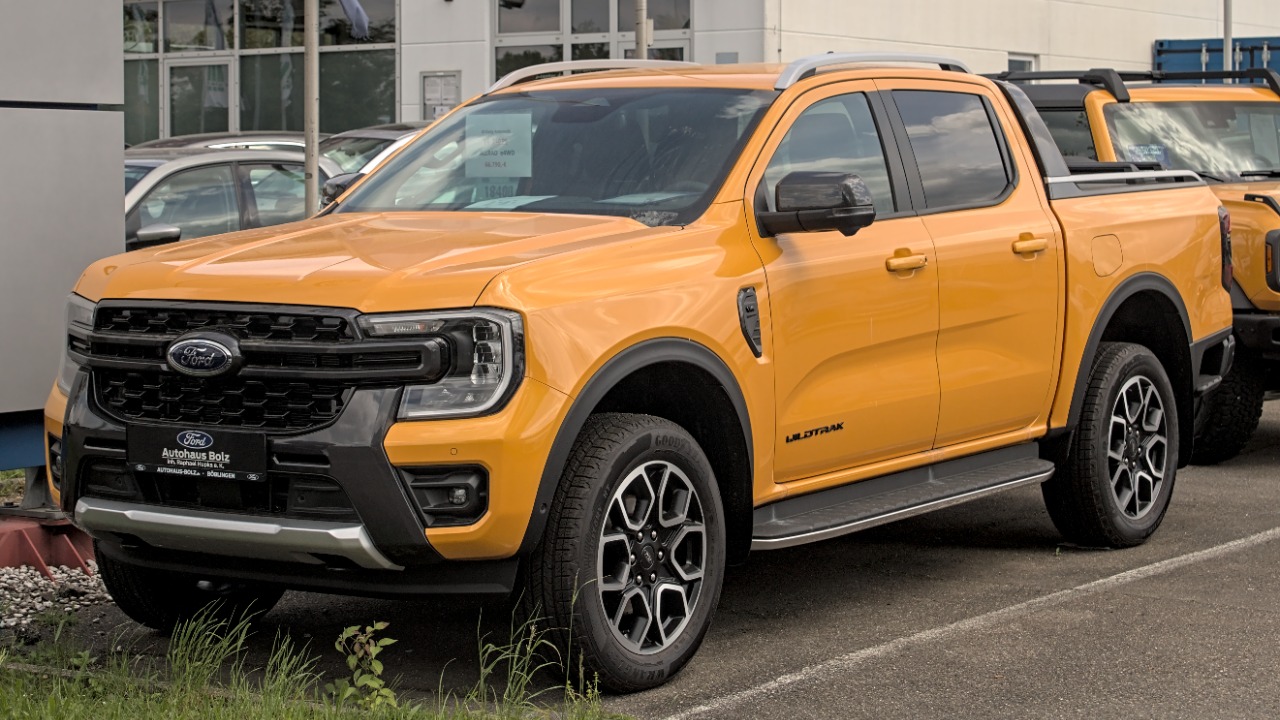

Ford is sharpening the 2026 Ranger for a tougher fight in the mid-size ute class, refreshing equipment and drivetrains while quietly retiring its headline 2.0‑litre bi‑turbo diesel. The update is aimed squarely at rivals like the latest Toyota HiLux, with Ford betting that a broader V6 footprint, more standard kit and targeted special editions will matter more to buyers than raw four‑cylinder punch.
I see a strategic pivot here rather than a simple model‑year tidy‑up, with the Ranger evolving from a tech‑heavy workhorse into a more refined, lifestyle‑ready truck that still has serious towing and off‑road credentials. The question is whether losing the bi‑turbo will be seen as progress or a step back by owners who prized its blend of torque and efficiency.
Ranger’s refreshed brief in a tougher ute battlefield
The 2026 Ford Ranger arrives into a mid-size segment that is more crowded and more capable than ever, and Ford is clearly positioning it as a truck that can do weekday duty and weekend adventure in equal measure. In North America, the Ranger already lines up against the Toyota Tacoma, Chevrolet Colorado and Honda Ridgeline, a trio that defines the class and sets expectations for comfort, safety and tech in a work‑ready package, as outlined in detailed competitors coverage. In markets like Australia and New Zealand, the stakes are even higher, because the Ranger is not just a niche choice but a top‑selling dual‑cab that has to fend off the Toyota HiLux on home turf.
Ford’s latest update is calibrated for that reality, with the company refreshing the Ranger and its closely related Everest SUV to keep them front of mind for buyers who might otherwise be tempted by a new‑generation HiLux. The strategy is not to reinvent the truck but to refine it, adding more standard equipment, tweaking the suspension tune and expanding the availability of its V6 diesel while trimming back overlapping variants. That approach keeps the Ranger’s core ladder‑frame architecture and cabin layout intact, but it signals that Ford is listening closely to how owners actually use these vehicles, from towing caravans to commuting in dense traffic.
Why Ford is killing the bi‑turbo diesel
The most controversial part of the 2026 update is Ford’s decision to drop the 2.0‑litre bi‑turbo diesel from the Ranger and Everest line‑ups. That engine has been a cornerstone of the current generation, praised for delivering strong torque and relatively low fuel use from a compact four‑cylinder, and it has long been regarded as one of the more responsive small diesels in the segment. Reporting on the Ranger’s powertrain overhaul notes that the soon‑to‑be‑discontinued 2.0‑litre biturbo‑diesel has been a standout among four‑cylinder engines, which makes its removal a significant shift in the ute’s character, as highlighted in a detailed powertrain revamp breakdown.
Ford’s reasoning is not spelled out in marketing slogans, but the pattern is clear: simplify the engine range, lean harder on the V6 for performance‑minded buyers and reduce complexity in production and servicing. The 2.0‑litre bi‑turbo sat in an awkward middle ground, offering more shove than a base single‑turbo four but overlapping with the six‑cylinder on price in some trims, and that overlap is exactly what the brand is now trimming away. For owners, the trade‑off will be a choice between a more straightforward four‑cylinder diesel and a muscular V6, rather than a three‑way ladder of outputs that can be confusing at the dealership and costly to support in the long term.
V6 expanded, Sport axed and the new drivetrain hierarchy
With the bi‑turbo gone, Ford is reshaping the Ranger’s drivetrain hierarchy around a clearer good‑better‑best structure that leans heavily on its six‑cylinder diesel. The company is expanding the availability of its V6 across more trims, giving buyers who might previously have settled for a four‑cylinder the option to step up to a more powerful engine without having to jump all the way to a halo variant. Coverage of the 2026 Ford Ranger and Everest update spells this out directly, noting that the bi‑turbo is dead, the Sport grade is axed and the V6 is expanded to more models, while also pointing out that the brand’s Best Price tools are being updated to reflect the new mix of engines and transmissions, as detailed in the Ford Ranger and Everest Update.
At the same time, Ford is pruning the range by removing the Sport variant, a move that suggests the brand wants clearer separation between workhorse, lifestyle and off‑road hero grades. Without Sport sitting in the middle, the Ranger line‑up can be organised more cleanly around entry‑level models for fleets, mid‑spec trucks for families and high‑spec off‑roaders for enthusiasts, each with a more obvious engine pairing. That clarity should help buyers understand what they are paying for and make it easier for dealers to guide them to the right configuration, especially now that the V6 is no longer reserved for a narrow slice of the catalogue.
Mechanical tweaks: more standard kit, fewer compromises
Beyond the headline engine changes, the 2026 Ranger benefits from a series of mechanical and equipment tweaks that aim to make the truck feel more cohesive across the range. Reporting on the update notes that the biggest mechanical change for the Ranger and Everest is the removal of the 2.0‑litre bi‑turbo diesel and the associated six‑speed automatic, with the focus shifting to a more streamlined set of powertrains that can drive either the rear wheels or all four wheels depending on specification, as set out in a technical overview of the biggest mechanical update. That rationalisation should reduce the number of unique parts and calibrations Ford has to manage, which in turn can improve reliability and serviceability over the life of the vehicle.
Ford is also using the 2026 refresh to add more standard features that used to be optional or limited to higher trims, a tactic that helps justify price rises while keeping the Ranger competitive against rivals that are loading up on driver‑assist tech and connectivity. While the exact specification mix varies by market, the pattern is consistent: more safety systems, more comfort features and a more polished driving experience, even on work‑focused models. For owners, that means fewer compromises between choosing a truck that can tow and haul and one that feels civilised on the school run, which is increasingly important as dual‑cab utes replace traditional family sedans and SUVs in many households.
Minor tweaks, big impact: how the 2026 Ranger drives
On the road, the 2026 Ranger is less about headline‑grabbing reinvention and more about incremental improvements that add up to a more confident drive. Ford has kept the basic suspension layout and steering hardware, but it has refined the tuning to smooth out low‑speed ride and sharpen body control when the tray is loaded or a trailer is hitched. A detailed blog on the 2026 Ranger describes these as minor tweaks with a big impact, noting that Ford keeps the 2026 Ranger lineup fresh with thoughtful updates and that you can still choose between configurations that prioritise payload or passenger comfort while enjoying a smoother, more confident drive, as laid out in the Minor Tweaks, Big Impact analysis.
From my perspective, this is exactly where Ford needs to focus if it wants the Ranger to feel modern without alienating traditional ute buyers. The brand is not chasing car‑like softness at the expense of toughness, but it is clearly aware that many Rangers spend more time on bitumen than on building sites, and that owners expect a level of refinement that would have been unthinkable in a one‑tonner a decade ago. By tightening up the way the truck responds to bumps and corners while preserving its ladder‑frame strength, Ford is trying to deliver a ute that feels less like a compromise and more like a genuine all‑rounder.
Design and cabin: subtle outside, smarter inside
Visually, the 2026 Ranger does not stray far from the bold, squared‑off look that has helped the current generation stand out, and that restraint is deliberate. Reporting on the update makes it clear that the Ranger does not receive redesigned body panels as part of this refresh, with Ford instead concentrating on new trims, colours and special editions to keep the showroom offering feeling fresh, as explained in coverage of how The Ranger has been enhanced across the lineup. That means the familiar C‑clamp headlights, high beltline and muscular wheelarches remain, which will suit buyers who like the current truck’s American‑inspired stance.
Inside, the focus is on usability and perceived quality rather than radical redesign. The portrait‑style central touchscreen and digital instrument cluster continue to anchor the cabin, but Ford is refining software, materials and storage solutions to make the Ranger feel more like a modern SUV when you climb aboard. That is a crucial battleground, because rivals like the Toyota Tacoma and Chevrolet Colorado are pushing hard on interior tech and comfort, and the Honda Ridgeline has long traded on its car‑like cabin. By keeping the exterior familiar while quietly upgrading the interior experience, Ford is trying to reassure existing owners while giving new buyers a reason to step up from older dual‑cabs that now feel dated.
Targeting the new HiLux and global rivals
Ford is not shy about the competitive target for this update: it wants the Ranger to be the default choice for buyers who might otherwise gravitate to the latest Toyota HiLux. Reporting on the 2026 refresh explicitly frames it as a move to fight the new HiLux while dropping a key engine, noting that Ford is revising the Ranger and Everest with more standard equipment and a reshaped powertrain lineup to stay ahead of its arch‑rival, as detailed in coverage titled Ford Updates Ranger To Fight The New Hilux But Drops. The reference to the HiLux’s sumo‑inspired styling and available EV option underlines how quickly the segment is evolving, with Toyota pushing into electrification and bolder design while Ford doubles down on diesel muscle and incremental refinement.
Globally, the Ranger also has to hold its own against the Toyota Tacoma, Chevrolet Colorado and Honda Ridgeline, which define expectations for mid‑size trucks in North America and influence what buyers elsewhere expect from a modern ute. Detailed reviews of the 2026 Ford Ranger position it squarely in that competitive set, noting that the Tacoma, Colorado and Ridgeline are the key competitors that shape how the Ranger is judged on capability, comfort and technology, as outlined in a comprehensive Ford Ranger overview. By expanding the V6, trimming the engine range and enhancing standard kit, Ford is effectively betting that a more focused diesel‑led package can still win hearts in a market where some rivals are experimenting with hybrids and full EVs.
Special editions and trim strategy in a crowded lineup
One of Ford’s most effective tools in keeping the Ranger front of mind has been its use of special editions and carefully tiered trims, and the 2026 update continues that playbook. The brand is adding variants like the Wolftrak special to give buyers more tailored options that sit between bare‑bones workhorses and high‑end off‑roaders, while at the same time axing overlapping grades like Sport to avoid confusion. Reporting on the refresh notes that Ford is revamping the Ranger down under with new special editions and a rationalised engine lineup, using these limited‑run or region‑specific models to keep interest high without having to redesign the core truck every year, as described in coverage of how Ranger and Everest are being updated.
From a buyer’s perspective, this strategy can be a double‑edged sword. On one hand, it means there is likely a Ranger that fits almost any use case, from a basic cab‑chassis for tradies to a fully loaded dual‑cab with leather, advanced driver aids and serious off‑road hardware. On the other, too many badges and limited‑run variants can make the range feel cluttered and hard to navigate, which is why Ford’s decision to cut the Sport grade and simplify the engine mix is significant. By pairing special editions with a cleaner underlying structure of engines and core trims, Ford is trying to keep the Ranger’s appeal broad without overwhelming buyers with choice paralysis.
What the 2026 changes mean for ute buyers
For ute buyers weighing up a 2026 Ranger against a Toyota HiLux or one of the American‑branded mid‑size trucks, the key takeaway is that Ford is prioritising clarity and refinement over sheer variety. The loss of the 2.0‑litre bi‑turbo diesel will disappoint some enthusiasts who appreciated its blend of torque and efficiency, but the expanded availability of the V6 and the streamlined drivetrain options should make it easier to pick a Ranger that fits your needs without second‑guessing whether you chose the right engine. At the same time, the incremental suspension and equipment tweaks promise a smoother, more confident drive that better matches how many owners actually use their trucks day to day.
In my view, the 2026 update positions the Ranger as a more mature, more focused product that leans into its strengths as a tough yet comfortable dual‑cab while quietly retiring some of the complexity that had crept into the range. It is a calculated response to pressure from the new HiLux and global rivals like the Toyota Tacoma, Chevrolet Colorado and Honda Ridgeline, and it reflects a broader industry trend toward simplifying powertrain lineups as emissions rules tighten and electrification looms. Whether buyers embrace the loss of the bi‑turbo will depend on how convincingly the V6 and remaining four‑cylinder options deliver in the real world, but the direction of travel is clear: fewer engines, more polish and a Ranger that is easier to understand, buy and live with.
More from MorningOverview