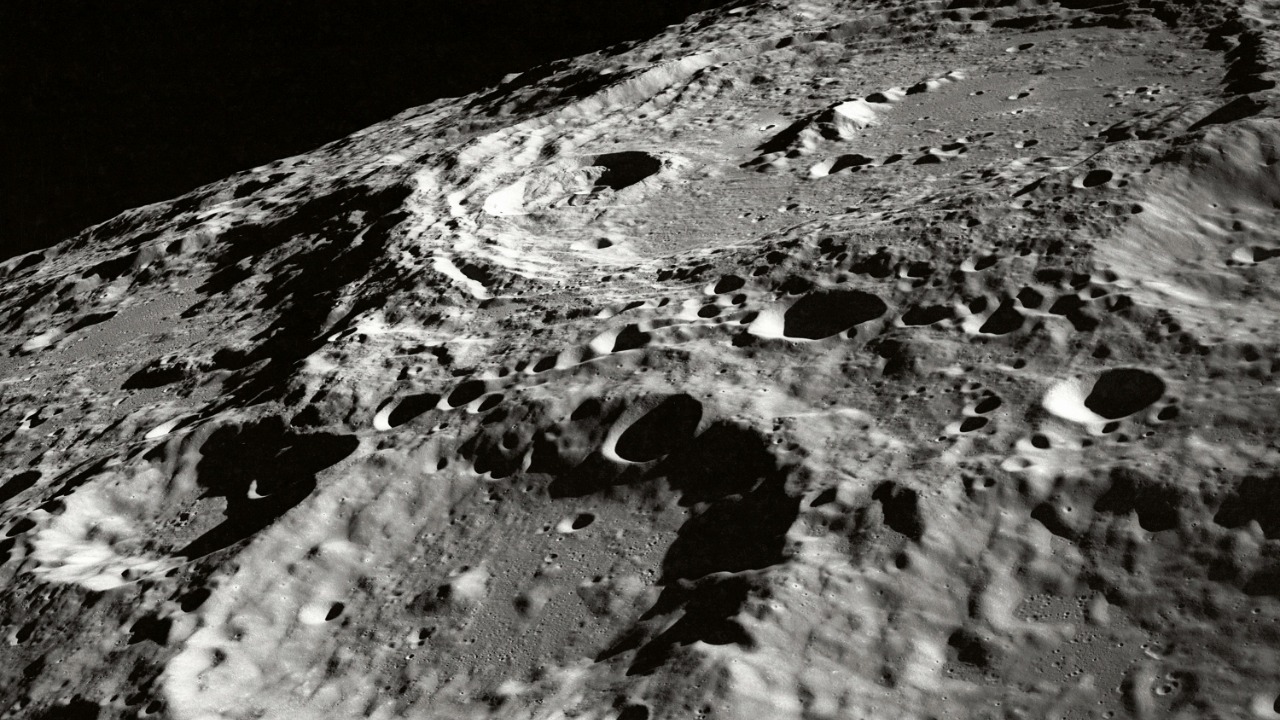

Moonquakes were once a scientific curiosity buried in Apollo-era data. Now a fresh analysis of those tremors is forcing mission planners to confront a harder truth: the ground under future lunar bases may be far less stable, and far more active, than the romantic image of a silent, frozen Moon suggests.
As NASA races to return astronauts to the surface and build long-lived habitats, the new moonquake findings are colliding with the agency’s most ambitious timelines. If the evidence holds, I expect it to reshape where outposts are built, how they are engineered, and which risks are treated as acceptable in the next phase of human exploration.
Artemis meets a restless Moon
NASA’s Artemis program is built on a simple promise: send crews back to the lunar surface, then stay long enough to turn short visits into a permanent foothold. The architecture behind that vision, from crewed landers to surface power systems, assumes that the Moon is a harsh but predictable environment, one where dust, radiation, and extreme temperatures dominate the risk calculus rather than the ground itself shifting under astronauts’ boots.
That assumption is now under pressure. As NASA details in its own overview of Artemis, the agency is targeting the lunar south pole for missions like Artemis III and planning a sustained human presence that will depend on fixed infrastructure, including habitats, landing pads, and mobility systems. The new moonquake research suggests that in some regions, those assets could face repeated shaking over the course of months and years, a cumulative hazard that was largely irrelevant to the brief Apollo landings but becomes central once crews are expected to live and work on the Moon for extended stretches.
What the new moonquake study actually found
The latest work that has rattled lunar planners goes back to the Apollo 17 landing zone, a site long treated as a relatively benign benchmark for surface conditions. Researchers revisited seismic records from that mission and uncovered a pattern of moonquakes that shook the area far more often than earlier analyses had indicated, revealing that even a location considered safe for a short stay can experience persistent seismic activity over time.
According to reporting on the new analysis, scientists have discovered that moonquakes repeatedly affected the Apollo 17 site, raising questions about how similar shaking might impact future lunar outposts. The study, described as drawing on a detailed review of seismic data and framed in part through a research poll of expert interpretations, points to a need to prioritize new seismic instruments on upcoming missions so that planners can map where the ground is most likely to move before committing to permanent base locations.
Why these quakes are different from Apollo’s brief visits
For the Apollo crews, seismic risk was largely a footnote. Missions like Apollo 17 were measured in days, not months, and the hardware they left behind was not designed to support a continuous human presence. A lander that only needs to survive a handful of sunrises and sunsets can tolerate a level of uncertainty that would be unacceptable for a habitat expected to shelter astronauts through multiple lunar nights.
New research underlines that distinction. One analysis explicitly contrasts the limited danger faced by Brief missions such as Apollo 17 with the daily risks that future crews will encounter as they operate rovers, laboratories, and power systems in the same terrain. That work, which examines how repeated shaking could affect operations, argues that what was tolerable for Apollo is not automatically tolerable for a permanent base, especially if quakes can subtly weaken structures or destabilize slopes over time.
A shrinking Moon and “Shrinking Moon Cliffs”
The Moon is not just quaking, it is slowly contracting, and that tectonic squeeze is reshaping the surface in ways that matter for where humans can safely live. As the interior cools and the body shrinks, the crust crumples, creating fault scarps and cliffs that can slip and generate seismic events when the stress becomes too great.
NASA’s own science overview describes how Shrinking Moon Cliffs have been observed both by Apollo astronauts and by the Lunar Reconnaissance Orbit spacecraft, tying visible scarps to the underlying tectonic forces. Those cliffs are not just geological curiosities; they are active fault zones that can host moonquakes, and their distribution will influence where Artemis-era planners choose to site landing pads, fuel depots, and habitats to avoid the worst of the shaking.
New ridges, recent activity, and a Moon on the Move
Layered on top of the shrinking interior is another sign that the Moon is more dynamic than once thought: fresh ridges that appear to record recent tectonic motion. These features suggest that the crust is still adjusting, and that some regions may be accumulating stress that could be released as quakes during the very period when humans are trying to settle there.
One study, framed under the banner of a Moon on the Move and highlighting Surprising New Ridges Reveal Recent Activity, argues that these structures should directly inform how we plan future moon missions. If ridges mark zones of relatively recent or ongoing deformation, then building a base nearby without detailed seismic mapping would be akin to constructing a skyscraper next to an unmapped fault line on Earth, a risk that would be unacceptable in any modern city.
Hour-long shaking and the Artemis III challenge
For Artemis III, which is intended to return astronauts to the surface near the south pole, the nature of the shaking itself is as concerning as its frequency. Some of the newly analyzed moonquakes are not sharp jolts but long, drawn-out events that can last for close to an hour, a duration that could resonate with structures and equipment in ways that short, sharp shocks might not.
Reporting on these findings notes that Preparing for Artemis NASA involves confronting the possibility of hour-long shaking at the south pole, precisely where Artemis III is targeting its landing. That combination of prolonged motion and a mission profile that includes extended surface operations means engineers will have to test how habitats, solar arrays, and even regolith-based landing pads respond to sustained vibration in one-sixth gravity, rather than assuming that lunar quakes are brief and easily shrugged off.
From exotic tremors to concrete threats for lunar bases
What was once treated as an exotic aspect of lunar geology is now being reframed as a direct engineering problem. The new analyses argue that moonquakes could threaten not just individual structures but the long-term viability of entire base sites, especially if repeated shaking undermines foundations, cracks pressure vessels, or destabilizes slopes above key assets like power stations or propellant tanks.
One detailed study, explicitly titled New Research Identifies Moonquake Dangers That Could Threaten Future Lunar Missions, lays out how seismic waves could interact with regolith and buried ice deposits in ways that amplify motion at the surface. It argues that mission planners should treat moonquakes as a design driver on par with thermal extremes, not as a secondary concern, and that base concepts need to be tested against realistic shaking scenarios rather than idealized, static loads.
Lessons from mysterious seismic signals on Earth
To understand how to live with a seismically active Moon, researchers are looking to Earth for analogues, particularly in places where subtle or unusual seismic signals hint at hidden hazards. One such case involves a potential megatsunami zone, where scientists have had to sift through enormous volumes of data to identify patterns that could warn of catastrophic landslides before they happen.
In that Earth-based work, researchers took on the massive task of manually reviewing a year’s worth of continuous seismic waveform data to understand mysterious seismic signals beneath a potential megatsunami zone and to anticipate when and where a landslide might occur. The same kind of painstaking pattern recognition will likely be needed on the Moon, where sparse seismic networks will have to extract maximum insight from limited instruments to flag unstable slopes, buried faults, or regions where repeated quakes could gradually erode the safety margins of a base.
How seismic risk could reshape site selection
All of this new evidence points toward a future in which seismic risk is a primary filter for choosing where to land and build, not an afterthought. Instead of focusing solely on access to water ice, line of sight for communications, or power availability, Artemis planners may have to weigh those benefits against the likelihood that a given site will experience frequent or intense moonquakes over the lifetime of a base.
One analysis of lunar seismic hazards emphasizes that the cumulative risk is particularly relevant as NASA and the Artemis program aim to establish a permanent human presence on the Moon. It notes that future crews, who will spend far longer on the surface than their Apollo predecessors, will face a different risk profile, one in which even moderate quakes can become serious threats when they are repeated over years and decades rather than encountered once during a brief visit.
The case for a new generation of lunar seismometers
If the Moon is more active than we thought, the most obvious response is to listen more carefully. The Apollo seismometers provided a tantalizing glimpse of lunar tectonics, but they were limited in number, duration, and coverage. A modern network, built with today’s sensors and data analysis tools, could transform that glimpse into a detailed map of where and how the Moon moves.
The recent moonquake studies repeatedly call for new seismic instruments to fly on upcoming missions, arguing that a denser network is essential to refine hazard models and guide base design. One report on the Apollo 17 analysis notes that the evidence from that site should prompt mission planners to prioritize new seismic instruments, and it frames that recommendation in part through a poll of expert opinion on how best to balance science goals with safety needs. For Artemis, that likely means carving out mass and power budgets for seismometers on both robotic precursors and crewed landers, even when every kilogram is contested.
Engineering for a quaking frontier
Ultimately, the new moonquake findings are not an argument against going back to the Moon, but a warning that the frontier will be more technically demanding than many early concept studies assumed. Habitats may need deeper or more flexible foundations, landing pads might have to be reinforced or relocated away from active scarps, and storage tanks for volatile propellants could require seismic isolation systems similar to those used for critical infrastructure in earthquake-prone regions on Earth.
As I read through the emerging research, I see a clear throughline: the Moon is not a static backdrop for exploration, it is a moving, shifting world whose subtle tectonics will shape every decision about where and how humans live there. The sooner Artemis planners integrate that reality into their designs and timelines, the more likely it is that the first permanent lunar outposts will endure not just the cold and the darkness, but the quiet, persistent shaking of a world that is still settling into its long cosmic night.
More from MorningOverview