
The catastrophe that unfolded at Chernobyl in 1986 was supposed to be entombed behind layers of concrete and steel, a disaster frozen in time rather than a recurring threat. Now Ukrainian officials and international inspectors say that protective barrier has been so badly damaged by a Russian drone strike that it can no longer fully contain the radioactive material inside, and that any new leak cannot be reliably stopped. The warning turns one of the world’s most infamous industrial ruins back into an active security risk in the middle of a live war zone.
Instead of a sealed sarcophagus, the site outside Kyiv is again a vulnerable industrial facility, exposed to both military attack and the slow grind of structural decay. As I weigh the emerging evidence, the picture that forms is not of an imminent second Chernobyl explosion, but of a chronic and uncontrolled seepage risk that Ukraine, its neighbors and global nuclear regulators will be forced to manage for years.
The strike that broke Chernobyl’s shield
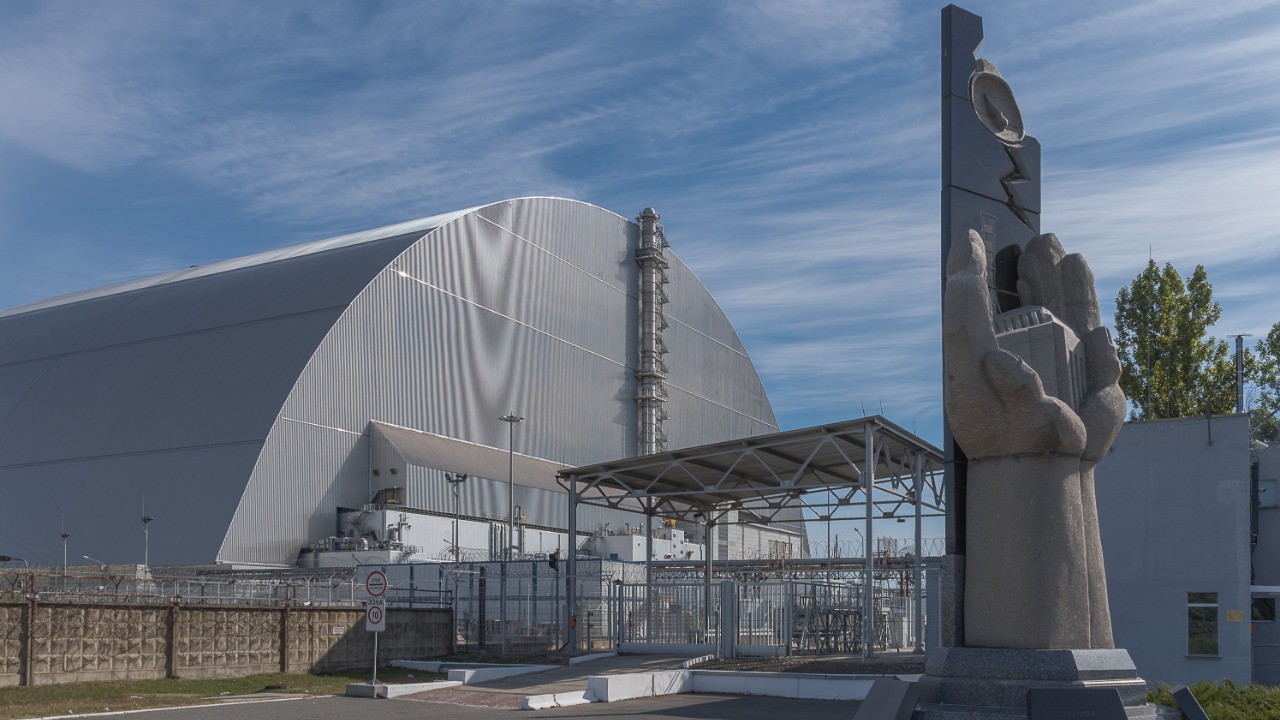
Ukrainian authorities say the current crisis began with a Russian drone strike that hit the New Safe Confinement structure earlier this year, punching through the steel shell that was designed to seal off the ruins of Reactor 4. That attack, described as part of a broader Russian campaign against Ukrainian energy and industrial sites, left the protective shield at the Chernobyl power plant so compromised that it no longer performs its core safety role. The structure, which looms over the shattered reactor like a vast aircraft hangar, was never meant to withstand repeated military strikes, and the impact of a guided drone on its outer shell has now exposed that design limit.
International nuclear experts who have inspected the site report that the massive arch has lost its “primary safety functions,” including the ability to confine radioactive dust and gases inside the ruined reactor building. One detailed assessment concludes that Chernobyl is now “unable to prevent” a radiation leak if conditions inside the reactor ruins deteriorate, a finding that Ukrainian officials have echoed in public warnings from Kyiv. That same analysis, relayed from the exclusion zone north of the Ukrainian capital, underlines that the damage is not cosmetic: the shield’s confinement capability has been fundamentally degraded by the Russian strike, and the plant’s operators no longer have confidence they can fully contain any new release.
What “unable to stop a leak” actually means
When Ukrainian officials say Chernobyl cannot stop a leak, they are not suggesting that the reactor is about to explode again, but that the engineered barriers designed to trap radioactive material are no longer reliable. The original 1986 sarcophagus was already cracked and unstable, which is why the New Safe Confinement was slid into place to capture dust, debris and contaminated air before it could escape into the environment. Now, after the Russian attack, that second layer of defense has been breached, and the operators concede that if Radiation levels spike inside the ruins, they no longer have a fully functioning envelope to keep those particles from drifting beyond the site. In practical terms, that means any new structural collapse or internal fire could send contamination into the air with far fewer obstacles in its path.
The phrase “unable to stop” also reflects the loss of key systems inside the arch, including ventilation, filtration and remote handling equipment that were supposed to let engineers stabilize the decaying reactor without exposing workers. Reports from the Kyiv region describe how the strike and the subsequent fire damaged power supplies and monitoring lines, leaving staff with fewer tools to detect and respond to changes in Radiation conditions. In the worst case, if parts of the old reactor building give way or if stored fuel-containing materials are disturbed, the plant would have to rely on improvised measures rather than the carefully engineered confinement systems that were meant to operate for decades.
A disaster site that never stopped being dangerous
Chernobyl has long been described as a closed chapter, but the site has never stopped being hazardous. The 1986 explosion and fire killed 31 people in the immediate aftermath, and the radioactive fallout forced the evacuation of entire towns around the plant. Even after the last reactors were shut down, the complex remained a sprawling industrial graveyard filled with contaminated concrete, twisted metal and unstable fuel debris. The New Safe Confinement was built precisely because the original sarcophagus was cracking and leaking, and because engineers feared that unchecked corrosion could eventually trigger a partial collapse that would throw radioactive dust back into the air.
That history matters because it explains why the current damage is so alarming. The shield that now stands over the ruins was supposed to buy at least a century of relative stability, giving Ukraine and its partners time to dismantle the old structure and safely manage the fuel-containing materials inside. Instead, less than a decade after it was completed, the arch has been battered by war. Inspectors now warn that the protective shell can no longer block radiation from leaking out of the destroyed reactor, and that the site north of Kyiv has reverted from a managed legacy hazard into an active nuclear safety problem.
Inside the New Safe Confinement’s failure
The New Safe Confinement was one of the most complex engineering projects in modern nuclear history, a 36,000 ton steel arch designed to slide over the old sarcophagus and seal it off from the elements. Its designers intended it to withstand earthquakes, storms and decades of corrosion, but they did not plan for precision-guided munitions. According to a detailed account of the damage, the Russian drone strike tore through the outer cladding and compromised internal support elements, leaving the arch’s steel shell riddled with weaknesses that now allow contaminated air to move more freely between the reactor ruins and the outside environment. The result is that the Chernobyl protective shield can no longer contain nuclear material in the way the UN nuclear Watchdog once certified it could.
Technical assessments shared with the International Atomic Energy Agency describe how the blast and subsequent fire warped sections of the steel structure and damaged the systems that keep the interior under controlled pressure. In the months after the attack, emergency crews had to fight a blaze that burned inside the arch, and their efforts, while necessary, also introduced water and heat that further stressed the metal. One analysis notes that the steel shield now behaves less like a sealed containment vessel and more like a damaged industrial hangar, with gaps and deformations that increase the risk of radioactive dust escaping during future disturbances. In effect, the New Safe Confinement has lost the redundancy and robustness that justified its enormous cost.
IAEA warnings and what inspectors found
The International Atomic Energy Agency has been unusually blunt about the situation, with Director General Rafael Grossi warning that the confinement facility has “lost its primary safety functions” after the Russian drone strike. Inspectors dispatched to the exclusion zone report that the shield protecting the Chernobyl nuclear power plant no longer blocks radiation in the way it was designed to, and that the structure needs major repair before it can again be considered a reliable barrier. Their findings, summarized in recent briefings, emphasize that the damage is not limited to superficial panels but extends to load bearing elements and monitoring systems that are essential for long term safety.
In one of its most detailed public assessments, the IAEA describes the Bombed Chornobyl shelter as no longer capable of fully blocking radiation and in need of extensive reinforcement and reconstruction. The agency’s experts note that while the main arch has not collapsed, the combination of blast damage, fire and accelerated corrosion has degraded the steel structure far faster than expected. They also stress that the loss of key monitoring lines makes it harder to track conditions inside the reactor ruins in real time, which in turn complicates any emergency response. For an organization that typically speaks in cautious technical language, the IAEA’s conclusion that the shield is no longer confining radiation is a stark warning.
How the damage is changing radiation risks
Radiation levels at the shuttered plant have fluctuated since the strike, and inspectors caution that the most serious danger lies not in a single spike but in the long term increase in potential release pathways. The steel shield was meant to keep contaminated dust and aerosols from escaping during maintenance work or structural shifts inside the reactor ruins. Now, with that barrier compromised, any disturbance of the fuel-containing materials, whether from internal collapse, corrosion or another fire, is more likely to send radioactive particles into the air. Reports from the site describe how emergency work to extinguish the blaze after the strike created additional debris and stress points, further increasing the chance that damaged sections could fail in the future.
Experts who have reviewed the IAEA’s findings say the key risk is a chronic, low level leak rather than a dramatic plume visible on satellite images. The shield’s damaged cladding and warped joints may allow small but persistent releases of contaminated dust, especially during storms or temperature swings that flex the steel. One technical summary notes that damage to the shield increases the likelihood that the structure will behave “like a massive aircraft hangar” rather than a sealed containment, with air moving in and out more freely. That shift in behavior, combined with the loss of some filtration and ventilation systems, is why inspectors now warn that Chernobyl is unable to prevent a radiation leak if conditions inside the ruins deteriorate.
Kyiv, Ukraine and the politics of nuclear vulnerability
For Ukraine’s leadership, the damage at Chernobyl is not just an environmental crisis but a political and strategic one. The plant sits in the Kyiv region, relatively close to the Ukrainian capital, and any renewed contamination would carry enormous psychological weight for a country that still lives with the legacy of 1986. Officials in Kyiv have framed the Russian drone strike as an attack not only on Ukrainian territory but on global nuclear safety, arguing that Moscow has turned a site of shared international concern into a battlefield target. Their message is that Ukraine cannot manage the fallout alone, either literally or diplomatically, and that the world has a stake in preventing further attacks on nuclear facilities.
The IAEA has echoed some of those concerns in its own language, warning that the Chernobyl nuclear plant’s protective shield has been damaged after the drone strike and asking bluntly whether Ukraine should worry about the long term implications. In one analysis, the agency notes that this is not the first time nuclear infrastructure has been caught in the crossfire since Russia’s full scale invasion, pointing to earlier incidents at other plants as part of a pattern. The Inter national community, through the IAEA, has urged both sides to respect basic norms around nuclear safety, but the strike on Chernobyl suggests those appeals have limited deterrent power when military planners see strategic value in targeting energy and industrial sites.
Comparisons with other Ukrainian nuclear flashpoints
Chernobyl is not the only nuclear facility to be dragged into the war, and the pattern elsewhere helps explain why inspectors are so alarmed. Earlier in the conflict, the Zaporizhzhia nuclear power plant lost its external power connection after shelling, forcing operators to rely on backup systems to keep reactors cool. That episode, described in the same reporting that now details how Chernobyl is unable to stop a radiation leak, underscored how quickly a modern plant can become vulnerable when grid connections and safety systems are disrupted. In both cases, the underlying lesson is that nuclear infrastructure is far more fragile in wartime than its designers ever intended.
The difference at Chernobyl is that the site is already a disaster zone, filled with unstable debris and radioactive materials that cannot simply be shut down or cooled in the way an operating reactor can. When the shield protecting the Chernobyl nuclear power plant no longer blocks radiation, as the IAEA now says, there is no easy way to restore full safety without a massive reconstruction effort in the middle of a conflict. That stands in contrast to Zaporizhzhia, where reconnecting the plant to the grid and stabilizing operations, while difficult, is at least conceptually straightforward. The war has thus created two distinct nuclear risks in Ukraine: one at an active plant that must be kept running safely, and another at a ruined reactor that can no longer be fully contained.
What repairs are possible in a war zone
Engineers and regulators agree that the damaged shield needs major repair, but the practicalities of doing that work under fire are daunting. The New Safe Confinement was assembled over years in carefully controlled conditions, with international teams and specialized equipment brought in from across Europe. Repeating even part of that effort now would require secure access to the exclusion zone, reliable supply lines for heavy steel and concrete, and a guarantee that Russian forces would not target the site again. So far, none of those conditions exist, which is why the IAEA has focused on short term stabilization measures rather than a full rebuild.
In public comments, Rafael Grossi has said there is an urgent need to restore nuclear safety and security at Chernobyl, but he has also acknowledged that any long term fix will depend on the broader trajectory of the war. Technical summaries suggest that crews are concentrating on shoring up the most damaged sections of the arch, patching obvious breaches and restoring some monitoring capacity where possible. Yet even those stopgap efforts carry risks, since workers must operate in a partially contaminated environment under a compromised roof. Until there is a durable ceasefire or peace agreement that allows for large scale reconstruction, the plant will remain in a kind of limbo, with a damaged shield that cannot be fully trusted.
Living with an uncontrolled legacy
For people in Ukraine and neighboring countries, the knowledge that Chernobyl’s shield has stopped working as intended reopens anxieties many hoped were buried with the reactor ruins. The site will not suddenly become uninhabitable for the rest of Europe, but it does represent a renewed source of uncertainty in a region already battered by war. Farmers, residents and local officials in the Kyiv region must now factor in the possibility of new contamination events, however small, while policymakers in distant capitals revisit emergency plans that had quietly assumed Chernobyl was safely entombed. The psychological impact of hearing that the plant is unable to prevent a radiation leak may be as significant in the short term as the physical risk itself.
As I look across the reporting and the IAEA’s unusually stark language, what stands out is how quickly a supposedly solved problem has become a live threat again. The New Safe Confinement was meant to symbolize closure, a final act of engineering that would let the world move on from 1986. Instead, a single Russian drone has turned that symbol into another casualty of the war, leaving Ukraine and its partners to manage a damaged arch, a wounded landscape and a renewed sense that nuclear disasters do not simply end, they linger and evolve. The reactor’s protective shield was so damaged by the strike that it is not confining radiation anymore, and until the guns fall silent long enough for real repairs, the world will be living with the consequences.
More from MorningOverview