
Frank Gehry, who died at 96 after a brief respiratory illness, leaves behind a body of work that reshaped how cities think about culture, spectacle, and public space. From Spain to California, his sculptural buildings turned skylines into global talking points and cemented his reputation as one of the most influential architects of the last century. I look at 10 Frank Gehry icons that define that legacy, tracing how each project pushed form, technology, and civic ambition in ways that continue to reverberate.
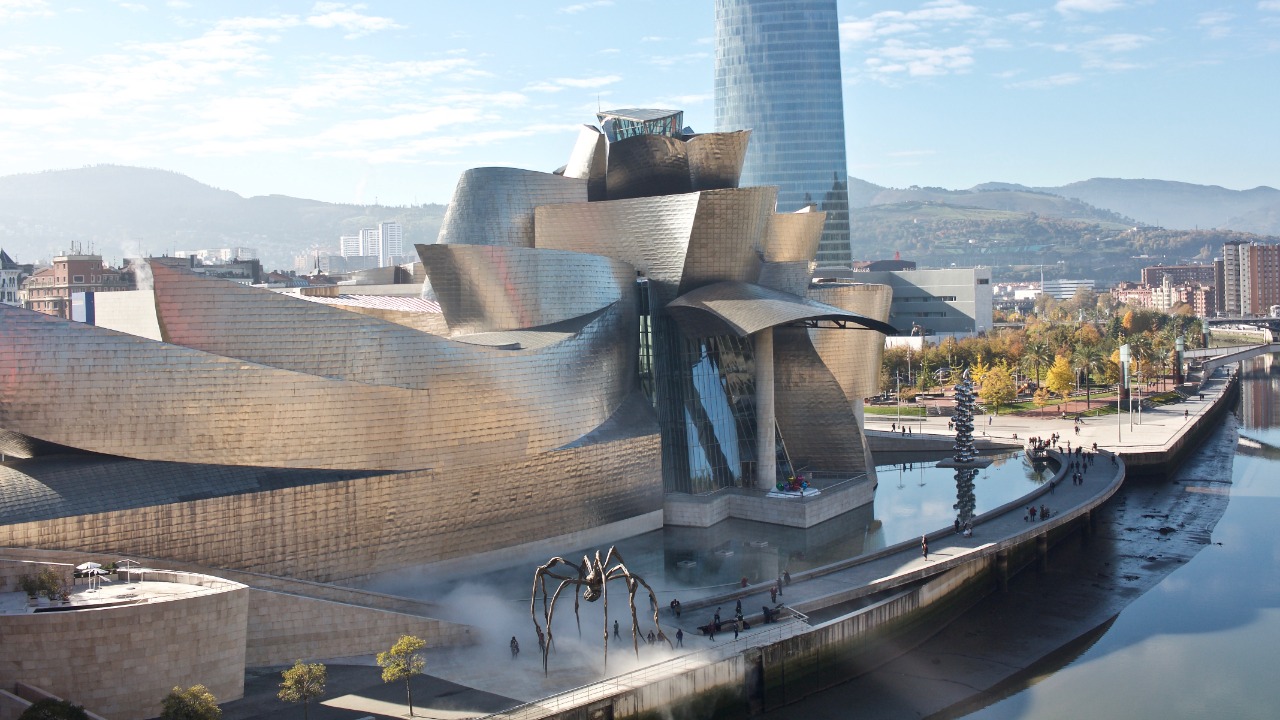
1. Guggenheim Museum Bilbao
The Guggenheim Museum Bilbao is the project that turned Frank Gehry from acclaimed designer into a global cultural force. Reporting on his death repeatedly identifies him as the architect of the Guggenheim Museum Bilbao, Spain, underscoring how closely his name is tied to this riverside landmark. The museum’s titanium curves and fragmented volumes helped transform Bilbao from an industrial city into an international arts destination, a phenomenon often described as the “Bilbao effect.” That shift matters not only as an architectural milestone but as a template for how cultural investment can drive urban regeneration and tourism.
Gehry’s status as a prize-winning architect behind the Guggenheim Bilbao is central to how obituaries frame his career, placing this museum at the heart of his legacy. The building’s complex geometry required advanced digital modeling, signaling a new era in how architects use technology to realize sculptural forms. For museum leaders and city officials worldwide, Bilbao became proof that daring design could pay off economically and symbolically, encouraging risk-taking in cultural architecture that continues to shape commissions today.
2. Walt Disney Concert Hall, Los Angeles
The Walt Disney Concert Hall in Los Angeles is the other building most frequently linked to Gehry’s name, and for good reason. Multiple accounts of his life describe him as the architect of the Walt Disney Concert Hall, Los Angeles, pairing it with the Guggenheim Museum Bilbao as a defining achievement. The stainless steel exterior, composed of sweeping, sail-like panels, gives the Los Angeles Philharmonic a civic monument that reads as both sculpture and infrastructure. Inside, the vineyard-style seating and warm wood surfaces support the hall’s reputation as an acoustic powerhouse, aligning Gehry’s visual bravura with the technical demands of world-class performance.
Coverage of his death also notes that Gehry was the prize-winning architect behind the Disney Concert Hall, emphasizing how awards and public acclaim converged around this project. For Los Angeles, the building signaled a maturation of the city’s cultural core, anchoring Grand Avenue as a destination and reinforcing the idea that serious architecture belongs in car-centric Southern California. For orchestras and arts funders elsewhere, Disney Hall demonstrated that investing in bold design could attract audiences, donors, and global attention, raising expectations for what a contemporary concert hall should deliver.
3. Fondation Louis Vuitton, Paris
The Fondation Louis Vuitton in Paris shows how Gehry translated his sculptural language into a new European context. Described as a visionary design of the Louis Vuitton Foundation, the building is often likened to a ship or a cluster of glass sails floating in the Bois de Boulogne. Its layered glass “veils” wrap a series of white volumes that house galleries, auditoriums, and public spaces, creating a complex interplay between transparency, reflection, and solid form. The project extends Gehry’s long-standing interest in movement and fluidity, but it does so with a refined palette that responds to Parisian light and parkland.
For the art world and luxury sector, the Fondation Louis Vuitton illustrates how cultural patronage and brand identity can intersect through architecture. The building gives the foundation a highly visible symbol of ambition, while also offering Paris another major venue for contemporary art. In urban terms, it reinforces a broader trend in which private institutions commission star architects to create destination museums, using design as a strategic tool to attract visitors, artists, and global media attention.
4. California Iconic Buildings (Loyola Law School and beyond)
Frank Gehry’s California portfolio, from Loyola Law School in Los Angeles to coastal and desert projects, forms a crucial strand of his legacy. Recent coverage of his passing highlights California iconic buildings that fans can still visit, underscoring how deeply his work is woven into the state’s built environment. At Loyola Law School, Gehry used fragmented forms, varied materials, and carefully scaled courtyards to create an urban campus that feels both experimental and humane. Across California, his buildings often respond to light, climate, and car culture, translating his sculptural approach into settings that range from academic to residential.
These projects matter because they show Gehry not only as a creator of singular global landmarks but as a shaper of everyday urban experience in his home region. For students, faculty, and local communities, his California buildings provide daily encounters with avant-garde architecture rather than occasional pilgrimages. The fact that these structures are framed as part of a visitable legacy also speaks to a broader shift in how architecture is consumed, with design-savvy travelers treating buildings as destinations on par with natural landscapes or historic monuments.
5. Vitra Design Museum, Weil am Rhein
The Vitra Design Museum in Weil am Rhein, Germany, is often cited as one of the 10 iconic Frank Gehry buildings that celebrate the late “Starchitect’s” legacy. A recent survey of his work includes the Vitra Design Museum among the key projects that define his deconstructivist style. The museum’s white plaster forms, intersecting volumes, and sharply angled roofs mark an early exploration of the fragmented geometries that would later appear in Bilbao and beyond. Unlike the metallic skins of his later icons, Vitra relies on sculpted mass and shadow, making it a crucial step in the evolution of his language.
For the design industry, the museum has become a pilgrimage site, housing exhibitions on furniture, industrial design, and architecture within a building that itself is a case study in experimental form. Its presence on the Vitra campus, alongside works by other renowned architects, positions Gehry within a broader conversation about late twentieth century design innovation. The project’s inclusion in lists of his most important works reinforces how even relatively small institutions can gain global visibility when they pair ambitious programming with equally ambitious architecture.
6. Dancing House, Prague
The Dancing House in Prague, sometimes nicknamed “Fred and Ginger,” shows Gehry’s ability to insert radical form into a historic European streetscape. It appears among the legendary architect’s 10 most iconic designs in a widely cited overview of his career, which highlights the Dancing House as a twisted residential and office tower that symbolizes fluidity. The building’s paired volumes, one glass and one more solid, seem to lean and swirl together, breaking from the surrounding block’s traditional rhythm without ignoring its scale. This tension between disruption and dialogue is central to how Gehry approached context throughout his career.
For Prague, the project was controversial at first, raising questions about how contemporary architecture should coexist with historic fabric. Over time, it has become a tourist magnet and a visual shorthand for the city’s post-communist transformation. The Dancing House’s inclusion in lists of Gehry’s most iconic works underscores a broader shift in public taste, showing how once-divisive designs can become beloved symbols that help cities project a modern, forward-looking identity.
7. Weisman Art Museum, University of Minnesota
The Weisman Art Museum on the University of Minnesota campus is another Gehry building now being revisited as part of his enduring legacy. It is singled out as one of the 10 iconic Frank Gehry buildings that celebrate the late “Starchitect’s” career, with the Weisman Art Museum praised for its metallic, abstract form. The building’s stainless steel surfaces fold and flare above the Mississippi River, catching Midwestern light in constantly changing ways. Behind that expressive exterior, the museum provides flexible gallery spaces that support a wide range of exhibitions and university programming.
For students and visitors, the Weisman serves as a daily reminder that a public university can host architecture as daring as any global museum. Its presence on campus elevates the institution’s cultural profile and offers a tangible example of how investment in design can enrich academic life. In the broader museum world, the Weisman helped normalize the idea that regional institutions could commission internationally renowned architects, expanding the geography of high-profile cultural buildings beyond traditional art capitals.
8. IAC Building, New York City
The IAC Building in New York City demonstrates how Gehry adapted his sculptural approach to the demands of a corporate headquarters. Frequently listed among his 10 most iconic designs, the IAC Building stands out for its rippling glass facade and softly curving form along the Hudson River. Instead of metal cladding, Gehry used fritted glass panels to create a sense of movement and depth, giving the office tower a lighter, more luminous presence. The building’s stacked, shifting volumes break from the typical rectilinear office block, signaling a different attitude toward workplace architecture.
For technology and media companies, the IAC headquarters became an early example of how architecture could embody a brand’s identity and values. Its open interiors and distinctive exterior helped position the tenant as innovative and design-conscious, reinforcing a trend in which creative firms seek out or commission signature buildings. In urban terms, the project contributed to the transformation of Manhattan’s West Side waterfront, aligning with broader redevelopment that has turned former industrial zones into hubs for culture, offices, and public space.
9. Peter O. Kohler Pavilion, Loyola Marymount University
The Peter O. Kohler Pavilion at Loyola Marymount University extends Gehry’s California story into a new generation of campus design. It is highlighted among California iconic buildings that form a key part of his legacy and can be visited today, underscoring its role in the state’s architectural landscape. The pavilion integrates bold geometry with carefully framed views, using Gehry’s characteristic play of angles and materials to create a dynamic academic environment. Its design reflects his long engagement with educational institutions, where circulation, gathering, and informal interaction are as important as formal classrooms.
For Loyola Marymount University, the Kohler Pavilion signals a commitment to architecture as a strategic asset in recruiting students and faculty. The building’s visibility within lists of Gehry’s important works amplifies the university’s profile beyond regional boundaries, aligning it with a global conversation about design-led campuses. More broadly, the pavilion shows how Gehry’s late-career projects continued to evolve, applying his sculptural vocabulary in ways that support contemporary pedagogical needs and campus life rather than simply repeating earlier gestures.
10. Ray and Maria Stata Center, MIT
The Ray and Maria Stata Center at the Massachusetts Institute of Technology is one of Gehry’s most debated and influential academic buildings. It features prominently in discussions of the 10 things to know about the “Titan of Architecture” Frank Gehry, with the Stata Center at MIT cited as a dynamic complex that challenges traditional functionality. Its leaning towers, tilting walls, and fragmented facades create a sense of controlled chaos, reflecting the experimental spirit of the computer science and artificial intelligence research housed inside. The building’s unconventional circulation and informal gathering spaces were designed to encourage chance encounters and interdisciplinary collaboration.
For universities and architects alike, the Stata Center has become a touchstone in debates about risk, maintenance, and innovation in campus architecture. While it has faced criticism and even legal disputes over technical issues, its impact on how institutions imagine research environments is undeniable. The project encapsulates Gehry’s willingness to push structural and spatial boundaries, even when that meant courting controversy, and it stands as a vivid reminder that transformative architecture often emerges from precisely that tension.
More from MorningOverview