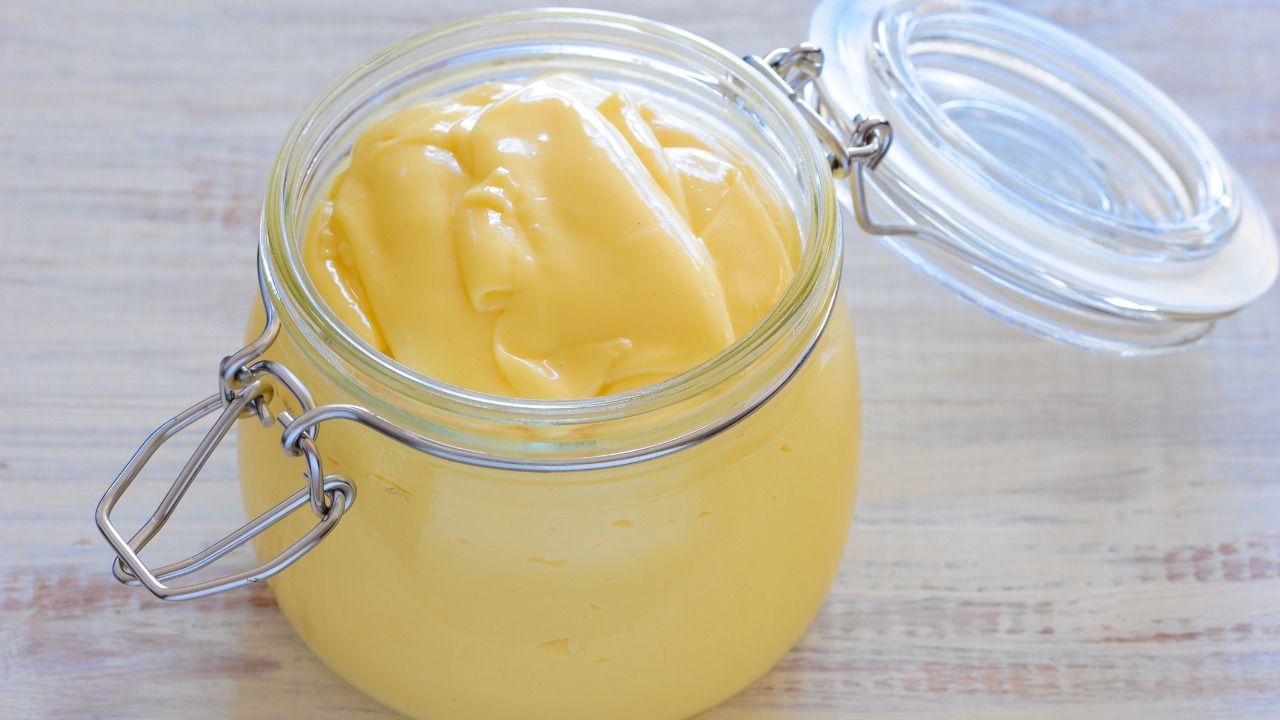

Mayonnaise is having a moment far beyond the sandwich. In orbit and on the lab bench, scientists are turning this everyday condiment into a precision tool to probe how complex fluids behave in microgravity and inside experimental nuclear fusion capsules. The results are not just quirky, they are reshaping how I think about the physics hidden in the foods we casually squeeze from a bottle.
By pushing mayo into the harsh conditions of space and the extreme pressures that mimic fusion experiments, researchers are uncovering how tiny droplets and internal structures hold together, fall apart, or morph into something new. Those insights could influence everything from the shelf life of sunscreen to the design of future fusion reactors that promise cleaner energy.
Why mayonnaise ended up on the International Space Station
The idea of sending mayonnaise into orbit sounds like a punchline, but for fluid physicists it is a logical next step. Mayonnaise is a classic emulsion, a dense mix of oil droplets suspended in water with the help of egg yolk and other stabilizers, and that makes it an ideal test case for understanding how complex mixtures behave when gravity is stripped away. On the International Space Station, researchers have turned this humble spread into a model system for tracking how droplets move, merge, and sometimes separate in slow motion.
To do that, they built a dedicated facility called COLIS, an experimental laboratory that now operates aboard the International Space Station and focuses on the internal structure of emulsions like mayonnaise that remain stable for years. By watching how these dense droplets rearrange in microgravity, scientists can isolate the subtle forces that keep the mixture from separating, something that is much harder to see on Earth where heavier components quickly sink and lighter ones rise. The data from COLIS are already feeding into models that explain why some emulsions stay creamy and uniform while others curdle or split.
What spaceflight reveals about everyday products
Once mayonnaise proved useful as a test emulsion, it became part of a broader campaign to understand how everyday products age in orbit. The same physics that governs a jar of mayo also shapes the behavior of sunscreen, pharmaceutical creams, and liquid medicines, all of which are built from intricate networks of droplets and particles. In microgravity, those internal structures evolve differently, and that gives researchers a rare chance to see how much of a product’s stability is driven by gravity and how much comes from its chemistry.
A new experiment on the ISS is using mayonnaise alongside sunscreen and medicines to track how their internal structures change over time in space, with researchers closely monitoring how these complex mixtures age and how their internal structures evolve in the absence of normal gravity. The findings, detailed in work on what happens to sunscreen, mayonnaise and medicines in space, are expected to inform better formulations for long missions, where a separated cream or degraded drug is more than an inconvenience. For manufacturers on Earth, the same insights could guide recipes that stay stable longer on store shelves without relying on extra preservatives.
From sandwich spread to fusion stand‑in
While one group of scientists studies mayonnaise in orbit, another is using it to mimic the violent environment inside nuclear fusion experiments. In these setups, tiny fuel capsules are blasted with energy until their outer layers behave like a solid, then melt and become plasma, a transition that is notoriously unstable. To understand and tame those instabilities, researchers needed a material that could behave like a solid and a fluid under controlled conditions, and mayonnaise turned out to be a surprisingly good fit.
In work that has been described under the banner of Mayo Madness Beyond, scientists have shown that the way mayonnaise deforms and flows under stress can stand in for the outer layers of a fusion capsule as it is compressed and heated. The emulsion’s dense, droplet-filled structure lets researchers visualize how ripples and instabilities grow, then either smooth out or tear the material apart. By tweaking the composition of the mayo and the way it is squeezed, they can simulate different capsule designs without firing up a full fusion experiment every time.
How Banerjee and colleagues turned mayo into a physics tool
To push this idea further, a team led by a researcher named Banerjee decided to treat mayonnaise as a controllable physics instrument rather than a kitchen curiosity. Banerjee and his colleagues were looking for a way to simulate the complex phase changes that occur when a fusion capsule is driven to extreme conditions, and they realized that mayo behaves like a solid at rest but can flow like a viscous fluid when stressed. That dual nature mirrors the way capsule materials respond as they are first compressed, then heated to the point where they begin to melt and eventually form plasma.
To simulate the process, Banerjee and his team used mayonnaise to recreate the way solid-like layers deform, buckle, and transition into more fluid or plastic phases under pressure. By carefully measuring how the emulsion responded, they were able to map out the conditions that make instabilities grow or shrink, information that is crucial for designing fusion capsules that compress evenly instead of tearing themselves apart. Because mayonnaise is inexpensive and easy to handle, the group argues that this approach could make early-stage fusion research cheaper and therefore more attainable for more labs.
Why mayonnaise is a surprisingly good fusion analog
At first glance, it might seem absurd to compare mayonnaise to the conditions inside a fusion reactor, but the physics of complex fluids makes the analogy compelling. Mayonnaise is packed with tiny oil droplets that interact, jam, and unjam as the material is squeezed, which is similar to how atoms and molecules in a solid begin to slip past one another as they approach melting. That makes it a powerful stand-in for the outer shell of a fusion capsule, where small imperfections can grow into large instabilities that ruin the reaction.
Reporting on how Mayonnaise can help study conditions ripe for nuclear fusion explains that scientists are using the condiment to explore how to keep fusion fuel compressed long enough to generate electricity. By watching how mayo’s internal structure responds to controlled disturbances, they can test strategies to suppress the kinds of ripples that would otherwise prevent fusion from taking place. The same experiments also help refine computer models, since the behavior of the emulsion can be measured directly and compared with simulations.
What scientists are really chasing: stable fusion energy
Behind the playful headlines about condiments and reactors lies a serious goal: making nuclear fusion stable enough to be a practical energy source. Fusion promises abundant power with minimal long-lived radioactive waste, but only if researchers can keep the fuel capsule from shredding itself through hydrodynamic instabilities. The work with mayonnaise is part of a broader push to understand those instabilities in detail, then design capsule shapes and materials that resist them.
Scientists have been working for years to ignite a fusion reaction that can be sustained long enough to be useful, and they know that tiny imperfections in the capsule surface or in the way it is compressed can prevent fusion from taking place. In coverage aimed at Educators and Parents, Sign Up for The Cheat Sheet, Scientists describe how experiments with mayonnaise are helping them see which kinds of disturbances grow fastest and which design tweaks can delay or suppress them. That knowledge feeds directly into the engineering of future fusion facilities, where even small gains in stability can translate into much more efficient energy production.
Designing “never unstable” fusion capsules
One of the most ambitious claims to emerge from this line of research is that mayonnaise-inspired experiments could help unlock fusion capsules that are far less prone to instability. By systematically varying the way the emulsion is prepared and compressed, researchers can test how different geometries and material properties affect the growth of ripples and jets that would otherwise tear a capsule apart. The goal is not perfection, but a design that keeps instabilities small enough that they do not derail the reaction.
Work described as a Stable fusion capsule design reports that the team’s findings could be crucial in delaying or even suppressing the instabilities by orders of magnitude. Banerjee concluded that the insights from these mayonnaise experiments point toward capsule configurations that are “never unstable” in the sense that the most dangerous modes are strongly damped. If those ideas hold up in full-scale tests, they could mark a significant step toward fusion systems that operate more reliably and at lower cost.
Researchers map the phases of mayo under extreme conditions
To make these claims credible, scientists have had to move beyond simple demonstrations and into detailed phase mapping of mayonnaise under controlled stress. That means treating the condiment like any other complex material, subjecting it to varying pressures, temperatures, and deformation rates while tracking how it transitions between solid-like, plastic, and fluid states. The resulting phase diagrams are then compared with those predicted for fusion capsule materials, allowing researchers to calibrate their models.
According to a report that begins with the line Researchers are using mayonnaise to study and address the stability challenges of nuclear fusion by examining the phase transitions between solid, fluid, and plastic phases in these conditions. By quantifying exactly when and how the emulsion yields, they can identify the thresholds where instabilities are most likely to grow. Those thresholds, in turn, inform how quickly a real fusion capsule can be driven without crossing into regimes where the outer shell becomes too soft or too uneven to hold the fuel in place.
Hellmann’s, headlines, and the public imagination
Part of what has propelled this research into public view is the sheer oddity of seeing a brand-name condiment linked to one of the most complex engineering challenges in energy science. When scientists pointed to Hellmann’s mayonnaise as a useful stand-in for fusion capsule materials, it created a bridge between a familiar grocery item and an otherwise abstract problem. That connection has helped draw attention to the underlying physics, even as some coverage leans into the novelty.
Accounts that describe how Mayo Madness Beyond being a delicious addition to a sandwich may help scientists figure out how to harness fusion energy emphasize that the same properties that make Hellmann’s spread smoothly also make it a revealing test material. By highlighting a household brand, researchers have inadvertently turned their experiments into a kind of science communication tool, one that makes it easier for non-specialists to grasp why the behavior of complex fluids matters for the future of energy.
From orbit to reactors: what comes next for mayo science
Taken together, the space-based experiments and the fusion analog studies show how a single everyday substance can illuminate very different scientific frontiers. On the ISS, mayonnaise and similar emulsions are helping researchers decode how internal structures evolve when gravity is removed, knowledge that feeds into better formulations for long-duration missions and more robust consumer products on Earth. In fusion labs, the same kind of emulsion is revealing how materials deform and destabilize under extreme compression, guiding the design of more resilient fuel capsules.
As I look across these projects, what stands out is not the quirkiness of the material but the discipline of the questions being asked. Whether in COLIS on the International Space Station or in tabletop setups that mimic the outer layers of a fusion capsule, scientists are using mayonnaise to probe the same fundamental issue: how complex, droplet-filled structures respond when pushed far from equilibrium. The answers, grounded in work on COLIS, on ISS aging experiments, and on fusion stability, suggest that the path to more reliable products and cleaner energy may run straight through the physics of a condiment most of us barely notice.
More from MorningOverview