
In a boiling corner of northern California, a single-celled creature is quietly rewriting the rules for how hot complex life can get. The so-called “fire amoeba” does not just tolerate temperatures that would cook most organisms, it actively thrives in them, forcing scientists to rethink where the upper limit for life really lies.
By shrugging off heat that destroys other eukaryotes, this microscopic extremophile has become a new benchmark for biological resilience and a fresh clue in the search for life in the harshest corners of Earth and beyond. I see it as a reminder that the map of habitable conditions is still being redrawn, one strange microbe at a time.
Meet the ‘fire amoeba’ redefining what complex life can endure
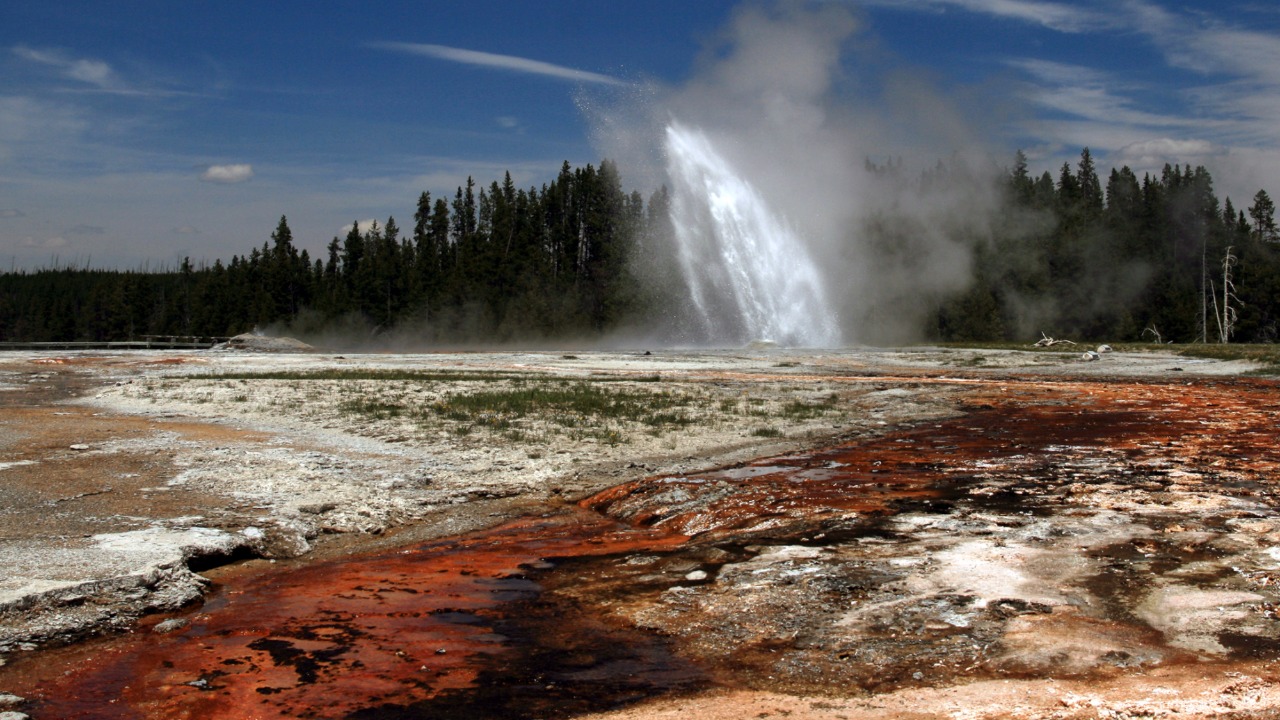
The organism now nicknamed the fire amoeba is not a bacterium or an archaeon, but a true eukaryote, a member of the same broad club of complex cells that includes plants, fungi, and humans. That alone makes its lifestyle remarkable, because it prospers in hot springs at Lassen Volcanic National Park where temperatures reach levels that would kill other complex cells, a setting described in detail in reports on the Lassen hot springs. In that scalding environment, the amoeba moves and feeds as if the near-boiling water were a mild bath.
Researchers have given this organism the formal name Incendiamoeba cascadensis, a nod to both its fiery habitat and its home in the Cascade Range. It is a single-celled Amoeba that behaves like a tiny, shape-shifting blob, yet it carries the full cellular machinery of a eukaryote, including a nucleus and complex internal structures that are usually far more fragile than the simpler architecture of bacteria. The fact that such a cell can remain intact and active in conditions that would normally denature proteins and shred membranes is what has scientists describing it as a record-breaking extremophile and a genuine outlier among known forms of complex life.
From Lassen’s boiling pools to the lab bench
The story of the fire amoeba begins in the steaming pools of Lassen, where researchers were surveying Hot springs that already hosted heat-loving microbes but had never yielded a eukaryote so extreme. Sampling teams collected water and sediment from these vents, then brought the material back to the lab and incubated it at temperatures that would usually be considered lethal for complex cells. According to local coverage of the find, the Amoeba from Lassen emerged from this work as a surprise resident of a niche that had been assumed to belong exclusively to simpler organisms adapted to Thermal extremes.
In the controlled environment of the lab, flasks were kept at the same punishing temperatures as the field sites, and after a few weeks of growth, researchers spotted a never-before-seen amoeba species gliding through the hot medium. Reports describe how, After that initial appearance, the team realized they were looking at a eukaryote that had quietly been thriving in a temperature band long thought off-limits to such cells, a realization that quickly turned a routine survey into a headline-grabbing discovery of an extremophile that pushes the boundaries of complex life.
Smashing the heat record for eukaryotes
For decades, biologists have treated the upper temperature limit for eukaryotes as a fairly firm ceiling, with most complex organisms faltering well below the scalding conditions that prokaryotic thermophiles enjoy. The fire amoeba has now reset that benchmark by surviving and growing at temperatures that had previously been recorded only for heat-loving bacteria and archaea, a leap in tolerance that effectively raises the known temperature ceiling for complex life. Coverage of the discovery notes that this organism now holds the record for the highest growth temperature for a eukaryotic organism, a status that has been highlighted in analyses of how this extreme fire amoeba smashes previous limits.
What makes this record so striking is not just the raw number on a thermometer, but the fact that the amoeba maintains the intricate choreography of eukaryotic life under such stress. Its enzymes still catalyze reactions, its membranes still hold, and its DNA remains stable in a thermal regime that would normally cause catastrophic damage. Reports emphasize that this performance does not merely edge past earlier records, it vaults over them, forcing researchers to revisit long-standing assumptions about how heat-sensitive eukaryotic structures really are and whether the old models of thermal limits were too conservative.
Inside the cell: how a ‘fire amoeba’ keeps its cool
To understand how a complex cell can function in such punishing conditions, scientists turned to analysis of the amoeba’s genome and cellular machinery. By decoding its DNA, they began to identify adaptations that echo those seen in classic thermophiles, including proteins that remain stable at high temperatures and molecular systems that repair heat-induced damage before it becomes lethal. Reports on this work describe how the team’s analysis revealed features that help explain the organism’s resilience, suggesting that the fire amoeba has converged on some of the same strategies that allow heat-loving prokaryotes to survive in boiling vents.
One particularly intriguing insight is that the amoeba’s toolkit appears to blend hallmarks of eukaryotic complexity with traits more commonly associated with thermophiles, such as robust chaperone proteins and membrane components that resist heat-driven breakdown. Coverage of the discovery notes that the team also decoded and compared its genome to those of known heat-loving prokaryotes called thermophiles, a comparison that highlighted both shared and unique solutions to life at high temperature, as described in reports on how scientists impressed by the fire amoeba probed its genetic secrets.
Why this discovery shocks biologists’ mental map of life
For years, textbooks and review papers have drawn a clear line between the thermal comfort zones of eukaryotes and the far hotter habitats of bacteria and archaea, with Eukaryotes such as mammals and us humans typically capped at much lower temperatures. The fire amoeba blurs that line by showing that at least one eukaryote can operate in a range previously reserved for prokaryotic specialists, a shift that forces biologists to rethink how rigid those categories really are. In practical terms, it means that the old mental map, where complex cells were confined to a relatively narrow band of conditions, now has to be redrawn to include a new outpost in the high-temperature frontier.
Researchers involved in the work have framed the find as a challenge to long-held assumptions about the fragility of eukaryotic structures, arguing that the discovery of this heat-loving Amoeba suggests there may be more undiscovered species occupying similar niches. A report highlighting A&S Researchers Featured in Nature for Discovery of Heat underscores how the Discovery of a Loving Amoeba that can form hardy cysts capable of reactivating later adds another layer of resilience to the story, as described in coverage of Researchers Featured in Nature for Discovery of Heat. Taken together, these details suggest that the upper boundaries of eukaryotic life are more flexible, and perhaps more frequently tested in nature, than scientists once believed.
From obscure microbe to global talking point
What began as a quiet field study in a remote park has quickly turned the fire amoeba into a minor celebrity in scientific circles and beyond. Local reporting on the Amoeba found in Lassen has noted that the discovery could reset the temperature ceiling for complex life, and that the story has drawn attention beyond academic circles as people grapple with the idea of a eukaryote thriving in conditions that sound more like an industrial sterilizer than a habitat. That leap from specialist journals to mainstream curiosity reflects how powerfully the organism speaks to basic questions about what life can endure.
The fascination is not limited to researchers; the tale of a gooey, heat-proof blob surviving in pools that would kill almost everything else has resonated with audiences who might never have heard of an extremophile before. One account described how this humble critter, a gooey single cell, has captured imaginations precisely because it lives in conditions that kill almost everything else, a framing that has helped the story spread across platforms like Bluesky, Facebook, Reddit, and Whatsapp as people share their amazement at such resilience, a reaction captured in coverage of scientists impressed by the fire amoeba.
What the fire amoeba means for astrobiology and extreme environments
For astrobiologists, the fire amoeba is more than a curiosity; it is a data point that expands the plausible range of environments where complex life might exist. If a eukaryote can function in the near-boiling waters of Lassen, then the list of potentially habitable niches on other worlds grows longer, from hot subsurface reservoirs on Mars to hydrothermal systems on icy moons. The organism’s success suggests that the transition from simple to complex cells does not automatically impose a strict thermal cap, a possibility that could influence how missions search for biosignatures in extreme settings.
The discovery also feeds back into how scientists think about Earth’s own deep past and future. If complex cells can adapt to such heat, then ancient hot environments may have been more welcoming to early eukaryotes than previously assumed, and future warming scenarios might need to account for a broader palette of biological responses. Reports on how an extremophile fire amoeba pushes the boundaries of complex life emphasize that the organism’s existence widens the conceptual space for where eukaryotes might arise and persist, a point underscored in coverage of how an extremophile fire amoeba pushes boundaries that once seemed fixed.
The next questions: from molecular tricks to practical uses
Now that the fire amoeba has reset the record books, the obvious next step is to dissect its molecular tricks in finer detail. I see a clear agenda emerging: identify the specific genes and proteins that confer heat tolerance, test how they behave in other organisms, and map out which adaptations are unique to this species and which might be shared across a hidden community of hot-spring eukaryotes. The initial genomic work has already pointed to candidate systems, but a full understanding will require years of biochemical and structural studies to see exactly how these components stay functional where others fail.
Beyond pure curiosity, there is a practical incentive to decode the fire amoeba’s resilience. Enzymes that remain active at high temperatures are valuable in industrial processes, from biofuel production to pharmaceutical manufacturing, and membranes that resist heat could inspire new materials for energy and chemical plants. Local coverage of the Amoeba in Lassen has hinted that the discovery has drawn attention beyond academic circles partly because of these potential applications, with the Thermal tolerance of this Eukaryote seen as a possible template for technologies that must operate in extreme conditions, a perspective reflected in reports on how the amoeba found in Lassen hot springs could reset expectations for complex life.
A new symbol of life’s stubborn adaptability
In the end, what lingers about the fire amoeba is not just its record-setting temperature tolerance, but the way it quietly undermines our sense of where life belongs. A single cell, drifting through a near-boiling pool in a volcanic park, has forced scientists to redraw charts, revise lectures, and reconsider how fragile complex cells really are. For me, it stands as a vivid reminder that biology is still full of surprises, even in places that have been sampled and studied for years.
As researchers continue to probe its genome, physiology, and ecological role, the fire amoeba will likely keep yielding insights that ripple far beyond its tiny body. Whether it leads to new industrial enzymes, reshapes astrobiological models, or simply deepens our appreciation for the ingenuity of evolution, this Dec discovery has already earned a place in the story of how life adapts to extremes. In a world grappling with rapid environmental change, a creature that treats searing heat as home is a potent symbol of both the limits and the possibilities of living systems.
More from MorningOverview