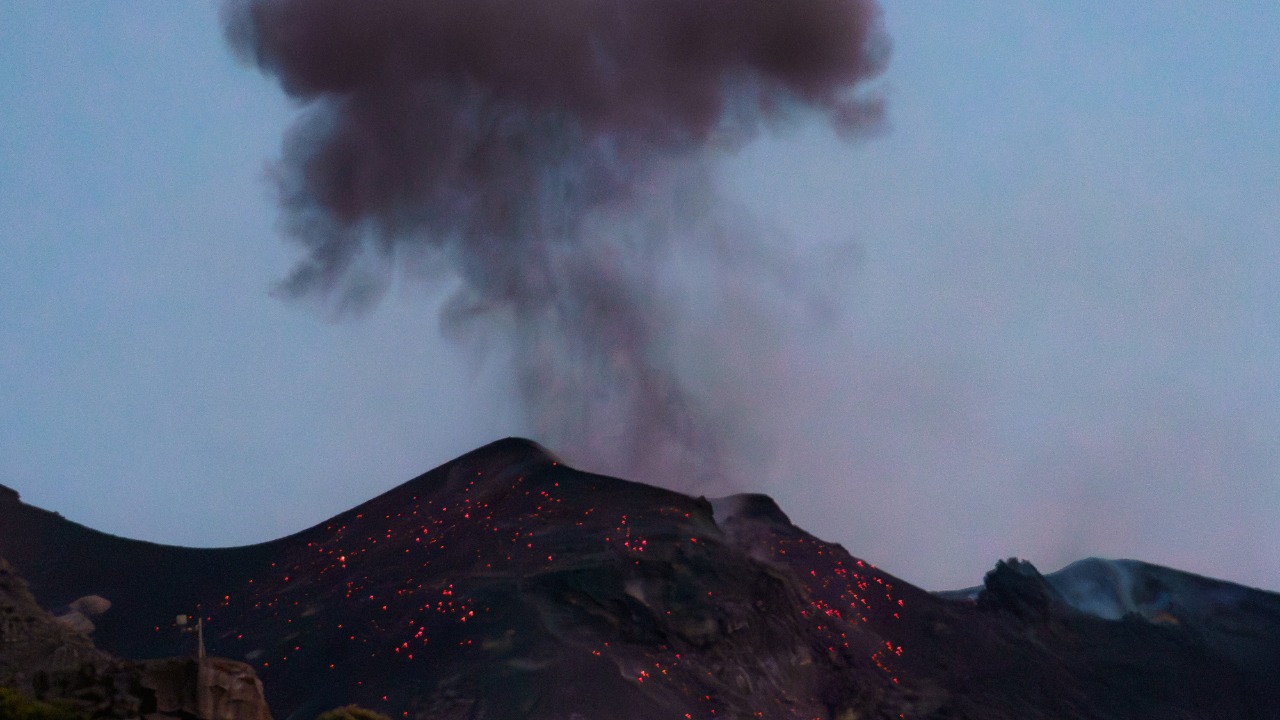

The Black Death has long been treated as a bolt from the blue, a medieval catastrophe that seemed to erupt out of nowhere and then vanish just as mysteriously. Now a new generation of climate detectives and genetic sleuths is converging on a far more precise origin story, one that traces the pandemic’s ignition point to a hidden volcanic blast and the fragile ecological networks it shattered.
By tying together tree rings, ancient DNA and the movements of rodents and fleas, scientists are beginning to pinpoint the literal spark that set the fourteenth century’s worst killer in motion. Their work reframes the Black Death not as an inexplicable curse, but as the cascading result of a specific environmental shock that rippled from remote mountains and oceans into the crowded streets of Europe.
The new volcano theory that rewrites a medieval nightmare
For generations, historians have focused on trade routes, rats and ships to explain how plague swept across continents, but the latest research argues that the real trigger sat deeper in the Earth. A cluster of studies now points to a powerful volcanic eruption that injected ash and sulfur into the atmosphere, setting off what scientists describe as a kind of “butterfly effect” that destabilized climate and food systems long before the first sick sailor staggered ashore. In this view, the Black Death was not just a biological event, it was the end point of a chain reaction that began when magma met seawater or ice in a still unidentified location.
Researchers examining tree ring samples from the Pyrenees and other sites have identified a sharp, sudden cooling that aligns with this hidden blast, a signal strong enough to suggest that Volcanic Eruptions Sparked a broader climatic shock. That cooling, they argue, helped set up the “Butterfly Effect” That Led To The Black Death Tearing Through Europe In The Century, as failed harvests, stressed ecosystems and shifting animal populations created ideal conditions for plague to jump from wild reservoirs into human communities.
How tree rings and ice cores exposed a hidden blast
The case for a volcanic spark rests on physical evidence that trees and ice quietly recorded centuries ago. When a major eruption fills the sky with reflective aerosols, summers tend to turn cooler and shorter, and trees respond by laying down unusually narrow rings that can be read like a barcode of past climate shocks. By lining up those narrow bands across thousands of samples, scientists have reconstructed a sudden downturn in growth that coincides with the years just before plague exploded across Eurasia, a fingerprint that points to a single, large eruption rather than a slow, natural fluctuation.
That same cooling signal appears in other archives, including high latitude ice cores that trap traces of volcanic sulfur, strengthening the case that a powerful blast darkened skies far from the eventual plague zones. One team has argued that the eruption’s location was likely in the tropics, based on how evenly the cooling shows up across hemispheres, a pattern they link to a Volcanic signal that spread globally. The pathogen that would later devastate Europe, they note, was already circulating in wild rodent populations, but the climatic jolt appears to have pushed those reservoirs and their insect parasites into new, more dangerous configurations.
From ash cloud to bread lines: famine as the missing link
What turns a distant eruption into a continental health disaster is not ash alone, it is hunger. When volcanic aerosols dim sunlight, crops fail, grain prices spike and the poorest households are forced into desperate choices that weaken immune systems and drive migration. In the years after the mysterious blast, harvest failures and erratic weather battered agrarian communities, creating pockets of malnutrition that made people far more vulnerable to any infectious threat that arrived on their doorsteps.
Climate historians argue that these food shocks did more than thin bodies, they also reshaped trade. As local harvests faltered, merchants expanded the grain trade across regions, moving not only wheat and rye but also the rodents and fleas that stowed away in sacks and ship holds. New work on plague ecology emphasizes that the disease is transmitted by insects that feed on blood, such as fleas, and usually cycles through rodent populations, a dynamic that became far more dangerous once Volcanic eruptions fueled famine and the grain trade. In that sense, the eruption did not just cool the air, it rewired the economic arteries that carried plague into Europe’s heart.
Pinpointing where the Black Death began
Even before the volcano hypothesis took center stage, geneticists had been closing in on the geographic cradle of the pandemic. By sequencing ancient DNA from plague victims and comparing it with modern strains, researchers traced the Black Death’s lineage back to a specific branch of the Yersinia pestis family tree that appears to have diversified rapidly in the fourteenth century. That genetic “big bang” pointed toward a source region in Central Asia, where long standing rodent reservoirs and trade routes intersected.
One influential study argued that the origin mystery had effectively been cracked, with scientists saying their discovery “puts to rest one of the last remaining debates” about where the infamous killer of humans began. They linked the diversification of plague strains to burials in a particular region and to about 30 skeletons taken from a cemetery that captured the moment when the disease first spilled into human populations, a finding that underpins the claim that the Mystery of Black Death origins has been solved. Another team stressed that Data from far more individuals, times and regions would still help clarify what the data presented really mean, but they agreed that the pathogen likely jumped from an animal that is infected in a specific ecological niche, a conclusion they anchored in Data gathered over decades.
From wild rodents to European ports
Once plague had established itself in wild rodent colonies, the path into Europe ran along the arteries of commerce. Caravans and ships carried grain, furs and spices, but they also ferried fleas and rats that served as mobile plague reservoirs, turning trade hubs into epidemiological relay stations. When the Black Death tore through Europe in 1347, it felt like the end of the world for communities that had no concept of bacteria or vectors, only the terrifying sight of neighbors collapsing with swollen buboes and blackened skin.
New research shows the disaster was not random, but the result of a chain of events that began far from the cities it eventually ravaged. Scientists now argue that the same climatic disruptions that followed the eruption reshaped rodent habitats and migration patterns, pushing infected animals closer to human settlements and into the caravans that fed Mediterranean ports. By the time ships reached Europe, the stage was set for a pandemic that would kill a large share of the population, a story that recent work on how When the Black Death hit Europe has begun to reconstruct in granular detail, including the role of specific ports and trade networks. Edited By researchers such as Joshua Shavit, that work emphasizes how Enti communities at the time interpreted the catastrophe through religious and social lenses rather than ecological ones.
The historians reading climate in medieval chronicles
While lab scientists pore over DNA and tree rings, historians are mining medieval texts for clues about how people experienced the environmental shocks that preceded the plague. Chroniclers recorded failed harvests, strange weather and famines that devastated villages, often framing them as divine punishment rather than the downstream effects of a volcanic blast. By aligning those narratives with physical climate records, scholars can see how communities were already under severe stress before the first plague ships arrived, which helps explain why the disease spread so quickly and lethally.
One of the leading voices in this field is Martin Bauch, a medieval and environmental historian at the Leibniz Institute for the History and Culture of Eastern Eu in Germany, who studies historic famine and the social upheavals that follow. His work highlights how an overlooked eruption may have sparked the Black Death by triggering a sequence of crop failures, price shocks and migrations that left societies brittle and exposed, a perspective grounded in the way Martin Bauch reads both chronicles and climate proxies. By treating famine and disease as intertwined rather than separate crises, he and his colleagues are reframing the fourteenth century as a single, long emergency that began with a geological event.
Medieval volcanoes, modern science
The idea that Medieval volcanoes may have ignited the Black Death might sound speculative at first glance, but it rests on a convergence of independent lines of evidence. Climate scientists see a clear volcanic signal in tree rings and ice cores, geneticists detect a rapid diversification of plague strains at the same moment, and historians document a wave of famines and social unrest that primed societies for catastrophe. When those strands are woven together, the eruption emerges not as a background detail but as a central actor in the story of how a local rodent disease became a continental killer.
Researchers now argue that the trigger for the pandemic was far more dramatic than previously assumed, pointing to volcanic eruptions rather than slow moving trade patterns alone. Their work suggests that the Black Death was ignited by a combination of environmental and social factors, with the eruption acting as the match that lit a pile of dry tinder built from inequality, fragile food systems and dense urban living. That synthesis is at the heart of new analyses showing how Medieval volcanoes may have ignited the Black Death, work that sits at the intersection of Technology and Science and depends on close collaboration between climate modelers and plague historians. The Researchers involved stress that understanding this interplay is essential for making sense of how future eruptions could interact with modern disease threats.
What the Black Death’s spark tells us about pandemics today
For me, the most unsettling lesson in this new research is how a single, distant event can cascade through ecological and social systems until it reshapes human history. The Black Death fundamentally altered Europe, from labor markets to religious life, yet its ignition point may have been a volcanic blast that no chronicler ever saw, only its shadows in the form of cold summers and empty granaries. That kind of hidden linkage is a reminder that modern societies, with their global supply chains and urban megacities, are just as vulnerable to shocks that begin far from the places they eventually devastate.
The parallels with more recent outbreaks are hard to ignore. More than 100 years before the COVID pandemic shut down the world and set off a wave of fear and anti-Asian sentiment, public health officials in San Francisco struggled to contain a different plague outbreak that arrived through maritime trade, a story retold in the documentary Plague at the Golden Gate. That film, which invites viewers to More fully grasp how COVID era fears echoed earlier panics, shows how quickly disease can become entangled with politics and prejudice. In both medieval Europe and modern California, pathogens rode the same currents of trade and migration, and in both cases, the real story began long before the first official case, in the quiet shifts of climate, animals and human behavior that made an outbreak possible.
The unfinished business of solving the Black Death
Even as scientists close in on the volcanic spark that set the Black Death in motion, they are careful to stress how much remains uncertain. The exact volcano responsible has not yet been definitively identified, and competing models still debate its size and location, with some pointing to tropical candidates and others to high latitude eruptions. Genetic timelines, too, carry margins of error, and new discoveries of ancient DNA could still refine the picture of how and when plague jumped from wild rodents into human trade networks.
What is clear is that the old, tidy narratives of a mysterious disease simply “arriving” in Europe no longer hold up against the weight of interdisciplinary evidence. The Black Death now looks like the outcome of a complex system pushed past a tipping point, with climate shocks, famine, trade, rodents and human choices all playing indispensable roles. As more teams integrate climate proxies, archaeological finds and genomic data, the story will almost certainly grow more detailed, but the core insight is unlikely to change: a hidden eruption lit the fuse, and a vulnerable world provided the powder. In that sense, the scientists who have pinpointed the spark are not just solving a medieval puzzle, they are offering a warning about how our own era might respond when the next great shock arrives.
More from MorningOverview