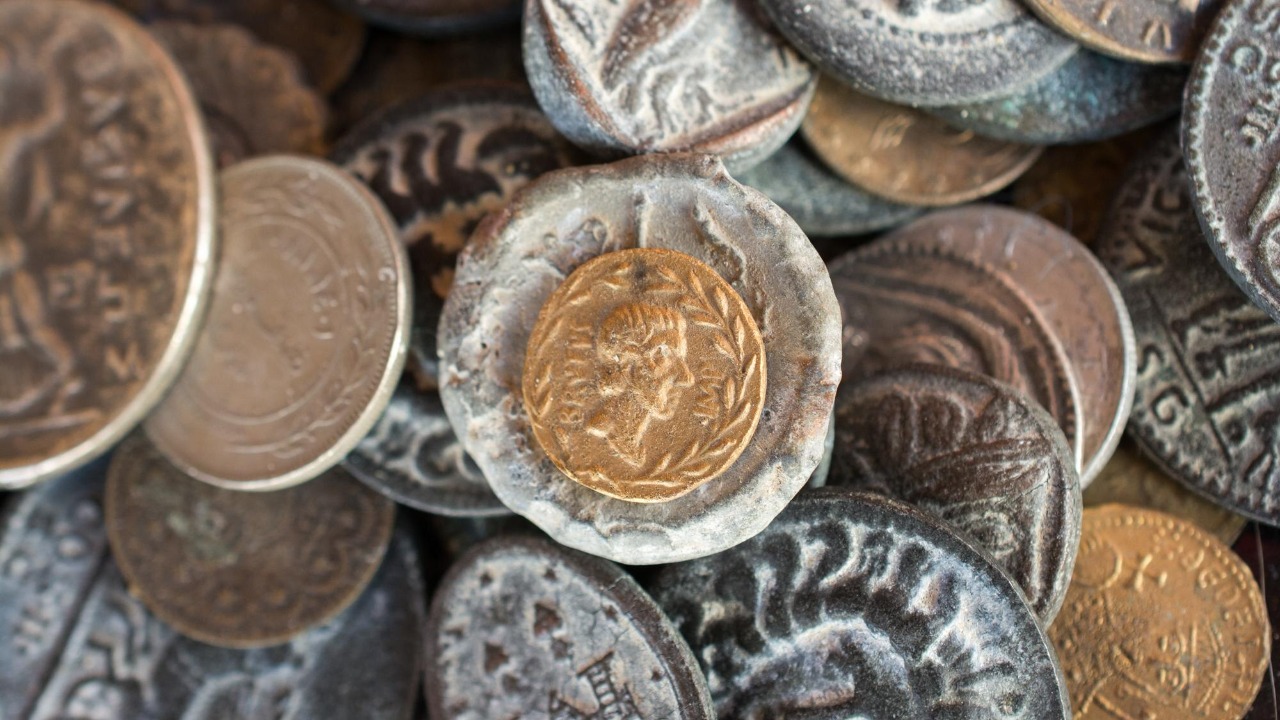

In a quiet corner of northern France, a home renovation has opened a window into the financial habits of the Roman world. Archaeologists have uncovered three ceramic jugs packed with thousands of ancient coins, a cluster of personal hoards that functioned much like 1,800-year-old savings pots hidden beneath a modern garden.
The discovery, which turns an ordinary village plot into a rare snapshot of late Roman life, is already reshaping how I think about money, security, and crisis in antiquity. What looks at first like a lucky windfall of buried treasure is, on closer inspection, a story of anxiety, improvisation, and the lengths people will go to protect what little wealth they can control.
The quiet village where a garden became an archaeological hotspot
The story begins in Senon, a small community in northern France where a resident decided to extend his house. What should have been a routine construction project instead exposed traces of a Roman-era settlement beneath the lawn, prompting professional archaeologists to step in before the work could continue. Because the property lies in an area with known ancient remains, the expansion triggered a formal rescue excavation, the kind of intervention that quietly reshapes our understanding of the past while homeowners worry about permits and delays.
Once the team began to peel back the soil, the garden stopped being a private space and became a controlled dig, complete with trenches, recording grids, and a legal framework that immediately placed any finds under state protection. The resident’s surprise at losing control of the discovery is understandable, but the rapid involvement of specialists ensured that fragile artifacts were documented, conserved, and interpreted rather than scattered or sold. In that sense, the garden in Senon turned into a textbook example of how modern regulations can transform a chance encounter with antiquity into a carefully managed public asset.
From “illegal” detectorist tip to full-scale excavation
What makes this case more tangled is that the buried wealth did not first surface in an orderly dig. Reporting on the find notes that an Illegal metal detectorist initially located coins on the property, a reminder that the allure of hidden treasure still tempts people to skirt the rules. Instead of quietly removing the objects, however, the situation ultimately led to the involvement of professional archaeologists, who were able to document the context that gives the hoards their real value.
Once alerted, the National Institute for Preventive Arc, the French body responsible for safeguarding heritage during construction projects, took charge of the site. Their intervention shifted the focus from private gain to public knowledge, turning what could have been a clandestine haul into a carefully recorded discovery. The contrast between the first, unauthorized sweep of a detector and the subsequent structured excavation underscores how fragile the line is between looting and legitimate research, and how crucial it is that finds like this move quickly into official hands.
Three amphora “piggy banks” packed with coins
At the heart of the story are three ceramic jugs, described as amphorae, that functioned as ancient savings containers. These vessels, uncovered during excavations run by the National Institute for Preventive Arc, were not empty storage jars but purposefully filled hoards. Each amphora had been carefully packed with coins and then secured in the ground, suggesting deliberate, long term concealment rather than a hurried stash tossed into a pit.
The coin stuffed amphoras had remained hidden and lost for nearly two millennia, their ceramic walls protecting the metal inside from the worst of corrosion and disturbance. When archaeologists finally lifted them from the soil, they were not just retrieving objects but opening sealed time capsules of late Roman economic life. The sheer density of coins inside each jug, stacked and layered rather than scattered, is what invites the comparison to modern piggy banks, those familiar containers where households quietly accumulate small savings over years.
Dating the hoards to a turbulent Roman century
Analysis of the coins points to a period around the late third and early fourth centuries, a time when the Roman world was grappling with political instability and inflation. One of the jugs, in particular, has been dated to between A.D. 280 and 310, a range that places its burial squarely in an era of reform and crisis. The fact that the second jug and its contents can be tied so precisely to that window, as noted in the description that the second jug and its contents were buried between A.D. 280 and 310, gives historians a rare fixed point for understanding local responses to empire wide upheaval.
When I think about someone in that period filling a ceramic container with coins and lowering it into a pit, I see less of a romantic treasure story and more of a defensive move against uncertainty. The late third century was marked by rapid changes of emperor, frontier pressures, and currency reforms that tried to stabilize a system under strain. In that context, the decision to convert wealth into metal and hide it in the ground looks like a rational hedge against both political and economic shocks, a way to keep value close at hand while the wider world shifted.
How the coins were packed, protected, and hidden
The physical arrangement of the hoards is as revealing as their dates. Archaeologists describe how the jugs were not simply buried but carefully wedged in place, with stones used to stabilize and protect them. One of the reports emphasizes that One of the most significant aspects of the find is the way the amphorae were secured with packing stones, a detail that speaks to planning rather than panic. Whoever buried these savings expected to come back for them and took steps to ensure they would still be intact when that day came.
Inside the vessels, the coins appear to have been stacked and layered with care, maximizing the capacity of each jug. This kind of deliberate packing suggests that the hoards were built up over time, with deposits added as funds allowed, rather than being the result of a single windfall. The amphorae themselves, robust and familiar containers in the Roman world, were repurposed from their usual roles in transporting goods into long term storage for personal capital. In effect, the owners turned everyday household objects into secure, low tech financial instruments.
Why archaeologists call them 1,800-year-old “piggy banks”
Describing the amphorae as 1,800-year-old piggy banks is more than a catchy phrase. It captures the continuity between how people in the Roman era and people today think about small scale savings. The hoards are not state treasuries or elite vaults but the accumulated reserves of individuals or families, built coin by coin and hidden in a place they trusted. The phrase “1,800-year-old” in the reporting is not just a chronological marker, it is a reminder of how long those private hopes and plans lay dormant beneath the soil.
Thinking of the jugs as piggy banks also helps frame the emotional dimension of the find. Each amphora represents someone’s decision to delay consumption, to put aside money that could have been spent on food, tools, or clothing in favor of a more secure future. That future never arrived for the original owners, who for reasons we can only infer failed to retrieve their savings. The coins, untouched for centuries, become a poignant record of interrupted intentions, a financial story frozen at the moment of burial.
What the hoards reveal about everyday Roman money
Beyond their drama, the hoards from Senon offer a granular look at how ordinary people in a provincial community handled money. The sheer number of coins, spread across three separate containers, suggests a community where cash circulated widely enough for non elites to accumulate significant reserves. At the same time, the decision to hide those reserves in a garden rather than rely on formal institutions hints at a world where trust was placed in physical concealment more than in contracts or banks.
The mix of denominations and issues within the jugs, which specialists are now cataloging, will help reconstruct patterns of trade and payment in the region. If the coins cluster around certain emperors or reforms, they can show how quickly new currency types reached this corner of Gaul and how long older issues remained in use. In that sense, the amphorae are not just containers of value but datasets, each coin a data point in the story of how the Roman economy functioned at the level of a single household.
French law, state ownership, and the homeowner’s surprise
For the modern homeowner, the discovery came with a legal twist that feels counterintuitive to anyone who imagines “finders keepers” still applies. Under French heritage law, artifacts of this kind are automatically claimed by the state, which treats them as part of the national archaeological record rather than private windfalls. Reports on the case emphasize that thousands of ancient coins were discovered in a garden and were immediately claimed by the government, a process that unfolded because the property lies in a zone where Because the law mandates archaeological interventions of this kind.
From the state’s perspective, this framework prevents the dispersal of crucial evidence and discourages clandestine digging. From the homeowner’s perspective, it can feel like watching a life changing discovery vanish into official custody. The tension between private expectations and public interest is not unique to Senon, but the case illustrates how firmly France has chosen to prioritize collective knowledge over individual profit when it comes to buried heritage. In practical terms, that means the coins will end up in laboratories and museums rather than on auction blocks, their stories accessible to scholars and the public alike.
Why this northern French find matters far beyond one village
It would be easy to treat the Senon hoards as a charming local curiosity, but their implications reach far beyond a single garden. The fact that three separate amphorae were buried in close proximity suggests that hoarding was not an isolated quirk but part of a broader pattern of behavior in the region. Combined with other discoveries of coin hoards in northern France, these jugs help map a landscape of anxiety and precaution in the late Roman world, where people responded to distant imperial crises with very local strategies of concealment.
For historians and archaeologists, the find offers a rare convergence of context, quantity, and preservation. The coins can be studied in relation to the structures, soils, and other artifacts around them, allowing for a nuanced reconstruction of the community that buried them. For the rest of us, the image of three ceramic “piggy banks” resting undisturbed beneath a modern lawn for nearly two thousand years is a reminder that the ground beneath ordinary life is layered with other people’s plans, fears, and savings, waiting for the moment when a spade or a backhoe brings them back into the light.
More from MorningOverview