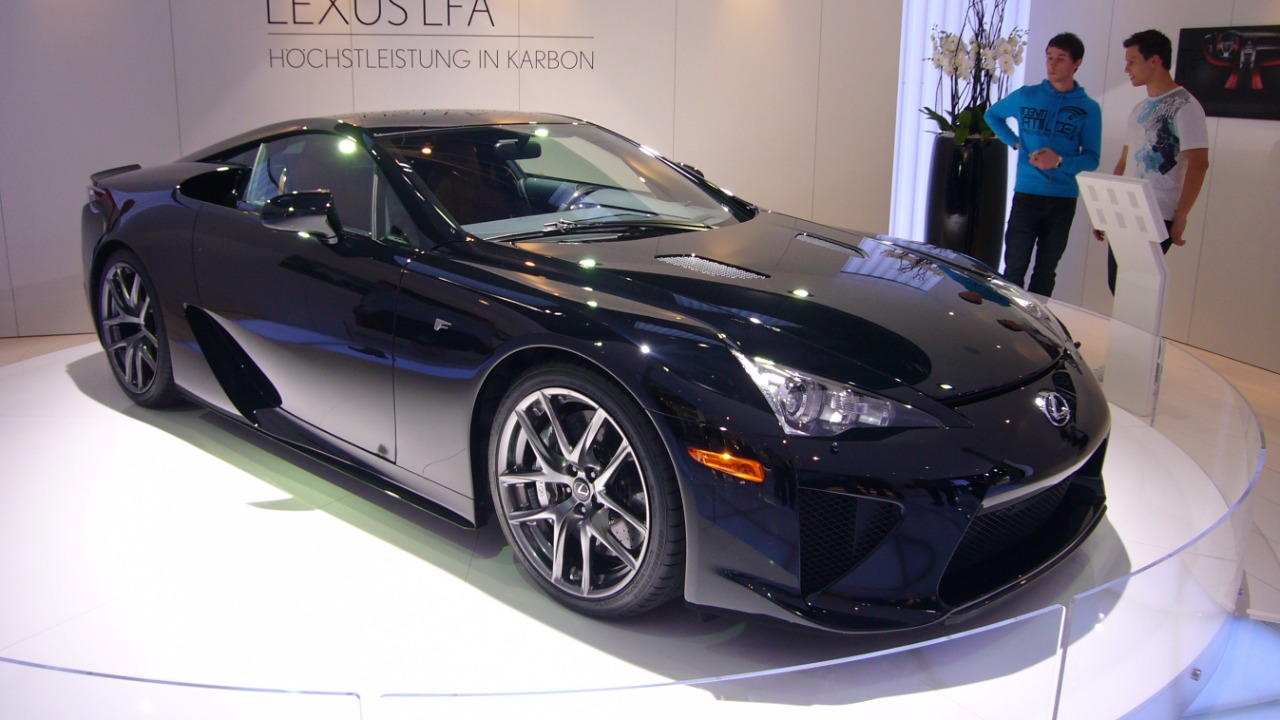

The Lexus LFA is returning not as a throwback V10 halo car, but as a fully electric twin to Toyota’s new GR GT, sharing its core structure while pushing Lexus deeper into battery-powered performance. Instead of chasing nostalgia, the brand is using the LFA badge to frame a new kind of flagship, one that treats electric hardware as a canvas for design, sound and driving feel rather than a compromise. In the process, Toyota and Lexus are turning a once-limited supercar into the spearhead of a broader electric sports car strategy.
The GR GT and LFA Concept: Two Flagships, One Architecture
Toyota is not reviving the 2000GT and Lexus LFA in isolation, it is building a shared platform that underpins a family of high-end electric coupes. The Toyota GR GT and the Lexus LFA Concept share the same basic underpinnings, built around Toyota’s first all-aluminum structure that is designed from the outset for battery power and motors rather than a traditional engine bay, a layout that lets engineers chase low weight and a low center of gravity without retrofitting an existing chassis. That common architecture is the backbone of a strategy in which the GR GT targets the broader electric GT market while the LFA Concept becomes the more exclusive, design-led expression of the same hardware, a pairing that lets Toyota amortize development costs while still delivering distinct personalities for each badge, as detailed in early looks at The Toyota GR GT and the Lexus LFA Concept.
On the Toyota side, the GR GT is positioned as a pure battery-electric grand tourer that arrives without any hybrid or combustion fallback, a car that, as one report notes, will enter the segment “sans any internal-combustion componentry at all” and effectively have the electric GT field to itself in the near term. That same reporting underscores how the GR GT and its Lexus sibling are being developed together as a supercar duo, with the shared aluminum structure and software-defined systems forming a common core that can be tuned differently for each brand, a strategy that is already visible in the way Toyota is talking about the upcoming GR GT supercar duo.
Lexus LFA returns as a 100% electric halo
Lexus is using the LFA name to signal that its next halo car is not a niche experiment but a full commitment to electric performance. The company has confirmed that the Lexus LFA is back and this time it is 100% electric, with the new model developed alongside the GR GT rather than as a standalone project, a pairing that lets Lexus focus on refinement, aerodynamics and driver engagement while Toyota handles the motorsport and GT brief. That shared development path is central to how Lexus is framing the car, with the brand explicitly describing the new LFA as a fully battery-electric sports car that will showcase what its next-generation EV platform can do in terms of acceleration, control and efficiency, a positioning laid out in early coverage of the Lexus LFA is back.
That same reporting makes clear that Lexus is not treating the LFA badge lightly, emphasizing that the new car is meant to deliver an “immersive” driving environment and a strong emotional response despite the absence of a V10. The brand is pitching the electric LFA as a statement about its future direction, not just a compliance EV, and is tying it directly to its broader electrification roadmap and design language, a message reinforced in follow up analysis that notes how Lexus is using the LFA name to anchor its shift to battery power in the minds of enthusiasts and luxury buyers, as seen in coverage by Lexus and LFA.
From V10 icon to electric twin: what changes, what carries over
The original Lexus LFA earned its reputation on the back of a high-revving V10, a hand-built chassis and a soundtrack that became supercar folklore, and any successor has to grapple with that legacy. The earlier car’s 4.8 liter V10 produced 552 bhp and gained notoriety for its visceral noise and swelling power as it climbed toward its stratospheric redline, a combination that cemented the Lexus LFA place in supercar folklore and set expectations for any future model that wears the same three letters. That history is not being erased, it is being reframed, with Lexus now trying to translate the sense of precision, responsiveness and drama that defined the combustion LFA into an electric context, a challenge that has been anticipated for years in discussions of how a Lexus LFA EV might work.
Early comparisons between the new concept and its V10-powered predecessor highlight both continuity and change. On the outside and inside, the electric Lexus retains some LFA traits, from its low, cab-backward stance to its focus on driver-centric ergonomics, yet the packaging realities of batteries and motors have reshaped proportions and surfaces, with the new car using its longer wheelbase and different hard points to carve out more dramatic aero elements and a more futuristic cabin. Analysts who have examined the concept up close note that while the emotional hook is different without a screaming engine, the design and layout still aim to deliver the same sense of occasion that defined the original, a point underscored in detailed breakdowns of how the Lexus electric LFA stacks up to its V10 ancestor.
Design language: “Timeless Vision, Beauty Transcends Era”
Lexus is not shy about the design ambition behind its new halo, framing the LFA Concept as a sculptural object that connects past and future. The company describes its approach as a Timeless Vision, Beauty Transcends Era, a philosophy that treats the LFA Concept as more than a retro homage and instead as a car that uses modern surfacing, lighting and aero to express continuity with the original while clearly belonging to an electric age. That ethos is visible in the long hood, tightly drawn cabin and dramatic rear treatment, which together create a silhouette that nods to classic front-engined supercars even though the underlying structure is optimized for batteries and motors, a balance Lexus spells out in its own description of Timeless Vision, Beauty Transcends Era.
Underneath the styling language is a clear performance agenda. Lexus says the LFA Concept is shaped so that every surface does something useful aerodynamically, from channeling air through the body to managing cooling for the battery and motors, an approach that mirrors the original LFA’s obsessive focus on airflow but applies it to different hardware. The result is a car that is meant to look dramatic standing still yet also deliver stability and efficiency at speed, with the brand positioning the concept as a bridge between its current design language and the sharper, more technical look that will define its next generation of sports cars, a direction that aligns with reports that the Lexus LFA returns as an EV shaped by aero-first thinking.
Dimensions, stance and the shared GR GT platform
In the metal, the electric LFA is not a compact toy but a full-size super GT, and its dimensions underline the intent. The electric Lexus LFA measures up at 4.7 metres long and two metres wide, figures that place it squarely in the territory of modern mid-engined exotics and give designers the canvas they need for a low roofline, wide track and dramatic overhangs. That footprint, combined with the aluminum structure and battery packaging, is meant to deliver both visual presence and a planted stance on the road, with the long wheelbase helping stability at speed and the wide body allowing for aggressive wheel and tire fitment, details highlighted in early specifications for the Lexus LFA electric supercar.
Those proportions are closely tied to the shared GR GT platform. The Toyota GR GT and the Lexus LFA Concept are built around the same all-aluminum structure, which is designed to be stiff enough for track work yet light enough to keep overall mass in check despite the battery pack, and that structure is also being adapted for the GR GT3 racing program. By using a common architecture, Toyota can tune the GR GT for a slightly more practical grand touring role while letting Lexus push the LFA Concept toward a more extreme, driver-focused setup, a split that mirrors how the brands have historically differentiated their performance flagships and that is already visible in the way the Lexus LFA is being discussed alongside the GR GT and GR GT3.
Inside the “bathtub cockpit”: driver-first, passenger-second
The cabin of the new LFA Concept makes it clear that Lexus is prioritizing the driver above all else, even in an era of screens and software. Interior photos show the driver’s position isolated from the passenger as if in a fighter jet’s bathtub cockpit, with a high center console and enveloping dashboard that create a focused, almost cocoon-like environment for the person behind the wheel. That layout is a deliberate echo of the original LFA’s driver-centric approach, but it goes further by visually separating the driver’s space from the rest of the cabin, reinforcing the idea that this is a car built around the act of driving rather than shared comfort, a theme that stands out in early looks at the LFA Concept Interior.
That cockpit is also a showcase for how Lexus plans to integrate digital interfaces into its future performance cars. The separation between driver and passenger zones gives designers room to tailor displays, controls and haptic feedback specifically for the person in control, while keeping secondary functions and entertainment on the passenger side, a layout that could help reduce distraction at high speeds. At the same time, the minimalist, almost monolithic surfaces suggest that Lexus wants the technology to feel embedded rather than tacked on, a contrast to some current EVs that lean heavily on tablet-style screens, and a direction that aligns with the brand’s broader push to create an immersive experience like no other before, a phrase it uses when describing how The thrill of driving should feel in its next-generation sports cars.
Sound and emotion: fake engine noise and the thrill of driving
One of the biggest questions around any electric successor to the LFA is how it will replace the original’s legendary sound, and Lexus is leaning into technology to answer it. The company is developing the all-electric Lexus LFA Concept with synthetic engine noise that is designed to recapture some of the drama of the V10, using speakers and software to create a responsive, rev-like soundtrack that rises and falls with throttle input rather than a generic EV hum. This approach is framed as part of a broader effort to revive a Legend, with the brand explicitly acknowledging that sound is a key part of the emotional connection drivers had with the first LFA and that the new car needs its own auditory signature, a strategy outlined in reports on how the Lexus LFA Concept will use fake engine noise.
That focus on sound is part of a larger philosophy that treats the thrill of driving as an unwavering value, even as powertrains shift from combustion to batteries. Lexus describes the LFA Concept as a car that should deliver an immersive experience like no other before, with steering feel, chassis balance, acceleration and sound all tuned to create a coherent, emotionally engaging whole rather than a set of disconnected specs. In practice, that means the brand is not just chasing headline numbers but also working on how the car communicates with the driver, from the way the synthetic sound responds to inputs to how the chassis and software work together to make the car feel predictable and alive, a mindset captured in its own language about how The thrill of driving underpins the appeal of sports cars even as times change.
Enthusiast reaction: excitement, skepticism and “Not the LFA we wanted”
The decision to bring back the LFA name on a shared-platform EV has sparked a mix of enthusiasm and skepticism among fans. Some see the move as a bold statement that Lexus is serious about electric performance, pointing to the fully battery-electric specification and the shared development with Toyota’s next-generation motorsport entries as signs that this is more than a styling exercise, a view echoed in coverage that asks Is the new Lexus LFA Concept electric or hybrid and answers that the newly revealed Lexus LFA Concept is a fully battery-electric vehicle tied closely to Toyota’s next-generation racing programs.
Others are less convinced, arguing that the new car lacks the bespoke, from-scratch aura of the original and that sharing its structure with the GR GT dilutes the LFA mystique. Some commentary has gone as far as to label the reveal “Not the LFA we wanted,” noting that while the Lexus LFA Concept EV is visually striking and technologically advanced, it does not deliver the same raw, mechanical character as the old V10 and instead leans on software and synthetic sound to create emotion. That tension between expectation and reality is likely to persist until production cars hit the road, but it also reflects a broader shift in what a halo car can be in an electric era, a debate captured in reactions to the Lexus LFA Concept EV.
How Lexus is positioning the LFA Concept within its lineup
Within Lexus’s own portfolio, the LFA Concept sits above existing F and F Sport models as a technology and design flagship rather than a volume seller. The company has presented the car as a preview of its next-generation sports car, using the concept to signal where its styling, interfaces and performance philosophy are headed even if the exact specifications remain under wraps. At its debut, the LFA Concept was shown alongside the new GR GT and a Lexus sedan concept, underscoring that it is part of a broader wave of performance-focused electrified models rather than a one-off, a context that is clear in coverage that notes how Lexus Debuts New LFA Concept and describes how Shown tonight alongside the new GR GT was a Lexus concept we have seen before, The Lexus LFA Concept, which is intended to pass the torch on to the next generation, as detailed in Lexus Debuts New LFA Concept.
That positioning also reflects how Lexus wants to be perceived in the electric era. Rather than chasing the highest possible output figures or the most extreme track times, the brand is emphasizing balance, craftsmanship and the emotional side of performance, using the LFA Concept as a rolling manifesto for what its future EVs should feel like. The car’s role as a halo means it will influence everything from the tuning of upcoming crossovers to the design of future sedans, and it gives Lexus a clear narrative about how it is evolving from a maker of quiet, conservative luxury cars into a brand that can credibly talk about high performance and cutting-edge electric technology, a shift that was foreshadowed when Japanese luxury automaker Lexus threw a curveball by revealing an LFA Concept EV that borrows the name and some cues from Monterey Car Week 2025 yet points firmly toward a battery-powered future, as noted in analysis of the Japanese Lexus LFA Concept.
What we still do not know: specs, pricing and production timing
For all the attention the LFA Concept has received, Lexus is still keeping many of the hard numbers under wraps, a strategy that builds intrigue but leaves some key questions unanswered. Other than that, and the fact it is a beauty, we know nothing, with no kilowatt-hours of battery capacity, no horsepower figures and no official performance claims disclosed yet, a level of secrecy that has led observers to focus more on design and philosophy than on spec sheet comparisons. What we can surmise, however, is that Lexus intends the car to demonstrate the potential of BEV sports cars rather than chase a specific rival, and that the eventual production version will likely sit at the top of the brand’s price ladder, a reading supported by commentary that notes how Other than that details remain a mystery.
There is also the question of how closely the production car will track the concept’s more extreme elements, from the bathtub cockpit to the most dramatic aero pieces. Some analysts doubt that the interior in its current form will make it to showrooms unchanged, pointing out that safety regulations, usability and cost will inevitably force compromises, while others expect Lexus to preserve as much of the concept’s drama as possible to justify the LFA badge and price tag. Until Lexus shares more concrete information, much of the discussion will remain focused on what the car represents rather than exactly how fast it is, but the combination of a shared GR GT platform, a fully electric powertrain and a design language built around Timeless Vision suggests that when the numbers do arrive, they will be framed as part of a broader story about how the brand sees the future of high performance, a narrative that has been building since early speculation that the next LFA would be an electric version of Toyota’s GR GT.
Why the LFA–GR GT pairing matters for Toyota’s performance future
By tying the reborn LFA so closely to the GR GT, Toyota is effectively using one architecture to cover both its motorsport ambitions and its luxury halo needs, a move that could shape its performance lineup for years. The GR GT is being positioned as the spiritual successor to the 2000GT and the original LFA, picking up where those icons left off by offering a flagship Gazoo Racing coupe that happens to be electric, while the new Lexus LFA sits alongside it as the more exclusive, design-led twin. That pairing allows Toyota to justify the investment in a dedicated aluminum EV sports car platform, which can then be spun off into GT3 race cars and potentially other derivatives, a strategy that has been outlined in reports on how Toyota’s new GR GT picks up where the 2000GT and Lexus LFA left off.
For enthusiasts, the significance goes beyond platform sharing. The original LFA was a limited-run, almost mythical object, but its electric successor and the GR GT that underpins it are being positioned as the vanguard of a new generation of performance EVs from Toyota and Lexus, cars that treat batteries and motors as tools for creating character rather than as mere compliance hardware. That shift is already visible in the way Lexus talks about the LFA Concept as a Timeless Vision and in how Toyota frames the GR GT as a pure electric GT that will have the segment largely to itself, a combination that suggests the company sees real opportunity in high-end two-door EVs even as some rivals pull back. The fact that the LFA name is being used to anchor that push, and that the concept has already been shown in multiple venues including Monterey Car Week 2025, underlines how central this project is to Toyota’s performance identity, a point that was clear when Japanese luxury automaker Lexus threw a curveball by revealing an LFA Concept EV that borrows heavily from its motorsport-linked GR GT duo.
More from MorningOverview