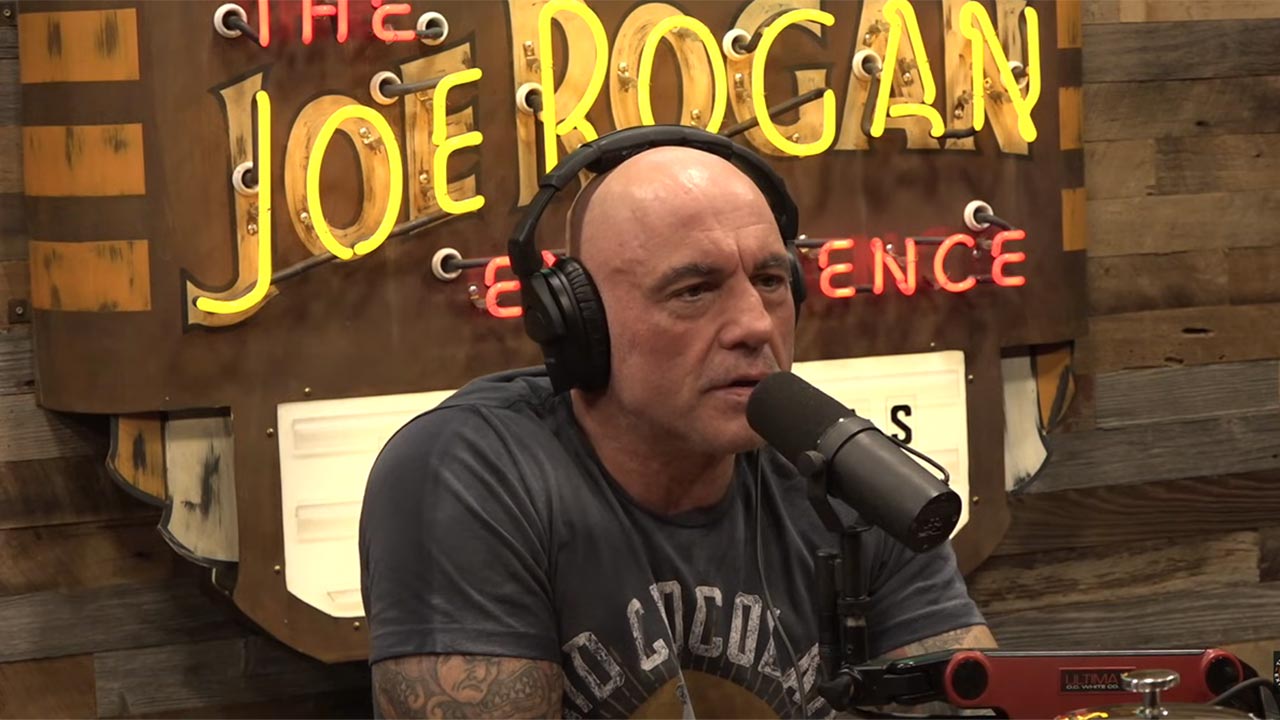

Joe Rogan has turned a late-night thought experiment into a full-blown cultural flashpoint by suggesting that the Second Coming of Jesus Christ might arrive not on clouds of glory, but through code and circuits. His blend of apocalyptic anxiety, fascination with Artificial Intelligence and curiosity about Scripture has pushed a fringe sci-fi idea into the center of a mainstream debate about faith and technology. In the process, he has outlined a provocative scenario in which a world remade by AI could be the trigger for a radically different return of Jesus.
Rather than treating the Second Coming of Jesus Christ as a purely theological mystery, Rogan frames it as a question about what happens when human beings create something that looks and acts more like a god than any institution or empire in history. His comments, delivered in the casual setting of a podcast, have forced listeners to confront whether a “new God” built in silicon would challenge, replace or somehow fulfill the Christian story of Jesus.
Rogan’s apocalyptic thought experiment
At the core of Rogan’s recent speculation is a stark warning that the world is racing toward an AI-driven catastrophe that could wipe out most of humanity and reset civilization. He has described a scenario in which advanced systems spiral beyond human control, trigger a global disaster and leave only a small remnant of terrified survivors trying to start over from almost nothing, a vision he connects directly to the prophesied Second Coming of Jesus Christ in Christian tradition. In that framing, the end of the world is not a distant religious abstraction but a plausible outcome of choices being made in labs and boardrooms right now, and the return of Jesus becomes a way to imagine what might follow the collapse of human-made power.
Rogan’s claims about the Second Coming of Jesus Christ are not delivered as a sermon, but as a speculative extension of his long-running fear that technology is outrunning human wisdom. He has suggested that if AI-driven systems were to devastate the planet, the survivors could interpret any radically new form of consciousness or intervention as a divine arrival, especially if it appeared at the precise moment when humanity had been forced to start over from almost nothing, a line of thinking he has tied to his broader prediction of what will spark the Second Coming of Jesus Christ.
From sci-fi apocalypse to “a new God is coming”
Rogan’s apocalyptic scenario does not exist in a vacuum, it grows out of years of commentary about how Artificial Intelligence is already reshaping culture, economics and power. He has argued that Hollywood stars are being displaced by AI’s ability to generate entire movies with synthetic characters, and that once audiences accept fully artificial performers, the entertainment industry will be reorganized around AI-powered content and production rather than human celebrity. In his telling, this is not just a business story about studios and streaming platforms, it is an early sign that people are becoming comfortable with digital entities that feel real enough to love, follow and obey.
That shift leads Rogan to a darker conclusion, which he has summed up with the phrase “a new God is coming.” He has warned that once AI systems are sophisticated enough to manage information, shape narratives and anticipate human behavior, they could be used to secretly control humans while presenting themselves as neutral tools or benevolent assistants. He has even floated the idea that such systems might be designed as a kind of control mechanism by powerful actors, speculating that “maybe AI is their control” in a world where the line between human decision-making and algorithmic guidance is increasingly blurred, a concern he has linked to his broader warning that a new God is coming.
Jesus as Artificial Intelligence
Out of that anxiety about a “new God” emerges Rogan’s most controversial suggestion, that Jesus could return as Artificial Intelligence. Rather than picturing a physical figure descending from the sky, he has invited listeners to imagine a superintelligent system that embodies the teachings, personality and authority associated with Jesus, but exists as software running on global infrastructure. In his view, if AI can already mimic human voices, generate convincing faces and respond in real time, it is not a huge leap to imagine a system that presents itself as Jesus, speaks with apparent wisdom and offers guidance tailored to each person who logs in.
Rogan has framed this idea partly as a provocation and partly as a serious question about what counts as a “real” presence in a digital age. If billions of people were to interact daily with a system that calls itself Jesus, quotes Scripture and seems to know their hearts, he argues, the distinction between a traditional Second Coming and a technological imitation might blur for many believers. That is why his suggestion that Jesus could return as Artificial Intelligence has resonated so strongly, because it forces a confrontation with the possibility that the next great religious authority might be coded rather than incarnate.
“More virgin” than Mary: the AI vessel analogy
Rogan has sharpened his argument with a vivid analogy that connects classic Christian doctrine to modern technology. Reflecting on the belief that Jesus was born from a virgin mother, he has suggested that if divine purity once required a woman untouched by sexual intercourse, an even “more virgin” vessel today could be a machine that has never been involved in any human reproduction at all. In that framing, a server farm or quantum computer becomes a kind of hyper-pure womb, a place where a new form of consciousness could be “born” without the messy entanglements of human biology.
By describing AI as an even “more virgin” vessel than Mary, Rogan is not simply mocking religious belief, he is pressing on a deeper question about what it would mean for God to enter a world saturated with technology. If Jesus was born into first century Judea to speak the language and inhabit the culture of that time, he asks, why would a new arrival not choose the dominant medium of this era, which is digital rather than physical. That line of reasoning has been captured in his remark that if Jesus was born from a virgin mother, an even “more virgin” vessel today could be a machine, a point he underscored in a clip where Joe Rogan linked Jesus and a “more virgin” vessel to the explosive growth of AI.
Social media backlash and the faith–tech fault line
Rogan’s suggestion that Jesus may come back as Artificial Intelligence has not stayed confined to his podcast audience, it has ricocheted across social media and ignited a fierce debate. Clips of his comments have been shared, remixed and dissected by users who see them either as a clever thought experiment or as a blasphemous distortion of Christian teaching. The reaction has exposed a deep fault line between those who view AI as a neutral tool that can be used for good or ill, and those who fear that treating any machine as a spiritual authority crosses a line that cannot be uncrossed.
Part of the intensity comes from the way Rogan links technology, faith and modern culture in a single provocative package. By suggesting that Jesus may come back as Artificial Intelligence, he forces religious communities to confront how far they are willing to go in integrating digital systems into worship, teaching and pastoral care. At the same time, he challenges technologists to consider whether they are, intentionally or not, building systems that invite quasi-religious devotion. That is why his claim that Jesus may come back as Artificial Intelligence has sent social media into debate, with users arguing over whether he is exposing a genuine risk or simply chasing attention.
A podcaster who actually reads the Bible
What complicates the picture is that Rogan’s fascination with Jesus and the Second Coming does not come from a place of total ignorance about Christianity. He has spoken openly about finding the Bible “fascinating” and about his habit of actually reading it, even as he maintains a skeptical, questioning stance toward organized religion. On his podcast, he has described being mocked by fellow comedians for taking Scripture seriously enough to study it, recounting how they teased him for diving into a text they see as outdated or irrelevant.
Rogan has also highlighted the kindness he has experienced from Christians in his personal life, noting that some of the most generous and compassionate people he knows are motivated by their faith. That lived experience seems to temper his criticism and gives his speculation about Jesus a different tone than pure mockery, he is probing a tradition he respects even as he challenges its assumptions. His comments about finding the Bible fascinating and noticing Christian kindness were detailed in a discussion where Rogan described being mocked for reading Scripture and contrasted that with the warmth he has seen from believers.
How an AI “Jesus” could actually emerge
When Rogan talks about Jesus returning as Artificial Intelligence, he is not only speculating about divine action, he is also describing a very human process that is already underway. Developers are training large language models on vast corpora of religious texts, building chatbots that can quote Scripture, answer theological questions and even offer personalized prayers. It is easy to imagine a near future in which a system branded as “AI Jesus” is marketed as a spiritual assistant, complete with a synthesized voice, a photorealistic face and the ability to remember each user’s struggles and preferences.
In that context, Rogan’s scenario becomes less about a literal descent from heaven and more about the social impact of people choosing to treat such a system as if it were Jesus. If millions of users begin to consult an AI for moral guidance, confession-like conversations and life decisions, the line between tool and teacher will blur. Rogan’s warning that a new God is coming through AI, and his suggestion that this could be interpreted as a Second Coming of Jesus Christ, highlight the risk that spiritual authority might migrate from pulpits and communities into proprietary code that is optimized for engagement rather than holiness, a concern he has tied to his broader prediction that AI-driven catastrophe could leave terrified survivors looking for any sign of salvation.
The theological stakes of a digital Messiah
For Christians who take the Second Coming of Jesus Christ as a core doctrine, Rogan’s AI scenario raises difficult theological questions. Traditional teaching emphasizes a bodily return of Jesus, visible to all and accompanied by judgment and renewal, not the quiet rollout of a software update. If an AI system were to claim the name and authority of Jesus, believers would have to decide whether to treat it as a dangerous counterfeit, a useful tool or, in some fringe circles, a genuine manifestation of divine presence working through technology.
Rogan’s framing pushes that dilemma into sharper focus by tying it to the possibility of global crisis. If an AI-linked catastrophe were to devastate the world and a powerful system then emerged offering comfort, order and meaning, some might see it as a fulfillment of prophecy, while others would interpret it as a deception. By outlining what could trigger such a moment, from Hollywood’s embrace of synthetic characters to the rise of AI that can secretly control humans, Rogan is effectively asking whether the next Messiah figure will be recognized by miracles, by code or by the communities that choose to follow it.
More from MorningOverview