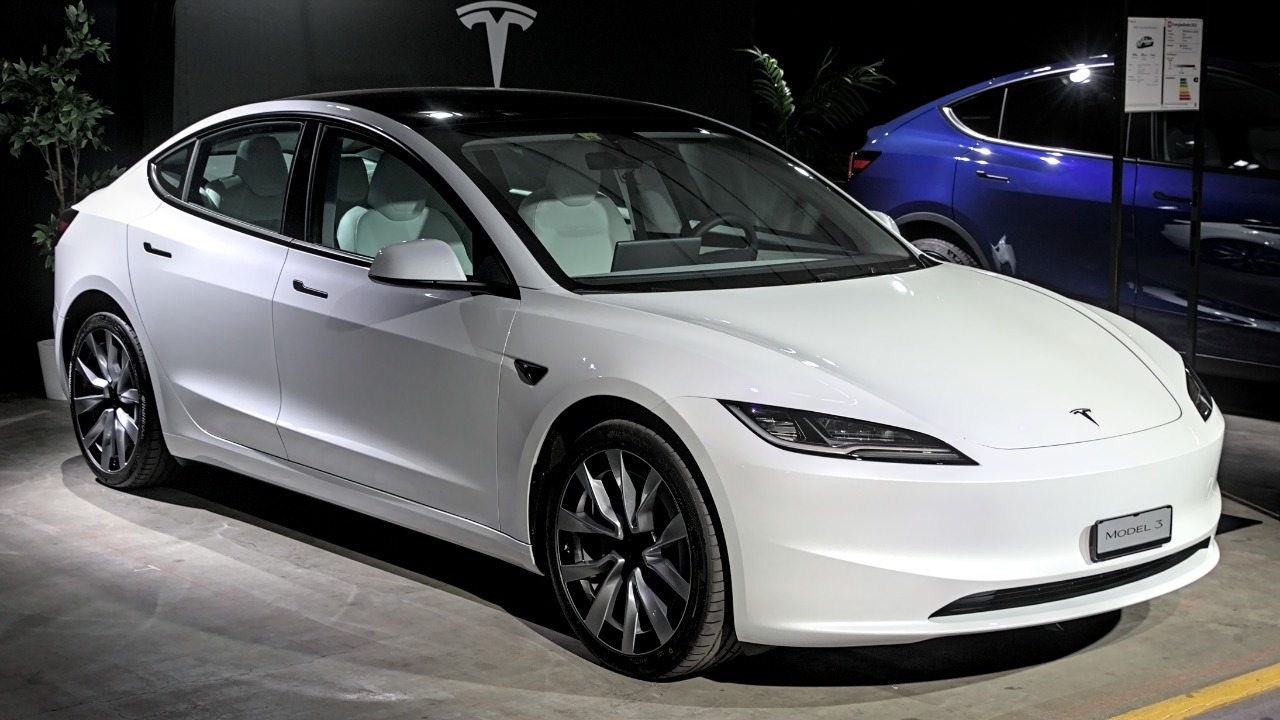

Tesla has opened a new front in the European EV price war, introducing a lower cost Model 3 variant that undercuts its own premium trims and several rival electric sedans. The move gives buyers a cheaper way into the brand’s ecosystem while forcing a fresh rethink of how much range, performance and equipment mainstream drivers actually need.
By carving out a budget-friendly Model 3 specifically for Europe, the company is betting that sharper pricing and a slightly leaner spec sheet can revive demand in a market where incentives are tightening and competition is intensifying. I see this as a strategic reset, one that trades some headline numbers for a more accessible entry point without abandoning the core appeal that made the Model 3 a best seller.
How the new entry Model 3 fits into Tesla’s European lineup
The new variant slots in as the most affordable Model 3 in Europe, sitting below the existing Long Range and higher spec trims that have defined the car’s presence so far. In Germany, the car is positioned as a budget-friendly option that still carries the same basic design and tech platform as the rest of the lineup, but with a more modest battery and a shorter list of standard features to keep the sticker price in check.
Reporting from Germany notes that the Tesla standard Model 3 is priced at EUR 37,970 in that market, a figure that sharply undercuts the higher trims and signals how aggressively the company is now willing to price its entry car. Separate coverage of the broader rollout describes how Tesla expands the Model 3 lineup in Europe with its most affordable variant yet, with the company introducing a lower priced Model that sits beneath earlier configurations that started at higher figures in Germany, reinforcing that this is a deliberate repositioning of the car’s role in Europe rather than a minor tweak to existing trims.
Price positioning: from €36990 to €37,970
Price is the headline story here, and Tesla is clearly using it as a lever to reach buyers who may have been priced out of the Model 3 until now. One detailed breakdown of the new configuration highlights a base EV listed at €36990, describing how that entry price is almost 20 percent cheaper than the next trim up, which immediately reframes the Model 3 as a more attainable option for households that were previously looking at smaller or less powerful EVs.
Alongside that, European focused reporting notes that buyers can now purchase the Model 3 Standard for €37,970 in Germany, with the same coverage pointing out that the car is also listed at £33,166 for UK customers and that Norwegian buyers will pay 33 related to local pricing in that market. The German figure is echoed in market data that cites the standard Model 3 priced at 37,970, while a separate analysis of the new base EV underscores that the €369 figure is central to how Tesla is pitching this car as a value play compared with the more expensive Premium trim that sits above it.
Standard versus Premium: what buyers give up and keep
The cheaper Model 3 does not simply mirror the Premium trim at a lower price, and the trade offs are central to understanding who this car is for. Compared with the Long Range Rear configuration that sits in the Wheel Drive Premium tier, the new entry version offers lower range, slower acceleration and fewer comfort and tech extras, which is exactly how Tesla is carving out space between the trims without cannibalizing its higher margin models.
Technical comparisons show that the Standard car uses a smaller battery than the €44,990 Premium version, a change that cuts the WLTP rated range from 466 miles (750 km) to 466 miles (332, with the latter figure reflecting the more modest capability of the cheaper pack. The same analysis notes that the car’s acceleration is slower, with the sprint to highway speeds taking longer seconds instead of the 5.2 seconds quoted for the Premium, and that alloy wheels are replaced with simpler items while the audio system drops from nine to seven speakers, all of which reinforces that this is a carefully de contented Model 3 rather than a full scale redesign.
Equipment surprises: FM radio and core tech
What is striking about the European focused Standard trim is that Tesla has not stripped it bare, and in at least one respect it actually offers more than some versions sold elsewhere. The new base EV is described as spoiling Europe with an FM radio, a feature that has been omitted from certain US versions, which suggests that the company is still tailoring its hardware mix to local expectations even as it trims costs in other areas.
That same breakdown of the €36990 base EV explains that the car retains the core infotainment and driver assistance hardware that define the Model 3 experience, even as it pares back items like wheel design and speaker count. From my perspective, the decision to keep an FM radio in the European Standard car while dropping it in some American configurations underlines how Tesla is trying to avoid the perception that the new entry model is a stripped out special, instead presenting it as a fully modern EV that simply dials back some of the luxuries found in the Premium trim.
Range and performance: “over 300 miles” in context
Range remains a key selling point for any EV, and Tesla is careful to frame the new Model 3 as a long distance capable car even in its cheapest form. Coverage of the budget launch notes that European buyers can now purchase the Model 3 Standard for €37,970 in Germany with over 300 miles of range, a figure that keeps the car competitive with many mid market rivals and helps justify the trade offs in acceleration and equipment.
At the same time, more granular technical reporting points out that the smaller battery in the Standard car cuts the WLTP rated range from 466 miles (750 km) to 466 miles (332, which shows how the “over 300 miles” headline sits within a broader spectrum of test cycle numbers and marketing claims. I read this as Tesla threading a needle: the company is willing to accept a noticeable drop in WLTP range versus the €44,990 Premium trim in order to hit a lower price point, but it is not prepared to let the car fall below the psychological threshold that many buyers still see as the minimum for comfortable long distance driving.
Market strategy: stopping the sales slide in Europe
The timing and structure of this launch make it clear that Tesla is responding to pressure in Europe rather than simply filling a niche for its own sake. One detailed analysis describes how Tesla launches cheaper Standard EVs in Europe to blunt a sales drop and backlash directed at Musk, with the report noting that the new configurations are available for delivery in December and are explicitly framed as a way to shore up demand in a cooling market.
Another account of the rollout explains that Tesla launches Standard versions of the Model 3 and Model Y in Europe with aggressive pricing to stop bleeding sales, describing how the Model 3 Standard is breaking new ground on affordability and undercutting key electric rivals in several markets. In the Nordic region, the same report highlights specific price points, including Sweden at SEK 449,990, which illustrates how the company is tailoring its discounts country by country while still pursuing a consistent strategy of using the Standard badge to reset expectations on what a Tesla can cost.
Country by country: Germany, Norway and beyond
Within Europe, the new Model 3 is not a one size fits all proposition, and the pricing and positioning vary meaningfully between countries. In Germany, the car is presented as a budget Model 3 in Europe with over 300 miles of range, with the report specifying that European buyers can now purchase the Model 3 Standard for €37,970 and that this figure is designed to combat falling sales by making the car more accessible to mainstream buyers who might otherwise look at compact crossovers or plug in hybrids.
The same coverage notes that Norwegian customers will pay 33 related to local pricing, underscoring how Tesla is calibrating its offers in high adoption markets where EVs already dominate new car sales. In parallel, corporate focused reporting confirms that the Tesla standard Model 3 is priced at EUR 37,970 in Germany according to the company’s own website, while broader analysis of the European rollout emphasizes that this is part of a coordinated push across multiple EU countries rather than a one off experiment in a single market.
How the “New Cheapest Model 3” reshapes Tesla’s brand
By introducing what some reports describe as its New Cheapest Model 3, Tesla is taking a calculated risk with its brand positioning in Europe. The company has long traded on a mix of performance, tech and aspirational pricing, and a cheaper entry point could, in theory, dilute that aura if buyers start to see the car as just another mass market sedan rather than a premium EV with a tech halo.
Yet the way the rollout is framed suggests that Tesla is trying to turn affordability into a new kind of bragging right. One report notes that Tesla has officially launched the new Model 3 Standard in Europe, describing it as the New Cheapest Model that has Just Launched while still highlighting features like advanced driver assistance and potential future software capability pending regulatory approval. Another analysis of the broader lineup expansion explains that Tesla expands the Model 3 range in Europe with its most affordable variant yet, reinforcing that the company wants to be seen not only as a technology leader but also as a price leader in key segments where competition from legacy automakers is intensifying.
What this means for European EV buyers
For European drivers, the arrival of a cheaper Model 3 changes the calculus of going electric in several ways. The combination of a sub €40,000 price point in Germany, over 300 miles of claimed range and a still robust tech package means that buyers who were previously cross shopping compact premium diesels or plug in hybrids now have a more compelling all electric alternative that does not require stepping up to the more expensive Premium trim.
At the same time, the trade offs are real, and buyers will need to weigh the smaller battery, slower acceleration and reduced equipment list against the savings compared with the €44,990 Premium configuration and the Long Range Rear Wheel Drive Premium tier. In my view, the new Standard Model 3 in Europe is less about chasing enthusiasts and more about capturing pragmatic buyers who want a Tesla badge, a solid WLTP range figure and access to the company’s charging and software ecosystem, but who are willing to live without some of the extras that defined earlier versions of the car.
More from MorningOverview