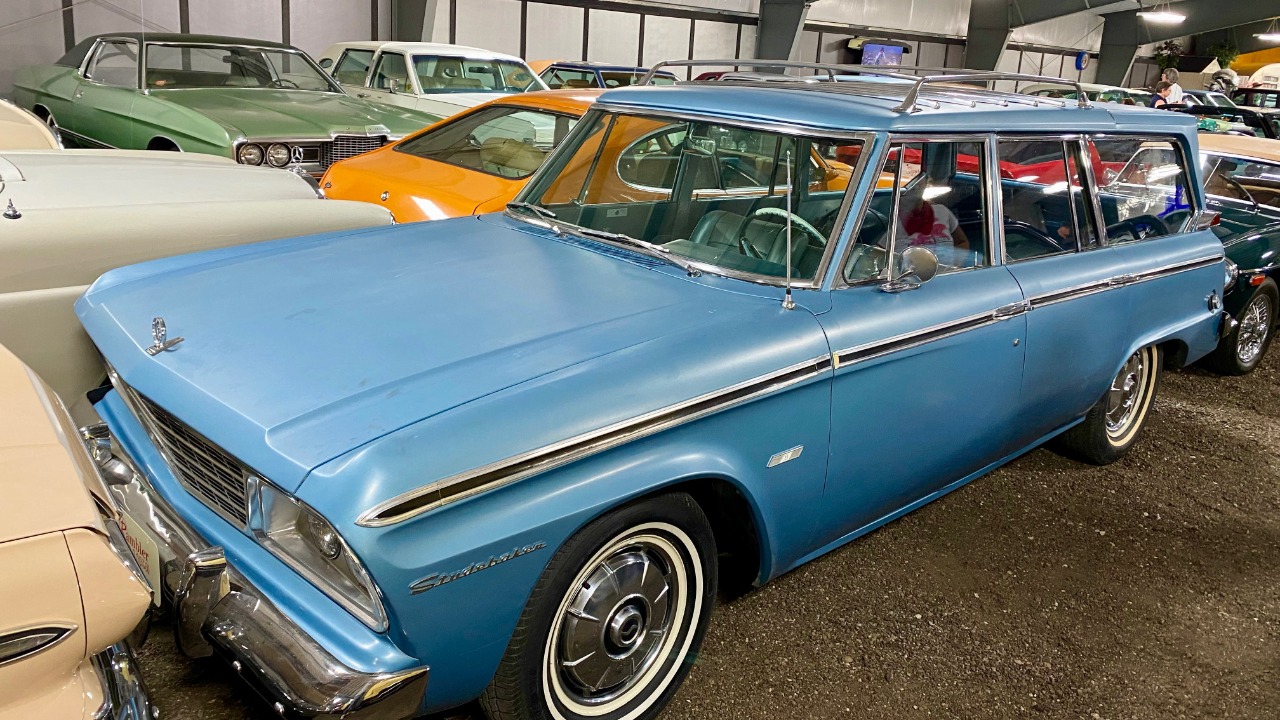

In a twist few would have predicted a decade ago, the Trump administration is pitching a future in which the classic family station wagon rolls back into American driveways. The idea is not nostalgia for its own sake, but a byproduct of a sweeping rewrite of fuel economy rules that officials say could tilt the market away from bulky crossovers and back toward lower, longer passenger cars.
That promise has ignited a fresh debate over how Washington should shape the vehicles Americans drive, pitting regulators who want to relax standards against environmental advocates and skeptics who see the wagon talk as political spin. At stake is not just whether wood paneling returns to suburbia, but how far President Donald Trump is willing to go in reordering the balance between efficiency, consumer choice and industry profit.
The policy pivot behind the wagon talk
The starting point for the wagon revival narrative is a proposed fuel economy rule that would ease future efficiency targets and redraw the line between cars and light trucks. Under the current system, station wagons are treated as passenger cars, while minivans and crossover utility vehicles are classified as light trucks that qualify for looser standards, a distinction the National Highway Traffic Safety Administration, or NHTSA Admini, has spelled out in detail. By relaxing the rules that apply to cars while keeping the more generous truck framework, the administration argues that automakers would have new incentive to build wagons that can hit the easier targets without being forced into the truck category.
Officials have framed this as a course correction after years in which the regulatory code pushed manufacturers toward crossovers that could meet looser light truck standards while still appealing to families. Reporting on the proposal notes that the government is explicitly dangling the return of the American station wagon as a selling point, with one analysis describing how the rule change could make it easier for an automaker to sell a long-roof car that still satisfies the updated benchmarks for passenger vehicles and no longer needs to be stretched or lifted to qualify as a truck, a scenario laid out in coverage of how the Government Wants Station Wagons To Come Back.
How Trump’s deregulation agenda set the stage
The wagon storyline fits neatly into President Donald Trump’s broader push to pare back federal rules across the transportation sector. Industry experts have already linked his deregulatory stance to a wider shift in how vehicles and freight are governed, noting that President Donald Trump’s commitment to reduced federal regulations is expected to reshape how transportation technologies are deployed and overseen, a point underscored in a discussion of Motive Technologies News Updates. The fuel economy rollback is one of the most visible expressions of that philosophy, signaling that the White House is willing to trade stricter environmental goals for what it casts as consumer freedom and industry flexibility.
Within that framework, the station wagon becomes a symbol as much as a product category, a way for the administration to argue that fewer rules will yield more choices on the showroom floor. By promising that looser mileage standards could bring back a body style long abandoned by Detroit, officials are trying to show that deregulation is not just about corporate bottom lines but about reviving options that regulators and market trends had squeezed out. The fact that the White House is leaning into this imagery, rather than talking only in abstract regulatory language, reflects a political calculation that a “bring back the wagon” message is easier to sell than a technical debate over fleetwide averages.
What the administration is actually promising
The most vivid articulation of the new policy came from President Trump’s own transportation team, which has been unusually explicit about the vehicles it thinks could reappear. In public remarks highlighted by automotive coverage, the president’s Transportation Secretary argued that loosening fuel economy standards could “allow you to bring back the 1970s station wagon,” even joking about “maybe a little wood paneling on the side,” a flourish that was widely quoted in accounts of how a Trump stooge wants to bring back wood-paneled station wagons. That kind of language goes far beyond the usual bureaucratic framing of fuel rules and signals a deliberate attempt to tie the regulation to a specific, nostalgic image.
Other officials have echoed the same theme in more sober terms, suggesting that by “loosing” the standards, as one report put it, automakers could find it easier to justify adding wagons to their lineups again. Coverage of the proposal notes that the Trump Administration Says Station Wagons Could Make a Comeback TDS Loosing because the new rule would change the cost-benefit math for manufacturers that have long favored crossovers and SUVs. In that telling, the promise is not that Washington will order wagons back into production, but that it will remove what officials describe as regulatory barriers that nudged companies away from them in the first place.
Why wagons disappeared from American roads
To understand why the administration’s pitch resonates with some drivers, it helps to recall how thoroughly the station wagon vanished from mainstream American lineups. The Final Nail In The Coffin The final full-size station wagons, the Chevrolet Caprice and Buick Roadmaster, were discontinued in the 1990s, closing the book on a body style that had defined family transport for decades. As those long-roof sedans disappeared, minivans and then SUVs stepped into the gap, offering more height, a tougher image and, crucially, the regulatory advantages that came with being classified as light trucks.
Analysts have traced the shift to a mix of consumer taste and policy design. As driver tastes edged towards SUVs of all different shapes and sizes in the 80s and 90s, with crossovers like the original car-based utility vehicles promising carlike comfort with a hint of off-road capability, wagons lost their cultural cachet and their business case, a pattern laid out in detail in an examination of what happened to American station wagons. Once buyers associated wagons with dated family stereotypes and SUVs with freedom and safety, it became far easier for automakers to justify dropping the long-roof variants from their U.S. portfolios.
The SUV boom and the regulatory tilt
The Trump administration is not wrong that policy helped accelerate the SUV boom, even if it was far from the only factor. Under federal rules, light trucks have long been allowed to meet lower fuel economy targets than passenger cars, which meant that a crossover classified as a truck could be less efficient than a wagon while still satisfying regulators. Reporting on the new proposal notes that station wagons are considered passenger cars but minivans and crossover utility vehicles are light trucks, a distinction that has shaped design decisions for years and is central to the current debate over how U.S. fuel efficiency standards should evolve.
At the same time, cultural and marketing forces did at least as much to bury the wagon as any line in the Federal Register. Analysts who have tracked the shift point out that, primarily, Americans embraced SUVs because they liked the higher seating position, the perception of safety and the image that came with driving something more rugged, even if it shared a platform with a car. One assessment of the administration’s claim notes that there are plenty of other reasons why wagons have fallen off and SUVs have prospered, and that automakers responded by pouring resources into crossovers while quietly dropping wagons from their lineups, a trend described in coverage of how Primarily Americans shifted away from wagons.
Enthusiasts never gave up on the long roof
Even as mainstream buyers migrated to crossovers, a vocal slice of the car community kept the wagon flame alive, arguing that the format offers the best blend of handling and practicality. Enthusiasts have championed European imports and performance variants that deliver sports-sedan dynamics with extra cargo space, helping to keep the high-performance wagon niche alive even as mass-market models disappeared from U.S. showrooms. Coverage of the current policy debate notes that these fans have been instrumental in sustaining demand for specialty models and in lobbying automakers to bring more of them stateside, a dynamic highlighted in reporting that enthusiasts are keeping the high-performance wagon segment visible as new wagons started to appear stateside.
Luxury brands have been especially important in this quiet revival. The three automakers behind wagons, Audi, Mercedes and Volvo, Joe Brown, have built reputations on fast, stylish long-roof models that appeal to buyers who want something different from the sea of crossovers. Joe Brown, group editorial director at Hearst Autos, has pointed out that these wagons are not the dowdy family haulers of old but sophisticated machines that can outrun many sports cars while swallowing bikes and luggage. That existing niche gives the Trump administration’s promise a real-world foundation: if regulations tilt in their favor, there is already a template for how modern wagons can succeed.
The White House messaging strategy
The way the Trump team is talking about wagons reveals as much about its political instincts as its transportation policy. By invoking road trips and cult movies, officials are tapping into a shared cultural memory of the long-roof family car, turning a dry regulatory change into a story about reclaiming a lost slice of Americana. One detailed account of the rollout notes that the White House suggests wagons could return under new mileage rules and even riffs on the idea of a “Wagon Queen Family Trumpster,” a tongue-in-cheek reference that plays on both pop culture and the president’s name, as described in a piece by Chris Chilton White House Trump.
That messaging is not universally admired. Critics have seized on the wood-paneling quips and the “Trumpster” branding as evidence that the administration is using nostalgia to distract from the environmental costs of rolling back standards. The same reports that quote the Transportation Secretary’s jokes also document sharp reactions from opponents who argue that promising a retro station wagon does little to address concerns about emissions and climate change, a tension captured in coverage of how a Trump stooge wants to bring back wood-paneled station wagons and the reactions that followed. The result is a polarized conversation in which the wagon is both a policy example and a political prop.
Could looser rules really bring wagons back?
The central question is whether the regulatory shift the Trump administration is championing would actually convince automakers to invest in new wagons for the U.S. market. Industry analysts note that while easing standards might lower the compliance cost of building a long-roof car, manufacturers still have to weigh that against the strong profits they earn on crossovers and SUVs that already fit neatly into the light truck category. One assessment of the proposal points out that the government is effectively betting that if wagons can meet looser light-truck-style standards without being classified as trucks, companies will see them as a viable alternative to some crossovers, a logic laid out in reporting that the American station wagon has become a policy talking point.
There is also the question of timing and product cycles. Even if the rule change is finalized quickly, it can take years for a manufacturer to design, engineer and launch a new body style, especially in a segment that has been dormant in the U.S. for so long. Some coverage of the administration’s comments suggests that officials are already hinting at wagons appearing in dealerships early next year, but that kind of timeline would almost certainly depend on existing overseas models being adapted for the American market rather than clean-sheet designs, a scenario implied in the discussion of how the Trump Administration Says Station Wagons Could Make a Comeback TDS. Whether that happens will depend less on presidential rhetoric than on how product planners read the market.
What a wagon comeback would mean for drivers
If the administration’s bet pays off and wagons do return in meaningful numbers, the impact on American drivers could be significant. For families who want space without the bulk of an SUV, a modern wagon offers a lower center of gravity, better fuel economy and easier loading, all while preserving the cargo room that made the format popular in the first place. Enthusiasts point out that a long-roof version of an existing sedan can deliver sharper handling than a taller crossover built on the same platform, a trade-off that could appeal to buyers who care about driving dynamics but still need to haul kids and gear, a balance that current offerings from Audi, Mercedes and Volvo already demonstrate.
There are also broader implications for how Americans think about vehicle choice and regulation. If a high-profile rollback framed around wagons leads to a more diverse mix of body styles on the road, it could strengthen the argument that carefully calibrated rules can shape markets without dictating a single outcome. On the other hand, if the promised wagon wave never materializes and automakers simply use the looser standards to sell more of the same crossovers and trucks, critics will likely point to the episode as proof that deregulation primarily benefits corporate balance sheets. For now, the station wagon sits at the center of a larger fight over who gets to decide what Americans drive: regulators, manufacturers or, as the administration insists, Primarily Americans themselves.
More from MorningOverview