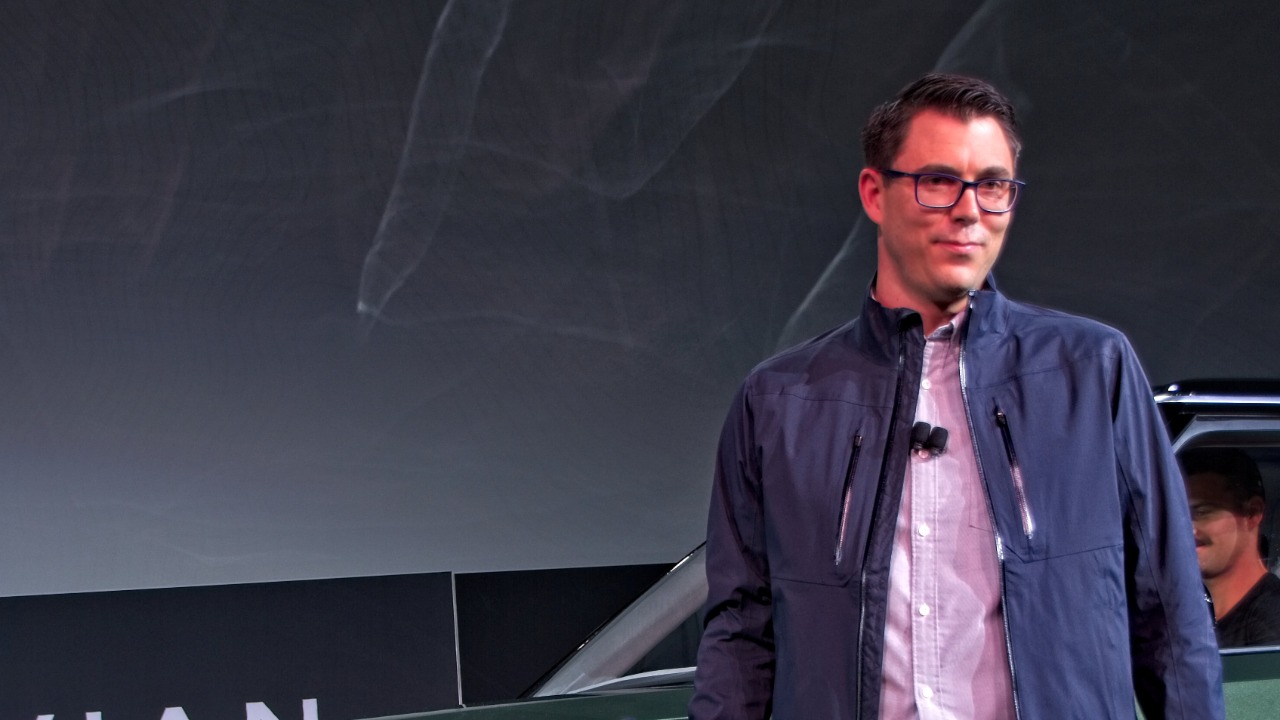

Rivian is no longer talking about driver assistance as a side feature, it is treating autonomy as the core of its future business. The company’s chief executive, Rivian CEO RJ Scaringe, is now openly sketching a world in which, before 2030 is out, a Rivian can complete a trip without anyone sitting inside at all. That vision raises a blunt question for the rest of the industry: if one of the most closely watched electric truck makers is planning for empty cars on public roads, who will be ready to compete in that world and who will be left behind.
Scaringe’s 2030 bet: from hands‑free to human‑optional
When Rivian CEO RJ Scaringe talks about autonomy, he does not describe a gentle evolution of cruise control, he describes a step change in how people and goods move. His message is that by the end of this decade, a Rivian owner will be able to send a vehicle off on its own, whether to pick up a family member, shuttle a package, or reposition itself for charging, with no one in the cabin. That is the context for his headline‑grabbing claim that by 2030 you will not even need to be in the car, a line that signals how far beyond today’s “assist” features Rivian expects its technology to go.
That ambition is backed by a formal roadmap in which Rivian targets full self‑driving capability by 2030 and frames autonomy as a bold artificial intelligence push rather than a bolt‑on option. In that plan, the company describes a progression from supervised systems to what it calls hands‑free autonomy and ultimately to driverless operation, with Rivian CEO Scaringe positioning this as a defining pillar of the brand’s identity rather than a niche experiment, a stance reflected in the company’s detailed targets for full self‑driving.
“You plug in your address”: how Rivian defines full autonomy
Scaringe’s description of the end state is strikingly simple: you get in, enter a destination, and the vehicle does the rest. In his telling, the car will be able to drive to that address with no involvement from the human beyond choosing where to go, a definition that goes well beyond lane keeping or adaptive cruise and into the realm of true point‑to‑point automation. That framing matters because it sets a clear bar for what Rivian considers success, and it is a bar that implies the system must handle city streets, complex intersections, and unpredictable traffic rather than just controlled access highways.
He has also been explicit that this level of capability could reshape which automakers win and lose before the end of the decade, arguing that autonomy will be a growth engine that shifts market share toward companies that can deliver reliable, robotic driving. In that scenario, Rivian is not just chasing a convenience feature, it is betting that customers will gravitate toward vehicles that can take over the full driving task, a bet he has tied directly to the idea that a Rivian will be able to complete a trip with no driver input at all, as he outlined when he said the vehicle could drive to an address with no involvement from you other than plugging it in, a vision captured in his detailed comments on how autonomy could reshape market share.
From “road to autonomy” to empty‑cabin trips
Scaringe is careful to stress that this future will not arrive with a software switch flipped overnight. In a Video Transcript of his recent remarks, he framed the journey as a “road to autonomy,” emphasizing that it is not like you are going to turn it on tomorrow and suddenly have full driverless capability everywhere. That choice of words underscores a phased rollout, where the system gradually expands from limited domains to broader use cases, and where each step must prove itself in real‑world conditions before Rivian moves on to the next.
In that same Video Transcript, he walked through how the company is preparing its first mass‑market models for this evolution, describing how the vehicles will initially focus on specific types of roads, many of which are highways, before branching into more complex environments. The message is that Rivian is designing its hardware and software stack today with that future in mind, so that the same trucks and SUVs customers buy now can grow into far more capable machines over time, a strategy he laid out while explaining that, obviously, it is a road to autonomy and not a single leap, in remarks captured in the Video Transcript of his autonomy comments.
Why Georgia and the factory map matter for a driverless future
Rivian’s autonomy story is not just about code, it is about where and how those vehicles are built. Rivian CEO Scaringe has been telling state leaders that automaking is now a technology race, and that regions able to support advanced manufacturing and software development will have an edge. When he talks about Georgia, he frames the state as being ahead in that race, highlighting how its workforce and infrastructure can support the kind of high‑tech production that a self‑driving platform demands.
He has also argued that every manufacturer needs to be developing world‑class technology if it wants to stay relevant, a line that doubles as both a warning to legacy players and a justification for Rivian’s own heavy investment in autonomy. By tying the company’s future to places like Georgia, he is signaling that the physical footprint of factories and engineering hubs is part of the competitive equation, not an afterthought, a point he made while stressing that automaking is a technology race and that Georgia is ahead, and that every manufacturer needs to be developing world‑class technology, in his remarks to leaders in Georgia’s growing EV corridor.
“You won’t need to be in the car”: what Scaringe actually promised
The line that grabbed the most attention was Scaringe’s assertion that Rivians will be so driverless by 2030 that you will not need to be in the car at all. Stripped of the hype, what he is describing is a vehicle that can operate as a fully autonomous robot, capable of running errands, repositioning itself, or serving as a shuttle without a human occupant. That is a more radical vision than simply letting the driver take their hands off the wheel, because it implies a system trusted to handle not just driving but also the social and regulatory expectations that come with an empty vehicle moving through public space.
He framed this as a natural extension of the company’s autonomy roadmap, suggesting that once a Rivian can safely handle a trip with a relaxed driver, the next step is to remove the driver entirely for certain use cases. In other words, you could send your truck to pick up groceries or your SUV to collect a child from practice while you stay home, a scenario he summarized by saying that Rivians will be so driverless by 2030 that you will not need to be in the car, a phrase that has since become shorthand for his long‑term autonomy pledge and that was highlighted in coverage of how Rivians Will Be So Driverless By 2030, You Won, Need To Be In The Car, CEO.
Autonomy as a market‑share weapon, not a side project
Scaringe is not shy about why he is pushing so hard on this front: he sees autonomy as a way to grab market share in a brutally competitive EV landscape. In his view, a robotic, self‑driving future is critical to gaining market share, because customers will find it very hard to choose a vehicle that cannot drive itself when alternatives can. That logic turns autonomy from a nice‑to‑have into a must‑have, especially for a younger brand that needs a clear differentiator against larger incumbents.
That perspective has resonated beyond Rivian’s own investor deck, with industry observers noting that Rivian CEO RJ Scaringe sees a robotic, self‑driving future as central to the company’s growth story and warning that it will be very hard for customers to ignore such capability once it is widely available. The implication is that automakers who lag on autonomy risk watching their share erode as buyers gravitate toward vehicles that can handle more of the driving burden, a dynamic captured in commentary that Rivian CEO RJ Scaringe sees a robotic, self‑driving future as critical to gaining market share and that it will be very hard for customers to choose a car without it, as highlighted in analysis of Rivian CEO RJ Scaringe’s strategy.
Spending big: Rivian’s autonomy push as a growth engine
Behind the rhetoric is a concrete spending plan that treats autonomy as a core investment, not a speculative bet. Rivian CEO RJ Scaringe has said directly that autonomy could reshape market share before the end of the decade, and that Rivian is spending heavily to build the software, sensor, and compute stack needed to make that happen. He has framed this outlay as essential to the company’s long‑term growth, arguing that the payoff from a successful self‑driving platform will justify the near‑term hit to margins.
That approach is reflected in detailed reporting that Rivian is pouring resources into autonomy and that its leadership sees this as a growth engine rather than a cost center, with Scaringe repeatedly tying the company’s future revenue mix to services and features unlocked by self‑driving capability. In that narrative, autonomy is not just a feature to help sell trucks, it is a foundation for new business models, from subscription software to logistics services, a view laid out in coverage of how Rivian CEO RJ Scaringe prioritizes self‑driving tech push.
From “eyes‑on” today to “no one inside” tomorrow
For all the talk about 2030, Rivian’s autonomy story is already visible in its current vehicles. The company has rolled out hands‑free, eyes‑on highway driving in its latest models, giving drivers a taste of what a more automated future feels like while still requiring them to pay attention. That system, which allows the vehicle to handle steering and speed on certain roads while the driver supervises, is the first rung on the ladder toward the fully driverless operation Scaringe describes.
At the same time, Rivian has been steadily improving its financial position, a necessary backdrop for any long‑term technology push that will demand sustained investment. The combination of early hands‑free capability and a healthier balance sheet is meant to reassure both customers and investors that the company can afford to keep climbing that autonomy ladder, from supervised highway features to the kind of empty‑cabin trips Scaringe envisions, a trajectory underscored by reports that Rivian has rolled out hands‑free, eyes‑on highway driving in its latest vehicles and has been steadily improving on the financial front, as detailed in analysis of Rivian’s early autonomy rollout.
The stakes: regulation, trust, and the race to 2030
Scaringe’s 2030 vision lands in a world where regulators, city planners, and the public are still wrestling with what safe autonomy looks like. For Rivian to deliver vehicles that can roam without anyone inside, it will need not only robust technology but also a regulatory framework that allows empty vehicles on public roads, along with a level of public trust that such systems will behave predictably. That is why the company’s incremental approach, starting with hands‑free, eyes‑on features and expanding from there, is as much about acclimating society as it is about training neural networks.
By tying autonomy to market share, factory strategy, and long‑term financial planning, Rivian is effectively betting that the rules and public sentiment will evolve in time for its 2030 target. If Rivian CEO RJ Scaringe is right, the companies that have built and tested their systems in real‑world conditions by then will be in a position to offer services that feel almost science fiction today, from self‑repositioning trucks to family SUVs that can run solo errands. If he is wrong, and regulation or consumer skepticism slows the rollout, Rivian will still have invested heavily in a technology stack that may take longer to pay off, but the company’s current roadmap makes clear that it sees no viable path to long‑term relevance without that bet on a future where, at least some of the time, you really do not need to be in the car.
More from MorningOverview