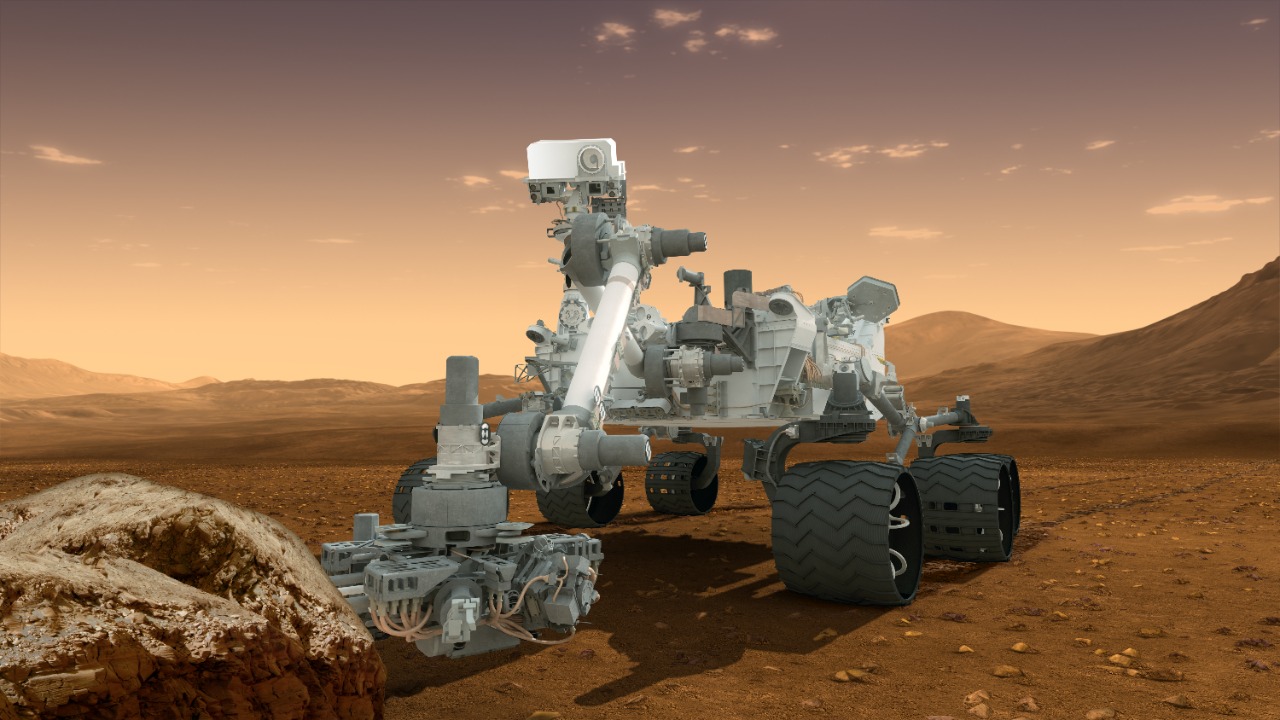

Humanity’s path to Mars will not be paved by rockets alone. The harsh cold, thin air, and toxic soil of the Red Planet demand a kind of resilience that metal and machinery cannot provide on their own, and that is where Earth’s toughest microbes come in. If people are ever to live sustainably on Mars, I expect that carefully chosen and engineered microorganisms will be doing much of the invisible heavy lifting.
Why microbes, not machines, will anchor Martian survival
Life on Mars will be constrained by scarcity: scarce air, scarce water, scarce fuel, and scarce spare parts. Microbes offer a way to turn that scarcity into abundance, because they can transform raw Martian resources into oxygen, food, and materials using only sunlight, minerals, and a bit of engineering guidance. Instead of shipping endless tons of supplies from Earth, settlers could rely on living systems that replicate themselves and adapt to local conditions, a strategy that is already central to how ecosystems function on our own planet.
Researchers such as Lynn Rothschild have argued that microbes will be essential for human survival on Mars, not as an afterthought but as a primary tool for building a functioning outpost. Work described in Microbes Will Be Essential For Human Survival On Mars highlights how Rothschild and colleagues see microbial systems as a realistic way to generate oxygen, recycle waste, and even manufacture useful compounds from Martian dust. In that framing, microbes are not a side project for future terraforming but a near-term, attainable route to keeping the first crews alive.
Extremophiles prove life can handle Martian punishment
Before anyone seeds Mars with biology on purpose, scientists need to know whether Earthly organisms can actually survive there. Extremophiles, microbes that already thrive in brutal environments on Earth, are the best test case. Their performance in simulated Martian conditions is reshaping expectations about how long life could persist on the surface and below it, and what kinds of organisms might be safe and useful to deploy.
Laboratory experiments have exposed hardy microbes to deep cold, intense radiation, and desiccation similar to what they would face on Mars. In one set of tests, organisms endured temperatures as low as minus 80 degrees Fahrenheit, which is minus 63 degrees Celsius, and still showed the capacity to revive when conditions improved. Other work on extremophiles such as Deinococcus suggests that some radiation resistant bacteria could remain viable for hundreds of millions of years if buried at different depths on Mars. These findings increase the probability that microbial life could still exist on the Red Planet today and, just as importantly, that engineered microbial helpers could endure long enough to be useful.
Turning toxic Martian soil into farmland
Even if astronauts arrive with advanced habitats, they will eventually need to grow food locally, and Martian soil is a problem. The regolith is laced with perchlorates and other compounds that are toxic to humans and animals, and its structure is poorly suited to conventional agriculture. Any realistic plan for settlement must therefore include a way to detoxify and restructure that soil so it can support crops without importing endless bags of potting mix from Earth.
One promising approach is to enlist photosynthetic microbes as both soil conditioners and biofactories. Reporting on future settlers notes that the soil on Mars is toxic to human and animals, but that Astronauts could potentially use cyanobacteria or algae as renewable food sources and as a way to grow crops on Mars. These organisms can pull carbon dioxide from the thin atmosphere, fix nitrogen if it is available, and slowly build organic matter that improves the regolith’s texture. Over time, a layered system of microbes and plants could convert sterile dust into something closer to soil, with cyanobacteria acting as the pioneers that make the environment habitable for more delicate crops.
Microbial miners and rock eaters
Beyond food, settlers will need metals and minerals for construction, electronics, and life support systems. Traditional mining on Mars would be energy intensive and dangerous, but microbes that specialize in dissolving rock and extracting elements offer a low energy alternative. These rock eating organisms already operate in some of Earth’s most inhospitable mines, and their talents could be repurposed for extraterrestrial geology.
Experiments and modeling suggest that tiny rock eating microbes could help with Mining extraterrestrial rocks, freeing up metals that would otherwise be locked away in Martian dust and stone. Fortunately, Mars will not subject these microbes to quite the same extremes as some of the vacuum and radiation tests used in the lab, which means their natural resilience should be more than enough for sheltered bioreactors. In practice, a future base could feed crushed regolith into microbial vats and harvest dissolved iron, magnesium, or rare elements, turning what looks like barren rock into a steady stream of industrial feedstock.
Building with living biocomposites
Housing on Mars will need to be strong, lightweight, and made largely from local materials, because shipping concrete blocks from Earth is not an option. Here again, microbes offer a template. On Earth, microbial communities have been building layered mineral structures for billions of years, and those natural biocomposites hint at how we might grow our own construction materials on another world.
Scientific work on organo sedimentary laminated structures shows that the formations known as stromatolites can be considered biocomposites, created as microbial mats trap and bind sediments over time. Researchers argue that this kind of process could be Harnessed to produce building materials on Mars that are created using in situ materials. In practice, that might mean seeding Martian regolith with engineered microbes that precipitate minerals into bricks, panels, or even self healing walls, reducing the need for heavy industrial kilns and allowing structures to be grown rather than cast.
Synthetic biology as the Martian toolkit
While natural extremophiles provide proof that life can survive Martian style stress, synthetic biology offers a way to tailor microbes to the exact jobs settlers will need done. Instead of relying on whatever traits evolution happened to produce, engineers can design organisms that combine radiation resistance, efficient photosynthesis, and the ability to produce fuels or plastics from simple inputs. This design driven approach turns microbes into modular tools that can be swapped or upgraded as mission requirements change.
Advocates of this strategy argue that the question is not whether we will use biology on Mars, but how deeply we will integrate it into every system. Analyses of future missions point out that the challenge of hauling everything from Earth is precisely where synthetic biology, often shortened to synbio, could shine. Commentators discussing how on Earth Will We Colonize Mars note that Use Synthetic Biology is a compelling answer, especially when even basic tasks like extracting water from Martian dust would be difficult with conventional hardware alone. In that vision, microbes become programmable factories that turn local ice, carbon dioxide, and regolith into everything from rocket propellant to replacement parts.
Terraforming dreams versus near term realities
Whenever microbes and Mars appear in the same sentence, the conversation quickly drifts toward terraforming, the idea of transforming the entire planet into something more Earthlike. It is an alluring concept, but the physics and timescales involved make it a distant prospect at best. The more immediate opportunity is to use microbial systems to create small pockets of habitability, from greenhouses to underground caverns, where humans can live and work without waiting centuries for a global makeover.
Scientists studying how Earth’s toughest microbes may help us colonize Mars emphasize this more modest, targeted approach. Analyses of microbial partnerships describe how carefully chosen communities of organisms could stabilize local environments, recycle waste, and support human life long before any planet wide transformation is possible. Reporting on How Earth Toughest Microbes May Help Us Colonize Mars notes that Scientists see these partnerships as a way to support early settlements and, only later, to help in Mars’s terraforming efforts. In other words, microbes are likely to start as life support systems for small bases, with any planet scale ambitions remaining a secondary and more speculative goal.
Guardrails: planetary protection and ethical choices
Sending microbes to Mars is not just a technical decision, it is an ethical and scientific one. If Earthly organisms can survive for hundreds of millions of years in Martian conditions, as some experiments suggest, then any contamination we introduce could be effectively permanent. That raises the stakes for planetary protection, because once a microbe is released into the Martian environment, there may be no practical way to remove it or to distinguish it from any native life that might exist.
Studies that expose extremophiles such as Deinococcus to simulated Martian radiation and cold show just how durable some microbes can be, with survival times stretching out, for 280 million years in certain scenarios. Combined with the evidence that organisms can endure temperatures down to minus 80 degrees Fahrenheit and minus 63 degrees Celsius, these results force mission planners to weigh the benefits of microbial helpers against the risk of obscuring or destroying any indigenous biosignatures. For now, that tension is pushing researchers toward tightly contained bioreactors and closed loop systems, where microbes work behind sealed walls rather than being scattered across the Red Planet’s surface.
From lab benches to launch pads
The leap from petri dish to planetary outpost will be gradual, but it has already begun. On Earth, engineers are testing bioreactors that grow cyanobacteria on simulated Martian regolith, mining microbes that leach metals from volcanic rock, and biofabrication systems that coax bacteria to produce structural materials. Each of these experiments is a small rehearsal for the much larger performance that a real Mars mission would demand.
Researchers like Lynn Rothschild, whose work is highlighted in Microbes Will Be Essential For Human Survival On Mars, are already sketching out how microbial life support systems could be integrated into spacecraft and habitats. At the same time, synthetic biology advocates who argue that How Earth Will We Colonize Mars, Use Synthetic Biology is a practical roadmap are pushing for standardized genetic toolkits that can be updated from Earth, much like software patches. If those efforts converge, the first crews to land on Mars will not arrive alone. They will be accompanied by a carefully curated menagerie of microbes, each one selected to solve a specific problem, and together those microscopic partners may prove to be the real pioneers of the Red Planet.
More from MorningOverview