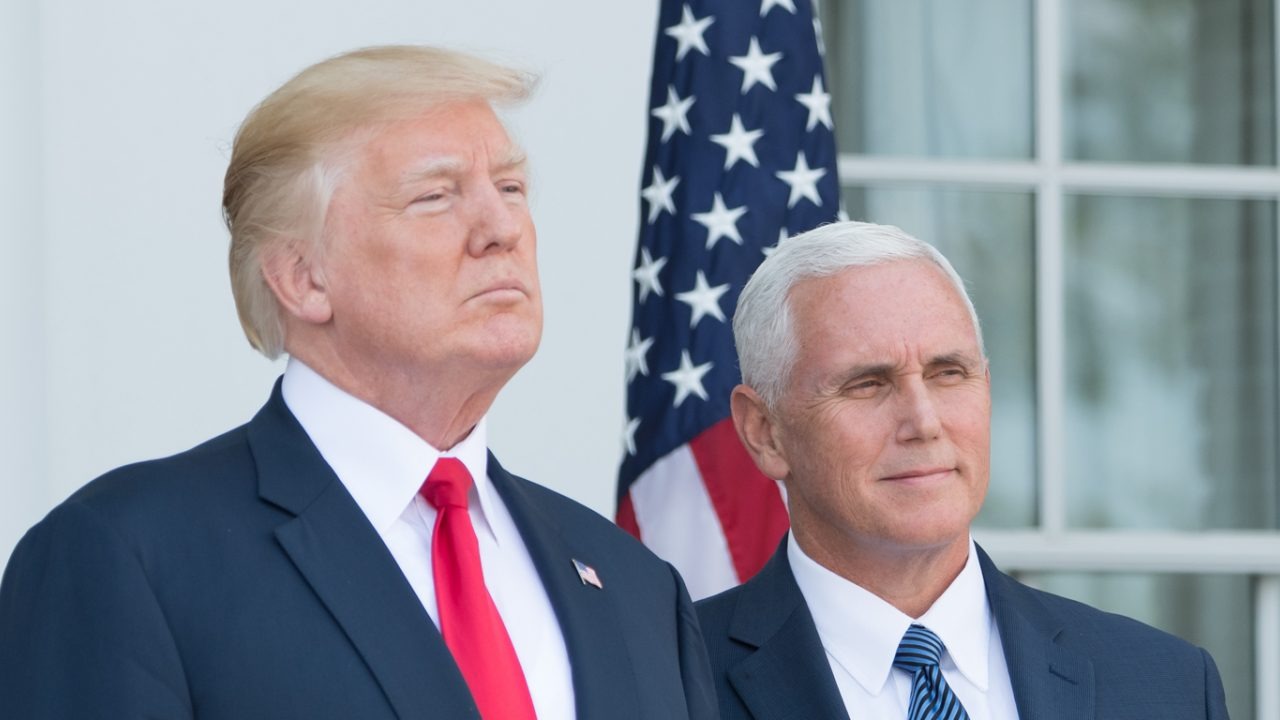

President Donald Trump is moving to relax federal fuel economy rules for new cars and trucks, a shift that would keep gasoline demand higher for longer and slow the auto industry’s pivot to cleaner technology. The immediate fight is over miles per gallon and tailpipe emissions, but the deeper stakes involve who dominates the next generation of vehicles and energy systems. By easing pressure on U.S. automakers to innovate, I see the administration effectively handing strategic ground to China, which is racing ahead in electric vehicles, batteries, and solar power.
The White House frames the reset as relief from “expensive” regulation and a win for drivers who still prefer gasoline engines. Yet the policy direction collides with where global markets are heading and where America’s largest economic rival is already investing at scale. The question is not whether the United States will keep selling pickup trucks and SUVs in the near term, but whether it will still be setting the pace in the technologies that will define transportation and energy in the decades ahead.
The new rollback and what it actually changes
The Trump administration’s reset of Corporate Average Fuel Economy standards is designed to sharply reduce how quickly automakers must improve the efficiency of their fleets. Instead of the steeper trajectory that had been set under the previous administration, the new plan would significantly lower the required gains in miles per gallon for cars and light trucks sold later this decade. According to one detailed description, the plan, if finalized next year, would substantially reduce fuel economy requirements that govern how far new vehicles must travel on a gallon of fuel, weakening rules that were meant to limit air pollution from the transportation sector and directly affecting model years like 2027 Honda CR‑V hybrids or Ford F‑150 pickups that would otherwise have been pushed toward higher efficiency under the earlier schedule, as reported in an analysis of how the administration plans to weaken vehicle mileage rules.
In parallel, the White House has formally announced what it calls a “reset” of the CAFE program, arguing that the prior framework was unrealistic and unfair to consumers. The official fact sheet asserts that The Biden standards would have compelled widespread shifts to EVs that American consumers did not ask for, accompanied by higher vehicle prices and a patchwork of rules in states that adopted California’s standards. By recasting the rules as a consumer protection measure rather than a climate or competitiveness tool, the administration is signaling that it is willing to trade long term technological leadership for short term relief from regulatory pressure.
How the rollback fits Trump’s broader energy bet
The move on fuel economy is not an isolated decision, it is part of a broader energy strategy that leans heavily into fossil fuels and slows support for renewables. President Donald Trump has, since returning to the White House, doubled down on oil and gas, positioning himself as a salesman in chief for domestic drilling and pipeline projects while casting doubt on the economic value of wind and solar. The fuel economy reset fits neatly into that pattern, since less efficient vehicles lock in higher gasoline consumption and extend the market for petroleum products.
Supporters of this approach argue that cheap domestic energy and looser rules will keep U.S. manufacturing competitive and protect jobs tied to internal combustion engines. Yet the same reporting that details Trump’s fossil fuel push also notes that this “win on gas, lose on renewables” strategy risks leaving American firms behind in sectors where global demand is growing fastest. By easing pressure on automakers to electrify and by slowing the build out of clean power, the administration is effectively placing a bet that the world will not move as quickly toward low carbon technologies as current trends suggest, a gamble that looks increasingly risky as other countries accelerate their own transitions.
What the White House and automakers say they want
From the administration’s perspective, the reset is about cost, choice, and regulatory simplicity. In public remarks and official documents, Trump has described the prior rules as “expensive restrictions” that would have forced automakers to load vehicles with technology that drivers do not want and cannot afford. One detailed account of the announcement notes that Trump announces roll back of Biden-era vehicle fuel efficiency rules for cars made from 2027 to 2031, casting them as a burden on both industry and households. The White House also argues that aligning federal standards more closely with what automakers say they can meet will avoid legal clashes with states that had adopted tougher benchmarks.
Some industry leaders have echoed that framing. Ford CEO Jim Farley, for instance, has praised the planned rollback as “a win for customers and common sense,” emphasizing that, as America’s largest auto producer, Ford wants flexibility to balance investments in electric models like the Mustang Mach‑E with continued production of gasoline powered F‑150s and Explorers. In one account of the negotiations, Farley is quoted saying the planned rollback was “a win for customers and common sense” and stressing that As America‘s largest auto producer, Ford must respond to what buyers are actually choosing on dealer lots. That argument resonates with companies that still earn most of their profits from trucks and SUVs, but it also assumes that consumer preferences are fixed rather than shaped by policy, prices, and the availability of compelling electric options.
Critics warn the U.S. is ceding the EV race to China
Policy advocates and energy analysts see the rollback very differently, warning that it will slow the transition to electric vehicles and hand a strategic advantage to Beijing. One detailed assessment notes that Policy advocates said weakening the standards would slow the transition to electric vehicles and make the U.S. vehicle fleet more polluting, while experts say China stands to benefit because its companies are already producing large volumes of affordable EVs and batteries. If American rules no longer push Detroit to keep pace, Chinese manufacturers could consolidate their lead in both technology and scale.
The concern is not abstract. China’s dramatic surge of investment into the “new three” sectors of EVs, batteries, and solar is expected to crush oil demand by mid century and shape a future in which Chinese firms dominate key supply chains. One analysis of Trump’s climate stance argues that China’s dramatic surge of investment into electric mobility and renewable energy is already positioning it to define global standards and capture export markets. By contrast, a United States that locks in higher gasoline use and delays EV adoption risks becoming a technology taker rather than a technology maker, importing batteries and software from abroad instead of building them at home.
Environmental and public health stakes
Beyond geopolitics, the rollback has immediate consequences for air quality and climate pollution. Transportation is a major source of greenhouse gases and local smog forming emissions, and fuel economy rules are one of the most direct tools the federal government has to curb that output. Reporting on the administration’s proposal notes that the plan would weaken vehicle mileage rules that limit air pollution, and that since taking office in January, Trump has relaxed auto tailpipe emissions rules and repealed fines for automakers that do not meet prior efficiency targets, steps that collectively allow more gasoline consumption and higher emissions from the U.S. fleet, as detailed in coverage of how Trump proposal would weaken vehicle mileage rules that limit air pollution.
Public health advocates warn that the burden of dirtier air will fall disproportionately on communities near highways and freight corridors, where asthma and cardiovascular disease rates are already high. The earlier standards would have steadily increased the average efficiency of vehicles on the road, cutting fuel use and emissions per mile driven. By slowing that trajectory, the new plan effectively locks in more pollution from every new gasoline powered SUV or pickup that rolls off the line. That choice may please some drivers who prefer large vehicles and some companies that profit from them, but it also means more smog forming nitrogen oxides and particulate matter in the air that millions of Americans breathe every day.
Auto executives, Congress, and the politics of delay
Inside the United States, the politics of the rollback reflect a familiar alignment between parts of the auto industry and Republican leaders who are skeptical of aggressive climate policy. When auto executives stand with the president to weaken fuel efficiency standards, they are choosing to concede the global race for the cars of the future from our largest competitor, a dynamic that one critic captured by warning that such moves effectively hand the future of the industry to China, as argued in a detailed essay on how When auto executives stand with the president to weaken fuel efficiency standards, they risk ceding leadership. Lawmakers who represent districts with engine plants and parts suppliers often back that stance, arguing that too rapid a shift to EVs would cost jobs before new ones are created.
Yet there is a growing split within the industry and on Capitol Hill. Some automakers that have already committed billions of dollars to EV platforms and battery factories worry that constant policy whiplash makes it harder to plan and undermines their case to investors. Members of Congress who see clean technology as a jobs engine for their states argue that delaying the transition only makes it more painful when it eventually arrives. The current rollback debate is therefore not just about one set of rules, it is a proxy for a larger struggle over whether the United States will lead or lag in the next industrial wave.
Trump’s rhetoric and the culture war over “green” policy
Trump has paired his regulatory moves with sharp rhetoric that casts climate and clean energy policies as scams foisted on ordinary Americans. In one widely noted appearance, he derided modern fuel economy and climate rules as part of a “green new scam,” a phrase that plays on conservative anger at progressive climate proposals and frames environmental regulation as an elite project disconnected from everyday concerns. A detailed account of that event describes how, under the banner “Kill Baby Kill,” Kill Baby Kill: Trump rolls back US fuel economy standards calling it “green new scam,” with reporting by Chidanand Rajghatta for TNN, highlighting his contempt for policies that promote electric mobility and renewable energy.
This language is not incidental. By turning fuel economy rules into a culture war flashpoint, the president makes it harder to build bipartisan support for long term investments in clean infrastructure and industrial policy. Voters who might otherwise welcome cheaper to run EVs or cleaner air are encouraged to see those benefits as part of a political project they distrust. That, in turn, gives cover to policymakers who prefer to stick with the status quo and to companies that are reluctant to disrupt profitable legacy business lines, even if doing so leaves them more vulnerable to foreign competition in the long run.
China’s strategic play in EVs, batteries, and solar
While Washington argues over miles per gallon, Beijing is executing a coordinated strategy to dominate the technologies that will power future vehicles and grids. Chinese companies have poured capital into EV manufacturing, battery plants, and solar panel production, building scale that allows them to drive down costs and flood global markets with competitively priced products. Analysts who track these trends note that China’s dramatic surge of investment into the “new three” sectors is already reshaping global energy demand and could significantly reduce oil consumption as electric cars and buses displace gasoline and diesel over the coming decades, a shift detailed in the argument that China’s dramatic surge of investment into EVs, batteries, and solar is expected to crush oil demand and shape a future defined by Chinese industrial policy.
For U.S. automakers, that means the competitive landscape is changing whether or not domestic rules keep pushing them. Chinese brands like BYD and SAIC are already selling electric models that undercut Western rivals on price in markets from Europe to Southeast Asia, and their battery suppliers are signing long term contracts with global carmakers. If American firms slow walk their own EV programs because domestic fuel economy rules no longer force the issue, they risk ceding not just the Chinese market but also third country markets where governments are tightening emissions standards and consumers are embracing electric options. The Trump rollback may feel like a reprieve in Detroit today, but it could look more like a trap if it leaves U.S. brands unprepared for a world where electric drivetrains are the default.
Short term relief versus long term competitiveness
In the near term, weaker fuel economy rules will likely reduce compliance costs for automakers that still rely heavily on gasoline powered trucks and SUVs, and they may keep sticker prices slightly lower for some models. That is the core of the administration’s argument: that easing standards protects consumers and preserves choice. Yet those savings must be weighed against higher fuel bills over the life of the vehicle, as less efficient models burn more gasoline, and against the risk that U.S. companies fall behind in the technologies that will define the next era of mobility. When the White House insists that American consumers did not ask for EVs, it is effectively betting that global demand will not outpace domestic skepticism, a view that runs counter to what is happening in Europe and parts of Asia.
From a competitiveness standpoint, the bigger question is whether U.S. policy will push domestic firms to innovate fast enough to keep up with foreign rivals. The earlier standards were not perfect, but they did create a clear signal that efficiency and electrification would be rewarded, nudging companies to invest in hybrid systems, lighter materials, and battery platforms. By softening that signal, the Trump administration is prioritizing short term comfort over long term positioning. If China continues to scale its “new three” industries while the United States slows its own transition, the balance of power in the global auto and energy sectors will tilt further toward Beijing, and American workers and consumers will ultimately pay the price in lost jobs, higher fuel costs, and diminished influence over the rules that govern the technologies of the future.
More from MorningOverview