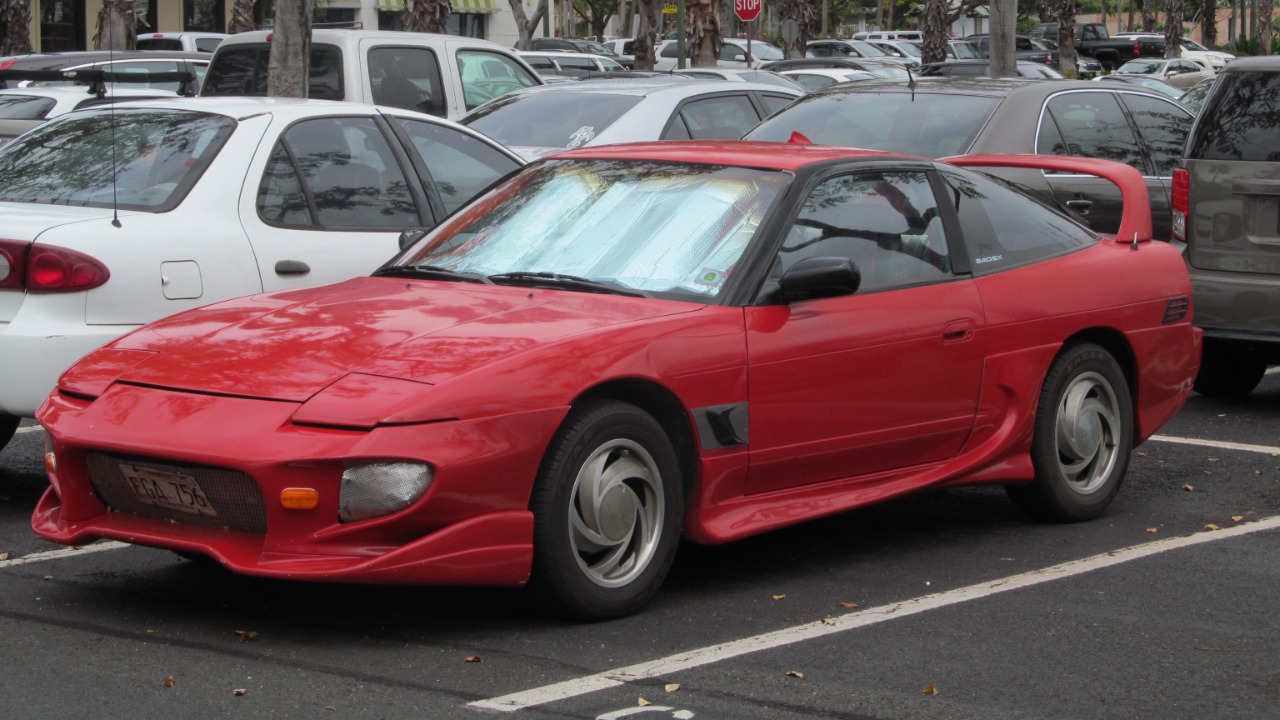

For nearly three decades, Zilvia.net was one of the internet’s most recognizable homes for Nissan 240SX owners, a place where build threads, classified deals, and late-night troubleshooting shaped a generation of grassroots drifting. Its sudden shutdown after 27 years did more than erase a message board, it exposed how fragile the old architecture of car culture has become in an era of data breaches and disposable platforms.
The overnight disappearance of a site that once defined the 240SX scene has left owners scrambling for answers, backups, and new gathering spots, while also confronting the security risks that come with long-running communities built on aging software. The end of Zilvia.net is a story about a forum, but it is also a warning about what happens when the infrastructure of enthusiast culture is treated as an afterthought.
The abrupt shutdown that stunned the 240SX world
The end of Zilvia.net did not arrive with a long goodbye or a carefully staged farewell post, it arrived as a blank page where a sprawling archive of S13 and S14 knowledge used to live. Regulars who had been refreshing build threads for years woke up to find that the familiar forum index was gone, replaced by the stark reality that the site had been taken offline and would not return. For a community that had grown used to the forum’s permanence, the suddenness of the shutdown felt less like a retirement and more like a crash.
What made the moment even more jarring was the lack of a clear roadmap for what came next, with users told that the forum had been taken down and that there was no plan or timeline for any kind of restoration. The message was blunt that the platform was finished, and that anyone who had relied on the same login details elsewhere should treat the incident as a serious security event rather than a routine outage, a warning that underscored how quickly a beloved corner of the internet can become a liability when it is compromised, as reflected in the advisory that the forum had been taken offline and would not return in the wake of a breach described in the forum has been taken offline.
From early-2000s message board to 240SX institution
To understand why the shutdown hit so hard, it helps to remember what Zilvia.net represented at its peak. Long before social media feeds and algorithmic recommendations, the forum functioned as a central hub where owners of the Nissan 240SX traded wiring diagrams, debated suspension setups, and documented every step of SR20DET swaps into U.S. market chassis. Over more than two decades, it evolved from a simple message board into a living technical manual, a classifieds marketplace, and a social club for people who built their cars in driveways and storage units rather than corporate race shops.
That longevity is what turned Zilvia.net into a kind of institution, especially for enthusiasts who came of age in the early drift boom and treated the site as a daily ritual. The community’s influence stretched beyond its own URL, shaping how people talked about S13 and S14 chassis codes, how they sourced parts, and how they learned to drive sideways at local tracks. Its role as a 24-year fixture of the scene is captured in retrospective accounts that describe how, in November 2025, Zilvia.net was forced offline after a data breach and how its impact on internet forums cannot be understated, a history that has been chronicled in detail in a look at how a data breach ended a 24-year institution.
A data breach that turned nostalgia into a security risk
Behind the emotional shock of losing a beloved forum was a more practical and unsettling reality, the shutdown was triggered by a data breach that turned a nostalgic hangout into a potential attack vector. When a site has been online for decades, it often carries layers of legacy code, outdated plugins, and long-forgotten user accounts, all of which can become weak points once attackers start probing. In Zilvia.net’s case, the breach was serious enough that the operators chose to pull the plug entirely rather than attempt a live cleanup, a decision that signaled how deeply the compromise may have reached.
The warning that accompanied the closure urged anyone who had reused their forum password on other services to change those credentials immediately, a reminder that the real damage from a breach often spreads far beyond the original site. That kind of guidance is now standard practice in the wake of cyber incidents, but it lands differently when it is attached to a community that many users associated with trust and familiarity rather than risk. The contrast with other recent attacks, where companies like Both Renault and Dacia have stressed that no financial data or passwords were accessed and that their own systems were not infiltrated after a third party was compromised, highlights how much worse the fallout can be when a platform cannot offer similar assurances, a point underscored by the way Both Renault and Dacia framed their own incident.
What vanished with 27 years of posts, builds, and classifieds
When a forum disappears, the loss is not just about the front page or the latest threads, it is about the cumulative weight of everything that has been posted since the first user registered. In Zilvia.net’s case, that meant thousands of build logs documenting the evolution of individual cars from bone stock to track-ready, troubleshooting threads that solved obscure electrical gremlins, and classified listings that tracked the ebb and flow of parts availability as S13 and S14 chassis aged. For owners who had bookmarked specific posts about, say, wiring an S14 Kouki cluster into an S13 or rebuilding an R200 differential, the shutdown felt like a library fire.
The classifieds section was its own ecosystem, a place where rare JDM aero, used coilovers, and complete SR20DET front clips changed hands in deals that often relied on the forum’s reputation to keep both sides honest. Losing that marketplace overnight did not just inconvenience buyers and sellers, it disrupted a supply chain that had grown around the assumption that Zilvia.net would always be there as a central exchange. The official site now reflects the abrupt end of that activity, with the familiar forum structure replaced by a stark notice that signals the community’s closure, a change that is immediately visible to anyone who visits the former home of the 240SX scene at the official Zilvia.net domain.
How the shutdown reshapes the 240SX and drifting community
The disappearance of Zilvia.net has forced the 240SX community to confront a question it had been able to ignore for years, what happens when the central hub of a niche scene suddenly goes dark. In the short term, owners have scattered to other platforms, from Facebook groups and Discord servers to smaller forums that never reached Zilvia’s scale. Those spaces can replicate some of the social energy, but they struggle to match the depth and organization of a traditional message board where long-form posts, detailed photo documentation, and searchable archives were the norm rather than the exception.
For grassroots drifting, the impact is more subtle but just as real. Zilvia.net was one of the places where local events were promoted, where drivers shared in-car footage and setup notes, and where newcomers learned the etiquette of track days and tandem runs. Without that shared reference point, the culture risks fragmenting into smaller, less connected pockets, each with its own norms and knowledge base. The long view offered by accounts of Zilvia’s rise and fall suggests that the forum’s influence on how people learned to drift, sourced parts, and built their cars will linger even as the URL itself fades, a legacy that is evident in the way its 24-year run is described as a foundational chapter in the history of internet car forums in the analysis of the rise, fall, and afterlife of Zilvia.net.
Lessons in cybersecurity for aging enthusiast platforms
One of the clearest lessons from Zilvia.net’s shutdown is that nostalgia cannot be allowed to substitute for basic security hygiene. Long-running enthusiast sites often operate on shoestring budgets, maintained by a handful of volunteers or a single administrator who juggles server bills with real life. Over time, software updates get delayed, backups become inconsistent, and security audits rarely happen at all, creating exactly the kind of environment where a determined attacker can do serious damage. When a breach finally occurs, the operators may lack both the technical resources and the financial cushion to respond with a full rebuild, leaving a hard choice between limping along or shutting down entirely.
The contrast with larger organizations that have weathered cyber incidents without pulling the plug is instructive. When Both Renault and Dacia disclosed that customer data had been stolen in a third party attack, they were able to emphasize that no financial data or passwords were accessed and that their own systems were not infiltrated, a level of containment and communication that depends on having robust security practices and incident response plans in place. Enthusiast forums rarely have that kind of infrastructure, which is why the warning that Zilvia.net users should change any reused passwords felt less like a routine advisory and more like an admission that the breach had outstripped the site’s ability to cope, a dynamic that is spelled out in the guidance that the forum had been taken offline and would not return after the compromise described in the sudden shutdown after 27 years.
The scramble to preserve Zilvia’s archives and identity
Once it became clear that Zilvia.net would not be coming back in its original form, attention shifted to what, if anything, could be salvaged from its digital remains. For archivists and longtime members, the priority was not reviving the forum as a live platform but rescuing the information it contained, from torque specs buried in decade-old threads to rare photos of early drift events. That kind of preservation effort is technically complex, especially when the original database has been compromised, but it is often the only way to keep a community’s collective memory from disappearing entirely.
Accounts of Zilvia’s afterlife describe attempts to extract and mirror portions of the site’s content, turning static snapshots of threads into read-only archives that can still be searched and referenced even if no new posts are ever added. The goal is less about nostalgia and more about continuity, ensuring that future 240SX owners can still learn from the hard-won experience of those who came before them. In that sense, the shutdown has forced the community to think like historians as much as enthusiasts, treating the forum’s 24-year run as a cultural artifact worth preserving, a perspective that runs through the narrative of how a data breach ended the original site but left room for some of its knowledge to be saved in the examination of what can still be saved from its ashes.
What comes after Zilvia.net for 240SX owners
With the original forum offline, the 240SX community is now in a transitional phase, testing new platforms and trying to rebuild some of the cohesion that Zilvia.net once provided. Some owners have gravitated toward social media groups that offer quick feedback and easy photo sharing, while others prefer smaller, invite-only spaces that feel closer to the tight-knit subforums they remember. None of these options perfectly replicate the structure of a traditional message board, but they reflect a broader shift in how car culture organizes itself in the mid 2020s, trading permanence and searchability for immediacy and reach.
For anyone who grew up refreshing Zilvia.net multiple times a day, that tradeoff can feel like a downgrade, yet it also opens the door to new voices and formats that were harder to surface in the old forum era. Video-heavy platforms make it easier to share in-car footage from a freshly built S13, while chat-based servers can coordinate track days and parts runs in real time. The challenge will be ensuring that the hard lessons of Zilvia’s shutdown, from password hygiene to the importance of backups, are carried into these new spaces so that history does not repeat itself. The blank landing page at what used to be the forum’s front door is a stark reminder of what is at stake if those lessons are ignored.
More from MorningOverview