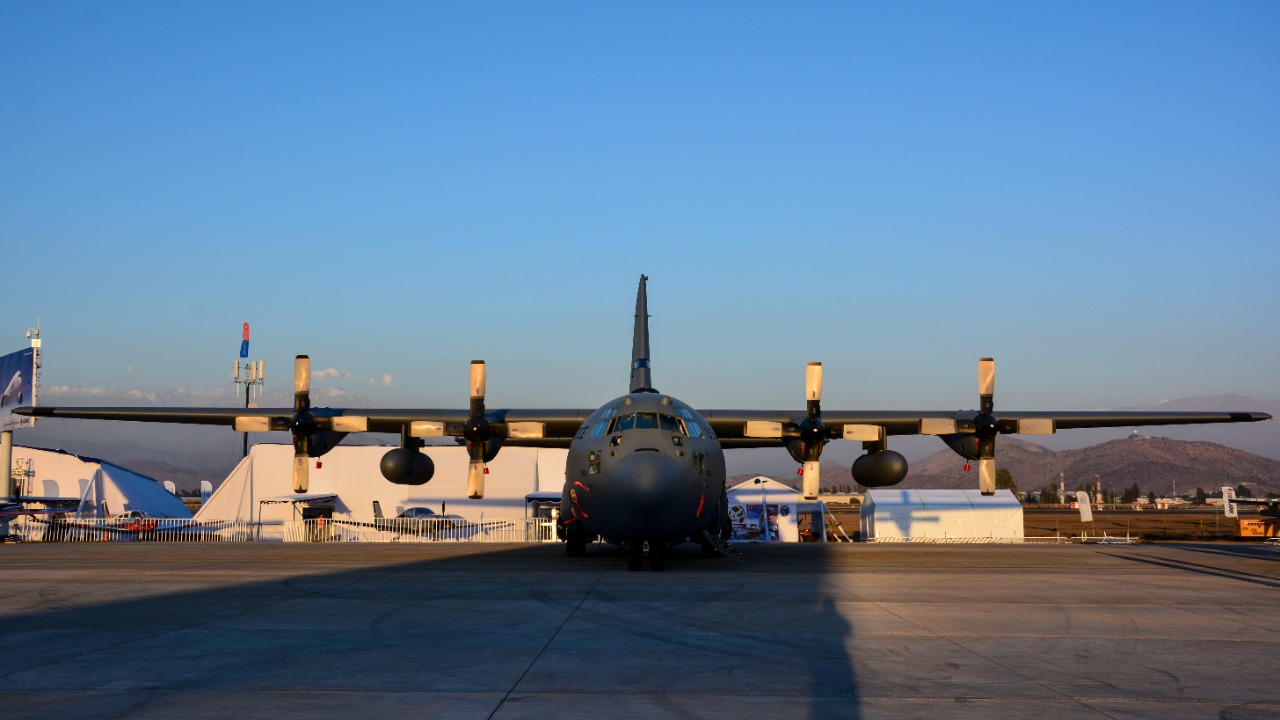

In the late stages of the Cold War, when nuclear optimism and strategic anxiety peaked together, Lockheed engineers quietly sketched out an aircraft so vast and so heavily armed that it blurred the line between bomber, carrier and airborne base. The Lockheed CL-1201 was conceived as a nuclear powered flying battleship, a machine that could loiter for weeks, launch its own air wing and project power across continents without ever touching a runway. It never left the drawing board, but the ambition behind it still exposes how far military planners were willing to go in search of permanent dominance in the sky.
Today, the CL-1201 survives as a set of specifications, concept art and scattered recollections, a ghost of a program that tried to turn nuclear energy into endless endurance and overwhelming firepower. Looking closely at what Lockheed proposed, and why it ultimately stayed theoretical, offers a rare window into the era’s mindset: a time when a 6,000-ton airplane and a nuclear reactor in the sky could be pitched as rational answers to geopolitical fear.
From paper study to Cold War legend
The Lockheed CL-1201 began life as a design study, not a production program, which gave its engineers permission to think on a scale that would have been unthinkable for a conventional transport or bomber. The company explored the idea of a gigantic nuclear powered aircraft that would weigh roughly 6,000-ton, dwarfing anything that has ever flown and pushing the limits of aerodynamics, materials and propulsion. In internal documents, the project was framed as a way to keep a strategic platform airborne for extraordinary stretches of time, effectively turning the sky itself into a permanent operating base.
That ambition placed the CL-1201 squarely in the context of the Cold War, when nuclear propulsion was being explored for submarines, surface ships and even experimental aircraft reactors. The design was part of a broader Lockheed effort to imagine what a future strategic fleet might look like if fuel and runway access stopped being constraints, a vision that later commentators have described as a colossal dream that never took flight. Even as the specifics of the design study remain partly obscured, the surviving details are enough to show how radically it departed from conventional aircraft thinking.
A nuclear heart and month-long endurance
At the core of the CL-1201 concept was a nuclear reactor that would power the aircraft’s engines and onboard systems, trading the weight and volume of traditional fuel for a compact, long lived energy source. The goal was not just long range but near continuous presence, with some accounts describing an endurance measured in weeks rather than hours. One detailed reconstruction notes that The Ambitious Lockheed CL was envisioned to stay airborne for an astounding 41 days without refueling, a figure that would have transformed how militaries think about deployment cycles and basing.
That kind of endurance would have made the CL-1201 less like an airplane and more like an airborne ship, able to orbit a theater of operations for over a month while its crew rotated through shifts and its aircraft cycled on and off the deck. The idea of a nuclear powered flying base has resurfaced in popular discussions, including a widely shared TIL about the Lockheed CL thread that highlights how the design promised to stay aloft as long as any aircraft today, despite being conceived decades earlier. In practice, such endurance would have raised enormous questions about crew fatigue, maintenance in flight and the logistics of sustaining a small city in the sky.
Supersonic flying carrier, not just a bomber
What set the CL-1201 apart from other nuclear aircraft concepts was not only its power source but its role as a flying carrier, a platform designed to launch and recover its own air wing. Rather than acting as a single strike aircraft, it was meant to function as a mobile base that could deploy fighters, reconnaissance planes and possibly even strike drones long before that term existed. Later analyses describe the Lockheed CL as a nuclear flying fortress that could deploy an Army, underlining how its designers imagined it as a hub for both air and ground forces.
Some reconstructions of the project describe multiple variants, including a more transport oriented configuration and a heavily armed version optimized for offensive operations. In both cases, the aircraft’s sheer size would have allowed it to carry a substantial complement of smaller aircraft, weapons and supplies, turning it into a self contained task force. One retrospective on the CL-1201 calls it a giant city sized flying aircraft carrier and notes that the first version, labeled simply CL-1201, was conceived to operate with its own escorts and support craft orbiting around 600 miles away, a detail that underscores how the project blurred the line between a single vehicle and an entire airborne fleet.
The AAC “Attack Aircraft Carrier” vision
Within the broader CL-1201 study, one of the most striking proposals was the AAC, short for Attack Aircraft Carrier, a variant that leaned fully into the idea of a flying battleship. This AAC configuration was described as an even more fanciful version of the base design, with a vast crew and a heavy focus on offensive capability rather than simple transport. According to one detailed account, the AAC would have carried 845 crewmembers, a figure that rivals the complement of some modern naval carriers and hints at the scale of operations envisioned on board.
The AAC concept imagined a platform that could not only host fighters and bombers but also coordinate large scale strikes, electronic warfare and command and control functions from a single airborne hub. The very name, Attack Aircraft Carrier, captured the hybrid nature of the idea, merging the offensive posture of a strategic bomber with the flexibility of a carrier group. In practical terms, operating such a vessel would have required intricate choreography of launch and recovery cycles, onboard maintenance and crew management, all while the aircraft remained in continuous flight for weeks at a time.
“Too insane to exist”: scale, risk and nuclear fear
Even by the standards of Cold War experimentation, the CL-1201 pushed into territory that many later observers have described as simply excessive. The combination of a nuclear reactor, a 6,000-ton airframe and a crew counted in the hundreds created a platform whose failure modes were almost unimaginably severe. A crash or shootdown would not just mean the loss of a single aircraft but the potential dispersal of nuclear material and the destruction of what amounted to a small airborne city. One modern video analysis captures the public reaction succinctly by labeling the project The Nuclear Powered Flying Aircraft Carrier Too Insane to Exist, a phrase that reflects both fascination and unease.
Those risks were not purely hypothetical. By the time Lockheed was exploring the CL-1201, earlier nuclear aircraft projects had already run into insurmountable safety and political obstacles, including concerns about reactor shielding for crews and the consequences of an accident over populated areas. The CL-1201 magnified those worries by orders of magnitude, since its nuclear heart would have powered an aircraft designed to remain airborne for weeks and to operate near potential conflict zones. It is telling that even sympathetic reconstructions of the project emphasize that it never left the drawing board, a point underscored in descriptions that note how the nuclear powered flying carrier concept ultimately never left the drawing board.
How the CL-1201 fit into Cold War strategy
Strategically, the CL-1201 was a response to a specific set of fears and ambitions that defined the Cold War. Military planners worried about the vulnerability of fixed bases to surprise attack and about the time it would take to surge forces into distant theaters. A nuclear powered flying base promised to sidestep both problems by keeping a fully equipped strike group permanently on station, ready to respond within minutes rather than hours or days. One modern breakdown of the Lockheed CL describes how it was conceived at the height of the Cold War, when its ambition still stuns today.
In that context, the CL-1201 can be seen as an airborne counterpart to nuclear submarines, which offered stealthy, survivable platforms for deterrence patrols. Where submarines hid beneath the ocean, the CL-1201 would have loitered high above contested regions, its presence both a deterrent and a constant reminder of American reach. The idea of a giant city sized flying aircraft carrier, described in one reconstruction as the CL-1201, fit neatly into doctrines that prized visible demonstrations of power. Yet the same visibility that made it a symbol of strength would also have made it a tempting target, raising questions about survivability in an era of increasingly sophisticated surface to air missiles.
Engineering the “insane largest aircraft ever designed”
From an engineering standpoint, the CL-1201 forced designers to confront challenges that remain daunting even with today’s technology. The sheer size of the airframe, its nuclear propulsion system and the need to support hundreds of people and multiple aircraft in flight demanded innovations in structure, materials and systems integration. One modern video analysis refers to the CL-1201 as The INSANE Largest Aircraft Ever Designed, noting that it was designed to remain airborne for over a month and to launch fighter jets while carrying nuclear missiles, all on the drawing board.
Those capabilities would have required a complex network of hangars, launch bays, elevators and maintenance facilities built into the airframe, along with robust shielding to protect the crew from the onboard reactor. The logistics of resupplying such a platform in flight, managing waste, handling emergencies and maintaining structural integrity over 41 day sorties would have stretched even the most optimistic engineering assumptions. The fact that the CL-1201 remained a study rather than a prototype suggests that, once the full implications of those requirements were understood, the gap between concept and reality proved too wide to bridge.
Why the nuclear flying battleship stayed on the drawing board
Ultimately, the CL-1201 was a victim of its own ambition and of shifting political and technological winds. As missile technology advanced and satellite reconnaissance improved, the strategic value of a single, massive airborne base began to look less compelling compared with more distributed and survivable systems. At the same time, public and political tolerance for nuclear experimentation in the atmosphere declined sharply, making it harder to justify a program that would put a reactor in the sky for weeks at a time. Contemporary retrospectives on the Lockheed CL emphasize that the nuclear powered flying fortress concept, while striking, remained too insane to exist in practical policy terms.
There is also the question of cost and opportunity. Building even a single CL-1201 would have required an enormous investment in specialized infrastructure, training and safety systems, all for a platform whose loss in combat or accident would have been catastrophic. In that light, it is not surprising that the project is now remembered as The Colossal Dream That Never Took Flight, a phrase that captures both the audacity of the idea and the inevitability of its cancellation. In the end, the CL-1201 serves less as a blueprint for future aircraft than as a case study in how far Cold War imagination could stretch when unrestrained by budget lines and environmental impact statements.
What the CL-1201 tells us about military imagination
Looking back at the CL-1201 today, I see less a failed product and more a revealing artifact of a particular mindset. The project distilled a belief that technology, and especially nuclear technology, could solve almost any strategic problem if applied at sufficient scale. It also reflected a willingness to contemplate platforms that were not just larger or faster than their predecessors but qualitatively different, merging the roles of carrier, bomber, command center and logistics hub into a single airborne entity. The fact that enthusiasts still share TIL posts about the Lockheed CL decades later speaks to the enduring pull of that imagination.
At the same time, the CL-1201’s fate is a reminder that not every bold concept should be built, especially when the risks scale as dramatically as the capabilities. In an era when militaries are again exploring long endurance platforms, from solar powered drones to high altitude airships, the nuclear flying battleship stands as a cautionary tale about the seductions of limitless endurance and concentrated power. The Lockheed CL, in all its variants, remains a powerful story precisely because it stayed hypothetical, a vision of what might have been if the Cold War’s appetite for extremes had gone just a little further.
More from MorningOverview