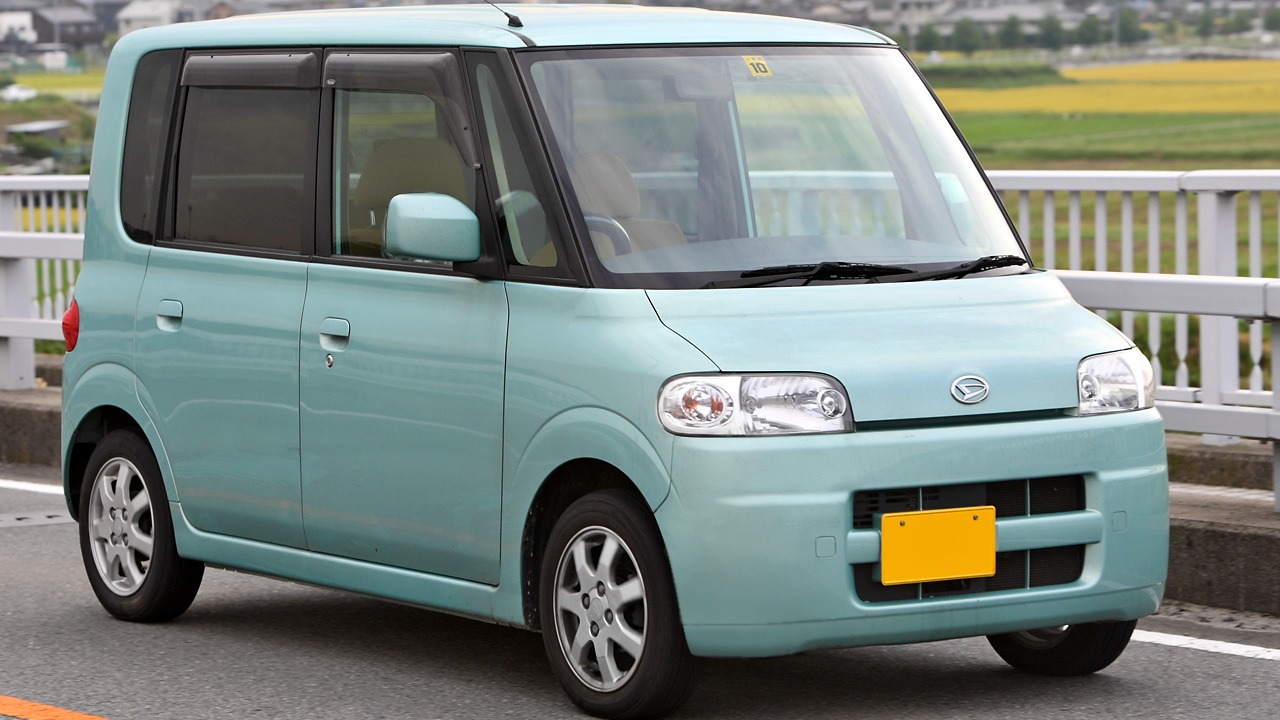

President Donald Trump is trying to steer the American car market in an unexpected direction, publicly embracing the idea of very small vehicles after years of political rhetoric centered on big trucks and SUVs. His push for what he calls “tiny cars” raises practical questions about safety, regulation, and consumer appetite, but it also hints at a potential shift in how the United States thinks about urban mobility and manufacturing.
By blessing a new class of petite vehicles for domestic production, Trump is challenging a long-standing national preference for size and power on the road, even as automakers and regulators weigh how such cars would fit into a market built around larger, heavier machines. The debate that follows will test whether a country that has long equated bigger with better is ready to make room for something radically smaller.
Trump’s sudden enthusiasm for tiny cars
Trump has moved beyond casual praise and into formal action, saying he has approved tiny cars to be built in the United States and explicitly thanking the Department of Justice, the Transportation Department and the EPA for helping clear the way. In his telling, these agencies have given a green light for a new category of vehicles that he argues can be produced in America, potentially opening a fresh niche for domestic manufacturing that sits apart from the traditional focus on large pickups and SUVs, a move he framed when he said President Trump had approved these tiny cars for U.S. production and credited the DOJ, Transportation Department and EPA.
His language is characteristically emphatic, branding the vehicles as “TINY CARS” in capital letters and presenting the decision as a personal intervention in the auto market rather than a slow regulatory evolution. That framing matters, because it turns what might have been a niche regulatory tweak into a political statement about what kinds of cars should be built in America, and it signals to both automakers and voters that the president sees these diminutive models as part of his broader industrial agenda.
How a trip to Asia shaped the tiny car idea
Trump’s fascination with very small vehicles did not emerge in a vacuum, it grew out of his exposure to compact city cars in Asia, particularly in Japan. After a visit there, he singled out Japan’s iconic kei cars, describing them as super petite autos built for dense cities and suggesting that similar vehicles could have a place in the United States if Trump has his way, a vision he tied directly to the kei car culture in Japan.
He has also pointed to other Asian markets as inspiration, saying that if you go to South Korea and Malaysia and other countries, they have very small cars that are “really cute” and highly practical in crowded streets. In a short video clip, he marvels at how they are very small, repeats that they are really cute, and holds them up as an example of what could be imported conceptually into the American landscape, a sentiment captured when he praised the tiny vehicles used in South Korea and Malaysia and other countries.
What exactly counts as a “tiny car” in Trump’s vision
When Trump talks about tiny cars, he is not referring to slightly downsized sedans or compact crossovers, but to vehicles closer in spirit to Japanese kei cars and micro trucks that prioritize minimal footprint over traditional American notions of comfort and power. These are cars designed to slip through narrow streets, fit into tight parking spaces and operate efficiently at lower speeds, a stark contrast to the large SUVs that dominate American roads and that Japanese Kei vehicles were originally designed to counter, as seen in the way Japanese Kei cars are framed against big American SUVs.
In practice, that likely means ultra-short wheelbases, narrow bodies and modest engines or electric drivetrains that keep weight and cost down, with interiors that prioritize two or three occupants and basic cargo over luxury amenities. The appeal Trump is tapping into is the idea that such vehicles can be cheap to build, cheap to run and easy to live with in crowded cities, even if they look out of place next to a full-size pickup or three-row SUV in a typical American driveway.
Regulators and agencies in the tiny car spotlight
By publicly thanking the Department of Justice, the Transportation Department and the EPA, Trump has pulled federal regulators into the center of the tiny car story and signaled that his approval is tied to specific legal and environmental clearances. The Department of Justice’s role suggests antitrust or liability considerations, while the Transportation Department and the EPA are responsible for safety and emissions standards that any new class of vehicle must meet, a connection he underscored when he credited the Transportation Department and EPA for enabling tiny cars to be built here.
Those agencies will have to reconcile the small size and light weight of these cars with existing crash test regimes and pollution rules that were largely written with larger vehicles in mind. Any carve-outs or new categories they create will set precedents for how the United States treats micro-mobility on public roads, and their decisions will determine whether Trump’s enthusiasm translates into a viable regulatory path or stalls in a maze of safety and compliance concerns.
Automakers’ cautious response to the tiny car push
While Trump is eager to present tiny cars as a done deal, major automakers are responding with notable caution, signaling that they are not ready to commit to specific products until the market and regulatory picture is clearer. General Motors, for example, has declined to comment on potential future products in this space, a silence that suggests the company is watching developments but not yet prepared to align its product roadmap with the president’s latest automotive priority, a stance captured when General Motors declined to comment on these tiny cars.
Stellantis has been slightly more open, saying the company is always looking for opportunities, a phrase that leaves the door ajar without promising anything concrete. That kind of hedged language reflects the reality that designing, certifying and marketing a new class of ultra-small vehicles in the United States would require significant investment and a belief that enough buyers will embrace them to justify the risk, something that remains far from certain in a market still dominated by larger, more profitable models.
American car culture and the uphill battle for mini cars
Trump’s tiny car push runs headlong into a deeply ingrained American preference for larger vehicles, a cultural and economic reality that has shaped the market for decades. Local special circumstances in the United States include a strong appetite for bigger cars and trucks, with consumers gravitating toward models that offer size, power and perceived safety, even as urban congestion and environmental concerns grow, a pattern highlighted in an analysis that notes how The United States has a unique automotive market that favors larger vehicles over mini cars.
That same analysis points out that mini cars remain a niche segment, even though they are better suited for dense urban environments where parking and road space are scarce. For tiny cars to gain real traction, they would have to overcome not only consumer habits but also infrastructure built around wide lanes, long commutes and high-speed highways, all of which tend to reward bigger, heavier vehicles rather than the petite city cars Trump is now championing.
Safety rules, state bans and the kei car precedent
Even if federal regulators clear a path, tiny cars will still have to navigate a patchwork of state-level rules that have not always been friendly to ultra-compact imports. Japanese Kei cars, for instance, are known for their compact size and efficiency, but they have been banned in multiple U.S. states, where officials have raised concerns about how such small vehicles fare in crashes with much larger American trucks and SUVs, a tension that has already played out as Japanese Kei cars were blocked in several states.
Those bans underscore the challenge of dropping very small vehicles into a traffic mix dominated by large SUVs and pickups, where crash energy and visibility differences can be stark. For Trump’s tiny car initiative to succeed, federal and state authorities would need to align on safety classifications, licensing rules and road access, or risk creating a confusing environment in which a car that is legal in one state is effectively sidelined in another.
Economic pressures that make tiny cars tempting
Behind the political theater, there are real economic forces that could make tiny cars more attractive to both buyers and manufacturers. In recent years, automakers have been Forced by limited chip supplies to choose which vehicles to build, and they have generally prioritized larger, more expensive rides like pickups and SUVs, a strategy that maximizes profit per unit but leaves budget-conscious shoppers with fewer options, a dynamic described in reporting that notes companies were Forced by limited chip supplies to favor high-margin vehicles.
In that context, a new class of tiny cars could serve as a pressure valve for consumers squeezed by high prices and limited inventory, offering simpler, cheaper vehicles that use fewer components and can be built with less material and fewer chips. For manufacturers, the appeal would lie in the ability to diversify their portfolios and tap into urban markets with vehicles that are inexpensive to produce, even if margins per unit are lower than on a full-size truck.
Grassroots excitement and skepticism online
While corporate boardrooms and regulatory agencies move cautiously, some corners of car culture are already celebrating the prospect of tiny vehicles arriving in the United States. On enthusiast forums, users have greeted Trump’s announcement with exuberant reactions, with one post exclaiming “Yesssss! We are finally getting tiny cars and trucks in the USA” and quoting his declaration that he has just approved TINY CARS to be built in America, a burst of enthusiasm that captures how some fans of kei trucks and micro cars see the moment, as reflected in a thread where a user cheered that the USA is finally getting TINY CARS in America.
At the same time, those same discussions often include a note of skepticism, with posters warning that regulatory hurdles, safety concerns and entrenched consumer preferences could still derail the project. The mix of excitement and doubt online mirrors the broader national conversation, in which Trump’s bold rhetoric has opened a door, but the hard work of turning tiny cars into a mainstream American reality remains very much unfinished.
More from MorningOverview