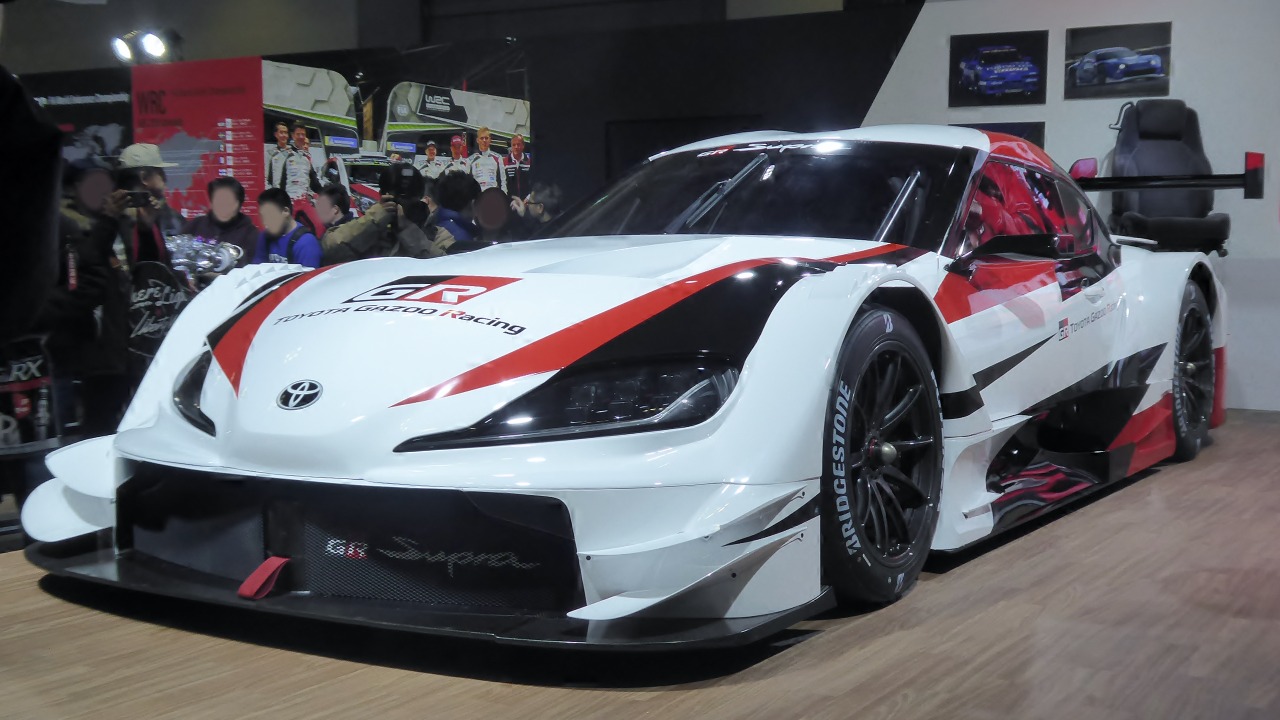

Toyota has spent the past decade rebuilding its performance reputation, and now it is finally ready to crown that effort with a new halo machine. The GR GT, a low-slung flagship that channels both motorsport grit and luxury-car theater, is being positioned as the spiritual follow-up to Japan’s most celebrated supercars of the 2010s. Rather than simply chasing nostalgia, it signals how the country’s “car of the decade” era is evolving into a hybrid, track-bred future.
From its concept roots to its production-ready silhouette, the GR GT has been teased as the missing link between Toyota’s racing program and its road-going icons. I see it as the clearest sign yet that Japan’s next great supercar will not just honor the Lexus LFA and other legends, but attempt to surpass them with electrified power and a renewed focus on global motorsport.
The GR GT steps into a very big spotlight
Every new supercar arrives with hype, but the GR GT is being treated as a generational moment for Toyota. The company has framed it as a new flagship, a car that sits above the GR Supra and GR Yaris and carries the weight of its performance brand on a single carbon-fiber shoulder. That alone would be notable, yet the context is even bigger: this is the machine expected to follow in the tire tracks of Japan’s most revered sports cars, the kind of model enthusiasts casually call “car of the decade” because it reshapes expectations for an entire era.
That sense of occasion is not accidental. Reporting on the car’s reveal describes the GR GT as the automaker’s new top-tier supercar, with a hybrid powertrain delivering a quoted 641 horsepower and a design clearly informed by racing prototypes, which is why it is being described as Toyota’s new flagship supercar. When a company that once built the Lexus LFA decides to crown a new performance king, it is not just filling a product gap, it is making a statement about where Japanese high performance goes next.
From GR GT3 concept to production reality
The GR GT did not appear out of thin air. Its silhouette and stance can be traced back to the 2022 GR GT3 concept, a wild, long-nosed coupe that previewed Toyota’s ambitions in both GT racing and road-going performance. That concept signaled that the company was serious about building a dedicated supercar platform rather than simply tuning an existing grand tourer, and it set expectations that any production follow-up would be more than a styling exercise.
Those expectations hardened earlier this year when reports noted that Toyota was preparing to unveil a new flagship supercar that would sit above its existing GR models and draw on the heritage of the Supra and the LFA, with the new car explicitly framed as more important than the two icons before it because it would define the future of the brand’s performance identity combined. That throughline from concept to production is what gives the GR GT its weight: it is not just another fast Toyota, it is the culmination of a multi-year plan to build a dedicated, motorsport-rooted flagship.
A teaser that broke the internet’s composure
Long before the spec sheets started circulating, the GR GT’s presence was felt through carefully staged teasers. One of the most telling moments came when an early look at the car, free of camouflage and wearing its production bodywork, appeared on social media and quickly drew intense scrutiny from enthusiasts. The post did not just show a new Toyota, it confirmed the car’s identity and signaled that the company was ready to talk about it in public.
In that teaser, Toyota confirmed the Toyota GR GT name and offered a first look at the car without camo, a moment that attracted exactly 38,486 likes and underscored how much attention this project has been drawing. The fact that a single image, shared in Dec and tagged simply with the Name and a nod to its World debut, could generate that level of engagement shows how hungry the audience is for a new Japanese halo car that feels as special as the legends enthusiasts still talk about.
Why this car matters more than another fast Toyota
On paper, the GR GT could be dismissed as just one more high-output hybrid in a world full of them, but its strategic role is far larger. Toyota has spent years rebuilding its enthusiast credibility after a period dominated by hybrids and crossovers, and the GR sub-brand has been central to that effort. A dedicated flagship that sits above the GR Supra is the logical next step, and it is being framed as a car that will influence everything from future sports coupes to the company’s racing programs.
Analysts have pointed out that Toyota is preparing to unveil a new flagship supercar that is more important than casual observers might assume, because it is intended to stand alongside and even above the Supra and the LFA in the company’s internal hierarchy, effectively becoming the reference point for all of its performance engineering going forward as a whole. In that light, the GR GT is not just a fast car, it is a rolling manifesto about how Toyota intends to balance electrification, racing, and road-going excitement in the next decade.
Powertrain: a 641 hp hybrid built for the track
The headline number that keeps surfacing around the GR GT is its output, a claimed 641 horsepower from a hybrid powertrain that blends internal combustion with electric assistance. That figure puts it squarely in modern supercar territory and signals that Toyota is not content to let European rivals dominate the hybrid performance conversation. Instead, it is using electrification to sharpen response and broaden the car’s capabilities, particularly on track.
Reports describe the GR GT as a new high-performance model that the Japanese marque has been developing as its flagship, with the hybrid system delivering that 641 hp punch and positioning the car as a rival to established European exotics while still carrying Toyota’s reputation for durability and engineering. By pairing a potent combustion engine with electric torque, the company is signaling that its vision of a next-generation Japanese supercar is not nostalgic, it is unapologetically modern.
Design language: from GT3 pit lane to city streets
Visually, the GR GT reads like a race car that has been barely tamed for public roads. The long hood, cab-backward stance, and aggressive aero elements all echo the GR GT3 concept, which was designed first and foremost for competition. That motorsport-first approach is a deliberate contrast to more traditional grand tourers, and it gives the car an immediate sense of purpose that aligns with its role as a halo for the GR brand.
Coverage of the car’s reveal has emphasized that the GR GT is arguably the summation of Toyota’s recent design and engineering efforts, with its proportions and detailing described as equal parts insane and glorious, a phrase that captures how the car blends extreme aero with sculpted surfaces in a way that feels both functional and theatrical at once. In practice, that means a car that looks at home in a pit lane but will inevitably spend much of its life turning heads on city streets, a duality that has always defined the most memorable Japanese supercars.
The Lexus LFA connection and a shared legacy
No discussion of the GR GT’s significance is complete without acknowledging the Lexus LFA, the V10 masterpiece that many enthusiasts still regard as Japan’s defining supercar of the 2010s. The new car is not wearing a Lexus badge, yet its development has been closely linked to the idea of an LFA successor, with Toyota using its own branding to signal that this time the halo will sit squarely under the GR umbrella. That shift reflects how the company now sees performance as a core part of its mainline identity rather than something reserved for its luxury division.
Recent reporting has explicitly framed the project as a Lexus LFA Successor Teased With a Toyota Badge and the GR GT Name, underscoring that the same lineage of high-revving, track-focused engineering is now being channeled through a different brand while still honoring the original’s spirit and intent. By tying the GR GT so directly to the LFA’s legacy, Toyota is inviting direct comparison with what many consider Japan’s car of the decade, a bold move that suggests real confidence in the new car’s abilities.
Successor to one of Japan’s most iconic sports cars
Beyond the LFA, the GR GT is also being positioned as the heir to a broader Japanese performance tradition that includes the Supra, the Skyline GT-R, and other icons that defined entire eras of car culture. The language around the project has consistently pointed to it as a successor to one of Japan’s most iconic sports cars, a phrase that carries both historical weight and a clear expectation that the new car must be more than a niche halo for collectors.
One detailed report described how the 2022 GR GT3 concept first signaled that Toyota could finally be unveiling a successor to One of Japan’s Most Iconic Sports Cars, with the production GR GT expected to translate that racing-focused concept into a road car that still feels deeply connected to the country’s performance heritage in a tangible way. That framing matters, because it sets the GR GT up not just as a fast new model, but as the car that will carry forward the narrative of Japanese supercars for the next decade.
How the GR GT reframes Toyota’s performance future
Looking ahead, the GR GT’s impact will be measured less by how many units it sells and more by how it reshapes Toyota’s approach to performance. A dedicated hybrid supercar at the top of the range gives engineers a playground for new technologies, from advanced battery management to active aero, that can eventually filter down into more attainable GR models. It also gives the company a clear flagship to anchor its motorsport efforts, particularly in GT racing categories that value close ties between race cars and road cars.
When the Japanese marque pulled back the curtain on the GR GT, it effectively announced that its performance future would be built around a hybrid flagship that could stand alongside European exotics while still reflecting Toyota’s own priorities and character as a brand. If the car delivers on its promise, it will not just succeed a past “car of the decade,” it will set the template for what the next one looks like, blending hybrid power, motorsport DNA, and everyday usability in a way that only a company with Toyota’s scale and racing pedigree can realistically attempt.
More from MorningOverview