
Toyota is quietly laying the groundwork for a new era of performance, and the clearest clues are not concept cars or splashy teasers, but a flurry of trademark filings. Names like MR2, MR-S, GR MR2 and GR Celica are now sitting in intellectual property offices, hinting at a future lineup that leans harder into sports cars than at any point in the company’s recent history. The pattern that is emerging suggests a coordinated push to turn Gazoo Racing from a niche badge into a full performance ecosystem that stretches from halo supercars to attainable two-seat coupes.
Those filings land just as Toyota rolls out the GR GT and GR GT3 and showcases a new Lexus LFA Concept, signaling that this is not a theoretical pivot but an active product strategy. The trademarks do not guarantee production, yet when they are read alongside the company’s latest hardware and its growing GR subbrand, they start to look less like defensive legal moves and more like a roadmap for the next wave of enthusiast cars.
How a new wave of trademarks set the rumor mill spinning
The clearest sign that something is shifting inside Toyota is the cluster of fresh applications for sports car names that had been dormant or underused. In various markets, the company has moved to protect MR2, MR-S and GR MR-S, along with a further 10 intellectual property entries that expand how those badges could be used. Reporting on these filings notes that Toyota has not limited itself to a single jurisdiction, instead pairing broader protections with more limited Denmark-only use, a pattern that suggests the company is testing how and where to deploy the MR2 and MR-S labels rather than simply preserving them in a vault, as detailed in coverage of how Toyota has filed for additional trademarks.
Alongside those regional moves, a separate analysis of the trademark databases describes a “new flurry” of applications that explicitly ties MR2, MR-S and GR MR-S to automobiles and related goods. That reporting frames the activity as the latest twist in Toyota’s long-rumored revival of its mid-engine sports car, arguing that the company is positioning these marks to support one of its most beloved two-seaters rather than letting them lapse. The same review notes that the cluster of filings is unusual in its breadth, which strengthens the case that Toyota is actively preparing for a product program built around these names, a point underscored by the way Toyota’s long-rumored revival is now being discussed in the context of concrete legal steps rather than vague wish lists.
MR2 and MR-S: from dormant badges to active possibilities
The MR2 name carries unusual emotional weight, which is why its reappearance in trademark filings has resonated so strongly with enthusiasts. Earlier coverage of Toyota’s moves notes that the MR2 has “moved one step closer to being official,” describing how the company has been circling the idea of a revival for some time and is now backing that interest with formal protections. That same reporting points out that while the MR2 one seems to be the headline, it is part of a broader set of sports car ideas that have been floating around for some time inside the company, which makes the new filings feel like the moment when internal sketches start to harden into a plan, as reflected in the way Did Toyota Just Confirm the Revival of an iconic sports car has become a serious question rather than a hypothetical.
Another slice of that same reporting zooms in on the imagery Toyota uses when it hints at the MR2’s future. One description highlights a red two-door sports car with a rear spoiler and white wheels parked in a way that evokes classic mid-engine proportions, a visual that has been read as a deliberate nod to the MR2’s heritage. The coverage notes that back when it was still only a rumor, Toyota executives were already fielding questions about a potential MR2 revival, and the persistence of those questions has now been matched by legal and marketing signals that keep the story alive. That continuity between early speculation and current filings is captured in the way the article describes a Red two-door sports car as more than just a design exercise, but as part of a narrative that keeps steering back to MR2 and MR-S.
GR MR2 and GR MR-S: what the Gazoo Racing badge really signals
The addition of the GR prefix to MR2 and MR-S in some of the filings is not a cosmetic flourish, it is a clue to how Toyota intends to structure its performance portfolio. Coverage of the latest batch of applications spells out that the company has moved to protect GR MR2 and GR MR-S alongside the base names, and frames that step as a sign that any revived mid-engine car would be integrated directly into the Gazoo Racing family. The same reporting argues that if you have been holding out hope for Toyota to bring back the MR2, the presence of GR in the paperwork suggests that the car would not only return but could be better than ever, with a sharper focus on track capability and motorsport-derived tuning, a reading that aligns with the way analysts describe how Could The MR2 Finally Return as GR MR2 and MR-S.
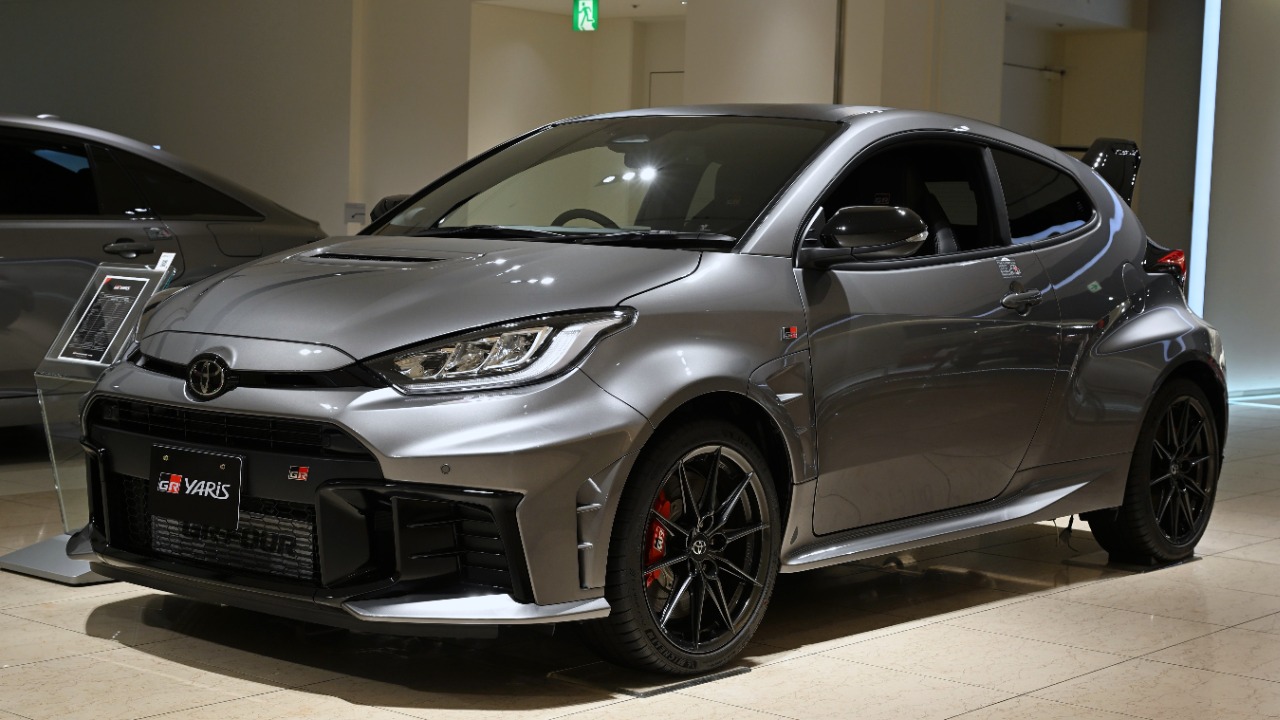
To understand why that matters, it helps to look at how Toyota has been positioning GR as more than just a sticker package. An in-depth look at the brand strategy explains that until now, Toyota (Toyota Motor Corp) has used GR as a subbrand similar to TRD Pro, a label that denotes performance models with upgraded hardware and tuning. That same analysis notes that GR has been applied to everything from hot hatches to crossovers, and that the company is now exploring how to retail GR as a distinct performance channel rather than just a trim line. In that context, attaching GR to MR2 and MR-S would effectively fold a revived mid-engine coupe into a broader performance ecosystem, consistent with the way Until now, Toyota has treated GR as its answer to TRD Pro.
GR Celica: another classic name waiting in the wings
The MR2 and MR-S filings are not happening in isolation, they sit alongside a separate trademark that could bring back another storied badge: Celica. Earlier this year, Toyota moved to protect the GR Celica name, and the filing classifies it under “automobiles and their structural parts,” a phrasing that leaves room for a full production model rather than a one-off concept. The analysis of that move notes that the paperwork itself does not reveal powertrains or platforms, but it does confirm that Toyota is actively reserving Celica for use in a Gazoo Racing context, which suggests that any return of the name would be tied to performance rather than a mainstream commuter, a conclusion drawn from the way the trademark filing doesn’t hide its automotive intent.
That matters because Celica, like MR2, occupies a specific place in Toyota’s back catalog as a car that blended everyday usability with genuine enthusiast appeal. By pairing the name with the GR prefix, Toyota is signaling that if Celica returns, it will likely do so as part of the same performance push that is reshaping the rest of the lineup. In practical terms, that could mean a front-engine coupe that complements a mid-engine GR MR2, giving the brand a two-pronged sports car strategy that echoes its past while aligning with its current motorsport focus. The fact that Celica is being revived in legal documents at the same time as MR2 and MR-S strengthens the impression that Toyota is not just dusting off one icon, but assembling a small family of GR-branded coupes.
GR GT and GR GT3: the halo that makes the trademarks credible
Trademarks alone can be dismissed as corporate housekeeping, but they look very different when they arrive alongside a new flagship supercar. Toyota has now unveiled the GR GT, a long-awaited model that pairs a new twin-turbo V8 hybrid system with racing DNA and output figures that start at at least 641 hp. Reporting on the car describes how years of development have gone into the project and argues that the wait may have been worth it, positioning the GR GT as a statement that Toyota is serious about high-end performance and not just dabbling in sporty trims, a point driven home by the way the long-awaited GR GT is framed as a supercar with deep motorsport roots.
Another detailed look at the GR GT fills in the hardware that underpins that positioning. The car’s brakes feature Brembo carbon discs, and it rides on tailor-made Michelin Pilot Spor Cup 2 tires, components that place it firmly in the realm of serious track machinery rather than grand tourers. The same report notes that the car Toyota showed is intended to be the road-going expression of its top-tier performance ambitions, effectively serving as the flagship of the Toyota GR GT range. Those specifics matter because they demonstrate that Toyota is willing to invest in the kind of expensive, low-volume technology that gives credibility to the rest of the GR lineup, a reality captured in the description of how Finally, the vehicle’s brakes feature hardware that belongs on a flagship supercar.
Inside Toyota’s new sports car triad: GR GT, GR GT3 and Lexus LFA Concept
The GR GT does not stand alone, it is part of a trio that Toyota has now positioned as the spearhead of its performance future. The company has confirmed that the GR GT and its racecar sibling, the GR GT3, will be joined by a new Lexus LFA Concept to form a sports car showcase that spans road, track and luxury performance. In official communications, Toyota describes how these three vehicles are meant to be tested in the severest of situations, language that underscores their role as development platforms as much as showroom draws, and that framing is explicit in the way the company presents The GR GT and the Lexus LFA Concept as a unified sports car strategy.
That triad has been teased and previewed in stages. Earlier coverage of Toyota and Lexus performance plans notes that the model in the front of one key teaser frame appears to be a car already seen in concept form, and identifies it as the Toyota GR GT that debuted on the show circuit before evolving into the production-bound supercar. The same analysis points out design cues like a light bar stretched wide across the rear, which tie the teaser imagery to the final car and reinforce the idea that Toyota has been carefully building anticipation for this performance wave. By pairing those teasers with the formal reveal of the GR GT, GR GT3 and Lexus LFA Concept, the company has created a halo environment in which the MR2, MR-S and GR Celica trademarks suddenly look like logical next steps rather than speculative outliers, a connection that becomes clearer when you look at how The Toyota GR GT was first teased alongside other performance silhouettes.
From teaser to track: GR GT and GR GT3 as proof of concept
The transition from teaser to tangible hardware is where Toyota’s performance narrative gains real traction. A detailed report on the GR GT’s public debut notes that some automakers build practical cars with an emphasis on reliability and then spin off a few sporty variants, but Toyota is now doing both, maintaining its mainstream lineup while committing to a dedicated supercar program. The same coverage emphasizes that the GR GT will be accompanied by the GR GT3 racecar, which is designed to compete alongside the road car and to feed development data back into future products, a strategy that shows how Toyota Unveils GR GT Supercar as part of a broader motorsport-linked ecosystem.
On social media, the GR GT3 has been presented as a wild, competition-focused counterpart to the road car. An Instagram post describes how Toyota has finally unveiled the GR GT and GT3 after a plethora of teasers, calling the GR GT a purpose-built, mid-engined sports car ready to take on the track. The same post highlights the GR GT3 concept’s aggressive design, with a long nose, big vents and a wide tail, and notes interior details like red leather, Alcantara and carbon bucket seats that underline its racing intent. That visual storytelling reinforces the message that Toyota is not just filing trademarks, it is actively connecting those names to a living, breathing GR universe, a point that comes through in the way the post frames how After a plethora of teasers, Toyota tied the GR GT and GT3 directly to its ongoing motorsport programs.
Why the GR strategy makes a revived MR2 more plausible
When you line up the trademarks, the GR GT family and the Lexus LFA Concept, a coherent strategy starts to emerge. Toyota is using Gazoo Racing as the connective tissue between its halo projects and its more attainable performance cars, and that structure makes it easier to imagine how a GR MR2 or GR MR-S would fit into the range. The company has already shown that it is willing to invest in bespoke platforms and high-end components for the GR GT, and it has created a marketing and retail framework that can support dedicated GR models, not just sporty trims on existing cars. In that environment, a mid-engine two-seater with a GR badge would not be an outlier, it would be the logical bridge between the flagship supercar and the rest of the enthusiast lineup.
The way Toyota has handled GR branding so far supports that reading. Analyses of the company’s approach explain that GR has been used as a subbrand similar to TRD Pro, signaling upgraded performance and a closer link to motorsport. At the same time, Toyota has been experimenting with GR-specific showrooms and experiences, hinting at a future where GR could function almost like a fifth brand under the corporate umbrella. If that evolution continues, the company will need a range of GR-exclusive models to populate the lineup, and the MR2, MR-S and Celica names are perfectly positioned to fill that role. The trademarks, in other words, are not isolated bets, they are puzzle pieces that slot neatly into a GR strategy that is already visible in the metal.
What the next few years could hold for Toyota sports cars
None of the filings guarantee that a GR MR2, GR MR-S or GR Celica will reach showrooms, and Toyota has not publicly confirmed production plans for those specific names. What the trademarks do provide is a clear signal of intent at a time when the company is investing heavily in performance hardware and motorsport programs. When a manufacturer that has just launched a twin-turbo V8 hybrid supercar with Brembo carbon brakes and Michelin Pilot Spor Cup 2 tires also moves to lock down multiple historic sports car badges, it is reasonable to read that as more than coincidence. The pattern suggests that Toyota is preparing a multi-tiered sports car lineup that could give enthusiasts a ladder from GR hot hatches through mid-range coupes and up to the GR GT and Lexus LFA Concept.
For now, the most concrete evidence sits in public databases and on the show stand, not in dealer order books. Yet the convergence of MR2, MR-S and GR Celica trademarks with the arrival of the GR GT, GR GT3 and Lexus LFA Concept marks a turning point in how Toyota presents itself to performance buyers. Instead of relying on nostalgia alone, the company is pairing its heritage names with modern GR branding and serious engineering, creating a framework in which those badges can return with real substance. If that trajectory holds, the next wave of Toyota sports cars will not just trade on past glory, they will be anchored in the same Gazoo Racing DNA that now defines the top of the range.
More from MorningOverview