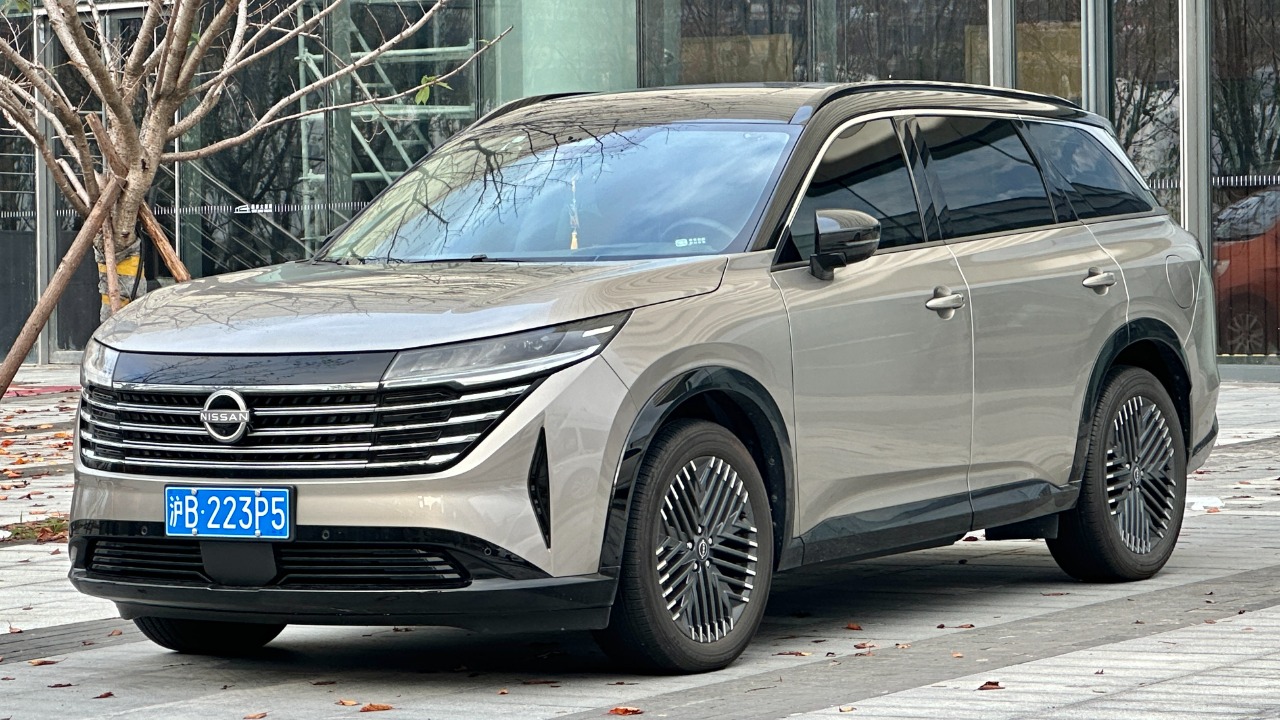

The latest Nissan Pathfinder finally treats wireless charging as core cabin infrastructure instead of a gimmicky add-on, and that shift changes how the whole SUV feels to live with. By redesigning the pad, integrating it with the rest of the tech stack, and making it widely available across trims, Nissan has turned a once-frustrating feature into something I can actually trust on a long drive.
That matters because wireless charging has become a daily expectation for drivers juggling navigation, music streaming, and constant notifications, yet most in-car pads still overheat phones, drop connections, or demand awkward phone placement. The new Pathfinder tackles those pain points head-on, pairing a more thoughtful charger with a familiar, button-heavy cockpit that keeps tech useful instead of distracting.
From afterthought to centerpiece: how Nissan’s pad finally evolved
For years, in-car wireless charging felt like a box-checking exercise, a small rubber tray that promised convenience but often delivered slow charging and finicky alignment. In the new Pathfinder, the pad has been treated as a central piece of the interior layout, positioned where drivers can drop a phone without hunting for the sweet spot and still see the screen at a glance. That physical rethink is what allows the charger to feel like part of the SUV’s core ergonomics rather than a tacked-on accessory.
Reporting on the latest Pathfinder highlights how the integrated pad is now described as a key part of the tech package, not a niche option buried in a bundle. Coverage of the new model notes that the integrated wireless charging solution is built into the center console and that this feature now comes with every Pathfinder, a clear sign that Nissan sees it as standard cabin infrastructure rather than a luxury extra, with one analysis pointing out that All the HVAC and media controls still rely on physical keys around it.
Why earlier Nissan pads struggled in the real world
To understand why this new setup feels like progress, it helps to look at why earlier Nissan wireless pads often frustrated owners. Many drivers found that their phones would stop charging mid-trip, especially during navigation, or that the pad would refuse to start charging at all unless the phone was placed just so. Those issues were not unique to Nissan, but they were common enough to make people default back to cables despite paying for wireless hardware.
Dealers and service departments have been blunt about the root causes. Guidance on troubleshooting Nissan wireless charging points to heat as a major culprit, explaining that Heat can cause the system to pause charging to protect both the phone and the pad, and that Both the device and the charging surface can get too hot under heavy use. That kind of intermittent behavior erodes trust quickly, especially when drivers rely on their phones for navigation and music.
What “getting it right” actually means in daily driving
When I say the new Pathfinder finally gets wireless charging right, I am talking about a combination of reliability, usability, and integration with the rest of the cabin tech. The pad has to start charging every time without fuss, keep the phone topped up even when navigation and streaming are running, and avoid cooking the battery in the process. It also has to be placed where drivers naturally drop their phones, not hidden behind cupholders or under a sliding lid that discourages use.
Early hands-on impressions of the latest Pathfinder’s charging setup describe a pad that simply works, with a stable charging connection and a layout that makes it easy to place the phone correctly on the first try. One detailed look at the system notes that The Wireless Charger in the New Pathfinder Is the First to Really, Truly Get It Right, emphasizing that the New Nissan Pathfinder Is the First solution in this segment that feels genuinely dependable rather than temperamental, and that this consistency is what makes it stand out as Really, Truly Get It Right.
Heat, batteries, and why thermal control matters so much
Any wireless charging system that aims to be truly dependable has to confront one stubborn reality: inductive charging generates heat, and heat is the enemy of lithium-ion batteries. When a phone sits on a pad for an extended drive, especially while running navigation and streaming, the temperature can climb quickly. If the system does not manage that heat, the phone will either throttle charging or shut it off entirely to protect itself.
Battery experts have been clear that Heat is a battery killer and that it is a product of wireless charging, warning that When the device heats up, the system will slow or stop charging to prevent damage. That dynamic is not unique to cars, but it is amplified in a closed cabin on a hot day, which is why any in-car pad that aspires to be more than a novelty has to be designed with thermal behavior in mind, a point underscored in a detailed breakdown of Qi2 hardware that explains how Heat and When the battery warms up, charging logic intervenes.
How Nissan’s own guidance shows the pad’s new maturity
One of the more telling signs that Nissan has taken wireless charging seriously in the Pathfinder is the level of official guidance around how to use it. Instead of treating the pad as a throwaway feature, the company walks owners through compatibility checks, placement, and indicator lights, which suggests an expectation that drivers will rely on it daily. That kind of documentation usually follows internal confidence that the hardware is robust enough to support regular use.
In a detailed walkthrough of the 2025 Nissan Pathfinder, Nissan explains that if so equipped your wireless charging pad is located in a clearly marked area of the center console and that owners should first ensure their phone is compatible with the wireless charging standard before placing it on the pad, a step-by-step approach captured in an instructional video published in Oct that shows how the system behaves when a device is correctly aligned on the wireless charger.
Where the pad fits in the Pathfinder’s broader tech stack
Wireless charging does not exist in a vacuum inside the Pathfinder cabin, it is part of a broader connectivity package that has to support navigation, media, and smartphone integration. Nissan’s own specifications for the Pathfinder emphasize a focus on Connectivity, listing features like Turn-by-turn guidance and integrated mapping alongside the charging hardware. The goal is to create a cockpit where the phone can stay on the pad while the driver interacts primarily with the vehicle’s own screens and controls.
Official trim and equipment charts for the Pathfinder spell out how Turn and Turn Navigation Services interact with the infotainment system, and how an Integrated Navigation System and NissanConnect Navigat functions are layered on top of the base display. Those documents show that the charging pad is not an isolated perk but part of a coordinated approach to in-car tech, with the same spec sheets that detail the 9 inch display and Safety Shield 360 also mapping out the Connectivity and Turn Navigation Services that depend on a powered phone.
Trim levels, tech priorities, and who gets the best pad
As with most modern SUVs, the Pathfinder’s tech story is tightly linked to its trim walk, and that includes how the wireless charging pad is packaged. Entry models focus on core safety and infotainment, while higher trims layer on more advanced driver aids and convenience features. That structure shapes who gets the most seamless charging experience, especially when it comes to pairing the pad with larger screens and camera systems.
Dealership breakdowns of the 2025 Pathfinder make it clear that higher trims like the SL and Platinum come with exclusive tech and safety packages, including features such as the Intelligent Around View Monitor that help drivers navigate tight spaces with a bird’s-eye perspective. One detailed guide notes that Jun buyers who step up to the Platinum grade gain access to more advanced equipment, confirming that Yes, the top trims are where Nissan concentrates its most sophisticated tech, a pattern spelled out in a trim explainer that highlights how Platinum models bundle the Intelligent Around View Monitor with other premium features.
Why the SL and Rock Creek buyers care about charging most
Among the Pathfinder’s trims, the Nissan Pathfinder SL and the off-road-leaning Rock Creek attract buyers who are especially likely to lean on wireless charging. These customers tend to use their SUVs for family road trips, weekend adventures, and daily commuting, all scenarios where phones pull double duty as navigation tools and entertainment hubs. For them, a reliable pad is not a novelty, it is a way to keep the cabin uncluttered while still staying connected.
Trim-level deep dives describe how the Nissan Pathfinder SL adds upgraded features that make long drives easier, with Moving up from lower trims unlocking Key SL equipment such as the Intelligent Around View Monitor and enhanced comfort touches. Another breakdown from Apr highlights how the Nissan Pathfinder SL and the 2025 Nissan Pathfinder Rock Creek share a focus on practical tech, noting that the Intelligent Around View system uses multiple cameras and a central Monitor to give drivers a clearer sense of their surroundings, a setup that pairs naturally with a phone that can stay parked on the pad while the driver relies on the vehicle’s own Intelligent Around View display.
How Nissan’s wider lineup set the stage for this pad
The Pathfinder’s charging success did not happen in isolation, it builds on Nissan’s broader experience rolling out wireless pads across its lineup. Over the past few years, the company has steadily expanded the number of models that offer in-car inductive charging, learning which layouts work and which ones lead to complaints. That experimentation has given engineers a clearer sense of how drivers actually use these pads day to day.
A detailed overview of Nissan’s charging strategy lists New Nissan Models With Wireless Device Charging and breaks down which Model trims treat the pad as Standard and which offer it as an Available option. That table shows how the company has moved from sprinkling wireless charging across a few high-end variants to making it a more common feature, and it is that accumulated experience that informs the Pathfinder’s more mature implementation, as seen in the way the pad is integrated into the center console and aligned with the rest of the New Nissan Models With Wireless Device Charging strategy.
Smartphone integration: CarPlay, Android Auto, and cable-free living
Wireless charging only delivers its full value when it is paired with equally seamless smartphone integration, and that is where Apple CarPlay and Android Auto come in. If drivers still have to plug in a cable to mirror their apps, the incentive to use the pad drops sharply. The Pathfinder’s approach to connectivity has to be read against Nissan’s broader strategy for wireless phone projection across its portfolio.
Guidance on which Nissan models support smartphone mirroring explains that Wireless Apple CarPlay is available on select 2025 Nissan vehicles, including the Altima, and that Nissan is gradually expanding this capability across trims. That same overview spells out Which trims include wireless CarPlay and how Nissan positions the feature as a step up from wired connections, a context that helps explain why the Pathfinder’s pad feels like part of a larger push toward cable-free cabins rather than a one-off experiment, with the company explicitly linking Which Nissan models get Wireless Apple CarPlay and how that ties into the Altima and other nameplates.
What aftermarket pads reveal about Nissan’s design choices
One way to appreciate the Pathfinder’s built-in pad is to compare it with the aftermarket solutions that many drivers have resorted to in older vehicles. Universal wireless charging mats promise to turn any car into a cable-free zone, but they often come with their own compromises, from sliding phones to slow charging speeds. Those trade-offs highlight the advantages of a factory-integrated solution that is tuned to a specific cabin layout.
A popular example is the MOGAOPI Wireless Charger Car, an Inductive Charging Station Car that markets itself as a Non-Slip Wireless Charging Pad for Car Charging Mat with Car Charger PD20W USB-C Compatible with iPhone 15 and Samsung S23. Its product description leans heavily on the idea that there will be No more fighting with your passenger for the charger in the car, but it also includes a Note for users that Please keep the phone properly aligned and that a compatible charger is required for fast charging mode, reminders that underscore how much friction remains when the pad is not designed into the vehicle from the start, as spelled out in the Note for aftermarket buyers.
Why this pad changes how the Pathfinder feels to live with
When I look at the Pathfinder’s new wireless charging setup in context, what stands out is not a single headline feature but the way a series of incremental decisions add up to a more livable SUV. The pad is placed where it is easy to use, the thermal behavior is managed well enough to avoid constant dropouts, and the rest of the tech stack is built to let the phone stay on the pad while the driver interacts with the vehicle’s own screens and controls. That combination makes the cabin feel calmer and less cluttered, especially on longer trips.
It also reflects a broader shift in how automakers think about in-car tech. Nissan’s move to make the integrated pad standard across the Pathfinder range, its emphasis on physical HVAC and media keys around the charging area, and its growing support for wireless phone projection all point toward a philosophy that values dependable, low-drama features over flashy but fragile gimmicks. In that sense, the Pathfinder’s wireless charger is not just a convenience feature, it is a small but telling example of how thoughtful hardware and software integration can quietly transform everyday driving.
More from MorningOverview