
China’s AI race is increasingly defined by two very different bets. ByteDance is turning its vast consumer empire into a distribution machine for everyday AI, while DeepSeek is trying to win on raw model quality and technical credibility. The contrast is reshaping how Chinese AI is built, financed, and exported, and it hints at the kinds of systems the rest of the world may soon be using.
One company is going wide, embedding chatbots and recommendation engines into everything from short video feeds to productivity tools. The other is going high, chasing benchmark wins, open research prestige, and reasoning-heavy models that can impress experts as much as consumers. The tension between those approaches is now one of the clearest storylines in global AI.
Two paths for Chinese AI: go high or go wide
At the center of China’s AI boom, ByteDance and DeepSeek have emerged as emblematic of two diverging strategies. DeepSeek is positioning itself as a builder of first-tier models that can stand alongside the best systems from the United States, while ByteDance is focused on turning AI into a mass-market utility that lives inside its existing apps. Analysts increasingly frame the choice facing Chinese AI as a fork between elite model performance and ubiquitous deployment.
Reporting on the “two directions” of Chinese AI describes DeepSeek as the player that “goes high,” publishing open models that compete on advanced benchmarks, while ByteDance “goes wide,” pushing AI into consumer products at enormous scale. A detailed look at how these companies operate shows that this is not just branding. DeepSeek is investing in research-grade systems that excel on mathematics and reasoning, as highlighted in coverage of how it aims to rival OpenAI and other Western leaders, while ByteDance is using its social and entertainment platforms to normalize AI chat and recommendation tools for hundreds of millions of users.
DeepSeek’s origins and the “high” model strategy
DeepSeek’s bet starts with its founding story. The company grew out of a fund whose leader, Liang, decided in 2023 to redirect resources into building a new class of AI model rather than backing incumbents like Baidu, Alibaba, or ByteDance. Liang, who has a master’s degree in computer science, chose to build a challenger from scratch instead of simply investing in the existing giants, a decision that set DeepSeek on a path toward technical audacity rather than incremental product work.
Accounts of how the startup emerged describe how, in 2023, Then, Liang pushed the fund’s capital into a new company that would try to match or beat Western frontier models on core capabilities. That decision led to a model that experts say rivals OpenAI on some key mathematics benchmarks and reasoning tasks, despite DeepSeek operating with what one analysis called a “joke of a budget” compared with American giants. The company’s official site, DeepSeek, now presents a portfolio of models and tools that are explicitly framed as research-grade systems rather than just chatbots, underscoring its ambition to be seen as a top-tier AI lab.
Open-source prestige and the DeepSeek R1 push
DeepSeek’s “high” strategy is not only about performance, it is also about how the company shares its work. The startup has leaned into open-source releases, publishing models that outside researchers can inspect and adapt. That approach has won it credibility among engineers who see transparency and reproducibility as essential to serious AI research, and it has helped DeepSeek punch above its weight in global debates about how these systems should be built.
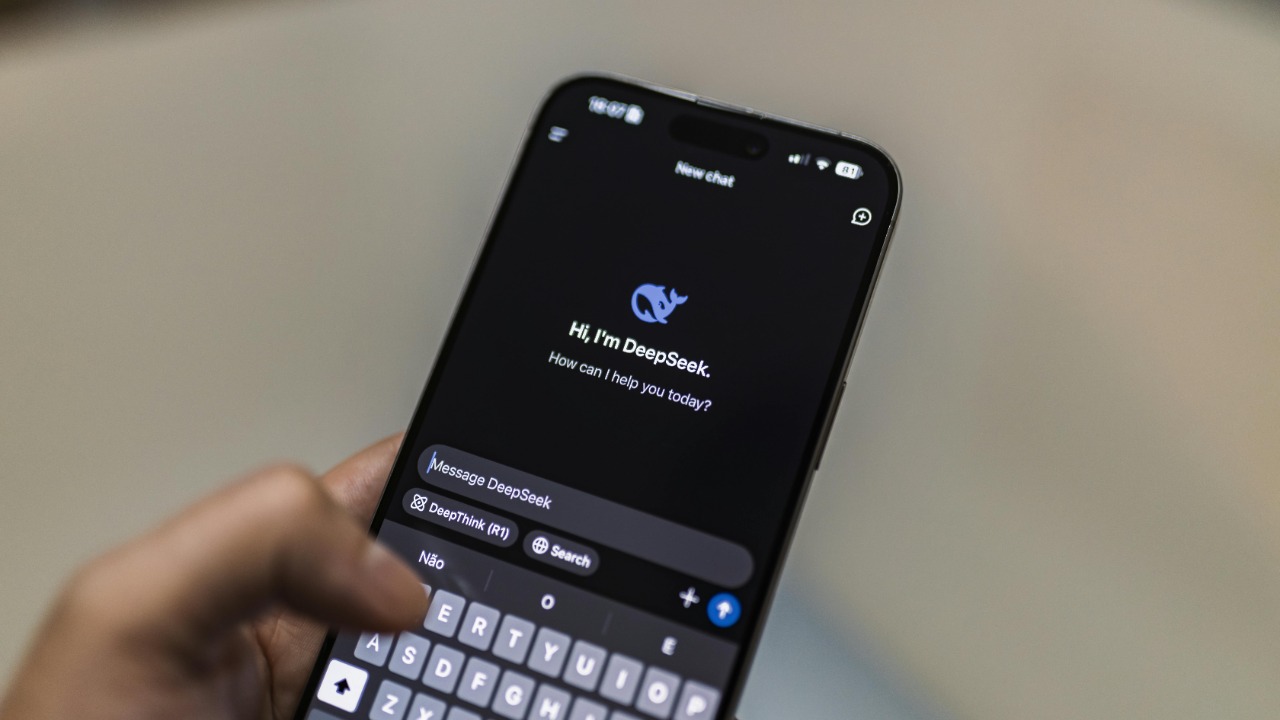
Analysts who track the sector note that DeepSeek is publishing first-tier open-source models that perform strongly on mathematics and reasoning benchmarks, a technical niche that has become central to how labs compare progress. The company’s R1 reasoning model, which powers a “DeepThink” mode in its consumer app, is a concrete example of this strategy. In that mode, users can tap into DeepSeek’s own reasoning models, which are designed to show their chain of thought and self-correction process. Coverage of the viral DeepThink feature notes that, despite limitations around sensitive topics like the Cold War and the Holocaust, DeepSeek’s popularity is being driven by its own reasoning models rather than by a slick interface alone.
From “joke of a budget” to global alarm
DeepSeek’s rise has unsettled both Western and Chinese incumbents because it challenges the assumption that only the largest budgets can produce competitive models. Commentators describe investors and executives as “spooked” by a system reportedly trained on a relatively small budget that still managed to impress experts. The company’s success has become a case study in how algorithmic efficiency and clever training strategies can partially offset hardware and capital disadvantages.
One detailed analysis notes that observers were Spooked by a model reportedly trained on a miniscule budget, especially given that it came from a country that was often portrayed as behind the United States in AI capabilities. That same reporting highlights how DeepSeek’s progress has rattled established players, including those of Nvidia, ASML, and Alphabet, by showing that new entrants can still emerge even in a capital-intensive field. Tech CEOs have echoed that anxiety in public forums, with one widely shared discussion warning that first the industry was reeling from the success of China’s AI upstart Deepseek, and now Tik Tok’s parent company Bite Dance has joined the race. In that conversation, captured in a Jan video, executives describe how Deepseek and ByteDance together are forcing a reassessment of how quickly Chinese AI can catch up.
DeepSeek’s minimalist product and viral app moment
For all its research ambitions, DeepSeek’s consumer product remains relatively stripped down. Its early hype was driven less by flashy design and more by the efficiency and performance of its first model. The interface is functional, but the real draw is the sense that users are accessing a system that can reason through complex prompts and show its work, a contrast with some rivals that emphasize personality or entertainment.
Coverage of ByteDance’s chatbot notes that DeepSeek’s early hype was driven by its first model’s efficiency and performance, even as its product remained fairly minimal. That technical edge helped set the stage for the company’s breakout consumer moment, when its app surged in popularity and startled rivals. Reports on the Chinese AI app DeepSeek describe how its “DeepThink” mode, which lets users invoke the R1 model, became a signature feature. Even with guardrails that limit discussion of topics like the Cold War and the Holocaust, the app’s popularity is attributed to the strength of its own reasoning models, not to heavy integration into a broader social network.
ByteDance’s AI factory: from TikTok to Doubao
ByteDance, by contrast, is building on a decade of experience turning algorithms into addictive consumer products. The company has long described itself as an “artificial intelligence factory,” using machine learning to power the recommendation engines behind TikTok and its Chinese sister app Douyin. That history gives ByteDance a natural path to fold large language models into feeds, search, and chat experiences that already dominate attention in China and abroad.
Academic work on the company’s evolution notes that, by the end of 2020, the startup was valued at $ 180 billion, and that it has been utilizing AI to power products like TikTok and its Chinese sister app, Douyin. That valuation and product footprint give ByteDance a very different starting point from DeepSeek. Instead of needing to build both a model and a user base from scratch, ByteDance can plug new AI capabilities into existing apps and watch them scale almost overnight. Its chatbot Doubao is a prime example of this strategy, sitting inside a broader ecosystem that already knows how to capture and monetize user attention.
Doubao’s scale and ByteDance’s “wide” deployment
ByteDance’s flagship chatbot, Doubao, shows what it means to “go wide” with AI. Rather than positioning Doubao as a standalone research artifact, the company treats it as a service that can be woven into video platforms, search tools, and productivity apps. The goal is to make AI feel like a natural extension of ByteDance’s existing recommendation systems, not a separate destination that users must seek out.
Reports on Doubao’s growth describe how ByteDance Ltd has turned it into one of China’s leading AI chatbots. One analysis notes that ByteDance’s Doubao tops China’s AI chatbots with 157M users, and that this surge reflects ByteDance (ByteDance Ltd) pivoting to integrate AI seamlessly into everyday user experiences. Earlier reporting on the company’s AI push also notes that Doubao had tens of millions of users when it was still relatively young, with one account citing 26 million users as ByteDance ramped up its AI efforts. In that context, ByteDance’s decision to work with chip suppliers is not an abstract research investment, it is a way to keep feeding a rapidly growing AI user base.
Securing chips and infrastructure for ByteDance’s AI ambitions
Scaling AI to hundreds of millions of users requires more than clever algorithms, it demands a reliable supply of advanced chips and data center capacity. ByteDance has moved aggressively to secure that foundation, treating hardware as a strategic asset rather than a commodity. The company’s efforts to lock in chip partnerships show how seriously it takes the infrastructure side of the AI race.
One detailed report explains that Securing AI chips is crucial for ByteDance to make its algorithms more powerful, and that the company is reportedly working with Broadcom to develop advanced AI chips. The same reporting notes that, in addition to TikTok and the Chinese apps in its portfolio, ByteDance is pushing an AI assistant called Doubao, which had 26 million users at one stage of its rollout. That combination of a massive consumer footprint and bespoke chip development underscores how ByteDance’s “go wide” strategy depends on deep control of the hardware stack, something DeepSeek, with its leaner budget, cannot easily match.
Everyday AI versus research-grade tools
Both companies talk about bringing AI into daily life, but they mean different things by it. ByteDance wants AI to be invisible, a background layer that quietly shapes what users see, search, and create. DeepSeek, in contrast, invites users to engage directly with the model’s reasoning, turning the AI itself into the product. The result is a split between AI as infrastructure and AI as a visible collaborator.
A community discussion that compares the two companies notes that Both ByteDance and DeepSeek have the same goal of bringing AI tools into people’s everyday lives, but they are adopting vastly different strategies to do so. DeepSeek is publishing open models and building features like DeepThink that foreground the system’s reasoning, while ByteDance is embedding Doubao and other AI tools into feeds and apps that users already rely on. That divergence shapes not only user experience but also how regulators, competitors, and foreign governments perceive the risks and opportunities of Chinese AI.
Agentic smartphones and the next interface shift
The competition between “high” and “wide” AI strategies is also playing out in hardware experiments that hint at the next interface shift. One of the most striking examples is a prototype smartphone billed as the world’s first fully agentic AI device, which can perform complex tasks on behalf of a user. In tests, the phone is shown booking services and navigating apps autonomously, raising questions about how deeply AI agents will be allowed to act inside consumer ecosystems.
In a widely shared thread, Ogan demonstrates how the agentic phone uses Meituan, a Chinese tech company that offers on-demand drone delivery services, to complete tasks on behalf of a user. Reporting on that experiment notes that Meanwhile, Ogan uses Meituan to show how the device can order items and manage logistics without the user tapping through each step. A follow up description of the same prototype explains that the hardware behind the Agentic AI Ogan is powered by Qualcomm’s new Snapdr platform, and that the system is designed to handle sensitive flows like payments and passwords. That report notes that The hardware behind the Agentic AI Ogan prototype is meant to show how deeply AI can be embedded into the device itself, not just run in the cloud. While this specific phone is not tied directly to ByteDance or DeepSeek in the available reporting, it illustrates the kind of agentic experiences that both companies will need to support if they want to stay relevant as interfaces evolve.
Global reaction and the geopolitical backdrop
The rise of ByteDance and DeepSeek is not happening in a vacuum. Western policymakers and executives are watching closely, in part because these companies complicate narratives about China lagging in AI. DeepSeek’s benchmark performance and ByteDance’s distribution power together suggest that Chinese firms can compete at both the research and consumer layers, even under export controls and political scrutiny.
Tech leaders have begun to sound the alarm about this shift. In the Tech CEOs discussion that flagged Deepseek and Bite Dance, participants describe how first they were reeling from the success of China’s AI upstart Deepseek, and now Tik Tok’s parent company Bite Dance has just escalated the competition. That conversation reflects a broader concern that Chinese companies are not only catching up but in some cases setting the pace, whether through efficient training on limited budgets or through massive consumer rollouts. Social media posts and short video explainers, including an Are Placing Very Different AI Bets clip that summarizes how DeepSeek and ByteDance are diverging, have helped popularize this framing for a global audience.
What ByteDance and DeepSeek tell us about AI’s future
Looking across these stories, I see ByteDance and DeepSeek as two halves of a larger picture. DeepSeek shows that a focused, research-heavy lab can still emerge from relative obscurity and challenge incumbents with efficient training and open models. ByteDance demonstrates how a company that already mastered algorithmic feeds can repurpose that expertise to deploy AI at national scale, from Doubao chat to recommendation engines that quietly shape culture.
Analysts who describe how DeepSeek goes high while ByteDance goes wide capture a real structural divide in how AI is being built in China. One side is betting that publishing strong open models and reasoning systems will secure long term influence in the research community. The other is betting that integrating AI into everyday products, from TikTok to Douyin and Doubao, will lock in user behavior and data advantages. As more experiments like the agentic AI smartphone emerge, and as platforms like DeepSeek and Doubao evolve, the rest of the world will be watching to see which bet pays off, or whether the future of AI belongs to companies that can somehow do both.
More from MorningOverview