
The largest parallel-twin engine ever fitted to a production motorcycle is not some futuristic prototype, but a bruising British twin that quietly rewrote the rulebook on displacement and torque. It sits at the crossroads of classic engineering and modern expectations, proving that two cylinders can still deliver the kind of shove that once belonged only to big triples and hulking V-twins. To understand why this motor matters, I need to trace how it fits into Triumph Motorcycles history, how it compares with other giants, and what it says about the future of twin-cylinder design.
Parallel twins have powered everything from no-frills commuters to championship-winning racers, yet their biggest expression on a showroom bike has often flown under the radar. By looking closely at this record-setting engine, and the lineage that led to it, I can show how a simple two-cylinder layout evolved into a liquid-cooled heavyweight that carries more cubic capacity than Edward Turner and Val Page could ever have imagined.
How parallel twins became the workhorses of motorcycling
Parallel twins earned their reputation as motorcycling’s workhorses because they balance simplicity, compact packaging, and usable torque in a way few other layouts can match. With two cylinders sharing a single head and a relatively narrow crankcase, they fit easily into a wide range of frames, from lightweight standards to long-distance cruisers. That practicality made them the default choice for generations of everyday riders, even as more exotic V-configurations grabbed the headlines.
What began as modest, air-cooled engines has steadily grown in sophistication and size, culminating in liquid-cooled units that deliver serious power and refinement. The shift from basic pushrod designs to modern, liquid-cooled twins with precise fueling and strong torque curves shows how far the format has come without losing its core appeal. That evolution set the stage for the largest production parallel twin to emerge not as a curiosity, but as a logical next step in a long-running story.
From Edward Turner and Val Page to modern mega-twins
The roots of today’s big twins reach back to designers like Edward Turner and Val Page, whose early work defined what a British parallel twin should feel and sound like. Their engines were compact, charismatic, and relatively simple, built around displacements that suited the roads and speeds of their time. Those motors helped establish a template that would influence Triumph Motorcycles for decades, even as technology and rider expectations changed.
Modern engineers have stretched that template far beyond what Turner and Page could have foreseen, pushing cubic capacity into territory that early pioneers would have considered outlandish. Contemporary twins such as the liquid-cooled 1699 cc units delivering 93 bhp and 111 ft-lbs of torque show how the basic layout has been reimagined for high-speed touring and heavy-duty use. That steady escalation in size and output created the conditions for a record-breaking parallel twin to move from drawing board to production line.
Triumph Motorcycles and the culture of big-displacement twins
Triumph Motorcycles has long treated the parallel twin as more than just a practical engine choice, using it as a core part of the brand’s identity. From classic roadsters to modern retros, the company has repeatedly returned to two-cylinder layouts to deliver the blend of character and torque that riders associate with British bikes. That cultural commitment helps explain why Triumph was willing to push displacement boundaries in a way few rivals attempted.
Over time, Triumph Motorcycles developed a reputation for building twins that punched above their weight, both in performance and emotional appeal. The company’s willingness to scale up capacity, refine cooling, and experiment with crank configurations laid the groundwork for what would become the biggest displacement parallel twin engine ever offered on a production motorcycle. That record-setting motor is not an outlier so much as the culmination of a long-running obsession with getting the most out of two cylinders.
The Thunderbird that quietly set a world record
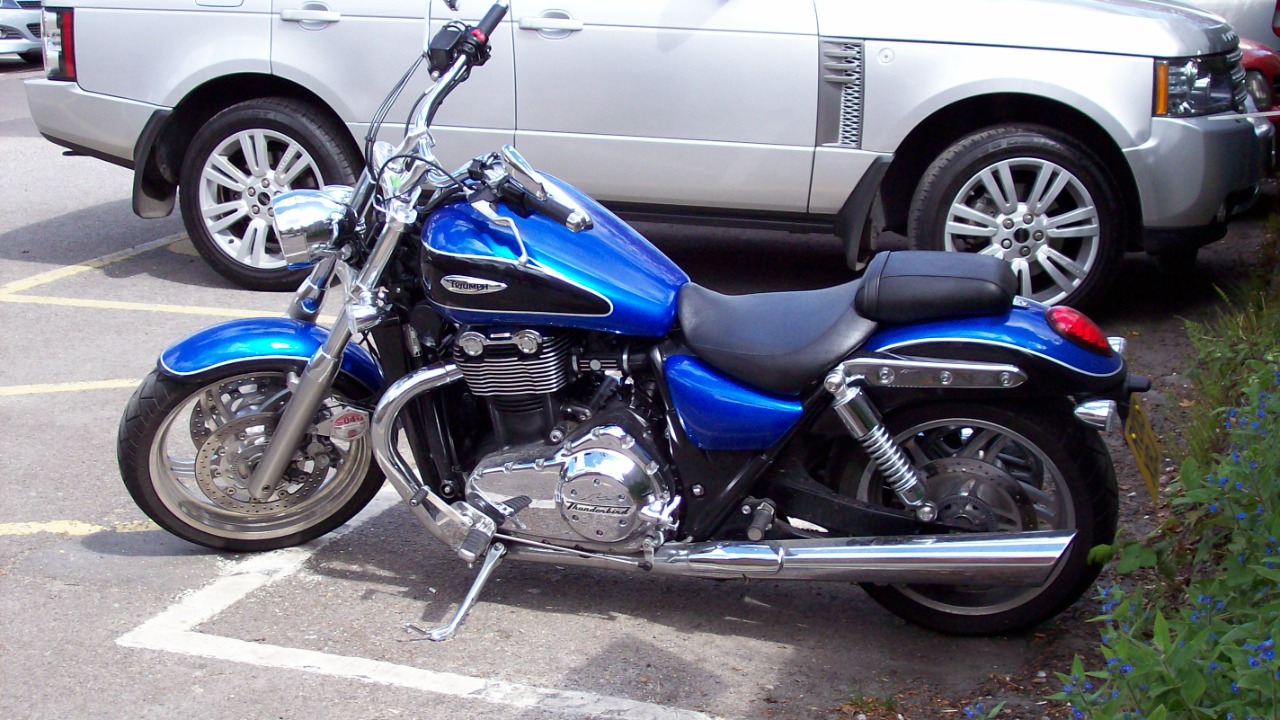
Between 2011 and 2018, Triumph Motorcycles sold a cruiser that, at first glance, looked like a traditional long-wheelbase tourer with classic lines and laid-back ergonomics. Underneath the chrome and sweeping fenders, however, sat a parallel twin that would claim the title of the largest displacement two-cylinder engine ever fitted to a production bike. The model’s relaxed image meant many riders did not immediately realize they were looking at a record holder.
In its base form, this 2011–2018 Triumph Thunderbird carried a massive engine that outgunned every other production parallel twin in sheer cubic capacity. The bike combined that oversized motor with the equipment and comfort expected of a fully loaded touring machine, turning the Twin Engine Ever On a production motorcycle into a real-world long-distance tool rather than a limited-run showpiece. That combination of everyday usability and engineering excess is what makes the Thunderbird’s achievement so compelling.
Inside the biggest displacement parallel twin on a production bike
The heart of the record-setting Thunderbird is a liquid-cooled parallel twin whose displacement eclipses every other two-cylinder engine offered on a showroom motorcycle. By stretching bore and stroke to their practical limits within a twin layout, Triumph Motorcycles created a powerplant that delivers the kind of low-end thrust riders usually associate with large V-twins. The result is an engine that feels unhurried at highway speeds yet responds instantly when asked to overtake or climb steep grades.
What sets this motor apart is not just its size, but the way it integrates modern engineering with traditional character. The engine’s configuration, cooling, and fueling systems are tuned to provide a broad, accessible torque curve that suits a heavy touring chassis, while still preserving the distinctive beat of a big twin. In doing so, Triumph Motorcycles turned the Production Motorcycle record into something riders can feel every time they roll on the throttle, rather than a statistic that only matters on paper.
How it stacks up against Triumph’s 2,500 cc triple
To appreciate the scale of the Thunderbird’s twin, it helps to compare it with Triumph’s own flagship triple. The company also builds a 2,500 cc three-cylinder engine that currently stands as Triple Is The Biggest Triumph Motorcycle Engine
Against that backdrop, the Thunderbird’s parallel twin looks like a close relative rather than a distant cousin. It does not match the triple’s 2,500 cc capacity or 166 pound-feet of torque, but it narrows the gap far more than most riders would expect from a two-cylinder layout. The comparison highlights how Triumph Motorcycles has pursued displacement at both ends of its lineup, using different cylinder counts to explore the limits of what a road-going engine can be while still remaining practical and reliable.
The 270-degree revolution and the Speed Twin connection
While the Thunderbird’s record is about sheer size, Triumph’s broader twin strategy also leans heavily on crankshaft design to shape character. The company has embraced 270-degree crank configurations to give its modern twins a more V-twin-like pulse and improved traction feel, particularly on roadsters and performance-oriented models. That approach shows how Triumph is willing to rethink the fundamentals of a parallel twin to keep it relevant in a crowded market.
One of the clearest examples of this philosophy is the Speed Twin, whose 270-degree parallel twin engine has become a calling card for the brand’s modern classic range. Triumph even celebrated that layout with a limited-edition collaboration, where the production run of 270 units was chosen specifically to honor the Speed Twin’s 270-degree parallel twin engine. That detail underlines how deeply the 270-degree concept is woven into Triumph’s identity, even as the company experiments with ever-larger displacements.
Why a giant parallel twin still matters in 2025
In an era dominated by electronics, rider aids, and increasingly strict emissions rules, the idea of celebrating the largest displacement parallel twin on a production bike might seem like a throwback. Yet engines like the Thunderbird’s show that there is still room for mechanical drama in modern motorcycling. A huge twin offers a visceral connection between rider and machine that no software update can replicate, especially when it delivers its power through a broad, accessible torque band.
At the same time, the existence of such a motor proves that traditional layouts can adapt to contemporary demands. The Thunderbird’s liquid-cooled, high-capacity twin sits alongside advanced triples and refined 270-degree engines like the Speed Twin, illustrating how Triumph Motorcycles has diversified its approach without abandoning its roots. As long as riders value character and torque as much as peak horsepower, the story of the biggest displacement parallel twin will remain a relevant chapter in the ongoing evolution of motorcycle engineering.
More from MorningOverview