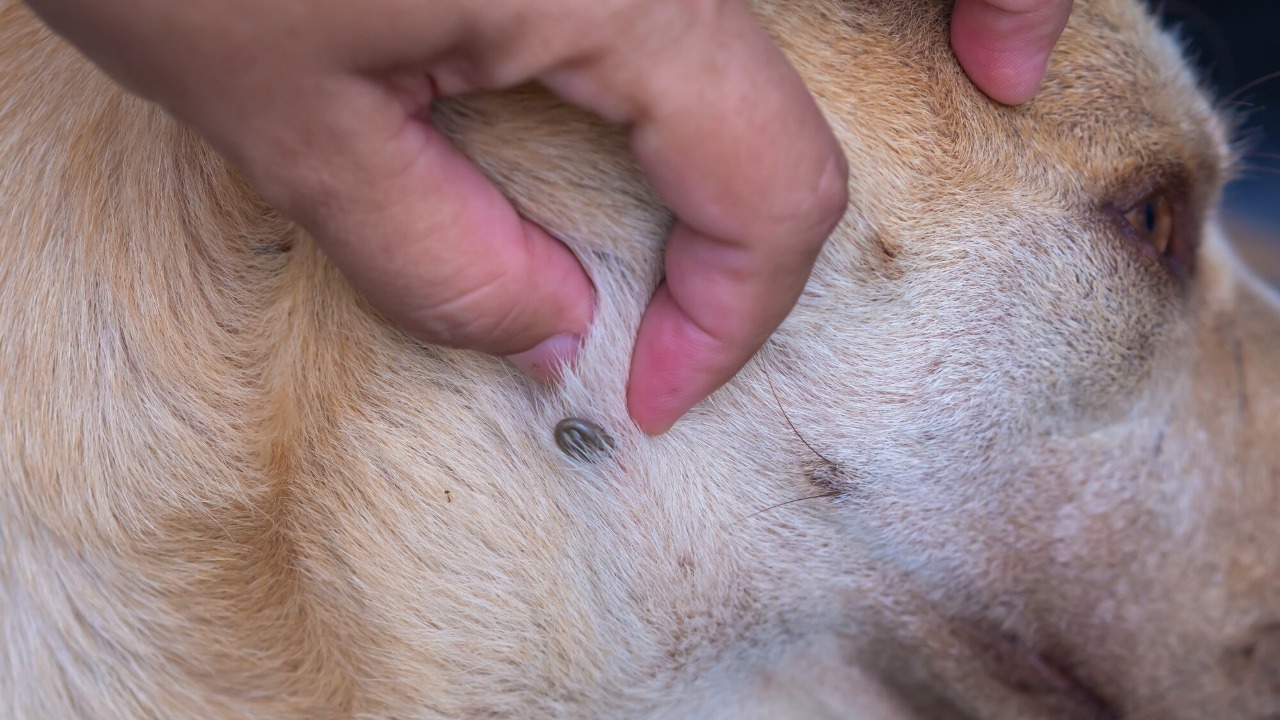

Veterinary researchers have confirmed a previously unknown tick-borne infection in dogs, and the discovery is sharpening concern that household pets can signal new threats for people long before human cases are recognized. The pathogen, a new Rickettsia species, appears to mimic other serious illnesses and may already be circulating quietly in parts of the United States where ticks and their hosts are thriving. As scientists race to understand how far it has spread, public health officials are treating dogs as early warning systems for a broader shift in tick-borne disease risk.
The finding lands at a moment when tick activity is expanding, diagnoses in both animals and humans are climbing, and climate conditions are giving parasites more months each year to feed and reproduce. Against that backdrop, a new canine infection that resembles Rocky Mountain spotted fever is not just a veterinary puzzle, it is a potential human health problem that demands closer surveillance, better diagnostics, and more consistent prevention for pets and people alike.
What scientists just found in dogs
The newly confirmed pathogen is a previously unrecognized member of the Rickettsia family, detected in dogs that were initially suspected of having Rocky Mountain spotted fever, or RMSF. Researchers analyzing blood samples realized that some animals carried a distinct Rickettsia species, and they now suspect that at least a portion of earlier RMSF diagnoses in certain regions were actually infections with this different organism, sometimes referred to in the literature as Rickettsia parkeri, hiding in plain sight. The work, led by Barbara Qurollo from NC State, underscores how easily one spotted fever group infection can be mistaken for another when clinicians rely only on symptoms and broad antibody tests.
In their report, the team confirmed that this new Rickettsia species was consistently found in canine blood and that it fits within the same group of pathogens known to cause serious illness in people. The confirmation that Researchers confirm new Rickettsia species found in dogs immediately raised the question of whether humans have already been exposed without realizing it. Separate coverage of the work notes that there is a chance some diagnoses of RMSF in parts of the nation were actually R. parkeri on the sly, which would mean the pathogen has been affecting both dogs and people for longer than anyone realized.
Why a canine infection matters for human health
From a public health perspective, the most important detail is not just that a new Rickettsia exists, but that it was discovered in a species that lives in such close contact with humans. Dogs share couches, hiking trails, and backyards with their owners, and the same ticks that feed on them will readily bite people. When a pathogen that belongs to a group already known to cause human disease shows up in canine blood, it is reasonable to treat it as a potential zoonotic threat until proven otherwise. That is why the confirmation that this organism is a spotted fever group Rickettsia has drawn attention from both veterinarians and epidemiologists.
Scientists who track vector-borne infections have long used dogs as sentinels for human risk, because pets are often tested more routinely and can reveal where pathogens are circulating before human surveillance catches up. Earlier work on canine testing has shown that Dog maps provide important clue to human disease risk, with Michael Yabsley and other researchers documenting how positive tests for Lyme disease and Anaplasmosis in pets often foreshadow similar patterns in people. The new Rickettsia finding fits that pattern: if dogs are picking up this infection, it is a strong signal that the ticks capable of carrying it are present in the same environments where humans live, work, and play.
How this pathogen hides among familiar tick-borne diseases
One of the most troubling aspects of the new canine infection is how easily it can be confused with better known illnesses like RMSF. Spotted fever group Rickettsia infections tend to produce overlapping signs, including fever, lethargy, and sometimes rash, and standard diagnostic panels may not distinguish between closely related species. That diagnostic blur is what allowed the new organism to masquerade as RMSF in dogs, and it raises the possibility that human cases have been misclassified as well. In regions where clinicians already expect RMSF, they may not think to look for a different Rickettsia unless specialized testing is available.
Broader guidance on tick-borne infections emphasizes that Symptoms of Many tickborne diseases can look similar in the early stages, which complicates both diagnosis and treatment. Fever, headache, muscle pain, and fatigue are common across a range of pathogens, from Rickettsia to Anaplasma and Babesia, and patients often do not recall a tick bite at all. In that context, a new Rickettsia species that behaves like RMSF is particularly challenging, because it can slip into existing diagnostic categories without raising alarms, even as it quietly expands its range through local tick populations.
Evidence that tick risks are rising in dogs
The discovery of a new pathogen in dogs is landing in a landscape where veterinarians are already documenting a steady rise in tick-borne infections. In California, for example, statewide data show that the percentage of dogs testing positive for exposure to the bacterium that causes anaplasmosis has climbed sharply in recent years. One analysis described California dogs as a “canary in the coal mine,” noting that Statewide rates of dogs testing positive for tick-borne bacteria have increased enough to worry both veterinarians and public health officials.
Those concerns are echoed in separate reporting that highlights how warming temperatures and changing land use are giving parasites more opportunities to thrive. A companion piece on the same trend notes that A report from the California veterinary community links rising canine exposure to broader environmental shifts that help animals and their parasites thrive. When dogs in a state as large and ecologically varied as California start showing higher rates of tick-borne bacteria, it suggests that the underlying conditions favoring ticks are not confined to a single region, and that new pathogens like the recently identified Rickettsia will find plenty of opportunities to spread.
What public health agencies are already watching
State and federal health departments have been tracking an expanding list of tick-borne threats, and the new canine Rickettsia fits into a broader pattern of emerging infections. In Georgia, for example, health officials note that, though cases are rarely reported, there are other concerning emerging tickborne diseases that the agency is watching closely. The Georgia Department of Public Health describes how Though cases are rarely reported in Georgia, there are other concerning emerging tickborne diseases that DPH monitors, underscoring that the state is already on alert for pathogens beyond the usual suspects like Lyme disease.
That vigilance is warranted, because new viruses have already been detected in local tick populations. In one investigation, researchers documented that lone star ticks in Georgia carried Heartland virus, a pathogen that can cause fever, diarrhea, muscle pain, headache, nausea, and a loss of appetite in people. Reporting on the work notes that The disease causes fever, diarrhea, muscle pain, headache, nausea and a loss of appetite, and that the virus was confirmed in lone star ticks in Georgia. When a state is already dealing with Heartland virus in its ticks and watching for other emerging infections, the appearance of a new Rickettsia in dogs becomes part of a larger story about how quickly tick-borne threats can diversify.
Ticks are carrying more than just one new pathogen
The new canine Rickettsia is only one piece of a growing mosaic of tick-borne risks. National forecasts for pet parasites now routinely include not just Lyme disease, but a suite of other pathogens that affect both animals and humans. Recent projections highlight the need to watch for Babesia microti, Anaplasma phagocytophilum, and Powassan virus, and they emphasize that the Upper Midwest and Northeast continue to be the highest risk regions for several of these infections. In those forecasts, experts warn that Babesia microti, Anaplasma phagocytophilum, and Powassan virus. The Upper Midwest and Northeast stand out as areas where both pets and people face elevated exposure.
Some of these pathogens can cause severe disease in humans. Powassan virus, for instance, is spread to people by the bite of an infected tick and can lead to serious neurologic illness. Federal guidance notes that Powassan virus is spread to people by infected ticks, that Powassan virus disease is rare but often severe, and that there is no specific medicine to treat Powassan virus disease. Against that backdrop, the appearance of yet another Rickettsia species in dogs is not an isolated curiosity, it is part of a broader expansion of tick-borne pathogens that collectively increase the odds that any given tick bite could carry something dangerous.
Climate, ecology, and the spread of new tick threats
Ecologists who study ticks point to environmental change as a key driver of this expanding disease portfolio. Warmer winters, longer growing seasons, and shifts in wildlife populations are all helping ticks move into new areas and stay active for more months of the year. Researchers monitoring these trends in the Northeast US have flagged the lone star tick and the longhorned tick as emerging threats that are expanding their range into regions where they were previously rare. One synthesis of this work notes that We are also monitoring the emerging threat of two ticks expanding their range into the Northeast US, and that mapping these shifts is essential to identify areas at risk and inform management interventions.
As new tick species arrive in a region, they bring their own suite of pathogens and can also change how existing diseases circulate by feeding on different hosts. That ecological churn creates opportunities for novel organisms, like the newly identified Rickettsia in dogs, to establish themselves in local tick populations and then spill over into pets and people. When combined with suburban development that pushes housing deeper into wooded areas and fragmented habitats, the result is a landscape where humans, dogs, deer, rodents, and ticks are in closer contact than ever, and where any new pathogen that enters the system can spread quickly if it is not detected early.
How veterinarians see the front lines of tick season
For veterinarians, the rise of tick-borne infections is not an abstract trend, it is a daily reality in exam rooms. Clinics routinely warn clients that spring and summer in many regions mean it is tick season, and that even dogs and cats that spend only brief periods of time outdoors can pick up parasites. One practice explains that Tick Borne Diseases. Spring and summer bring higher risk, and that while the bites themselves cause only mild irritation, the real danger lies in the diseases that pets can contract from tick bites.
Educational materials for pet owners stress that tick-borne diseases are a subset of vector-borne diseases, meaning that an intermediate host, often an insect or arachnid, is involved in transmission. One overview aimed at dog and cat owners explains that Tick-borne diseases are a subset of vector-borne diseases, and that every pet owner, even those with indoor-only cats, should know about the risks. When a new Rickettsia species is added to the list of pathogens that ticks can transmit to dogs, veterinarians must adjust their diagnostic thinking and prevention advice, because a dog with fever and lethargy after a tick bite may now have one more possible infection to consider.
What human medicine already knows about tick-borne illness
Human health agencies have been warning for years that tick-borne diseases and conditions are transmitted through the bite of an infected tick, and that the list of pathogens involved keeps growing. Public health guidance emphasizes that Tick Borne Diseases. Tick-borne diseases and conditions are transmitted through the bite of an infected tick, and that when a tick feeds on a human, the person may become infected. This framework already covers Lyme disease, Anaplasmosis, Babesiosis, Powassan virus, and several spotted fever group Rickettsia, so the appearance of a new Rickettsia in dogs fits into an existing, if crowded, category of concern.
Clinicians are also reminded that early symptoms can be nonspecific and that prompt treatment is often critical to prevent severe outcomes. Federal tick guidance notes that Symptoms. Many tickborne diseases can have similar signs and symptoms, and that anyone who gets a tick bite and then develops fever, rash, or flu-like illness should seek medical care. In that context, the main practical implication of the new canine pathogen for human medicine is not a change in symptom lists, but a need for better diagnostic tools that can distinguish between different Rickettsia species, so that epidemiologists can track which organisms are circulating where and how they are affecting patients.
Not every pet infection threatens people, but patterns matter
It is important to note that not every tick-borne disease in pets poses a direct risk to humans. Some pathogens are highly specific to certain animal hosts and have never been documented in people. Cytauxzoonosis, for example, is a serious disease of cats caused by the protozoan parasite Cytauxzoon felis, transmitted by ticks. Veterinary guidelines explain that Oct Host Associations and Transmission Between Hosts Cats become infected with C. felis when ticks inoculate sporozoites, and that, under current knowledge, this parasite is not known to infect people.
However, even when a specific pathogen like C. felis does not jump species, the ecological conditions that allow it to flourish often support other, more broadly zoonotic organisms as well. The same tick populations that transmit Cytauxzoonosis to cats may also carry Rickettsia or other bacteria that can infect humans. That is why public health officials pay close attention to patterns in animal disease, even when the pathogens themselves are not directly shared. The new Rickettsia in dogs falls into a different category, because it belongs to a group already associated with human illness, but it is part of the same larger pattern in which animal infections serve as a barometer for the health of local tick ecosystems.
How communities are responding on the ground
At the community level, health departments and local media have been working to translate these scientific findings into practical advice. In Georgia, for instance, residents are reminded each spring that warm weather means it is time to take precautions for ticks, which transmit a variety of illnesses that can be serious or even fatal. One public advisory notes that Apr GEORGIA Warm weather means it is time to take precautions, and that simple steps like using repellents, checking for ticks after outdoor activities, and promptly removing attached ticks can significantly reduce risk.
Similar messages are being echoed in veterinary clinics and public health campaigns across the country, often framed around the idea that protecting pets and people requires the same basic habits. Educational materials for pet owners stress that Tick checks after walks, year-round preventives for dogs, and keeping yards clear of tall grass can all help cut down on tick encounters. As the new Rickettsia species in dogs gains attention, these existing prevention messages are likely to be updated to emphasize that unknown pathogens can be circulating long before they are formally named, which makes routine protection even more important.
The bigger picture: dogs as early warning systems
Stepping back, the confirmation of a new Rickettsia species in dogs is a reminder that our pets often encounter environmental hazards before we do, and that their medical records can serve as an early warning system for human health. When canine tests start picking up unfamiliar pathogens, it is a signal that the local tick community has changed in ways that may not yet be visible in human case counts. That is why researchers emphasize the value of integrating veterinary data into broader disease surveillance, using dog maps and other tools to anticipate where human risk is likely to rise next.
As ecologists track the spread of ticks into the Northeast US and other regions, and as public health agencies monitor emerging infections like Heartland virus and Powassan, the new canine Rickettsia adds one more reason to take that integration seriously. Separate coverage of the discovery notes that Dec New Tick Borne Disease Discovered Dogs May Pose Risk Humans, and that the pathogen was identified precisely because scientists were paying close attention to the blood it was found in. If that same level of attention is applied across veterinary practices and public health labs, there is a better chance that the next emerging tick-borne threat will be spotted in dogs before it has a chance to cause widespread illness in people.
More from MorningOverview