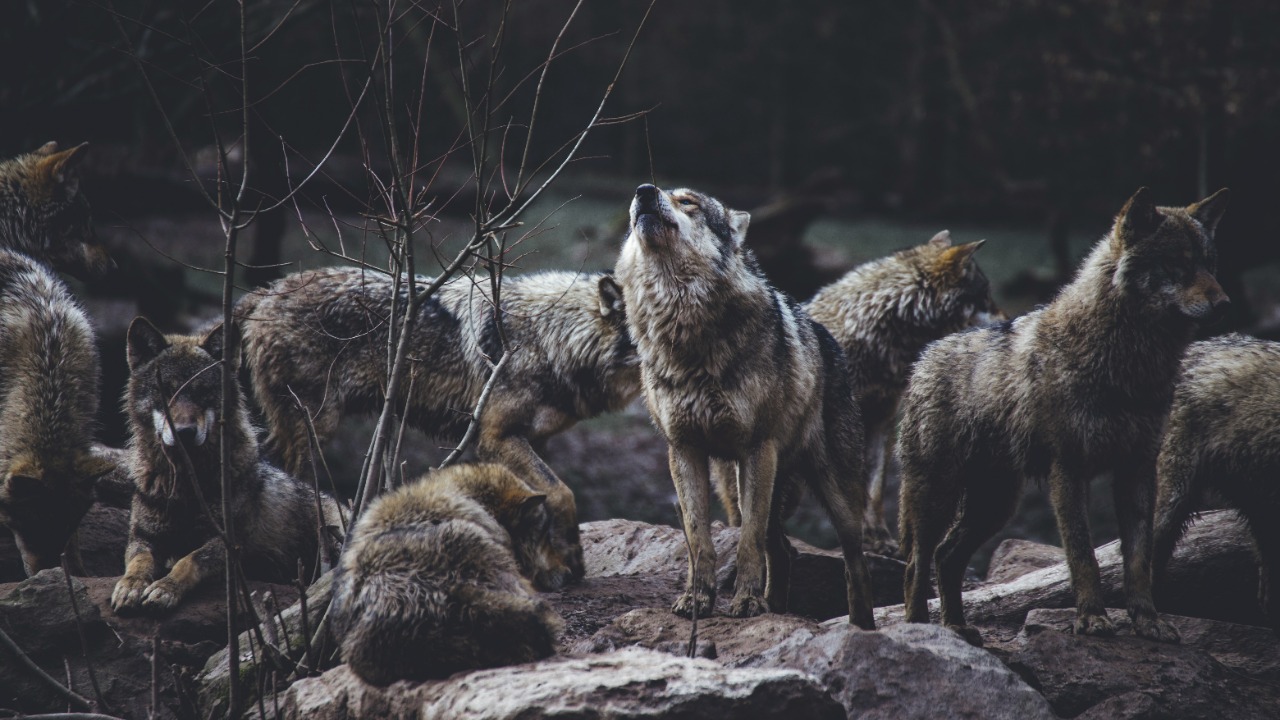

For the first time in roughly eighty years, a rare apex predator in the American West has climbed above 200 individuals in the wild, a milestone that signals both ecological recovery and a new phase of political conflict. The population has grown by about 15 percent in a single year, enough to push the species past that symbolic threshold and force communities, ranchers, and wildlife officials to confront what living with a large carnivore really means.
That rebound is not an accident. It is the product of deliberate reintroduction, years of planning, and a willingness by state agencies to move animals across borders and into landscapes that had not heard their howls since the early twentieth century. The result is a conservation success story that is still fragile, still contested, and still unfolding in real time.
The 200‑animal milestone and why it matters
The jump past 200 animals is more than a round number. It marks the first time in eight decades that this endangered predator has reached a population size that biologists consider a meaningful foothold rather than a tenuous remnant. According to reporting that highlighted a roughly 15 percent increase in the wild population, the species has finally crossed a threshold that many experts doubted they would see in their careers, a change that reflects both natural reproduction and carefully managed releases into suitable habitat. That same reporting noted that specialists were “stunned” not just by the raw count but by how quickly the animals have begun to reclaim territory after being absent for generations, a reminder of how resilient top carnivores can be when given space and prey.
Ecologically, a population above 200 individuals opens the door to something closer to a functioning predator guild rather than a scattered set of isolated packs. With more animals on the ground, the species can begin to shape deer and elk behavior, redistribute browsing pressure, and influence everything from riparian vegetation to scavenger communities. Biologists have long argued that landscapes in the Rockies and adjacent ranges still have the prey base and wild country that can support these wolves, and the new numbers suggest that assessment was correct. The same analysis that documented the 15 percent rise also underscored that there is still room for growth in areas that can support these wolves, which means the current milestone is likely a waypoint rather than an endpoint in the recovery story, even as it intensifies debates over how many predators is enough.
How Colorado’s reintroduction changed the map
The return of wolves to Colorado has been central to this broader surge, because it reestablished the species in a state that had not hosted a breeding population in roughly eighty years. After voters narrowly backed reintroduction, Colorado Parks and Wildlife began capturing animals in the Pacific Northwest and moving them south, a process that culminated in the first releases on the Western Slope. Earlier this year, the agency followed up by bringing in another 15 wolves from Canada, a significant infusion that accelerated the pace of recovery and ensured that the new population would not be built on just a handful of founding animals. Those transplants were not symbolic gestures. They were the backbone of a deliberate strategy to seed multiple packs across a broad swath of mountain and forest habitat.
Colorado Parks and Wildlife has framed the program as a way to restore a missing piece of the state’s natural heritage while honoring the will of the electorate. The agency has had to balance that mandate with the realities of moving large carnivores into working landscapes where cattle, sheep, and people already live. The decision to source animals from Canada, where wolves are still relatively abundant, reflected both genetics and logistics, since those populations are adapted to similar climates and prey. Reporting on the reintroduction has emphasized that Colorado now has wolves again for the first time in 80 years, and that the January transfers from Canada were a turning point that shifted the conversation from theory to practice, with real animals on the ground and real consequences for ranchers, hunters, and rural communities.
From near eradication to cautious recovery
The fact that it has taken roughly eight decades to get back above 200 animals is a stark measure of how thoroughly wolves were eradicated in the twentieth century. Government bounties, poison campaigns, and a cultural narrative that cast wolves as vermin drove them out of Colorado and much of the lower 48, leaving only scattered survivors in the far north. For generations, the absence of wolves was treated as a sign of progress, proof that the frontier had been tamed and that livestock and game herds were safe from a feared competitor. That history still shapes how many people view the species, especially in ranching communities where stories of lost calves and harrowing encounters have been passed down like family lore.
The modern recovery effort has had to work against that legacy. Wildlife agencies have spent years explaining that wolves are not the indiscriminate killers of legend, that they play a role in healthy ecosystems, and that coexistence is possible with the right tools. Yet the memory of a landscape without large predators is still fresh enough that their return feels like a rupture rather than a restoration. When I talk to biologists, they often point out that the current population, even at more than 200 animals, is a fraction of what once roamed the Rockies. The long gap since wolves were last common in Colorado and neighboring states means that both people and ecosystems are relearning how to live with them, a process that is as much social and political as it is biological.
Why experts are both thrilled and wary
Conservation scientists see the 15 percent population jump as validation of decades of work, but they are also quick to warn that the recovery is still fragile. A single harsh winter, a disease outbreak, or a spike in illegal killing could erase much of the recent gain, especially if packs are still clustered in a few regions. The same analysis that documented the population topping 200 noted that this was the first time in about eighty years that the species had reached such numbers, which underscores how long it can take to rebuild a predator that reproduces slowly and faces intense human scrutiny. For experts who have spent their careers modeling wolf dynamics, the current moment feels like a narrow window in which smart policy could lock in long term stability or, if mishandled, allow the population to slide backward.
There is also a recognition that success in one state can create new pressures in another. As wolves disperse from Colorado into neighboring jurisdictions, they will cross into areas with different regulations, different tolerance levels, and different histories with predators. Biologists I have spoken with describe this as a “patchwork problem,” where the fate of a wide ranging species depends on a mosaic of local decisions. The fact that the population has finally cleared the 200 animal mark gives managers more room to experiment with tools like targeted hazing, compensation programs, and limited lethal control, but it also raises the stakes of every policy choice. With more wolves on the landscape, every conflict, every depredation, and every high profile incident will be watched closely by both supporters and opponents of recovery.
Ranchers, hunters, and the politics of fear
The return of wolves has landed hardest on ranchers who graze cattle and sheep in the same mountain valleys where reintroduced packs now roam. For them, the 15 percent increase in the predator population is not an abstract statistic but a potential hit to their bottom line. Calving season, already a stressful period, now comes with the added worry that a pack might move through at the wrong moment. Some ranchers argue that the state has prioritized an urban vision of wildness over the realities of rural livelihoods, and they point to every confirmed livestock kill as evidence that their warnings were ignored. That tension has fueled lawsuits, heated public meetings, and calls for more aggressive control of problem wolves.
Hunters have their own concerns. In parts of the West, elk and deer are not just wildlife but a cultural touchstone and a significant economic driver through license sales and guiding businesses. As wolves recolonize historic range, some hunters fear that herds will shrink or become harder to find, especially in areas where habitat is already under pressure from development and drought. Wildlife agencies counter that prey populations have coexisted with wolves for millennia and that modern management can adjust harvest quotas to reflect changing conditions. Still, the perception that wolves are competitors for a finite resource has made them a lightning rod in hunting circles, and that political pressure feeds back into how state commissions set rules for both predators and prey.
Organized pushback and the new culture war over predators
Opposition to wolf recovery is not just a loose collection of individual complaints. It has coalesced into organized resistance that frames the issue as a broader fight over who gets to decide what rural landscapes look like. One of the clearest expressions of that pushback came from Jim Pribyl, the Chair of Colorado Nature Action, who acknowledged that “Obviously, there’s been controversy,” before adding that “people are starting to see the benefits” of having wolves back on the land. His comments, reported in coverage of officials facing pushback on apex predator reintroduction efforts, captured the uneasy middle ground where even some conservation minded leaders feel compelled to balance enthusiasm for recovery with empathy for those who feel threatened by it. The same reporting noted that the debate has unfolded alongside the first wolf pups born this summer in the reintroduction area, a tangible sign that the program is working biologically even as it remains contested politically.
That tension has turned wolves into symbols in a larger culture war. Supporters often see them as emblems of wildness and ecological integrity, while opponents view them as avatars of distant bureaucrats and urban voters imposing their values on working landscapes. The quote from Jim Pribyl, with its careful acknowledgment that “Obviously” there is controversy, reflects how charged the conversation has become, even among people whose titles and organizations suggest they are predisposed to favor reintroduction. When I listen to public testimony or read local coverage, I hear the same themes repeated: fears that wolves will drive small ranches out of business, anger that ballot initiatives can override local opposition, and skepticism that state agencies will keep their promises on compensation and control. Those narratives are powerful, and they will shape how far and how fast the population can grow beyond the current 200 plus animals.
What Colorado Parks and Wildlife is trying to prove
Colorado Parks and Wildlife sits at the center of this storm, tasked with turning a voter mandate into a functioning, durable wolf population. The agency’s decision to introduce another 15 wolves from Canada in January of this year was a calculated move to demonstrate momentum and to avoid the genetic bottlenecks that can plague small, isolated populations. By moving quickly to supplement the initial releases, managers signaled that they intend to build a robust, interconnected network of packs rather than a token presence that could be wiped out by a single bad year. The fact that Colorado now has wolves again for the first time in 80 years is a point of pride for many within the agency, but it also comes with the burden of constant scrutiny from both sides of the debate.
Internally, Colorado Parks and Wildlife has had to expand its capacity for conflict response, field investigations, and community outreach. Every confirmed depredation triggers a chain of events: site visits, carcass examinations, paperwork for compensation, and sometimes difficult conversations about whether lethal control is warranted. The agency is also investing in nonlethal tools, from range riders and fladry to carcass removal and better fencing, in an effort to show that coexistence is not just a slogan. Reporting on the reintroduction has highlighted how central Colorado Parks and Wildlife has been to the process, and how the January imports from Canada were a pivotal step in moving from planning to implementation. If the current 15 percent population increase is to be sustained, the agency will need to keep refining its approach, learning from early missteps, and maintaining enough public trust to weather the inevitable flashpoints.
Ecological ripple effects of a growing wolf population
Beyond the politics, the ecological implications of a wolf population that has finally climbed above 200 animals are profound. In systems where wolves have been absent for decades, ungulates often behave differently, lingering longer in riparian zones and overbrowsing young willows and aspens. As wolves return, they can alter that behavior, pushing elk and deer to move more frequently and to avoid certain high risk areas. Over time, those shifts can allow streamside vegetation to recover, which in turn stabilizes banks, shades water, and improves habitat for fish and songbirds. Biologists refer to this as a trophic cascade, and while the details vary from place to place, the basic pattern has been documented in multiple reintroduction sites.
Scavenger communities also change when wolves are back on the landscape. Carcasses left by wolf kills provide food for ravens, eagles, foxes, and even bears, creating pulses of nutrients that ripple through the food web. With more than 200 wolves now hunting across a broader area, those carcass subsidies are likely to become more frequent and more widely distributed. At the same time, managers have to watch for unintended consequences, such as wolves pushing coyotes into new territories or altering the behavior of mountain lions. The key point is that a recovering apex predator does not just add one more species to a checklist. It reshapes relationships across the ecosystem, and the recent 15 percent population increase suggests that those reshaping forces are now strong enough to be felt in measurable ways.
What comes next for a species at 200 and climbing
With the population finally above 200 animals and growing, the central question is no longer whether wolves can survive in the modern West, but under what conditions society will allow them to thrive. Some advocates argue that the current numbers are still far below what is needed for long term genetic health and ecological function, and they push for continued releases and strict protections. Others insist that the threshold for success has already been met and that management should now shift toward limiting further expansion, especially in areas with dense livestock operations. The fact that experts were “stunned” by the speed of the recent 15 percent increase suggests that the species may be more adaptable than many assumed, which in turn raises the stakes of decisions about hunting seasons, lethal control, and where future reintroductions might occur.
In practical terms, the next few years will likely determine whether the current recovery solidifies into a stable, socially accepted presence or fractures under the weight of conflict. Compensation programs will be tested as more depredation claims come in. Nonlethal deterrents will either prove their worth or be dismissed as inadequate. State wildlife commissions will face pressure to adjust regulations in response to every new data point, from pup survival rates to elk harvest numbers. For now, the milestone of more than 200 wolves in the region stands as a rare piece of good news in the broader story of biodiversity loss. It is a reminder that, given time, political will, and careful management, even a vilified predator that has been absent for roughly eighty years can find its way back into the fabric of a modern landscape, and that the hardest work often begins after the first big success.
More from MorningOverview