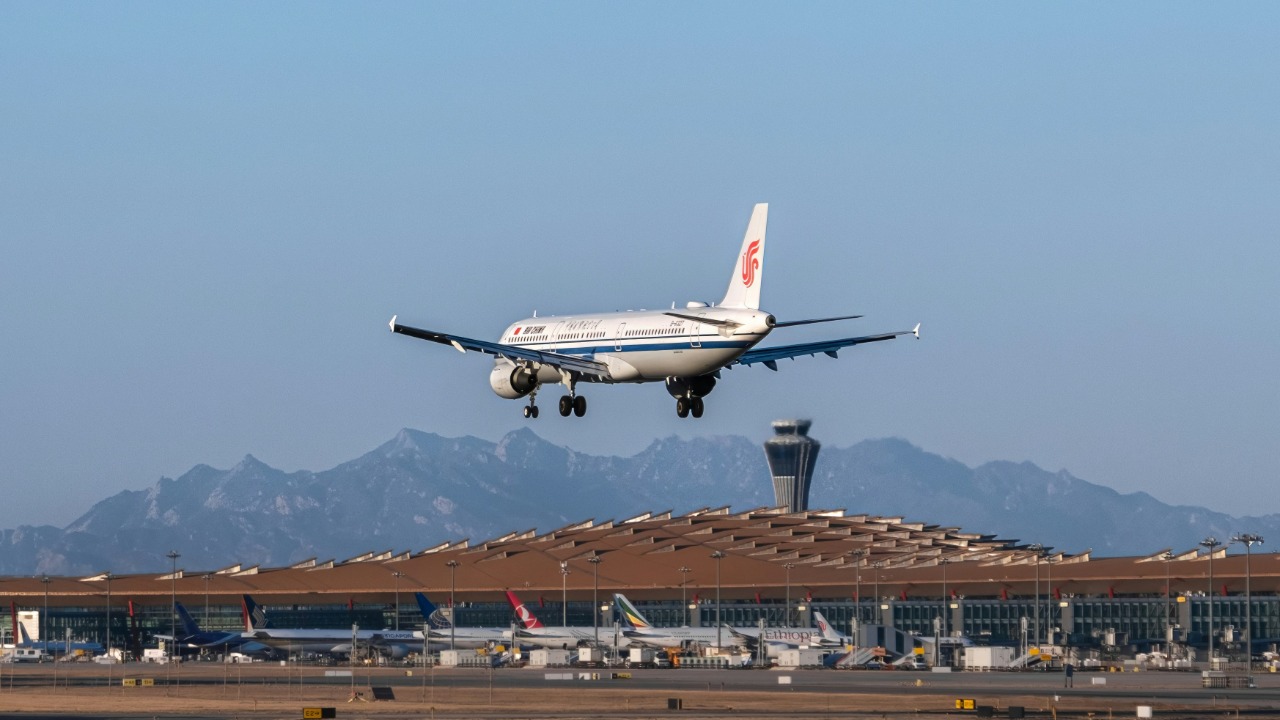

China has just stitched together a marathon air corridor that effectively redraws the map between East Asia and South America, setting a new benchmark for how far a commercial passenger jet can go in a single itinerary. The new service links Shanghai with Buenos Aires on what is now widely described as the world’s longest airline flight, both in distance and total journey time, and it signals how aggressively Chinese carriers are pushing into ultra long haul travel. For travelers, it promises fewer connections and faster access between two booming regions, but it also raises fresh questions about comfort, cost, and the future of extreme-distance flying.
What exactly is the new record-breaking route?
The centerpiece of China’s latest aviation milestone is a route that connects Shanghai with Buenos Aires, creating a direct air bridge between China and Argentina that did not exist at this scale before. Reporting on the launch describes the distance as “about 19,631 km,” a figure that comfortably clears the range of existing ultra long haul services and places the flight in a category of its own. The same coverage notes that the scheduled flight time is roughly “25.5 hours” from Shanghai to Buenos Aires, with the journey stretching to as much as 29 hours in some operational scenarios, which underscores just how demanding this itinerary is for both passengers and crew.
Chinese state-linked reporting adds another layer of scale, describing the new service as “Spanning approximately 20,000 kilometers” and emphasizing that the route crosses both the “Eastern and Western Hemispheres” as well as the “Northern” and Southern Hemispheres. That framing is not just a flourish, it underlines how the flight effectively wraps around a large portion of the globe in a single itinerary, turning what used to be a multi stop, multi day journey into a single, if marathon, trip.
Who is operating the flight and how does it work?
The record belongs to China Eastern, one of the country’s largest state-backed carriers and a key player in Shanghai’s role as an international hub. The airline has been steadily building its long haul portfolio and now uses its official platform at China Eastern’s website to promote a growing network of intercontinental services that increasingly target secondary markets as well as traditional business centers. Earlier reporting on the launch highlights that “China Eastern has made history” by starting what is described as the world’s new longest one stop scheduled passenger service, with the itinerary clocking in at around 29 hours and operated by a long range, widebody aircraft, specifically a Boeing 777-300ER equipped for extended operations, according to detailed coverage of the “29 hours” service.
Operationally, the flight is not a simple point to point hop but a carefully structured long haul that uses a stop in New Zealand to make the distance viable and to tap into additional passenger demand. One report describes how the “1st flight of China Eastern Airlines takes off from Shanghai Pudong International Airport to Buenos Aires” and notes that the route operates “via New Zealand,” which is a reference to the stop in Auckland that breaks up the journey. Another account explains that the carrier has launched what it calls the world’s longest direct flight “via Auckland Airport,” highlighting how the New Zealand hub sits at the center of this new corridor and benefits from the additional traffic and global visibility.
How long is it really, and how does it compare with other ultra long haul flights?
Different reports frame the record in slightly different ways, but they converge on the idea that this is now the longest commercial airline journey in the world by distance and one of the longest by time in the air. One widely cited figure describes the route as covering “12,427 miles,” which aligns with the roughly 19,631 km distance reported elsewhere and underscores how far beyond typical long haul ranges this service stretches. Another detailed breakdown notes that the flight time is “roughly 25.5 hours from Shanghai to Buenos Aires (up to 29 hours),” reinforcing that passengers are committing to more than a full day in transit when they book this itinerary between Shanghai and Buenos Aires.
To understand the scale, it helps to compare this with existing ultra long haul benchmarks. Singapore’s flagship carrier has long marketed its non stop services between Singapore and New York as among the world’s longest, and its official platform at Singapore Airlines showcases a network of ultra long haul flights that previously defined the upper limit of commercial endurance. The new China Eastern route, however, adds several thousand kilometers and multiple hours to that standard, and one analysis notes that “with a duration of 25 hours” the Chinese service now surpasses other long haul links between Asia and major South American cities, according to a report that frames it as the world’s longest airline flight and highlights the “duration of 25” hours as a key milestone.
Where does the flight go and why these cities?
The route’s endpoints are not random, they reflect a strategic bet on deepening ties between China and Latin America and on elevating Shanghai’s role as a global gateway. On the Chinese side, the flight departs from Shanghai Pudong International Airport, the primary international hub for eastern China and a key base for China Eastern Airlines. Pudong already handles a dense schedule of long haul flights to North America and Europe, and the new South American link cements its status as a truly intercontinental node. On the other end, the service lands in Buenos Aires, Argentina’s capital and largest city, which has been seeking more direct connections to Asia to support trade, tourism, and investment flows.
Geographically, the route’s path is unusual because it arcs across multiple hemispheres and uses New Zealand as a pivot. Chinese reporting emphasizes that the flight is “Spanning approximately 20,000 kilometers and crossing both the Eastern and Western Hemispheres as well as the Northern and Southern Hemispheres,” a description that captures how the aircraft effectively traces a giant curve across the Pacific and Southern Oceans. The stop in Auckland is central to this geometry, and local coverage notes that “Auckland Airport is at the centre” of the new service, which not only gives New Zealanders a new one stop option to Shanghai and Buenos Aires but also positions Auckland as a mid Pacific connector in a way that few other airports can match.
How is China presenting the flight and what does it say about its ambitions?
For Beijing and for China Eastern Airlines, the new route is more than a commercial experiment, it is a statement about China’s technological and logistical reach. One detailed account describes how “China Eastern Airlines launches world’s longest intercontinental flight” and notes that the aircraft showcased a special livery featuring China Eastern Airlines’ inaugural “National Museum of China” themed design, a symbolic choice that ties the airline’s global push to national cultural branding. The same reporting highlights that the carrier framed the route as a bridge between countries, underscoring how aviation is being used as a tool of soft power and economic diplomacy.
Another report goes further, labeling the inaugural journey “The New Record Flight” and noting that it departed Shanghai and set a new benchmark for airline distance and duration. That same coverage points out that previous record holders for ultra long haul services often involved flights that took “30 hours or more” when connections were included, whereas the new China Eastern itinerary consolidates that journey into a single, continuous service. For China, being able to say that “China sets new record for world’s longest airline flight” is a powerful narrative that dovetails with broader ambitions to lead in infrastructure, technology, and global connectivity.
How does the one stop structure actually work for passengers?
From a traveler’s perspective, the route is marketed as a direct service even though it includes a stop in New Zealand, which is why some reports describe it as the world’s longest “one stop” or “direct” flight rather than a pure non stop. One detailed analysis explains that “China Eastern has made history by starting the world’s new longest 1 stop scheduled passenger service” and that the itinerary, which takes around 29 hours, is operated by a Boeing 777-300ER configured for long range comfort and efficiency, according to the breakdown of the “29 hours” journey. The key distinction is that passengers remain on a single flight number and typically stay with the same aircraft, even as it pauses in Auckland for refueling, crew changes, and operational checks.
Local reporting in New Zealand clarifies that “China Eastern Airlines launches world’s longest direct flight via Auckland Airport,” which means that while the aircraft touches down in Auckland, the service is still treated as a continuous direct connection between Shanghai and Buenos Aires. For passengers, that structure reduces the hassle of separate tickets and transfers, even if they still have to disembark during the stop for security or cleaning procedures. It also gives travelers in New Zealand the option to board or leave the flight at Auckland, effectively turning the world’s longest itinerary into a flexible multi segment route that can serve regional demand as well as the headline grabbing end to end journey.
What does this mean for global aviation records and competition?
The launch of the Shanghai to Buenos Aires service forces a recalibration of how airlines and aviation watchers define “longest flight,” a title that has shifted over the years as aircraft technology and fuel efficiency have improved. One report that focuses on the record aspect notes that “China sets new record for world’s longest airline flight” and emphasizes that the new benchmark is not just about distance but also about the complexity of operating such a long itinerary reliably. The same coverage points out that previous record flights often involved multiple connections that stretched total travel times to “30 hours or more,” whereas the new China Eastern service consolidates that into a single branded journey that is easier for passengers to understand and book.
At the same time, the new record puts pressure on other carriers that have built their brands around ultra long haul services. Singapore’s flagship airline, for example, has invested heavily in aircraft and cabin configurations that can handle non stop flights between Singapore and distant cities like New York, and its official platform at Singapore Airlines continues to highlight those routes as signature offerings. With China Eastern now operating a service that covers 12,427 miles and roughly 19,631 km, competitors will have to decide whether to chase the record with even longer non stop flights or to focus instead on comfort, frequency, and reliability. The fact that the Chinese route is described as “Spanning approximately 20,000 kilometers and crossing both the Eastern and Western Hemispheres as well as the Northern and Southern Hemispheres” suggests that the bar for any future record attempts is now extremely high.
How are the cities and airports along the route positioning themselves?
For Shanghai, the new flight reinforces its status as a global aviation hub and as a key gateway for China’s outbound tourism and trade. The city is already well known for landmarks like the Bund and the Lujiazui financial district, and its profile as a travel destination is captured in mapping and travel tools that highlight Shanghai’s role in regional and global networks, such as the detailed location data available through platforms like Shanghai’s place entry. By anchoring the world’s longest airline flight, Shanghai Pudong International Airport strengthens its claim to be one of the most important intercontinental hubs in Asia, capable of handling complex long haul operations and connecting passengers from across China to far flung destinations.
On the South American side, Buenos Aires gains a direct, high profile link to East Asia that could reshape travel patterns for both business and leisure. The city’s global profile, from its historic neighborhoods to its role as Argentina’s political and economic center, is similarly documented in mapping resources like the Buenos Aires location entry, which underscores its status as a major metropolitan area. A related mapping view of the Argentine capital highlights its dense urban footprint and transport infrastructure, which now includes a direct air bridge to Shanghai via Auckland. For Auckland itself, being “at the centre” of the world’s longest direct flight gives the airport and the city a marketing hook that could attract more transit traffic and tourism, reinforcing New Zealand’s role as a strategic stopover in the South Pacific.
What should travelers know before booking such a long journey?
For passengers considering this marathon itinerary, the first thing to understand is the sheer length of time involved and the physical demands that come with it. Reports on the route emphasize that the distance is about 19,631 km and that the flight time is roughly 25.5 hours from Shanghai to Buenos Aires, with the journey sometimes stretching to 29 hours depending on operational factors. Another analysis notes that “with a duration of 25 hours” the service now ranks as the world’s longest airline flight, which means travelers need to plan for sleep, movement, and hydration in a way that goes beyond a typical long haul. That includes thinking carefully about seat selection, cabin class, and layover strategies in Auckland, even if the flight is marketed as a single direct service.
It is also worth paying attention to how the airline configures the aircraft and structures onboard service for such a long journey. Coverage of the launch notes that China Eastern has equipped its Boeing 777-300ER for extended operations, with an emphasis on balancing seat density and comfort for a flight that can last more than a full day. The airline’s official booking and information portal at China Eastern’s website provides details on cabin layouts, fare classes, and amenities, which can help travelers decide whether to invest in premium economy or business class for the extra space and rest. Given that the route is operated twice a week, according to the report that cites the 19,631 km distance and 25.5 hour flight time, flexibility on travel dates may also be limited, so passengers should plan well in advance and be prepared for the possibility of schedule changes on such a complex long haul operation.
More from MorningOverview