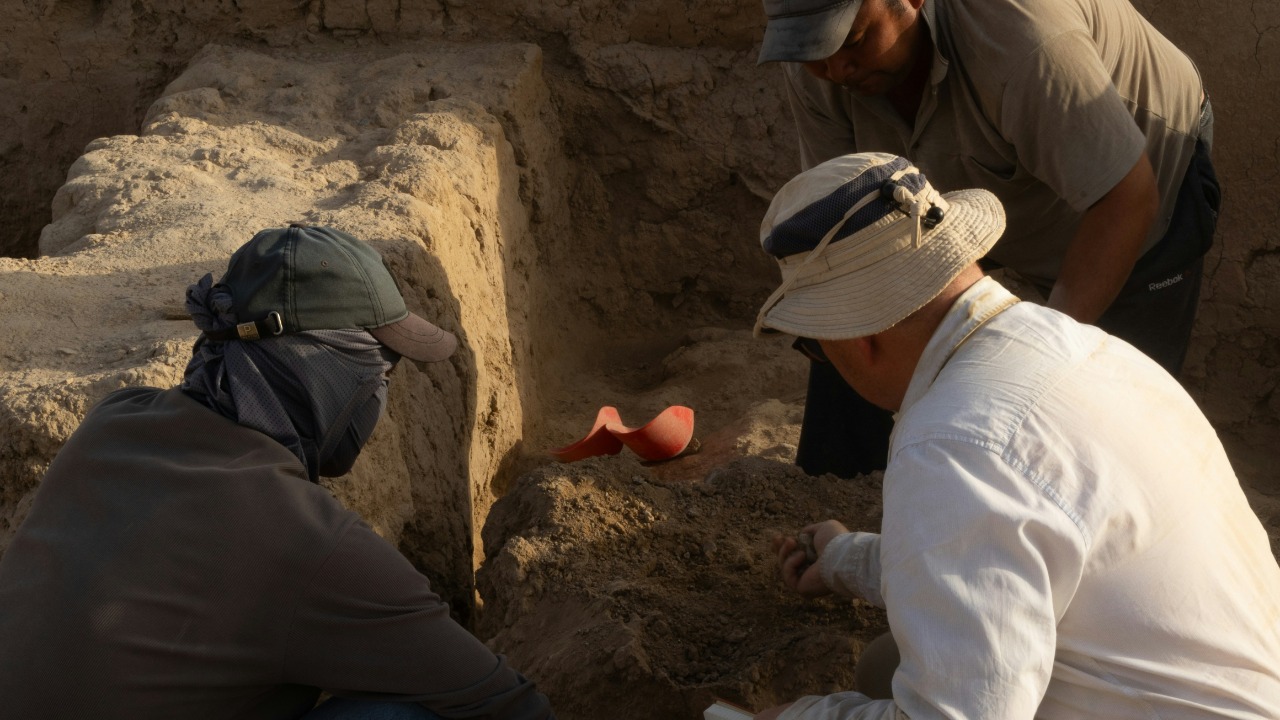

Newly excavated Egyptian tombs dating back roughly 4,000 years are yielding a cache of rare relics that is reshaping how I understand life and death along the Nile. From intact jewelry hoards and elaborately prepared mummies to animal offerings and the grave of an elite magician, these finds are filling in gaps in the archaeological record rather than simply decorating it.
What stands out is not just the age of these burials but their preservation and variety, which together offer a granular look at family ties, religious beliefs, and social ambition in the Middle Kingdom and Old Kingdom. Taken as a whole, the discoveries show a landscape of tombs that was far more crowded, creative, and competitive than the bare stone walls tourists usually see.
The 4,000-year-old magician and the power of elite tombs
One of the most striking recent discoveries is the 4,000-year-old resting place of an overachieving Egyptian magician, a burial that reads like a résumé carved in stone. I see this tomb as a case study in how spiritual authority and bureaucratic rank could be fused into a single career, with the dead owner advertising his status for eternity through titles and ritual scenes. The grave’s occupant is described as a “magician” of the goddess Serket, and the walls are covered in engravings that underline his role as both religious specialist and high official.
Those Engravings do more than decorate the chamber, they encode a worldview in which written words and images were thought to have real power in the afterlife. The fact that Archaeologists can still read those titles and rituals today shows how deliberately the tomb was planned as a permanent monument. By tying his identity to the goddess Serket and to the royal administration, this Egyptian magician turned his burial into a political and spiritual billboard, and the survival of that billboard helps me trace how religious expertise translated into real-world influence.
Jewelry-filled family tombs and the economics of devotion
If the magician’s tomb reveals the power of titles, a separate family burial packed with jewelry shows how wealth and affection were poured into grave goods. In that chamber, excavators found that the wooden coffins had been destroyed, yet the valuables endured, a reminder that organic materials rot while metal and stone can outlast empires. Around the bones, they identified Dried “flood mud,” a detail that hints at ancient environmental damage and later inundations that disturbed the dead without fully erasing them.
What survived inside this family tomb is a trove of necklaces, bracelets, rings, and other items made of more durable materials, including pieces associated with fertility and love that speak to the emotional stakes of burial. The report notes that Still other significant finds in the same context help date the burial to a period when Thebes was emerging as a major power. When I look at this mix of personal adornment and symbolic motifs, I see a household investing heavily in the afterlife economy, turning gold and semi-precious stones into a kind of spiritual insurance policy for multiple generations.
New tombs at Saqqara and the return of intact mummies
Far from the magician’s grave, the necropolis of Saqqara is undergoing its own quiet revolution as new shafts and chambers are opened. Recent work described as the Discovery of New Tombs at Saqqara has brought to light burials dating to 2465–2323 BCE, a span firmly within the Old Kingdom. Among the finds are wooden coffins, some beautifully painted, that show how artisans used color and text to guide a pharaoh’s journey into the afterlife. For me, these coffins are not just containers but narrative devices, wrapping the dead in spells and stories that were meant to work as a continuous script.
Saqqara has also produced one of the rarest prizes in Egyptian archaeology, a perfectly preserved human body that survived both ancient looters and modern exposure. In a tomb described from SAQQARA, Egypt, workers, Illuminated only by torches and camera lights, used crowbars and picks to open a sealed sarcophagus that had not been disturbed in antiquity. Inside lay a perfectly preserved mummy, a reminder that under the right conditions, linen, skin, and even facial features can endure for millennia. When I compare this intact body with the damaged coffins elsewhere, I see how much of our picture of ancient Egypt depends on the luck of preservation rather than the intentions of the dead.
Animal mummies and the sacred ecology of Saqqara
Human burials are only part of the story. At Saqqara, excavations have also revealed a dense population of animal mummies that reframes the site as a living ecosystem of cults and offerings. In seven tombs discovered near the necropolis, researchers identified mummified beetles, crocodiles, cats, and other sacred animals, each wrapped and buried with care. These finds show that the desert plateau functioned not just as a cemetery but as a vast ritual complex where animals served as intermediaries between worshippers and the gods.
The presence of these creatures in the necropolis of Saqqara, south of Cairo, underscores how deeply religion was woven into daily life and the local environment. Beetles and cats were not random choices, they were carefully selected species with strong symbolic associations, from solar rebirth to domestic protection. When I factor these animal mummies into the broader pattern of tombs and temples, Saqqara emerges as a place where humans, animals, and deities were bound together in a continuous cycle of offerings and petitions.
Jewelry-rich burials and the first tomb of its kind
Beyond Saqqara, another 4,000-year-old burial has captured attention for its sheer concentration of personal adornment. Authorities have uncovered a tomb with eleven sealed burials and many items of jewelry, a configuration that suggests a tightly knit group, perhaps a family or elite circle, sharing a single monumental space. The site is described as the first tomb of its kind in the region, which tells me that local elites were experimenting with new ways to display status and solidarity in death.
The fact that Authorities link this burial to a period about 4,000 years ago places it squarely in the Middle Kingdom, a time when provincial power bases were rising and local governors could rival the court in wealth. The sealed nature of the eleven burials suggests that the tomb was not repeatedly reopened for later interments, which in turn preserves a snapshot of social hierarchy at a single moment. For me, the combination of multiple individuals and concentrated jewelry hints at a group identity that was as much about shared prosperity as it was about blood ties.
Gold tongues, fake nails, and the theater of the afterlife
Some of the most visually arresting relics to emerge from 4,000-year-old tombs are not statues or sarcophagi but small, intimate modifications to the dead themselves. Earlier this year, a joint Egyptian-American mission reported 11 sealed burials in a tomb on the Nile’s West Bank in Luxor, where they found 13 mummies with gold tongues and fake nails. These details turn the bodies into carefully staged performances, with metal tongues perhaps intended to give the deceased a voice in the afterlife and artificial nails completing an idealized image of the person.
The collaboration between Egyptian and American teams at this site, described with the transitional word Meanwhile, highlights how international research is converging on the West Bank of Luxor, a city already famous for its temples and royal necropolis. When I think about these gold tongues alongside the magician’s titles and the family jewelry hoards, a pattern emerges: the afterlife was imagined as a space where appearance, speech, and status all had to be carefully curated, and the body itself became a canvas for that preparation.
Asyut’s 4,000-year-old tomb and the geography of power
The wave of discoveries is not confined to the better-known hubs of Thebes and Memphis. Between August and September, reports highlighted a spectacular 4,000-year-old tomb discovered in Asyut, a city in central Egypt that once controlled key routes along the Nile. The burial, flagged in coverage that notes how Between August and September 2024, Archaeology Magazine reported on this find, underscores how provincial centers participated in the same culture of monumental tomb building as the royal capitals.
By situating this Asyut tomb within the broader landscape of Egypt, I see a corridor of elite burials stretching the length of the river, each site adapting shared religious ideas to local conditions. The Asyut discovery also dovetails with the magician’s grave and the jewelry-rich family tombs, all of them roughly 4,000 years old, suggesting a period of intense investment in funerary architecture outside the main royal cemeteries. That geographic spread challenges the old assumption that innovation flowed only from the court outward, instead pointing to a more networked map of power and piety.
Luxor, Thebes, and the enduring pull of the Nile’s west bank
Many of these 4,000-year-old burials cluster along the Nile’s west bank, where the sun was believed to set and the dead were thought to journey into the next world. Modern Thebes, anchored today by the city of Luxor, sits at the heart of this ritual landscape, with cliffs riddled with tombs and valleys that once hosted royal processions. When I look at the clustering of new finds here, from gold-tongued mummies to jewelry-filled chambers, it reinforces the idea that this stretch of riverbank functioned as a spiritual capital long before the great temples reached their classical form.
The modern city of Luxor now overlays that ancient topography, but the pattern of discovery shows that the old necropolis still has layers to give up. Tombs that were once cut into the desert edge are now sometimes found beneath fields, roads, or modern houses, which complicates excavation but also brings archaeology into direct contact with contemporary life. For me, that overlap is part of the story: the same river that sustained pharaonic courts now supports hotels and cruise ships, yet beneath the surface, 4,000-year-old burials continue to surface, reminding residents and visitors alike that they are walking through a palimpsest of the dead.
Why these 4,000-year-old relics matter now
Stepping back from the individual tombs, what ties these discoveries together is the way they sharpen the picture of Egypt at a moment of political consolidation and cultural experimentation. The magician’s engraved titles, the Dried “flood mud” around family bones, the eleven sealed burials with jewelry, the mummified beetles and cats, and the perfectly preserved mummy from a torchlit shaft all belong to a world that was negotiating how to balance tradition with new forms of authority. I read these relics as evidence that ordinary families, provincial elites, and royal officials were all investing in the same basic project, to secure a good death and a stable afterlife through material means.
They also matter because they show how much remains Unverified based on available sources until a spade actually hits the ground. For every intact coffin or gold tongue that makes headlines, there are likely dozens of tombs still hidden under sand or modern construction, waiting to complicate our assumptions. As excavations continue at Saqqara, Asyut, and along the cliffs of Thebes, I expect more surprises that will force me to revise what I think I know about class, gender, and belief in ancient Egypt. The 4,000-year-old relics emerging now are not just curiosities, they are active participants in an ongoing debate about how the living remember the dead and how the dead, in turn, shape the stories the living tell.
More from MorningOverview