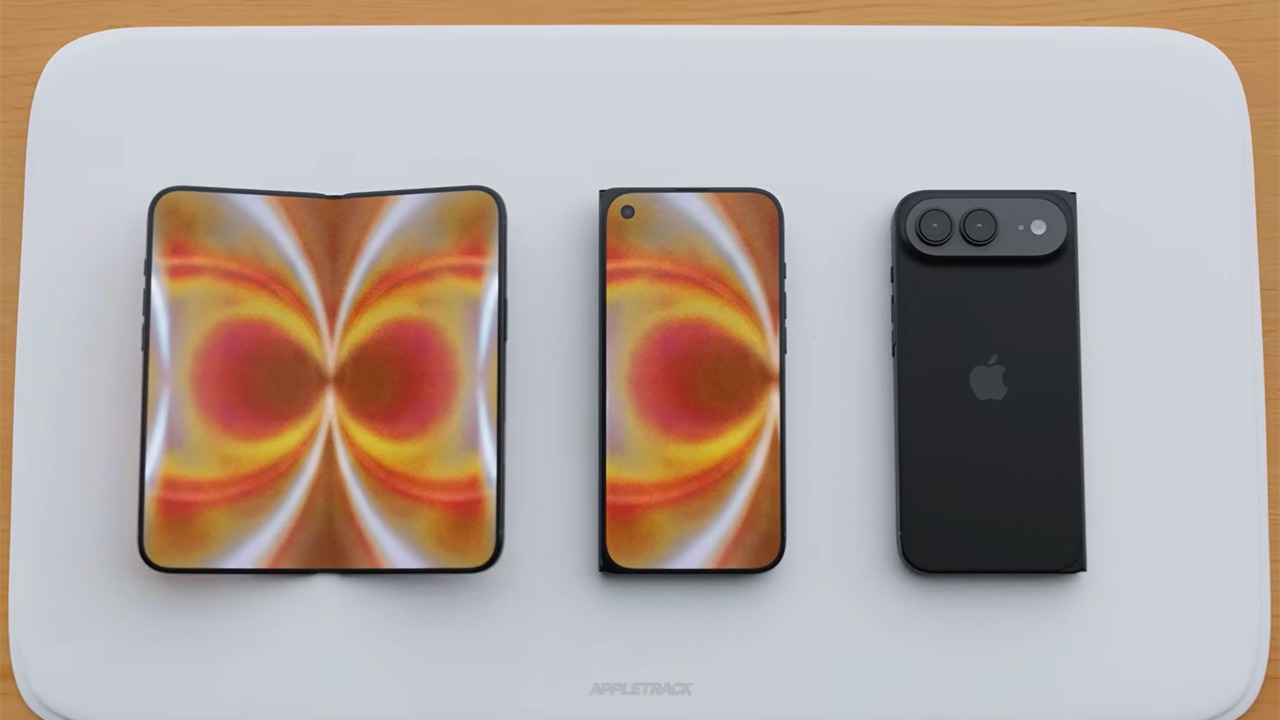

The first foldable iPhone is shaping up to be less a niche experiment and more a new ultra‑premium tier that could sit above today’s Pro Max flagships. If current pricing chatter holds, the iPhone Fold expected in 2026 may arrive as Apple’s most expensive iPhone yet, reflecting both its ambitious hardware and the company’s confidence that fans will pay for a radically different design. I see the emerging roadmap, the feature leaks, and Apple’s broader device strategy all pointing toward a foldable that is priced to signal exclusivity rather than mass adoption on day one.
Why 2026 is now the pivotal year for iPhone Fold
The clearest throughline in the current rumor cycle is timing, and the consensus is hardening around a 2026 debut for iPhone Fold. An analyst note cited in recent reporting indicates that the foldable iPhone is now expected to launch in 2026, aligning it with Apple’s usual September release window for new iPhones, which positions the device as part of the mainline calendar rather than a side project dropped off‑cycle. That same note frames 2026 as the year Apple finally joins a foldable market that rivals like Samsung and Google have been iterating on for several generations, which raises the stakes for Apple to arrive with something polished rather than experimental, a factor that typically pushes prices higher as the company leans on early adopters to subsidize new hardware.
Other leaks sketch a similar window, suggesting Apple could show a foldable prototype by late 2025 or early 2026, then move to a commercial launch once the design and software are ready for mainstream scrutiny. One report notes that while no official date has been announced, analysts expect Apple to debut that prototype in the second half of the decade, warning that competitors will keep iterating in the meantime and that Apple will need a strong first impression to justify a premium price. Taken together, the analyst note on Launch years and the separate discussion of a late‑2025 or early‑2026 prototype both point to 2026 as the realistic moment when Apple will ask buyers to pay a record iPhone price for a foldable form factor.
How Apple’s roadmap sets up a super‑premium foldable tier
Pricing power does not exist in a vacuum, and Apple’s broader iPhone roadmap is quietly clearing space for a foldable that can sit above the rest of the lineup. Reporting on Apple’s internal schedule suggests that Apple’s iPhone launch roadmap may have just leaked, outlining how the company plans to juggle its thinnest models, Pro variants, and new form factors over the next couple of years. According to that roadmap, Apple is not killing its slimmest iPhone, which indicates that the company wants to keep a traditional, ultra‑thin slab in the mix even as it introduces a foldable, reinforcing the idea that iPhone Fold will be an addition at the very top rather than a replacement for existing flagships. When Apple maintains a full spread of devices, from entry models to Pro Max, it usually reserves the highest price tier for the product that best showcases its latest engineering, and a foldable clearly fits that role.
The same roadmap hints that Apple fans’ wait for a foldable iPhone may be over within the next product cycle or two, which dovetails with the 2026 timing and suggests Apple is planning the rest of its lineup around that launch. Apple’s iPhone launch roadmap may have just been described as a sequence that keeps the current Pro Max tier intact while layering in a new category, a structure that naturally leaves room for a device that costs more than any existing iPhone. In that context, the report that Apple is preserving its thinnest model while preparing a foldable reinforces my view that iPhone Fold is being positioned as a halo product, not a mainstream default, which almost guarantees a price tag that breaks current records.
What early leaks say about iPhone Fold’s design and screens
Design leaks are still fluid, but several reports now converge on a book‑style foldable with a compact outer display and a larger inner panel, a configuration that tends to be expensive to engineer. One graphic shared on social media describes a Book style device with a 5.5 inch external display and a 7.8 inch folding internal screen, framed as a Style Style Folding design similar to the Galaxy Z Fold, and pegs the price somewhere in the range of AUD$3,000. That figure, even after currency conversion, would put iPhone Fold well above today’s Pro Max pricing and into a territory more akin to a high‑end MacBook, which is exactly the kind of sticker shock Apple has historically used to signal that a new category is aimed at enthusiasts first. The same graphic underscores the book‑style orientation, which tends to require a more complex hinge and more robust display layers than flip‑style foldables, both of which add cost.
Other leaks suggest Apple is experimenting with a different twist on the foldable formula, one that could further justify a premium price. Reporting on Apple iPhone Fold notes that leaks suggest Apple is working on a foldable iPhone with a fresh twist, described as Apple iPhone, and that unlike Samsung book‑style foldables, the design may prioritize a more pocket‑friendly profile without compromising on screen size. That approach, which would still deliver a large unfolded display while keeping the closed device relatively compact, implies custom display panels and a bespoke hinge system that will not be cheap to produce at scale. When I combine the social post describing a Book Style Style Folding layout with the separate report that Leaks point to a pocket‑friendly but expansive Apple iPhone Fold, the picture that emerges is of a device whose physical design alone will demand a price premium.
The feature set that could push iPhone Fold past Pro Max pricing
Hardware rumors around iPhone Fold are not just about the screen, they also describe a feature stack that reads like a wish list of every premium technology Apple can fit into a phone. One report on a foldable iPhone notes that the device may launch with 4 cameras, Touch ID, and a crease‑free display, and explicitly states that this combination would make it, the foldable iPhone, even more expensive than the Pro Max models in Apple’s current line‑up. That comparison is crucial, because it does not just imply a small bump over the Pro Max tier, it frames the foldable as a separate, higher rung that justifies its price through a unique mix of camera hardware, biometric options, and display engineering. A crease‑free panel alone would require a more advanced flexible OLED stack and a refined hinge, both of which are cost drivers in a category where visible creases are still the norm.
The same reporting argues that Apple is betting on rising consumer interest in foldables and Apple’s loyal customer base to absorb that higher price, which is consistent with how the company has historically rolled out its most expensive devices. When Apple introduced the iPhone X, early rumor coverage highlighted how features like an advanced 3D camera with augmented reality capabilities were used to justify a new four‑figure price tier, and the market ultimately validated that strategy. I see the foldable iPhone following a similar pattern, with the combination of 4 cameras, Touch ID, and a crease‑free display positioned as the next leap beyond the current Pro Max, just as the advanced 3D camera helped the iPhone X stand apart from the iPhone 8. The explicit claim that the foldable will cost more than Pro Max models, combined with the earlier coverage of how Follow Rob Price We described Apple using advanced 3D camera tech to justify higher pricing, reinforces my view that iPhone Fold is being engineered specifically to command a record‑setting price.
How Apple’s foldable strategy evolved from iPad experiments
Apple’s path to a foldable iPhone has not been linear, and the company’s work on larger foldable devices appears to have shaped how and when it will bring a folding phone to market. Reporting on a foldable iPad notes that Apple is said to be gearing up to join the foldable market soon, explaining that Apple has been exploring a tablet‑sized foldable even as it keeps details under wraps. While that device has yet to materialize, the same coverage mentions that a foldable iPhone will land next year in the context of Apple’s broader foldable ambitions, suggesting that the company may now be prioritizing the phone form factor as its first commercial foldable. That shift matters for pricing, because a phone that doubles as a small tablet is easier to pitch as a laptop‑adjacent productivity tool, which helps justify a higher price than a purely entertainment‑focused foldable tablet.
More recent reporting indicates that the Foldable iPad Is Delayed Amoungst the major smartphone manufactuers, Apple has remained resolute in not releasing a foldable phone while it experiments with other form factors, but that stance appears to be softening as the iPad project slips. The same analysis notes that Is Delayed Amoungst the competition, Apple is watching the form factor fashion of the iPhone Air and other thin devices, which suggests that the company is now weighing how a foldable phone could sit alongside a future ultra‑thin slab. In my view, the delay of The Foldable iPad and the growing focus on a foldable iPhone indicate that Apple wants its first foldable to be the device that most directly competes with high‑end Android phones, which again points to a price that exceeds those rivals and sits at the top of Apple’s own range. The report that The Foldable iPad Is Delayed Amoungst the competition, combined with the earlier note that Apple is said to be gearing up for a foldable iPhone, underlines how the company’s tablet experiments have effectively cleared the runway for a phone that can command a premium.
Why Apple is taking its time while rivals flood the foldable market
By 2026, Samsung, Motorola, Google, and several Chinese brands will have multiple generations of foldables behind them, yet Apple has deliberately stayed on the sidelines, a choice that has direct implications for how it will price its first attempt. One analysis notes that Apple has reportedly been working on a foldable iPhone, sometimes referred to as the iPhone Flip, since potentially before the COVID‑19 pandemic started in 2020, which means the company has had years to refine prototypes and study where competitors have stumbled. That same report frames the iPhone Air as a separate thin‑phone project, suggesting Apple is not rushing a foldable just to chase a trend but is instead waiting until it can deliver a device that feels as polished as its best slab phones. When a company invests that much time and engineering effort into a new form factor, it rarely prices the result as a mid‑tier experiment.
Other coverage reinforces that Apple’s caution is intentional rather than a sign of technological lag. A lifestyle‑focused explainer on folding phones notes that You might be wondering, does Apple make folding phones in 2025, and answers that while Apple has not officially launched one yet, rumors describe a device with an OLED screen and advanced hinges for durability. The same piece emphasizes that While Apple has stayed out of the foldable market so far, it is closely watching how early adopters respond to existing devices, which supports the idea that Apple wants to skip the most visible growing pains and arrive with a more mature product. In my view, the combination of long‑running internal work on a device sometimes called Apple Flip and the acknowledgment that You will not see a foldable from Apple until it is confident in OLED screen and hinge durability both point to a strategy where the company charges a premium for a device it believes has outgrown the compromises that still plague some rivals.
The pricing context: from iPhone X to a possible AUD$3,000 Fold
To understand how high Apple might price iPhone Fold, it helps to look at how the company has used new technologies to stretch the iPhone price ladder in the past. Ahead of the iPhone X launch, early rumor coverage contrasted that device with the iPhone 8, explaining that Apple was preparing a more expensive model with features like an advanced 3D camera and augmented reality capabilities, and that this would sit above the more traditional iPhone 8 in both features and price. That split allowed Apple to keep a familiar, relatively affordable flagship while simultaneously testing how far it could push pricing with a more experimental design, a pattern that feels very similar to the dynamic now forming between a future iPhone Fold and the existing Pro and Pro Max tiers. When Apple successfully normalized four‑figure phone prices with the iPhone X, it set a precedent for using breakthrough hardware as a justification for a new top tier.
The rumored AUD$3,000 price range for iPhone Fold, mentioned in the Book style social post, would represent another step change of that magnitude. Even accounting for currency differences, that figure would place the foldable well above the current Pro Max and into a bracket where buyers might otherwise be considering a MacBook Air or a high‑end iPad Pro. The social post that describes a 5.5 inch external display, a 7.8 inch internal screen, and a price somewhere in the range of AUD$3,000 frames the device as a premium Book Style Style Folding design, similar to the Galaxy Z Fold, which is already one of the most expensive mainstream phones. When I set that against the earlier pattern where Follow Rob Price We reported that Apple used an advanced 3D camera and AR features to justify a higher tier for the iPhone X, the idea of Apple asking close to AUD$3,000 for a foldable that effectively combines a phone and a small tablet feels entirely consistent with the company’s pricing history.
How iPhone Fold could reshape Apple’s future lineup
Looking beyond the launch year, iPhone Fold is likely to influence how Apple structures its entire iPhone range through the second half of the decade. One report on future models notes that Apple iPhone 20 is expected in 2027 for a 20th anniversary celebration, with no iPhone 19 on the radar, and stresses that it is important to note that Apple has not officially confirmed these plans and typically remains tight‑lipped about future product releases until formal announcements. That same report suggests Apple may use the iPhone 20 branding to mark a milestone, which raises the possibility that by then, foldable technology could be integrated more deeply into the lineup, either as a distinct Fold model or as a feature that blurs the line between traditional and folding designs. If iPhone Fold launches in 2026 as a super‑premium device, Apple will have a year to gauge demand before deciding how prominently foldables figure into that 20th anniversary strategy.
Apple’s history of managing expectations around major launches also hints at how it might talk about iPhone Fold in the run‑up to release. Coverage of the iPhone 8 launch at Steve Jobs Theater noted that However, there had been no confirmation from the company on many of the rumored features, and that instead of speculation, observers should wait for the September launch, which ultimately validated several of the leaks. I expect a similar pattern with iPhone Fold, where Apple keeps quiet while leaks swirl about pricing, screen sizes, and features, then uses the launch event to frame the high price as a logical extension of the device’s capabilities. The reminder that Apple is already being linked to an iPhone 20 while declining to confirm anything, and that However similar restraint surrounded the iPhone 8, reinforces my view that Apple will let the rumor mill set expectations for a record‑breaking price, then step in at launch to argue that the iPhone Fold’s design, cameras, and crease‑free display earn its place as the most expensive iPhone it has ever sold.
More from MorningOverview