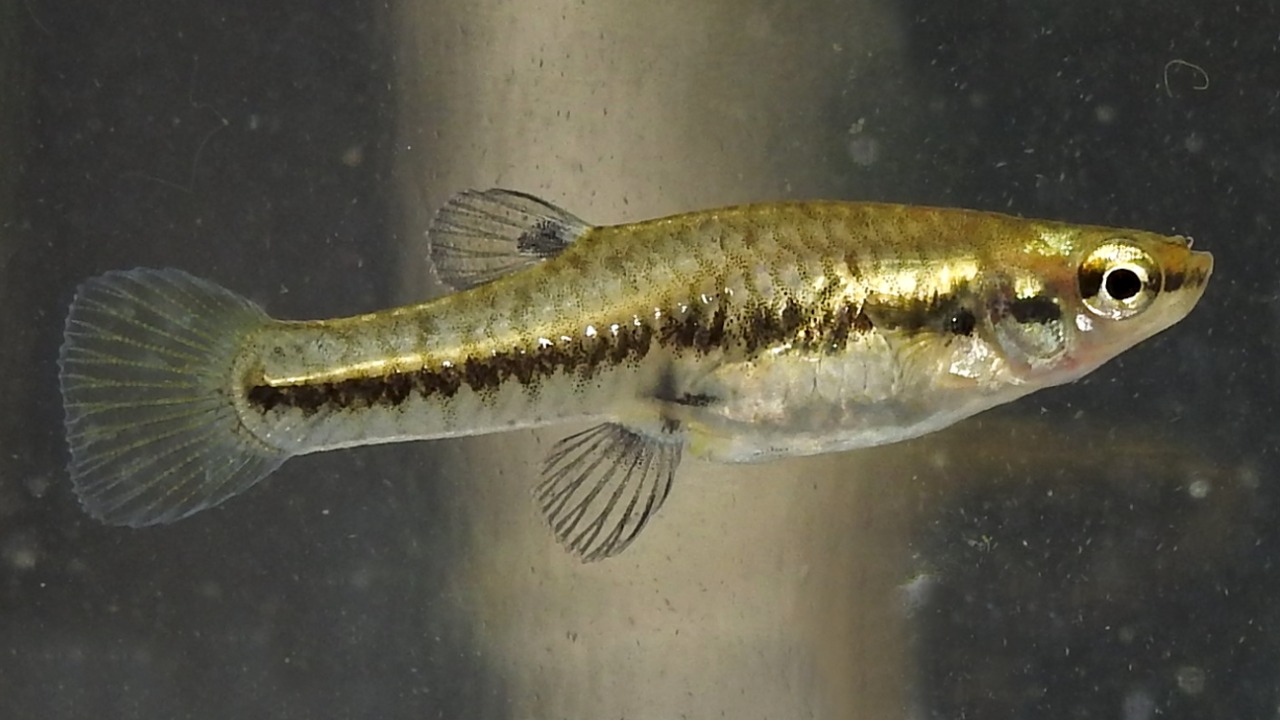

Hidden in Bolivia’s seasonal wetlands, a small fish that scientists had written off as extinct for more than two decades has surfaced alive, vivid, and unexpectedly resilient. Its return from presumed oblivion is not just a feel-good story about a single species, but a sharp reminder of how much of the planet’s biodiversity still slips through the gaps of our knowledge and our protection.
By tracing how researchers found this elusive animal, why it vanished from view, and what its comeback means for conservation, I see a larger narrative emerging: extinction is not always a straight line, but the window for second chances is narrowing fast in places where habitats are shrinking and climate pressures are rising.
The fish that came back from the dead
The rediscovered animal is a small seasonal fish from Bolivia’s Amazonian frontier, a place where shallow pools appear with the rains and then vanish as the dry season advances. For more than 20 years, scientists believed this fish had disappeared for good, its absence from surveys and its fragile habitat feeding the assumption that it had slipped into extinction. The new finding overturns that verdict, showing that a species can persist, unseen, in pockets of habitat that are easy to overlook but vital for survival.
Researchers now link this rediscovery to the species Moema claudiae, a member of the killifish group that had not been observed in the wild for over two decades and was considered lost by experts tracking Bolivia’s freshwater fauna. In 2025, a research team working in the country’s vanishing Amazonian wetlands confirmed that they had rediscovered Moema claudiae, a fish that had been feared extinct and that now stands as a symbol of both nature’s resilience and its vulnerability.
A life built around disappearing water
What makes this rediscovered fish so unusual is not only its long absence from scientific records, but the extreme way it lives. Killifish like Moema claudiae are often called annual or seasonal fishes because their entire life cycle is compressed into the brief window when temporary pools hold water. Adults hatch, grow, reproduce, and die in a matter of months, leaving behind eggs buried in the mud that can survive the dry season and wait for the rains to return.
Researchers studying this group describe how these annual or seasonal fishes have evolved to thrive in wetlands that eventually dry up, a strategy that allows them to exploit habitats too unstable for most other species. The team that confirmed the rediscovery in Bolivia emphasized that this extreme and complex lifecycle is precisely what makes the fish both hardy and fragile, since it depends on the predictable rhythm of flooding and drying in wetlands that eventually dry up and can be disrupted if those seasonal patterns shift.
Bolivia’s vanishing Amazonian frontier
The rediscovery unfolded in a part of Bolivia where the Amazonian frontier is changing fast, as forests give way to agriculture, infrastructure, and other development. Seasonal wetlands in this region are often dismissed as marginal land, yet they form a mosaic of shallow pools and floodplains that sustain a surprising array of life. The fact that a species could hide here for more than 20 years underscores how incomplete our picture of these ecosystems remains.
Reporting on the find highlights how the fish was located deep in Bolivia’s vanishing wilderness, in a fragile ecosystem teetering on collapse as deforestation and land conversion accelerate. In this disappearing Amazonian frontier, the rediscovery of a species that had been thought extinct for over 20 years has been framed as a wake-up call about the hidden richness of seasonal wetlands and the urgency of protecting Bolivia’s vanishing Amazonian frontier before more species slip away.
From “lost” to living: how scientists found it again
Bringing a species back from the “lost” list requires more than luck. In this case, researchers combined local knowledge, targeted fieldwork, and a clear understanding of the fish’s unusual biology. They focused on seasonal pools that fill during the rains and then dry out, probing the muddy bottoms where dormant eggs might be waiting. When the water returned, they monitored these sites closely, looking for the distinctive shape and coloration that would confirm the fish’s identity.
The team ultimately announced that they had rediscovered Moema claudiae, crediting detailed field surveys and careful identification work supported by photographic documentation. Images of the fish were attributed to Heinz Arno Drawert and Thomas Otto Litz, whose photographs helped confirm that the animal in hand matched the species that had vanished from records more than two decades earlier. By tying the rediscovery to this specific scientific name and to the work of these researchers, the announcement moved the fish from rumor back into the realm of verified scientific evidence.
Why seasonal wetlands hide so much biodiversity
Seasonal wetlands are often treated as empty space on maps, yet they function as biological engines that pulse with life when the rains arrive. For a fish like Moema claudiae, these temporary pools are not marginal habitat but the entire world, providing food, shelter, and breeding grounds in a short, intense burst of productivity. When the water recedes, the visible life disappears, but the ecosystem does not shut down; it simply shifts into a dormant phase, with eggs and seeds waiting in the soil.
The rediscovery of this fish in Bolivia has been used by scientists to illustrate the hidden richness of seasonal wetlands, which can harbor specialized species that never appear in permanent rivers or lakes. Reports on the find describe how a small Bolivian fish that had been considered extinct for 20 years was found in these ephemeral habitats, revealing a layer of biodiversity that standard surveys often miss and underscoring the ecological value of seasonal wetlands that are often drained or degraded.
Extinction, data gaps, and the limits of what we know
When scientists label a species extinct, they are making a judgment based on the best available evidence, but that evidence is rarely complete. Remote habitats, limited funding, and the sheer difficulty of finding small, cryptic animals mean that some species can persist undetected for years. The Bolivian fish that has resurfaced after more than two decades in the shadows is a textbook example of how data gaps can blur the line between extinction and absence.
In this case, the fish’s reliance on temporary pools, its short lifespan, and the rapid transformation of its habitat all contributed to its disappearance from surveys. Conservation assessments that flagged the species as possibly extinct were responding to a real pattern of loss in Bolivia’s wetlands, where a rapid loss of biodiversity has been documented alongside expanding human activity. The rediscovery does not erase that decline, but it does show that some species can hang on in overlooked refuges, challenging researchers to refine how they interpret silence in the data and how they prioritize searches for species considered extinct.
Conservation stakes: a second chance, not a safety net
It is tempting to treat stories like this as proof that nature will somehow take care of itself, but the reality in Bolivia’s wetlands points in the opposite direction. The fish’s survival after more than 20 years of presumed extinction is a narrow escape, not a guarantee that it will persist for another generation. Its fate is tied to the health of seasonal wetlands that are under pressure from drainage, pollution, and climate shifts that can alter rainfall patterns and shorten the wet season.
Scientists involved in the rediscovery have framed it as a second chance for conservation, arguing that the species’ continued existence depends on protecting the shallow pools and floodplains where it breeds. In Bolivia’s disappearing Amazonian frontier, where a fragile ecosystem is already described as teetering on collapse, the return of a fish once written off as extinct has been used to argue for stronger safeguards on wetlands and for closer collaboration between researchers and local communities who know these landscapes intimately, as highlighted in accounts of a species thought extinct for over 20 years being found alive.
The people behind the rediscovery
Every “Lazarus species” story is also a story about the people who refused to stop looking. In Bolivia, the rediscovery of this fish reflects years of patient work by researchers who specialize in seasonal fishes and by local partners who know where water lingers longest on the landscape. Their persistence, often in difficult field conditions, turned scattered clues into a confirmed sighting and then into a formal scientific announcement.
Photographic credit for the rediscovered fish goes to Heinz Arno Drawert and Thomas Otto Litz, whose images captured the distinctive features of Moema claudiae and helped validate the identification. Reporting on the find also references Heinz Arno Drawe in connection with the broader story of a species thought extinct for over 20 years being rediscovered alive in Bolivia’s wilderness, underscoring how individual scientists and photographers can shape the narrative that reaches the public and influence how much attention a small, easily overlooked fish receives on the global conservation stage.
What this Bolivian fish tells us about the future
The return of a tiny fish in Bolivia might seem like a footnote in the larger climate and biodiversity crises, but I see it as a concentrated lesson in how fragile and how persistent life can be. It shows that even in landscapes described as vanishing, with ecosystems on the brink, there are still species holding on in the margins, waiting for the right conditions and for someone to notice. At the same time, it makes clear that rediscovery is not a cure for habitat loss; without swift action, the same forces that nearly erased this fish could finish the job.
As conservationists digest what it means to find a species that had been missing for more than 20 years, the Bolivian case is likely to fuel calls for more targeted surveys of seasonal wetlands, more nuanced extinction assessments, and more investment in the kind of fieldwork that brought Moema claudiae back into view. The fish’s story suggests that there are still surprises waiting in the world’s overlooked habitats, but also that the window to find and protect them is closing, especially in places like Bolivia’s Amazonian frontier where change on the ground is outpacing the science that tries to keep up.
More from MorningOverview