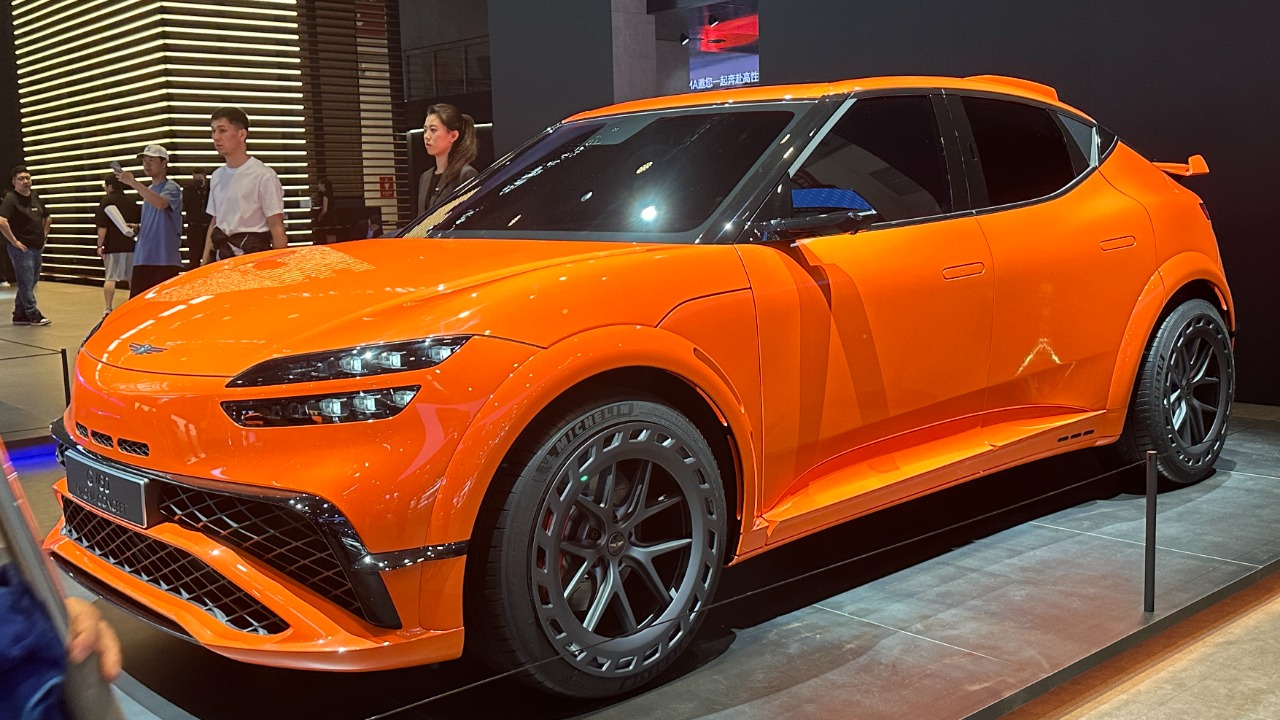

Genesis has spent the past decade building a reputation on quiet, confident luxury, but its latest concept signals a far louder ambition. With the Magma GT Concept, the brand is openly flirting with a full-bore supercar, hinting at a future where its badge sits alongside the most exotic names in performance. I am looking at what this concept actually tells us about a potential production car, and how seriously to take the idea that Genesis might build it.
From luxury upstart to supercar contender
Genesis arrived as a challenger brand focused on comfort, craftsmanship, and value, not lap times, which is why the Magma GT Concept lands with such impact. A company that built its image on sedans and SUVs is now sketching out a low, mid-engined machine that would compete in the same mental space as established European exotics. That pivot suggests Genesis is no longer content to be the quiet alternative, and instead wants a halo product that can pull the rest of the lineup upmarket in both price and perception.
The Magma GT Concept is described as the first pure sports car from the brand, a clean break from the fast-but-practical sedans and crossovers that defined its first decade. In official material, the car is framed as the opening move in a more performance-focused future, with the Genesis Magma GT Concept explicitly positioned as the car that kickstarts that shift. That framing matters, because it casts the project not as a one-off design exercise, but as a strategic statement about where Genesis wants to go.
The Magma GT Concept as a supercar blueprint
Concept cars can be pure fantasy, but the Magma GT reads more like a blueprint for a real product than a rolling sculpture. Its proportions, packaging, and detailing all track closely with what a modern mid-engined supercar needs to be, from the low cowl and long rear deck to the aggressive aero work around the body. I see a design that looks engineered to work, not just to photograph well on an auto show stand.
Earlier this year, Genesis introduced the Magma GT Concept as a low-slung, mid-engine machine that immediately triggered speculation about production intent. Reporting on the car describes a mid-engine layout with a V8 that would be more appropriate for a supercar than for the brand’s existing sedans, and notes that Genesis dropped this shocker as part of a broader performance push in Dec, with the Magma GT Concept framed as a serious exploration of that idea. The combination of mid-engine packaging and a V8 powertrain is not something a company casually prototypes if it has no interest in building at least a small run of road cars.
Design drama: butterfly doors and sculpted surfaces
Visually, the Magma GT is Genesis at its most theatrical, and that matters because supercars sell as much on drama as on data. The brand’s familiar two-line lighting motif is stretched and sharpened, the body is pulled tight over the mechanicals, and every surface seems to be doing aerodynamic work. It is a car that looks designed to be seen arriving, which is exactly the point of a halo product.
Along the flanks, the styling leans fully into supercar territory, with reports highlighting how, down the sides, the drama does not quit. A vented clamshell hood, deep sculpting, and butterfly doors that would make a supercar jealous are all called out as key elements of the Magma GT’s presence, with one detailed walkaround noting that down the bodywork, every line is working to feed air or frame the cabin. Those butterfly doors in particular are a strong tell: they are expensive, complex, and hard to justify on anything that is not meant to be a flagship.
Mid-engine V8: what we know about the powertrain
The heart of any supercar is its engine, and here the Magma GT Concept sends a clear message by centering a V8 in a mid-engine layout. That choice alone signals that Genesis is thinking about performance in a very different way from its front-engined sedans and SUVs. A mid-mounted V8 promises sharper responses, better weight distribution, and the kind of sound that buyers in this segment expect.
Coverage of the concept emphasizes that Genesis just dropped a mid-engine V8 supercar concept and that they might actually build it, with the car repeatedly referred to as The Magma GT. Separate reporting on the Magma GT Concept notes that the engine choice is more appropriate for a supercar than for anything else in the current Genesis lineup, reinforcing the idea that this is not a lightly tuned version of an existing powertrain. While exact output figures are not detailed in the summaries, the consistent focus on a mid-engine V8 architecture underlines that Genesis is targeting the performance benchmarks that define the segment.
Performance ambitions and the “First Pure Supercar Concept”
Genesis is not shy about how it wants the Magma GT to be perceived. The language around the car leans heavily on the idea that this is not just a fast Genesis, but a pure supercar concept that previews the marque’s future. That framing matters because it sets expectations for performance, handling, and exclusivity that go far beyond a typical grand tourer.
One detailed feature describes the project as Genesis’s First Pure Supercar Concept Is a Look at the Marque’s Future, explicitly tying the car to the brand’s long-term direction and noting that the powertrain makes upwards of 670 horsepower in its envisioned form. That same report characterizes the Magma GT as a clear signal that Genesis wants to be taken seriously among high-performance brands, with the First Pure Supercar Concept Is language underscoring that this is not a one-off stunt. When a company starts talking about a car as a look at the marque’s future, it is effectively telling customers and rivals that the performance bar is about to move.
Magma as a performance sub-brand
Beyond the car itself, the Magma name hints at a broader strategy. Rather than simply calling the concept a GT or using an existing model designation, Genesis is introducing Magma as a distinct identity that can carry performance messaging across multiple vehicles. That approach mirrors how other luxury brands have carved out sub-brands to signal higher performance, and it suggests Genesis is thinking beyond a single halo car.
In official descriptions, the #Genesis Magma GT Concept is described as the first pure sports car from the brand and as the future icon of Magma, language that positions Magma as more than just a paint color or trim line. The reel that introduced the Genesis Magma GT Concept leans into hashtags about future cars and performance, reinforcing the idea that Magma is a banner under which Genesis can group its most aggressive projects. If the supercar reaches production, it would likely sit at the top of that Magma hierarchy.
How the Magma GT fits into Genesis’s 10th anniversary story
Timing is another clue to how seriously Genesis is taking this project. The brand chose to unveil the Magma GT Concept as part of its 10th anniversary celebrations, effectively using a milestone moment to pivot the narrative from “promising newcomer” to “established player with big ambitions.” That is not the move of a company dabbling in design experiments; it is the move of one that wants to mark a turning point.
Coverage of the anniversary events notes that Genesis marked its 10th anniversary with the Magma GT Concept aimed at a more extreme expression of its design language, highlighting the vented clamshell hood, butterfly doors, and dramatic side surfacing as proof that the brand is willing to push beyond its comfort zone. One detailed piece on the celebration emphasizes how, Genesis Marks 10th Anniversary with a concept that looks ready to trade blows with established supercars, framing the car as both a birthday present to itself and a statement of intent to the rest of the industry.
Production odds: concept fantasy or future showroom car?
The key question is how likely it is that the Magma GT evolves from concept to production. On one hand, the car’s extreme styling, butterfly doors, and mid-engine V8 layout all point to a project that would be expensive and complex to build in meaningful numbers. On the other, the way Genesis is talking about the car, and the way it is integrating it into broader brand narratives, suggests this is more than a design studio indulgence.
Reports that Genesis just dropped a mid-engine V8 supercar concept and that they might actually build it underline that even early observers see real production potential in the Magma GT. The detailed breakdown of the car’s engine layout, power ambitions, and role as the first pure sports car from the brand, as described in Dec coverage of the Genesis Magma GT Concept, reinforces that this is a serious engineering study. While there is no official confirmation of a showroom version yet, the combination of technical detail and strategic positioning makes the odds of some form of production far higher than with a typical auto show fantasy.
What a Genesis supercar would mean for the market
If Genesis does greenlight a supercar based on the Magma GT, it would instantly change how the brand is perceived by enthusiasts and rivals. A mid-engine V8 halo car with upwards of 670 horsepower would put Genesis in direct conversation with cars like the Ferrari F8 Tributo, Lamborghini Huracán, and McLaren Artura, even if it undercuts them on price. That kind of competition would have been unthinkable when the brand launched with sedans aimed at the BMW 5 Series and Mercedes-Benz E-Class.
The Magma GT Concept’s role as Genesis’s First Pure Supercar Concept Is a Look at the Marque’s Future suggests that the company sees this car as a way to pull its entire lineup into a more performance-oriented light. If the production car delivers on the promise of the concept, it could help Genesis attract a new kind of buyer, one who might never have considered a Korean luxury brand before. At the same time, the existence of a credible Genesis supercar would put pressure on established players to keep innovating, especially if Genesis leverages its experience with technology and design to offer something distinct in a crowded field.
More from MorningOverview