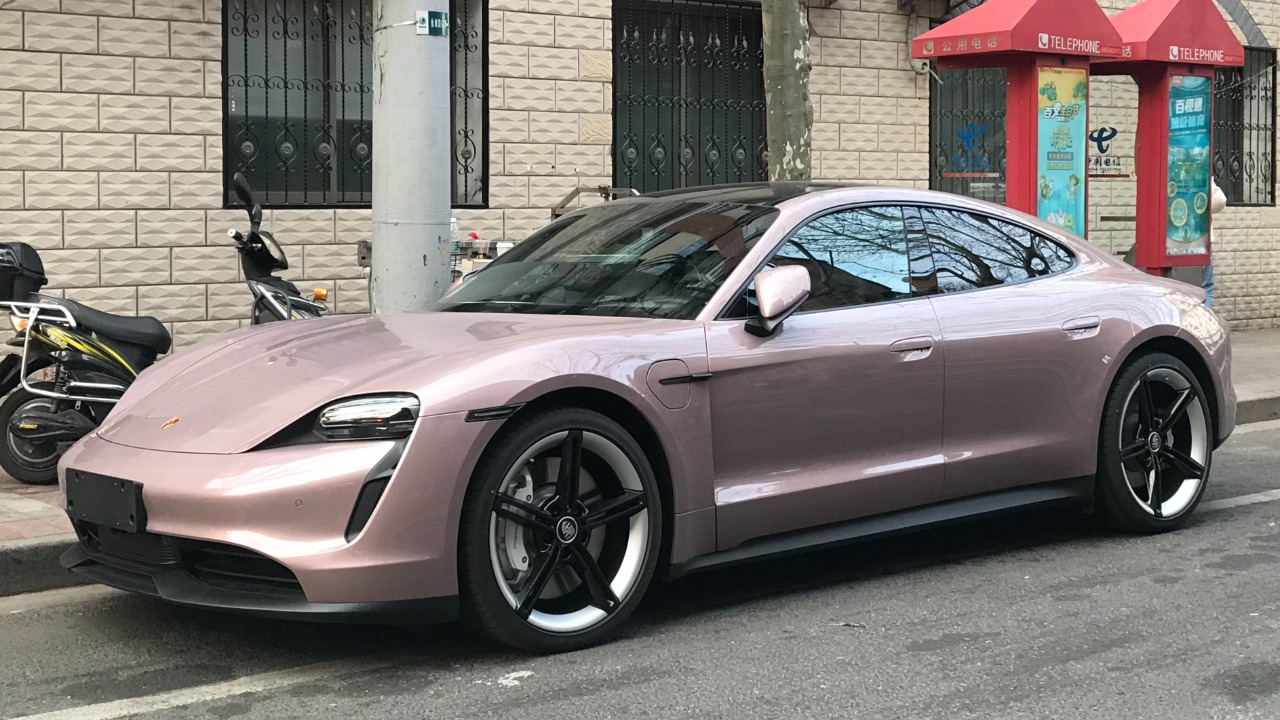

Porsche is preparing to give its electric cars something they have never truly needed but many drivers still crave, the sensation of rowing through gears. The company is developing simulated shifts for its battery models, and the 2027 Taycan is expected to be the first production Porsche EV to launch with the feature. Instead of a mechanical gearbox, software and power electronics will choreograph a performance meant to feel like a traditional transmission, right down to the way the car responds when a driver pulls a paddle.
The move signals a sharp turn in how one of the world’s most influential performance brands thinks about electric driving. Rather than chasing only seamless torque and silent speed, Porsche is now betting that some customers want a more analog-feeling experience layered on top of digital propulsion. That decision could reshape expectations for premium EVs, and it is already stirring a heated debate among enthusiasts about what authenticity should look like in an electric era.
What Porsche is actually planning for the 2027 Taycan
The core idea is straightforward: Porsche intends to let drivers of its future electric models feel as if they are shifting gears, even though the powertrain remains fundamentally single speed. Reporting on the next-generation Taycan indicates that the 2027 model is being positioned as the first Porsche EV with this simulated shifting system, effectively turning it into a launchpad for the brand’s new digital drivetrain tricks. In that context, the car is not just another update to an existing nameplate, it is a test case for how far software can go in recreating the mechanical drama that many drivers associate with performance driving.
Behind the scenes, the feature is described as a “virtual transmission,” a label that captures how the system will live entirely in code while trying to mimic the behavior of a physical gearbox. Power delivery will be modulated in discrete steps that feel like upshifts and downshifts, with the 2027 Taycan expected to debut this new tech as the first Porsche EV to carry it into showrooms, a plan detailed in coverage of the 2027 Taycan First to Debut New Tech. That framing matters, because it suggests Porsche sees this not as a gimmick for one niche variant, but as a foundational capability it can refine and roll out across its electric lineup.
How the “virtual transmission” is supposed to work
At a technical level, the simulated shifts are expected to rely on software that deliberately interrupts and reshapes the flow of torque from the electric motors. Instead of delivering power in a perfectly linear surge, the control system will create distinct phases that resemble the pull, pause, and renewed acceleration of a conventional upshift. The goal is to give drivers a sense of timing and rhythm, so that accelerating out of a corner or setting up an overtake feels like a sequence of deliberate actions rather than a single, continuous push of the pedal.
Reports describe this as a feature that mimics the feel of a traditional gasoline car by electronically controlling both the power output and the driver-facing controls required to operate it, effectively creating fake gearshifts from a fake transmission inside the Taycan’s EV architecture. That means the paddles, software logic, and power electronics will all work together to simulate the steps of a multi-speed gearbox, a concept laid out in detail in coverage of how Porsche is preparing a new fake transmission. In practice, that could mean the car briefly eases off acceleration during a “shift,” then surges again, giving the driver a tactile cue that something has changed even though the underlying hardware has not.
Why Porsche is chasing fake shifts after dismissing them
The decision to embrace simulated shifting marks a notable reversal from Porsche’s earlier public stance on the idea. In prior comments, the company argued that faking combustion-style behavior in an EV would make the experience worse, not better, because it would add unnecessary complexity and undermine the natural strengths of electric propulsion. That skepticism was rooted in a belief that EVs should lean into their own character, with instant torque and smooth acceleration, instead of pretending to be something they are not.
Those reservations were captured in remarks that Porsche did not want to fake the combustion engine because it still produces combustion engines, and therefore did not see the point of simulating that experience on its electric models, a position outlined in a report on why simulated shifts on EVs make them worse. The shift toward a virtual transmission suggests that internal thinking has evolved, likely influenced by how customers respond to more playful, characterful EVs. Instead of seeing fake shifts as a betrayal of engineering purity, Porsche now appears to view them as another tool to make its electric cars feel special behind the wheel.
The Hyundai Ioniq 5 N effect on Porsche’s strategy
One of the clearest catalysts for this change is the Hyundai Ioniq 5 N, a high-performance EV that surprised the industry by leaning hard into theatrics. When the Hyundai Ioniq 5 N started selling in 2025, it caught the automotive world off guard with its fake gear shifts, using software to simulate an eight speed dual clutch gearbox and pairing it with aggressive sound design. Drivers could pull paddles, feel a jolt that mimicked a shift, and hear synthesized engine notes that made the car feel more like a rally special than a silent commuter.
Porsche’s new direction effectively acknowledges that this formula resonated with a certain kind of enthusiast. The company is now expected to follow Hyundai’s lead and add a virtual transmission to its EVs in the name of driver engagement, a move that aligns with forum discussions noting that Porsche will follow Hyundai’s lead on simulated shifts. In that light, the 2027 Taycan is not just a product update, it is Porsche’s answer to a challenge posed by the Hyundai Ioniq 5 N about what an electric performance car can feel like when engineers are willing to bend reality a bit.
How Porsche’s plan spread from insider report to viral news
The story of Porsche’s fake shifts did not emerge from a single press release, it built momentum through a series of detailed reports and social media amplifications. Early coverage laid out that Porsche would adopt one of the Hyundai Ioniq 5 N’s standout features and add fake gear shifts to its EV range, with the 2027 Taycan identified as the first model slated to receive the system. That reporting framed the move as a deliberate attempt to make electric Porsches more engaging to drive, particularly for customers who miss the interaction of a manual or dual clutch gearbox.
From there, the news jumped into the broader EV conversation when a widely shared post summarized that Porsche will reportedly add fake gear shifts to its EVs, starting with the 2027 Taycan, and that the company calls the system a virtual transmission designed to create a more engaging drive. That concise description, circulated under the banner of NEWS Porsche will reportedly add fake gear shifts, helped crystallize the narrative: a storied sports car maker was now willing to fake shifts in the name of fun. Once that framing took hold, the debate over whether this was genius or heresy spread quickly across enthusiast circles.
Why Porsche thinks simulated shifts can enhance engagement
Underneath the controversy, Porsche’s logic is relatively simple: many drivers still associate performance with the act of shifting, not just the outcome of acceleration. By giving Taycan owners a way to time their inputs, anticipate a “shift,” and feel a change in acceleration that corresponds to their commands, the company is trying to restore a sense of participation that some EVs have lost. In that sense, the virtual transmission is less about pretending the car has gears and more about giving the driver a structured way to interact with the powertrain.
Supporters of the idea argue that, if the execution is right, the feature could add the layer of engagement many drivers miss when switching to electric, especially those coming from manual or dual clutch sports cars. Coverage of Porsche’s plans notes that this simulated shifting capability hints at a clear direction for the brand’s EV strategy, one that prioritizes emotional connection as much as raw performance, a point underscored in analysis that says If the execution is right, the Taycan’s simulated gear shifts could transform how drivers experience electric acceleration. For Porsche, which has built its reputation on feel as much as figures, that is a compelling reason to experiment.
The social media backlash and mixed enthusiast reaction
Not everyone is convinced that fake gearshifts belong in a serious performance car, and the online reaction to Porsche’s plan has been anything but quiet. As details of the 2027 Taycan’s simulated transmission spread, social media filled with heated arguments over whether the feature represents innovation or pandering. Critics see the idea as a distraction that adds artificial steps to a powertrain that does not need them, while supporters counter that driving is about emotion as much as efficiency, and that optional theatrics hurt no one.
Coverage of the reaction notes that the 2027 Porsche Taycan is getting fake gearshifts from a fake transmission and that the social media response has been very heated, with many commenters offering mixed-to-negative reviews of the concept even before they have driven it. Reports describe how the Taycan is about to become a lightning rod for debates over authenticity in EV design, with some enthusiasts embracing the playful approach and others dismissing it as a video game gimmick, a divide captured in analysis of how the Porsche Taycan is about to get mixed-to-negative reviews for its fake transmission. That split underscores how emotionally charged the transition to electric performance has become.
From niche experiment to broader Porsche EV roadmap
Although the 2027 Taycan is the first Porsche EV expected to ship with simulated shifts, the company’s strategy appears to extend well beyond a single model year. By investing in a virtual transmission that lives in software, Porsche is effectively building a modular feature it can tune and deploy across future electric platforms. That opens the door to different shift profiles for different models, from aggressive, tightly spaced “gears” in a track-focused variant to more relaxed, long-legged steps in a grand touring EV.
Reports on the upcoming Taycan emphasize that the car could become the first Porsche EV with fake gearshifts, but they also frame the technology as something the brand can refine and expand once it has real-world feedback from early adopters. The description of the 2027 Taycan as the first to debut new tech, including this simulated shifting system, positions it as a pioneer for a broader rollout of such features across Porsche’s electric range, a trajectory highlighted in analysis of how the 2027 Taycan will be first to carry fake gear shifts into Porsche’s EV lineup. If customers respond positively, it is easy to imagine future electric 911-inspired models or SUVs offering their own take on the virtual gearbox.
What this means for the future of performance EVs
Porsche’s embrace of simulated shifting is part of a broader pattern in which automakers are using software to inject personality into electric cars. From synthetic soundtracks to configurable drive modes, EVs are increasingly defined not just by their hardware but by the experiences engineers can script on top of it. By committing to a virtual transmission for the 2027 Taycan, Porsche is signaling that it sees value in giving drivers more ways to shape how their car feels, even if that means blurring the line between authenticity and artifice.
In practical terms, the success or failure of this feature will likely influence how other premium brands approach the question of engagement in EVs. If Taycan buyers embrace the fake shifts as a meaningful enhancement, rivals may feel pressure to develop their own versions, while a lukewarm response could reinforce the argument that electric performance should stay simple and direct. For now, what is clear is that Porsche is willing to experiment, and that the 2027 Taycan will serve as a high profile test of whether simulated gear changes can make an electric sports sedan feel more alive without undermining what makes EVs compelling in the first place.
More from MorningOverview