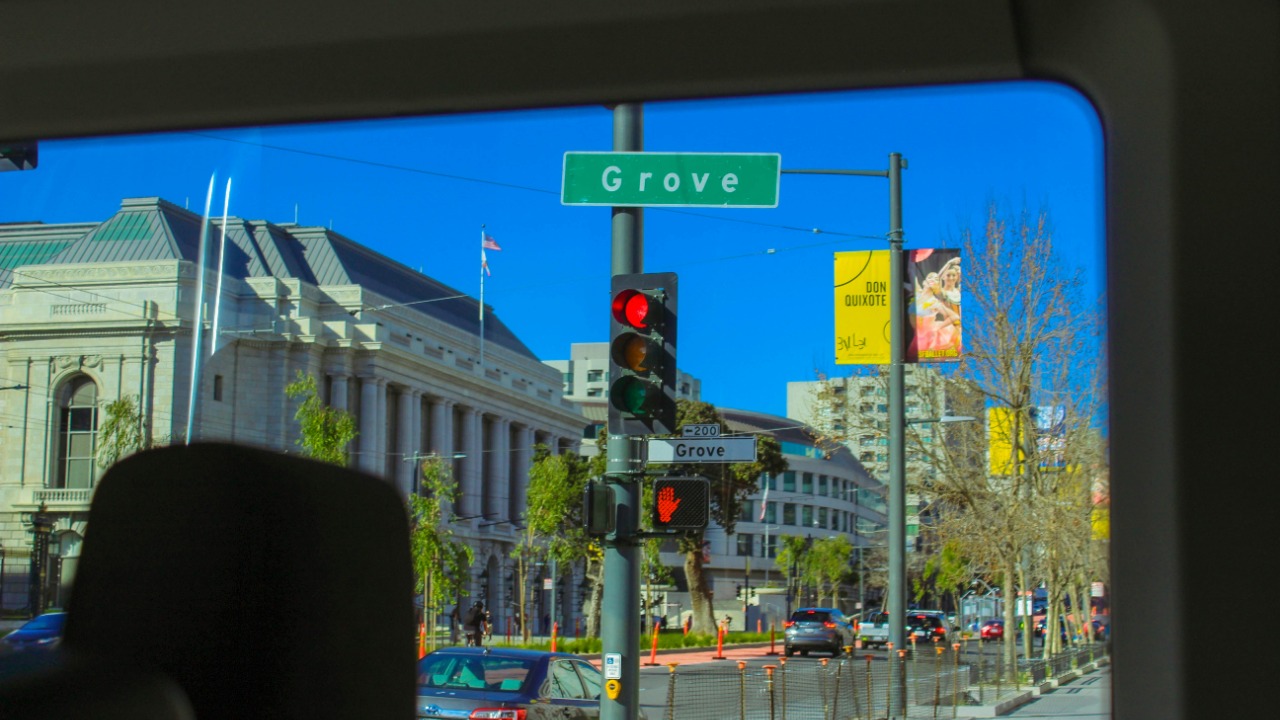

California is moving to rewrite the rules of the road at its intersections, pairing a push to cut deadly crashes with a new wave of automated enforcement that could cost violators hundreds of dollars. The state’s emerging traffic light bill, centered on red light cameras and a revamped fine structure, is pitched as a way to save lives while reshaping how drivers are monitored, ticketed, and held accountable.
At its core, the proposal tries to balance two competing pressures: the urgency of stopping high-speed red light running that kills people in crosswalks and cross traffic, and the backlash against sky-high penalties and invasive surveillance. I see a debate unfolding that is not just about who pays a $100 ticket, but about how far California is willing to go to automate safety on its streets.
The deadly stakes behind California’s red light crackdown
California’s lawmakers are not talking about traffic lights in a vacuum, they are responding to a pattern of crashes at busy intersections where a few seconds of impatience can be fatal. Red light running is a classic example of low-frequency but high-impact behavior, the kind of violation that may not happen on every commute but, when it does, can turn a routine drive into a life-altering collision. When I look at the policy debate, the throughline is clear: the state is trying to reduce the kind of broadside and pedestrian impacts that leave families grieving and city officials under pressure to act.
That urgency is reflected in the way supporters describe the problem, focusing on “stats” that show how often red light violations lead to serious injuries and deaths at intersections that “take so many lives,” a framing that underpins the push for a new camera-based enforcement system that no longer depends on identifying a driver’s face to issue a citation, as described in one detailed overview of how the enforcement overhaul would work. The same safety-first logic runs through the legislative fact sheets that describe a “Safer Streets Act” approach to red light cameras, which is framed as a way to reduce crashes at signalized intersections rather than simply generate revenue, a point that is spelled out in the official background on SB 720.
How SB 720 would overhaul red light cameras
The centerpiece of the current debate is Senate Bill 720, formally titled the “Safer Streets Act,” which would modernize how California deploys and manages red light cameras. Instead of relying on older systems that capture a clear image of the driver’s face, the bill envisions a program that focuses on the vehicle and the violation itself, with a streamlined process for issuing tickets based on license plates and signal timing data. In my reading, the intent is to make enforcement more consistent and less vulnerable to technicalities that let obvious violations slip through.
Under the framework laid out for What Would SB 720 Do, the bill would update how municipalities across California run their red light camera programs, clarifying the roles of local governments and outside vendors and tightening rules for data sharing between agencies. A separate fact sheet on SB 720 underscores that the current system captures photos of the driver, raising concerns about data collection and storage, and notes that existing fines are among the highest in the country, a combination that has fueled criticism and calls for reform.
From face photos to plate numbers: fixing a broken enforcement model
One of the most striking shifts in the new traffic light bill is the move away from facial images as the linchpin of enforcement. Under the current regime, many red light camera citations hinge on a clear shot of the driver’s face, a requirement that has made some tickets unenforceable when the image is obscured or the driver cannot be confidently identified. That gap has created a kind of enforcement lottery, where two identical violations can have very different outcomes depending on camera angle, lighting, or even a sun visor.
Advocates for change argue that this is not just a technical flaw but a fairness problem, and they point to a new traffic law in California that explicitly addresses how citations are issued and how fines are structured to be more manageable for lower-income offenders. That same analysis notes that, before the new law, citations required an image of the offending driver’s face, which meant some violations could not be enforced even when the vehicle and license plate were clearly visible. The proposed overhaul would flip that logic, treating the registered owner as responsible unless they can show otherwise, a model that is already common in other automated enforcement programs.
Why $100 fines are at the center of the fight
For drivers, the most tangible part of any traffic law is the size of the ticket, and the emerging California plan is no exception. The new framework would introduce a baseline penalty in the $100 range for certain red light violations, a figure that is meant to be high enough to deter dangerous behavior but low enough to avoid the sticker shock that has made existing tickets so controversial. In practice, that means a driver who rolls through a red or ignores a no-turn-on-red sign could face a triple-digit bill even if there is no officer in sight.
One detailed warning about the upcoming changes spells out that, under the legislation of SB 720, ignoring the new traffic-light rule could trigger $100 fines, a level that some critics already view as punitive. That debate is sharpened by the fact that California’s current red light penalties are far higher once fees and surcharges are added, with one breakdown of How Much Is a Red Light Ticket in California noting that, although the base fine is relatively modest, the total cost typically lands between $490 and $550 in most counties, along with DMV points and potential traffic school. Against that backdrop, a flat $100 automated fine can look either like a bargain or a new burden, depending on where you start.
California’s existing red light camera rules and where SB 720 fits
To understand how big a change SB 720 represents, it helps to look at the legal scaffolding that already governs red light cameras in the state. California has long authorized automated enforcement at signals under Vehicle Code provisions that spell out where cameras can be installed, how they must be signed, and what due process protections drivers receive. Those rules were written for an earlier generation of technology, and they assume a relatively small number of cameras deployed at high-crash intersections, not a dense network of sensors feeding data into modern back-end systems.
Current guidance on whether California has red light and speed cameras points to Red light cameras authorized under Vehicle Code § 21455.5, and notes that Cities must post clear warning signs before intersections where cameras are in use. SB 720 would not erase that framework, but it would modernize how programs are managed, including how contracts with private vendors are structured and how data is shared between local governments and state agencies, as outlined in the description of California red light regulations. In effect, the bill tries to bring the law in line with the technology that is already reshaping traffic enforcement nationwide.
Privacy, surveillance, and the backlash against driver photos
Any time a government program involves cameras and license plates, privacy concerns are never far behind, and California’s red light debate is no exception. Critics worry that automated enforcement can morph into a broader surveillance network, with images and data stored for longer than necessary or shared with agencies far beyond traffic courts. Those fears are amplified when systems capture clear images of drivers’ faces, which can be cross-referenced with other databases or used for facial recognition, even if that is not the stated purpose of the program.
The official fact sheet for SB 720 acknowledges that the current generation of red light cameras captures photos of the driver, raising concerns regarding data collection and storage, and notes that the existing fines are among the highest in the nation. That combination of intrusive imagery and steep penalties has fueled a backlash that SB 720 is trying to defuse by shifting the focus to the vehicle and tightening rules around how long data can be kept and who can access it. At the same time, advocates for safer streets argue that automated enforcement is one of the few tools that can consistently deter dangerous behavior without relying on traffic stops that can escalate or be applied unevenly.
Equity, income, and who really pays for red light enforcement
Behind the headline numbers, the fight over red light fines is also a fight over equity. A $100 ticket might be a nuisance for a high-income driver in a late-model Tesla Model Y, but it can be a serious financial shock for someone commuting in a 2008 Honda Civic who is already juggling rent, childcare, and rising insurance premiums. California’s existing system, where total red light penalties can climb toward $500 once surcharges are added, has drawn criticism for pushing low-income drivers into debt or license suspensions over a single mistake.
One analysis of California’s traffic light bill notes that the new law is designed to make fines more manageable for lower-income offenders, a recognition that the current penalty structure can be regressive. At the same time, the breakdown of Full Cost, DMV Points and fees for a Red Light Ticket in California shows how quickly a base fine can balloon once court costs and assessments are added, often landing between $490 and $550 in most counties. SB 720’s supporters argue that a standardized $100 automated fine, paired with clearer rules and fewer add-ons, could actually be a step toward a more predictable and less punitive system, even if some drivers will still feel the sting.
How the new rules would change everyday driving
For most Californians, the impact of SB 720 will not be felt in legislative hearing rooms but at the moment a light turns yellow and the driver has to decide whether to brake or push through. Automated enforcement changes that mental calculus, because the risk of a ticket no longer depends on whether a patrol car happens to be nearby. Instead, the presence of a camera, often flagged by warning signs, becomes a constant reminder that the intersection is being watched and that a rolling right turn or late sprint through a stale yellow could carry a real cost.
One consumer-focused warning about the upcoming changes frames it bluntly, telling drivers to “Say no more to red light turns involving fatal accidents” and explaining that the city is tired of deaths and reckless driving and is ready to enforce the new rules with $100 fines for those who ignore them. A separate explainer on Are Red Light and Speed Cameras in California notes that cameras are already authorized under Vehicle Code § 21455.5 and that Cities must post clear warning signs, which means drivers often have fair notice that an intersection is monitored. In practice, that could nudge more people to slow down earlier, stop fully before turning right on red, and think twice before treating a yellow as an invitation to accelerate.
Lawmakers, advocates, and the politics of automated tickets
As with most traffic laws, the red light camera overhaul is as much a political story as a technical one. State lawmakers are weighing pressure from safety advocates, who see automated enforcement as a proven way to cut crashes, against skepticism from drivers who feel targeted by cameras and wary of new fines. The debate has spilled into public forums and local news segments, where officials walk through scenarios in which a driver could receive a ticket even if they never see a police officer, and where residents question whether the system is about safety or revenue.
One televised segment on California lawmakers considering a red light ticket redo captures that tension, describing how changes under discussion could land drivers with a red light ticket even if they are not physically stopped at the scene. At the same time, advocates pushing for SB 720 emphasize that the bill would modernize red light regulations across California, clarifying how municipalities and government agencies coordinate on enforcement and data, as outlined in the description of California’s need to modernize red light regulations. The result is a classic California policy fight, where safety, privacy, and pocketbook concerns collide at the intersection.
Public safety networks and the broader push to modernize infrastructure
The red light camera debate is also part of a larger story about how California uses technology to manage public safety. Over the past decade, the state has invested heavily in digital infrastructure that connects first responders, traffic management centers, and emergency services, with the goal of sharing information more quickly when something goes wrong. Automated enforcement systems, from red light cameras to speed sensors, feed into that ecosystem by generating data about where and when dangerous behavior occurs.
One example of this broader trend is the way Following this close collaboration, California chose to adopt the plan and “opt in” to FirstNet, a dedicated public safety broadband network that Today continues to meet regulatory requirements and bring together agencies to discuss their public safety broadband needs. That same mindset, where data and connectivity are treated as core safety tools, underpins the push to modernize red light enforcement through SB 720. The question now is whether California can harness that technology in a way that genuinely reduces harm at intersections without crossing the line into overreach or turning every traffic signal into a revenue machine.
More from MorningOverview