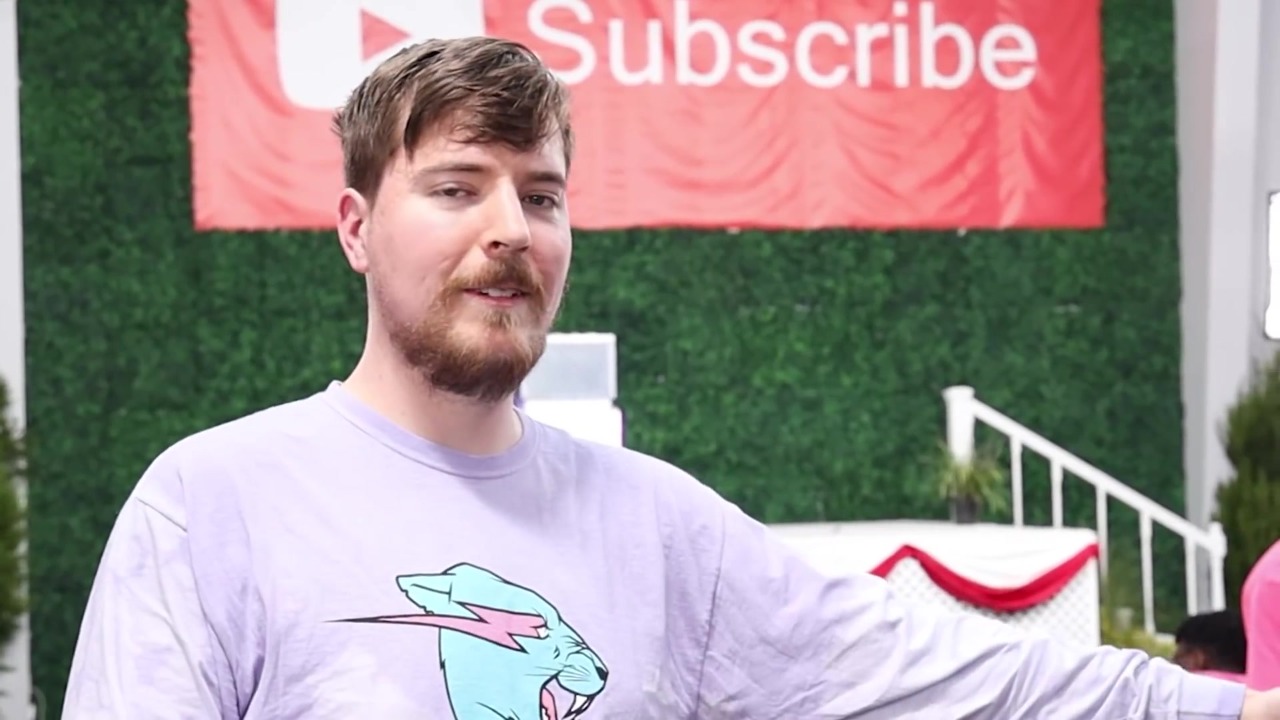

MrBeast has already turned YouTube spectacle into a sprawling consumer empire, but his next big stunt may play out on Wall Street instead of in a warehouse full of cash. The creator and his executive team are openly talking about ways to let fans own a piece of the business, raising the prospect that one of the internet’s biggest stars could eventually test the public markets.
That ambition collides with a messy reality: packaging a personality-driven brand for an initial public offering while keeping creative control and fan goodwill intact is far more complicated than giving away a Lamborghini on camera. The path from viral videos to a stock ticker runs through securities law, governance headaches, and a fan base that behaves very differently from traditional institutional investors.
The CEO who says fans should be “owners”
The clearest signal that an IPO is on the table came from MrBeast’s own leadership, not from speculative investors. In a recent onstage conversation, His CEO was pressed on whether the company might ever sell shares to the public, and he responded that he wants fans to have “a chance to be owners of the company,” a line that instantly reframed MrBeast’s audience as potential shareholders rather than just viewers. That framing matters, because it suggests the team is not only thinking about capital raising, but also about how to hardwire fan participation into the corporate structure.
Pressed further on how to give ownership stakes to more than a billion people who watch MrBeast’s content, the executive’s answer sounded less like a hypothetical and more like a roadmap. He acknowledged that if fans are to become owners at scale, some form of broad-based equity distribution would be needed, and observers noted that it “Sounds pretty much like a yes” to the idea that a public listing could be the practical mechanism to do it, a point underscored in Dec coverage of the exchange. When I look at that combination of rhetoric and scale, it reads less like a casual musing and more like early-stage expectation setting for a fan-centric capital markets debut.
From tweets about IPOs to a formal Beast Industries
Long before His CEO floated the idea of fan ownership on stage, MrBeast himself had already toyed with the concept in public. According to some recent tweets highlighted in According, he once sketched out a plan to take MrBeast Burger and Feastables public, then use the proceeds to “give away billions in future videos.” That idea captured the essence of his brand, turning a dry corporate event into another spectacle of generosity, but he later admitted that actually running public companies might “make life 2 stressful,” a telling acknowledgment of the tradeoffs between creative freedom and public-market obligations.
Since then, the business has matured into a more formal structure that investors can analyze. A profile of Beast Industries describes a holding company that sits over MrBeast’s various ventures and asks directly, “Can you invest in Beast Industries pre-IPO?” and “Can you sell shares of Beast Industri…?” while explaining that the group is still private. A related note on whether Beast Industries will go public stresses that the company “has not yet filed for an IPO,” but also walks through how an eventual listing could allow a private company to transition to public trading, language that reads like a primer for fans who are already asking when they can buy in, as seen in the separate page titled Will Beast Industries.
A growing empire beyond YouTube videos
Any IPO conversation around MrBeast only makes sense if you look at how far his operation has expanded beyond ad-supported videos. The core content machine still drives the brand, but the business now stretches into food, snacks, technology, and soon, telecom and finance, which gives Beast Industries the diversified revenue streams that public investors typically expect. That breadth is also what could justify the kind of valuation that would make a listing worth the regulatory and reputational risk.
On the telecom side, YouTuber MrBeast has plans to launch a mobile phone service called Beast Mobile, a move His CEO confirmed in an interview that described how the service is being built out and how it fits into the broader ecosystem of products his audience already buys. The report, which urged readers to Follow Dan Whateley, framed Beast Mobile as a way to deepen engagement and capture recurring subscription revenue, a classic pre-IPO playbook. In parallel, MrBeast is building out a platform to connect creators and big advertisers, with reporting that MrBeast is developing a platform that links creators to brands while also expanding into financial services and mobile phones, a strategy laid out in detail in Dec coverage of his plans.
Financial services, trademarks and the Beast Mobile play
The push into money and phones is not just a branding exercise, it is being formalized through legal filings and new product lines that look tailor-made for a future investor deck. YouTube superstar Jimmy Donaldson, better known as MrBeast, has filed a trademark for “MrBeast Financial” that covers banking, investment, and crypto services, a move that signals he is serious about offering financial products to his audience rather than just slapping his logo on someone else’s card. The trademark filing, detailed in Jimmy Donaldson, shows a deliberate attempt to lock down intellectual property in a heavily regulated sector where brand trust and legal clarity are prerequisites for scale.
At the same time, MrBeast is moving into financial services for his audience more broadly, with one report stating that MrBeast to launch financial services for his audience and explicitly linking that expansion into financial and mobile services to his existing content empire. That analysis, captured in Dec coverage, frames the strategy as a way to monetize the trust he has built with viewers by offering them tools they already use, from payments to connectivity. When I connect those dots with Beast Mobile and the creator-advertiser platform, I see the outline of a vertically integrated consumer ecosystem that could be pitched to public investors as “Beast Industries,” not just a YouTube channel.
Valuation hype and the $1.5 billion question
Any discussion of a MrBeast IPO inevitably runs into the question of what the company is worth, and whether the hype around creator-led businesses can survive the cold math of public markets. Earlier analysis asked bluntly if MrBeast is actually worth $1.5 billion, pointing to a funding round that reportedly valued his operation at that figure and then asking if it is time for MrBeast to hit the public markets. That piece, which linked the valuation debate directly to the question “Could MrBeast IPO? His CEO wants fans to have ‘a chance to be owners of the company’,” is captured in Oct coverage that treated the $1.5 billion figure as both a milestone and a provocation.
More recent reporting has sharpened that picture by tying the valuation to concrete fundraising. One account notes that MrBeast’s company raised money at a $5 billion valuation last year, a detail embedded in a broader discussion of whether he could go public and how His CEO wants fans to participate in ownership. That same report, which asks “Could MrBeast IPO?” and then details how the company was valued at $5 billion, is summarized in Could. When I compare that trajectory to other high-demand startups, including those highlighted in a separate analysis that notes, According to The Wall Street Journal, the company told investors in November 2024 that it raised $5 billion in a funding round that values it at $50 billion, as described in According, it is clear that Beast Industries is being discussed in the same breath as some of the most aggressively priced private companies in the market.
What an IPO would actually require
For all the excitement around fan ownership, the mechanics of going public are unforgiving. Any Beast Industries IPO would have to satisfy the same regulatory and disclosure standards that apply to industrial conglomerates and software giants, even if the underlying asset is a creator brand. That means audited financials, detailed risk factors, and a governance structure that can withstand scrutiny from institutional investors who may not care how many subscribers a channel has if the cash flows are volatile.
One primer on listing requirements spells out that Increased Scrutiny is inevitable, noting that Once public, your business will face heightened scrutiny from investors, regulators, and the media, a warning that appears in Increased Scrutiny. On top of that, Under the U.S. Securities Exchange Act of 1934, public companies must file quarterly reports disclosing information in periodic filings, a requirement that President Trump has recently suggested should be relaxed to six-month reporting, as described in Under the. Even if reporting frequency changes, the core obligation to open the books would force MrBeast’s team to translate a creator’s intuition-driven operation into a cadence of earnings calls and guidance that Wall Street can model.
Control, stress and the human cost of going public
Beyond the paperwork, an IPO would test how much control Jimmy Donaldson is willing to surrender in exchange for capital and liquidity. A Reddit thread titled “Can MrBeast LLC go public?” captures the fan-side version of this debate, with one commenter noting that Theoretically, yes Beast could become a publicly traded company, but in practicality, he’d lose some control over his company and might have to answer to shareholders if stunts go wrong or margins shrink. That sentiment, preserved in Theoretically, mirrors the concerns founders of more traditional startups voice when they weigh the tradeoff between independence and access to public capital.
There is also the question of personal bandwidth. At least that is how Jimmy “MrBeast” Donaldson feels, a YouTuber whose content empire is worth a cool $85 million, according to one profile that describes how he already feels his life is full of sorrow due to all the “boss things” that occupy his schedule. The same report notes that his empire is worth $85 m and quotes him saying he barely has time to live or be in his own head, a portrait captured in Jimmy. Layering the relentless demands of a public company CEO on top of that schedule would not just be a financial decision, it would be a lifestyle gamble that could affect the creative output that underpins the entire valuation.
How fans might actually get shares
If Beast Industries does head for the public markets, the most distinctive feature of the offering would likely be how shares are allocated. His CEO has already said he wants fans to have “a chance to be owners of the company,” a phrase that appeared in His CEO coverage of the onstage exchange. That could translate into a directed share program for subscribers, loyalty-based allocations tied to purchases of Feastables or Beast Mobile plans, or even a hybrid model that uses fan engagement metrics as a kind of eligibility score, though the specific mechanics remain unverified based on available sources.
There is precedent for retail-heavy offerings, from consumer brands that reserve IPO shares for customers to platforms that let fans buy into pre-IPO rounds, and Beast Industries is already being discussed in that context. A page that invites readers to Learn more about Beast Industries asks, “Can you invest in Beast Industries pre-IPO?” and “Can you sell shares of Beast Industri…?” while explaining how secondary markets sometimes provide access before a formal listing, as laid out in Learn. If MrBeast’s team wants to turn his audience into a shareholder base, they will have to navigate securities rules that limit who can buy what and when, but the appetite is clearly there, both from fans and from platforms that specialize in pre-IPO demand.
The cultural risk of turning a fandom into a cap table
Even if the legal and financial pieces line up, there is a softer, but equally important, risk: what happens to the relationship between creator and audience when that audience becomes a group of investors. MrBeast’s brand is built on surprise, generosity, and a sense that he is playing with money for the audience’s benefit, not his own. Once fans hold stock, every expensive stunt or risky expansion could be reframed as a decision that affects their portfolio, not just their entertainment, and that shift could change how they react to losses, controversies, or strategic pivots.
That tension surfaced subtly when Housenbold cut in during a discussion about the company’s learning curve, saying, “Listen, we’re always learning and getting better,” a line that was interrupted by laughter from the crowd before the conversation turned to how another creator-led company went public in Korea. The moment, recounted in Housenbold, hints at how the team is already positioning itself as a learning organization that can adapt under scrutiny. If that message resonates, fans-turned-shareholders might be more forgiving when experiments fail, but if they start to see themselves primarily as investors, the margin for error could narrow quickly.
So, could MrBeast really IPO?
When I put all of this together, the answer is that MrBeast could go public in a technical sense, and his team is clearly laying the groundwork, but whether he should is a more complicated question. The corporate scaffolding exists in the form of Beast Industries, the product mix is broadening into Beast Mobile, MrBeast Financial, and a creator-advertiser platform, and valuations in the billions have already been floated and, in some cases, raised against. The remaining hurdles are about governance, disclosure, and the personal willingness of Jimmy Donaldson to live inside the constraints of a listed company.
For now, the clearest takeaway is that the idea of a MrBeast IPO is no longer a punchline or a fan fantasy, it is an active scenario being discussed by His CEO, by investors asking when they can buy in, and by regulators whose rules will shape how any such deal is structured. Whether the first truly mainstream creator IPO ends up being Beast Industries or a rival, the playbook is being written in real time, and MrBeast’s next moves will tell us how far a YouTube-born brand can stretch before it snaps under the weight of public-market expectations.
More from MorningOverview