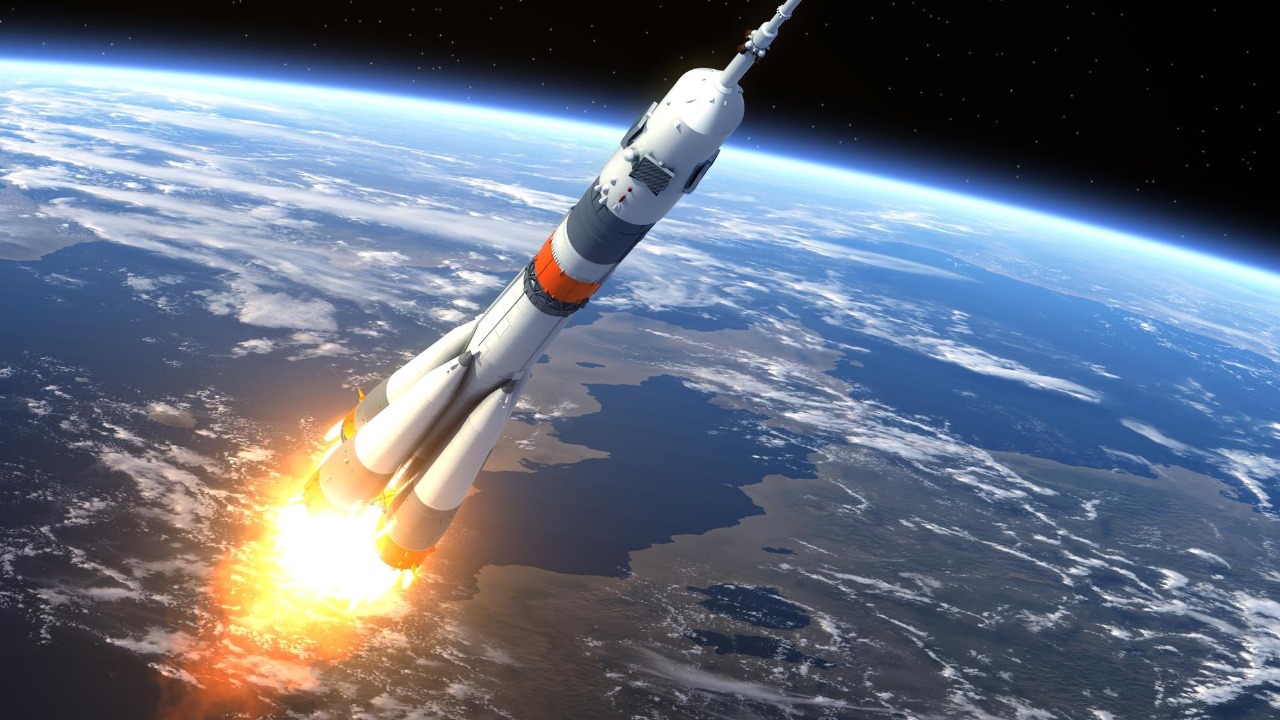

China’s push to match the world’s leading space powers took a dramatic turn when its first orbital-class reusable rocket reached space, then broke apart in a fiery crash during its attempted return. The debut of the Zhuque-3 booster marked a historic step for the country’s commercial launch sector, even as the failed landing underscored how hard it is to master the technology that underpins cheaper, rapid-fire access to orbit. For China’s space ambitions, the spectacle of success followed by explosion is less an embarrassment than a sign that its engineers are now grappling with the same high-stakes learning curve that reshaped the industry in the United States.
Orbit achieved, landing lost
The Zhuque-3 mission managed the part that used to be considered the hard bit: lifting a payload to orbit and separating cleanly, a milestone that confirmed the vehicle’s basic design and propulsion concept. Only after the upper stage had completed its work did the lower stage, which was intended to fly back and touch down vertically, run into trouble during its return to a landing field in the Gobi Desert. Telemetry later showed that the booster’s engine stalled during the final burn, and the vehicle flipped and disintegrated in a dramatic fireball as it attempted to land, a sequence that turned what had been a textbook ascent into a Booster Explodes moment.
From a technical standpoint, the split outcome matters. Reaching orbit on a maiden flight is a strong validation of the rocket’s core systems, while a failed landing burn points to a narrower set of problems in guidance, engine throttling, or propellant management during descent. Engineers described the mishap as a “Failed Landing Attempt” that occurred only after Zhuque-3 had already “Reaches Orbit,” a pairing that captures both the success and the setback in a single mission profile and highlights how close China came to a complete triumph on its first try.
LandSpace and the rise of China’s private launch sector
The company behind Zhuque-3, LandSpace, sits at the center of China’s effort to cultivate a commercial launch ecosystem that can complement its state-run space program. As the rocket’s Designer, LandSpace has already distinguished itself with earlier liquid-fueled launches, and Zhuque-3 is its boldest step yet, a stainless-steel, methane-powered vehicle explicitly built to be flown again and again. The firm’s decision to attempt recovery on the very first orbital mission signals a willingness to accept visible failure in pursuit of rapid progress, a posture that mirrors the early years of other reusable rocket pioneers.
LandSpace’s emergence also reflects a broader shift inside China, where private and semi-private firms are being encouraged to chase commercial contracts and technological breakthroughs that once would have been the exclusive domain of state-owned giants. By fielding what it describes as China’s first reusable rocket and then immediately attempting to land it, the company has positioned itself as a flagship for this new wave of entrepreneurial space activity. The failed recovery, which saw the lower stage catch fire before crashing near the recovery site, is now the subject of an internal investigation, but the very fact that such a complex maneuver was attempted at all shows how far the country’s commercial launch sector has come in a short time.
What went wrong in the Gobi Desert
The most striking images from the mission came not from liftoff but from the booster’s final seconds above a remote landing zone in the Gobi Desert. As the vehicle descended, onboard systems initiated the landing burn that was supposed to slow the rocket to a gentle touchdown, only for the main engine to stall and the stage to lose stability. Observers watched as the booster tipped, its exhaust plume flared sideways, and the entire structure erupted in a fireball that scattered debris across the designated landing field, a sequence later confirmed by telemetry as an “anomaly” during the recovery phase of the flight.
From the outside, it is tempting to treat such a fiery end as a simple failure, but the pattern of events suggests a more nuanced picture. The booster had already survived reentry, oriented itself for landing, and fired its engine for the final burn, which means most of the recovery sequence functioned as designed before the stall. According to technical accounts of the attempt, the lower stage appeared to catch fire just before crashing near the recovery site, a detail that points to a late-stage problem in engine performance or structural integrity rather than a fundamental flaw in the overall concept. For engineers, that distinction matters, because it narrows the search for root causes and increases the odds that the next attempt will get further than the last.
Why reusability is the new space race
The reason Zhuque-3’s fiery landing drew so much attention is that reusable rockets have become the defining technology of the modern launch industry. Instead of discarding expensive hardware into the ocean after a single use, companies now aim to recover and refly boosters, slashing the cost per mission and enabling a cadence of launches that would be impossible with expendable designs. In this context, China’s first serious attempt to land an orbital-class booster is less about one company’s fortunes and more about whether the country can close the gap with the leaders who already treat reusability as routine.
Reusable systems form the backbone of the business model at SpaceX, the company founded by Elon Musk that turned vertical landings from science fiction into a regular spectacle. Its Falcon 9 boosters and the larger Starship vehicle, which is famously built from stainless steel, have shown how reusing hardware can transform both economics and expectations in spaceflight. When analysts note that Zhuque-3’s structure also incorporates plenty of stainless steel and that its recovery profile is explicitly compared to Reusable launch vehicles pioneered by Elon Musk, they are highlighting how directly China’s new rocket is aimed at matching that standard.
How close China came on its first try
For all the attention on the explosion, the more consequential story may be how close Zhuque-3 came to sticking the landing on its very first orbital mission. According to detailed accounts of the flight, the booster executed its ascent, stage separation, and reentry maneuvers as planned, then descended toward a prepared landing field in the Gobi Desert with its guidance systems still functioning. Only during the final engine burn did the anomaly occur, suggesting that the rocket had already cleared many of the hurdles that typically take multiple test flights to master, especially for a vehicle that is both methane-fueled and designed for full reusability.
That near-miss matters because it signals that China is not starting from scratch but building on a body of knowledge that has accumulated globally over the past decade of reusable rocket experimentation. One analysis described the event as a spectacular explosion that nonetheless showed China is close to obtaining reusable rockets, a conclusion drawn from telemetry data indicating that the booster nearly landed in the designated field before the engine stalled. In other words, the difference between a triumphant touchdown and the fireball that actually occurred may come down to a handful of software parameters or hardware tolerances, a gap that can be narrowed with each subsequent launch and recovery attempt, as highlighted in assessments of how China is close to operational reuse.
Technical design: stainless steel and methane
The design of Zhuque-3 reflects a deliberate choice to follow the emerging template for heavy-duty reusable rockets rather than the older model of lightweight, expendable launchers. The vehicle uses a stainless-steel structure that can better withstand the thermal and mechanical stresses of reentry, trading some mass efficiency for durability and ease of manufacturing. That material choice echoes the approach taken with Starship, where the ability to tolerate repeated heating and cooling cycles is more important than shaving off every possible kilogram, especially when the long-term goal is to fly the same hardware multiple times.
Propulsion is another area where Zhuque-3 aligns with the cutting edge. The rocket is powered by methane-fueled engines, a configuration that offers cleaner combustion and potentially easier refurbishment compared with traditional kerosene-based systems. Reports on the mission note that there is also plenty of stainless steel used in the rocket’s construction and that its overall architecture invites comparison to Starship, not only in materials but in the ambition to create a fully reusable launch vehicle. The failed landing burn, in that light, looks less like a verdict on the design philosophy and more like an early stumble in the long process of tuning engines, guidance algorithms, and structural margins for repeated use.
From “anomaly” to roadmap
In the immediate aftermath of the crash, LandSpace framed the event as an anomaly during recovery rather than a catastrophic failure of the mission as a whole. That language is more than spin. It reflects a mindset in which each flight is treated as a data-gathering exercise, especially when the goal is to pioneer a capability that no Chinese company has previously demonstrated. By cataloging exactly when the engine stalled, how the booster’s attitude changed, and where the debris ultimately fell, engineers can turn a few seconds of chaos into a roadmap for software patches, hardware redesigns, or procedural changes before the next launch.
China’s broader space community is likely to treat the Zhuque-3 landing attempt in a similar way, as a proof of concept that validates the overall direction even as it exposes specific weaknesses. Official statements have already emphasized that the cause of the failure is under further investigation, a standard phrase that nonetheless signals a commitment to root-cause analysis rather than superficial blame. For a country that has watched others iterate their way to reliable reusability, the lesson is clear: spectacular setbacks are part of the process, and the only real failure would be to stop flying before the technology matures.
Global context and competitive pressure
The timing of Zhuque-3’s debut is not accidental. Around the world, governments and private firms are racing to secure a share of the growing market for satellite launches, crewed missions, and deep-space exploration, and reusable rockets are increasingly seen as the ticket to compete. In the United States, SpaceX’s Falcon 9 has flown hundreds of times with recovered boosters, while Starship test flights aim to push the envelope on size and capability. Europe is experimenting with partial reusability, and other countries are funding their own projects, all in recognition that expendable rockets struggle to match the economics of hardware that can be flown again.
China’s entry into this arena through Zhuque-3 and LandSpace raises the stakes for everyone involved. If Chinese companies can field reliable reusable boosters, they will be able to offer lower launch prices and higher cadence to domestic and international customers, potentially reshaping the commercial landscape. The fact that the country’s first serious attempt at orbital-class recovery ended in a fireball does not change that strategic calculus. Instead, it serves as a vivid reminder that the path to competitive parity runs through a series of high-risk tests, some of which will end exactly as Zhuque-3’s did, in a cloud of smoke over a remote desert.
Why the explosion still counts as progress
For viewers who saw only the final seconds of Zhuque-3’s descent, the mission might look like a failure, but in the context of reusable rocketry, the explosion is almost a rite of passage. Early attempts by other companies to land boosters on barges or concrete pads produced their own catalog of toppled stages and fiery impacts before the techniques were refined. Each of those mishaps generated memes and headlines, yet they also yielded the data that made later successes possible, and the same dynamic is now playing out in China’s Gobi Desert.
By reaching orbit, separating cleanly, and then attempting a controlled return, Zhuque-3 compressed years of incremental testing into a single high-stakes flight. The fact that the booster ultimately broke apart does not erase the achievements that came before the anomaly, nor does it negate the value of the telemetry captured in those final moments. If anything, the dramatic end ensures that the mission will be remembered, both inside China and abroad, as the moment when the country’s commercial launch sector fully committed to the reusable future. The next time a stainless-steel booster descends toward a landing pad under its own power, the lessons from this explosion will be riding with it, encoded in software updates and design tweaks that owe their existence to a few seconds of failure at the edge of success.
What comes next for Zhuque-3 and China’s reusable ambitions
The real test of China’s commitment to reusability will come not from postmortem statements but from how quickly LandSpace and its partners move to the next launch. If the company follows the pattern set by earlier pioneers, it will aim to incorporate fixes and fly again as soon as practical, using each mission to chip away at the remaining unknowns in booster recovery. That could mean adjusting engine start sequences, refining landing algorithms, or modifying structural components to better handle the stresses of descent, all informed by the detailed data gathered during the first flight’s “Failed Landing Attempt.”
At the national level, Zhuque-3’s mixed outcome is likely to reinforce, rather than weaken, support for reusable technology. China has already invested heavily in its state-run space program, from crewed missions to its own space station to ambitious lunar plans, and a robust commercial launch sector would complement those efforts by providing flexible, lower-cost access to orbit. As policymakers weigh the lessons of the Gobi Desert fireball, the logic of pressing ahead is straightforward: the country has now demonstrated that it can build a rocket that “Reaches Orbit” on its first try, and the remaining challenge is to turn that capability into a system that can also come home in one piece. The path from explosion to routine reuse is long, but with Zhuque-3, China has taken its first unmistakable step onto it.
More from MorningOverview